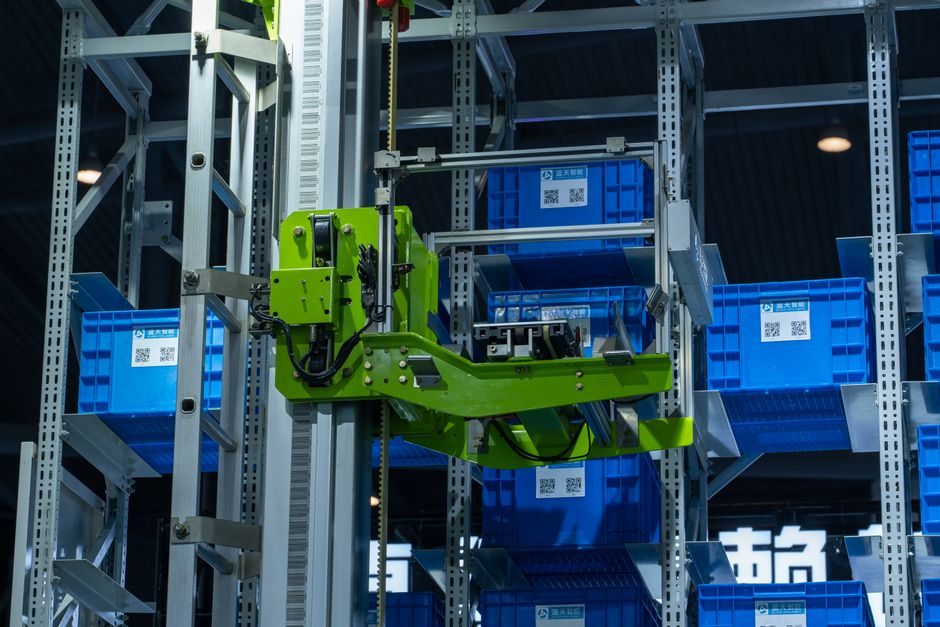
Global warehouse robotics spend is anchored on a USD 4.31B 2022 base, projected to USD 17.29B by 2030, with the Asia Pacific region holding the largest revenue share in 2022 [S2].
That expansion is being driven by three quantified forces: e-commerce and retail order volumes, persistent warehouse labor shortages, and a measurable push by retailers to build in-house distribution facilities to control order-fulfilment operations [S1][S2]. The result is sustained capex into mobile robots, fixed automation, and the orchestration software that ties both together.
Market Sizing, Regional Split, and 2030 Trajectory
IndustryARC ties the demand curve to industrial automation broadly, with retail in-housing of distribution as the proximate trigger for orders [S1]. Grand View Research sizes the opportunity at USD 4.31B in 2022 with a 2023-2030 CAGR trajectory toward USD 17.29B, and places Asia Pacific as the leading regional revenue generator in 2022 [S2]. The Business Research Company's January 2026 report extends coverage to a 2026-2035 window across end-uses including automotive, electronics and electrical, metal and machinery, and pharmaceuticals [S6].
The 2030 baseline matters for specifiers because it implies multi-year capex pipelines rather than one-off pilots, and it explains why orchestration platforms — not isolated robots — are the procurement target on MODEX 2026 stands [S5]. The combined picture: a market growing on a 4-5x revenue multiplier from 2022 to 2030, with the Asia Pacific installed base doing the heaviest lifting through 2022 [S2].
Robot-Type Mix: Fixed, Mobile, and Gantry Palletizers
IndustryARC's taxonomy breaks warehouse robotics into fixed (conveyors, gantry, palletizers, others) and mobile platforms, with functions spanning storage, sortation, packaging, and others, and verticals including automotive, electronics and electrical, food and beverage, pharmaceutical, and others [S4]. Fixed assets still dominate throughput per square foot, but mobile platforms are where vendor differentiation is most visible at trade shows [S4][S5].
Gantry and palletizer cells are specified where payload, reach, and duty cycle are non-negotiable, and conveyors remain the workhorse for sortation. Mobile robots — AMRs and the orchestration layer above them — are where retail-fulfilment capex is concentrated, because they map onto existing brownfield floors without civil works. The Onward Robotics showcase at MODEX 2026 highlighted orchestration software that coordinates people, robots, and workflows into a single fulfilment system, not standalone bots [S5].
Selection Criteria: Throughput, Footprint, and Brownfield Fit

Specifying warehouse robotics in 2026 is a function of three measurable axes: required pick/throughput rate, available floor footprint, and brownfield integration risk. Fixed cells (conveyors, gantry, palletizers) win on throughput density and deterministic cycle time, while AMRs win on deployment speed and reconfigurability on existing slab [S4]. The cobot market 2026 payload and spec map is a useful adjacent reference for collaborative arms that often sit at the end of an AMR or conveyor run.
Buyers evaluating a single vendor against these axes should score each platform against (1) picks per hour at target SKU mix, (2) payload band and reach envelope, (3) integration footprint per square meter, and (4) orchestration stack openness. A PLC-centric brownfield site, for example, is cheaper to extend with a fixed gantry than to retrofit with an AMR fleet plus WMS/WCS middleware, while a greenfield sortation build favours AMR-first layouts. The orchestration layer is the common multiplier on either path, and that is where MODEX 2026 vendor messaging concentrated [S5].
Vertical Demand: E-Commerce, Pharma, and Automotive
Retail and e-commerce remain the dominant pull, with in-housing of distribution named as a structural driver by IndustryARC [S1]. Grand View Research reinforces this with e-commerce throughput, retail order-fulfilment pressure, and warehouse labor shortage as the three named demand drivers in 2022 [S2]. The Business Research Company extends the vertical list to automotive, electronics and electrical, metal and machinery, and pharmaceuticals for the 2026-2035 forecast window [S6].
Pharma and electronics customers typically add more demanding constraints — ESD-safe end-effectors, validated cleanroom-compatible SKUs, and tighter cycle-time SLAs — that push selection toward fixed cells or hybrid layouts. Automotive and metals, with heavier unit loads, lean toward gantry and palletizer cells. Across all verticals, the recurring failure mode is under-specifying the orchestration and WMS/WES integration layer, which is why trade-show messaging has shifted from robot count to fulfilment flow [S5].
Software, AI Foundations, and the Research Stack
Open-source work on the warehouse-robotics topic clusters around reinforcement-learning navigation (DQN-based single- and multi-agent stacks in PyTorch) and AI foundation models for fulfilment, with Covariant's warehouse AI explicitly cited as a foundation-model reference implementation [S3]. For buyers, that matters because orchestration is migrating from rules-based WCS logic to learned policies that can re-plan around congestion, picker behaviour, and SKU velocity shifts [S3][S5].
On the spec sheet, this shifts evaluation weight from raw robot speed to (a) simulation-to-real transfer of learned policies, (b) API openness for WMS/WES/ERP, and (c) observability into fleet-level KPIs. The MODEX 2026 platform messaging — "turn chaos into fulfilment flow" — is the same theme: orchestration software is now the procurement target, with the robots underneath becoming increasingly commoditised [S5].
Adjacent Hardware: Cobots, Sensors, and the Spec Stack
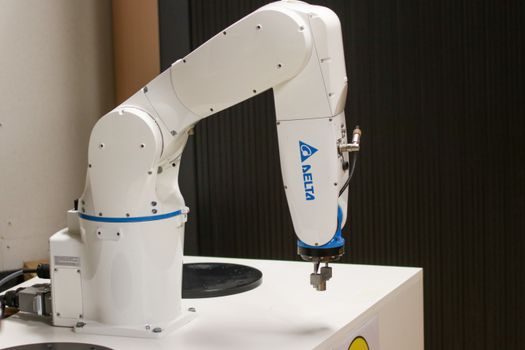
A typical 2026 warehouse cell combines a mobile platform, a fixed pick station, and one or more servo motor-driven axes or a collaborative arm. Cobot selection is now driven by payload tier, reach, and integration cost; a vendor map of 2026 cobot suppliers, payload tiers, and price bands is the practical reference for the arm side of that cell [S1, cobot vendor map 2026]. [S5]
On the sensing side, pressure sensor and flow meter choices matter less directly than in process plants, but industrial valve selection still drives pneumatic and vacuum lines into grippers and suction tools. A full 2026 spec map for the segment is in the warehouse robotics 2026 size and spec deep-dive, and collaborative-robot buyer context is in the top cobot companies 2026 vendor map.
Limits, Failure Modes, and What to Monitor

Open public data still leaves a buyer-exposed gap on installed-base penetration by robot type — the published reports cite a 2022 base of USD 4.31B and a 2030 projection of USD 17.29B, but vendor-by-vendor shipment share is not disclosed at the same fidelity [S2]. The same gap exists on brownfield retrofit cost per square meter, which is why floor-print scoring in section 2 is qualitative. IndustryARC's 2026 press release language also implies, without quantifying, that retail in-housing is a continuing structural driver rather than a one-time capex wave [S1].
Trackable signals for the next two quarters: (1) MODEX 2026 vendor disclosures on fleet-level picks per hour, ideally broken out by SKU mix, and (2) the next update of the Asia Pacific regional split in the 2026 Business Research Company report cycle, given that APAC was the 2022 revenue leader and will set the demand ceiling for the 2026-2030 leg [S5][S6].