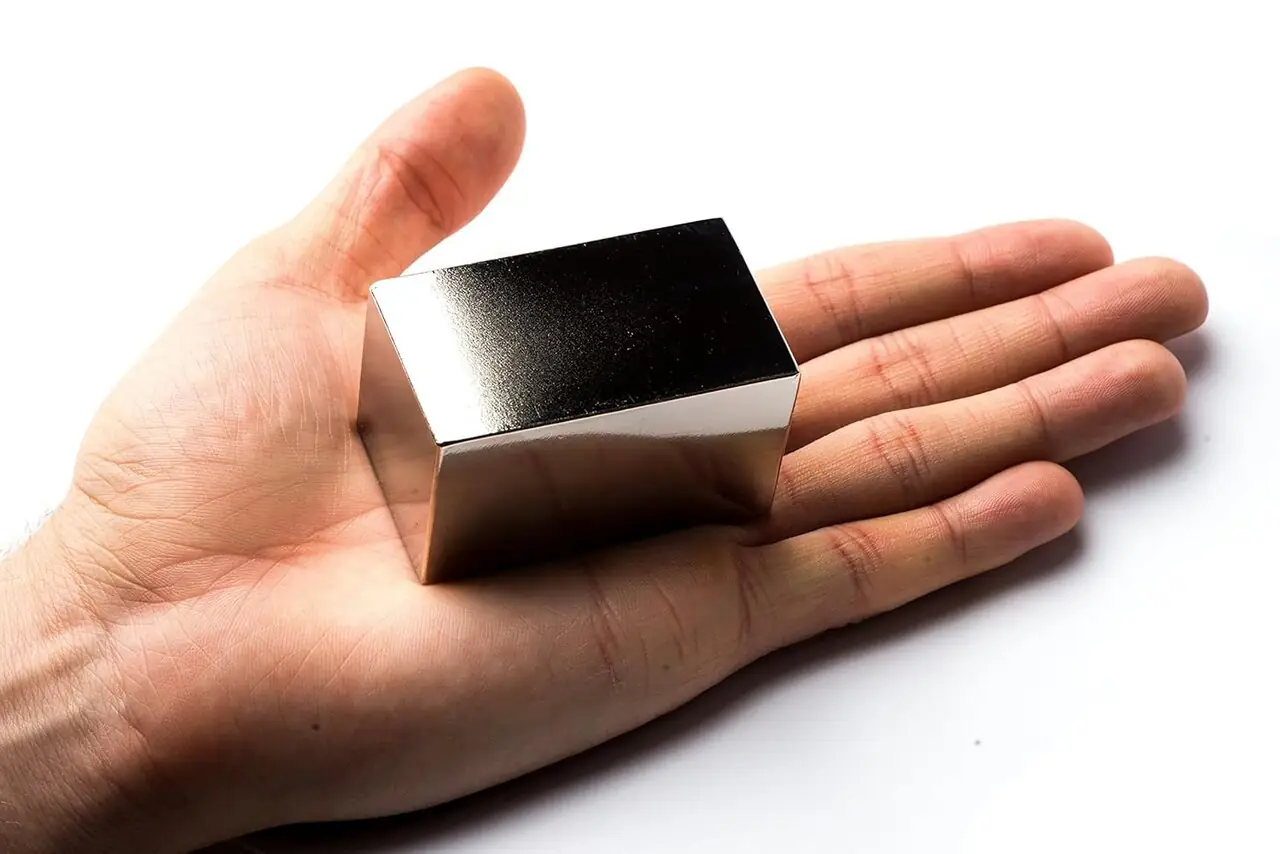
An eddy current separator is the machine that lifts nonferrous metal out of a dry stream of nonmetallic material without touching it. A short belt carries shredded scrap, glass cullet, plastic flake, or incinerator ash across a drum, and inside the drum a rotor built from alternating blocks of neodymium magnet turns many times faster than the shell around it. Each particle of aluminum, copper, or brass that crosses the field develops circulating currents of its own, and those currents push the particle forward until it lands in a chute apart from the material that felt nothing. Eriez product literature describes how those parts fit together; here the buying object is the whole machine, feeder, magnet, rotor, belt, splitter, and controls.
This page is aimed at the engineer who has to specify an eddy current separator for a scrap yard, an auto shredder residue line, a glass beneficiation plant, a plastics reclamation line, or an ash treatment facility. Six chapters follow. They define the machine and the numbers the buyer is really committing to, explain the physics in the rotor and the belt, sort the rotor and machine types and fence them off from their neighbors, list the specification parameters, set out the selection factors with RFQ wording, and end with installation, safety, the ways these machines fail, and the maintenance that prevents most of it. The standard against which each choice is judged is the same: more of the feed's metal in the bin, less of the feed's nonmetal with it, and a machine that holds both when the feed changes.
Five things decide the purchase: the feed, its size range, its moisture, and how much nonferrous metal it carries; the rotor, concentric or eccentric and standard or high frequency, which sets how small a particle can still be thrown; the belt, its width, its speed, and its gap to the magnets, which set throughput and how close the metal comes to the field; the splitter, which trades metal grade against metal recovery; and the ferrous removal ahead of the machine, without which the rotor overheats and the belt burns. Feed and ferrous removal decide more than any catalog option.
Chapter 1 / 06
What an Eddy Current Separator Is and What Is Being Decided
In form the separator is a short belt conveyor with a magnetic rotor hidden in its head pulley. Material enters at the tail end, spreads into a thin even layer, and rides the belt over a nonmetallic shell that turns at belt speed while the rotor inside turns at several thousand revolutions per minute. The rotor carries permanent magnets in alternating polarity, so a particle passing over it meets a field that flips hundreds of times each second. Metal that conducts electricity answers each flip with currents of its own and is pushed ahead of the freely falling material, while glass, stone, plastic, paper, and textile feel nothing and drop from the belt head in the ordinary way.
The purchase commits the buyer to two numbers measured on the real feed, a recovery and a grade. The order is for a stated share of the aluminum, copper, brass, and zinc in a stated stream, recovered into a product clean enough for a secondary smelter or refiner to take, while the cleaned fraction leaves with a metal content its outlet can tolerate. A rotor class, a belt width, a splitter, and a feeder are worth only what those two numbers are worth, and a vendor who quotes them without running the feed through a test machine is quoting someone else's material. Both numbers move whenever the feed moves, so the guarantee should say which feed it was measured on.
The separator belongs to metals recycling rather than to mineral processing, and the distinction is worth holding. Ore dressing recovers a valuable mineral that has never been smelted, by gravity on a spiral concentrator, by surface chemistry in a flotation cell, or by magnetism in a wet drum. The eddy current separator works on metal that has already been refined, formed, used, and discarded, and its task is to take that metal back out of whatever it was mixed with at end of life. Its feed has usually been through a shredder, a trommel screen or vibrating screen that narrows the size range, and a drum magnet or magnetic head pulley that takes the iron and steel out first.
One machine serves very different yards. An auto shredder operator runs it on the mixed nonferrous residue that remains after ferrous removal, where aluminum fragments carry most of the value. A municipal recycling plant runs it on shredded mixed waste or on crushed beverage cans. A glass processor runs it to strip caps and foil from cullet, because a few grams of aluminum per tonne can fail a container glass furnace. A plastics reclaimer runs it on washed PET flake; an ash contractor on bottom ash from a waste incinerator; a metal caster on spent core sand. The stream fixes the size range, the rotor, and the splitter position the machine will keep.
The machine pays for itself by turning a disposal cost into a sale, which is worth a paragraph of its own. Nonferrous metal that leaves with the residue is paid for twice: once as metal not sold, and again as a contaminant in a residue that fetches a lower price or must be landfilled. The separator consumes little besides the rotor drive, needs no reagents and no water, and its running cost is dominated by belts, bearings, and the labor of keeping the splitter set. Against that stand the capital for the feeder, the ferrous removal stage, and the dust collection a dry line requires, together with the nonmetallic that flies with the metal, which is why grade and recovery are always quoted as a pair.
One pass through the machine, followed from the hopper, shows how the parts connect. A loader tips shredded material into a surge hopper; a vibrating feeder meters it onto the belt conveyor that feeds the line; a magnetic drum lifts out iron and steel; what remains crosses the rotor as a single layer; can stock, wire, and cast fragments arc forward into a metal bin while foam, plastic, glass, and dirt fall into a second bin; a final magnetic pulley returns stray ferrous, and a hand picker or an optical sorter polishes the metal. The ride over the belt takes a second or two for each particle, and it repeats for every tonne the yard handles, day and night.
Chapter 2 / 06
How Rotor, Belt, and Splitter Do the Work
The principle is electromagnetic induction applied to a particle in flight. When a conductor meets a magnetic field that keeps changing, a voltage is induced in it and current flows in closed loops inside the metal; these loops are the eddy currents. Lenz's law says the induced current flows in the direction that opposes the change causing it, so the small field of those loops pushes back against the field of the rotor. Because the rotor field rises and falls as each alternating pole goes by, the particle is repelled during every change, and the repulsion has a direction: the particle is thrown forward, in the direction the magnets are moving, and a little upward, off the belt.
The deflection of a particle grows with the ratio of its conductivity to its density, with the square of the field strength, with the frequency of the field changes, and with particle size up to a limit; it falls steeply with distance from the magnet faces. Aluminum is the easiest metal to throw because it conducts well and weighs little. Copper, brass, and zinc respond strongly though they are denser, and magnesium throws nearly as far because it is lighter still, though a weaker conductor. Lead and stainless steel barely move, because they conduct poorly for their weight, and no rotor setting recovers them well. Small pieces need a faster changing field, and every particle needs to pass within a few millimeters of the magnets, which is why the belt is thin and its tension matters.
The rotor is a shaft carrying a ring of magnet blocks in alternating polarity, held under a nonmetallic cover and balanced as one assembly before it goes into the shell. That cover is often a split tube, made in two longitudinal halves, so the magnet array can be opened for service without being pulled off the shaft. Each magnet block is one pole, north and south alternating around the ring, so the frequency a particle sees is the rotational speed multiplied by the pole count, divided by two and by sixty. A rotor turning at three thousand revolutions per minute with sixteen poles therefore presents a field that completes four hundred cycles a second. The magnets are sintered neodymium-iron-boron, a magnetic material chosen for the rotor's running temperature.
The belt is the machine's metering surface. Its tail pulley runs in pillow block bearings bolted to the frame, and the belt itself is only a few millimeters thick so that a particle stays as close to the magnets as the shell allows, and it runs fast, commonly between about one and three and a half meters per second, because speed raises throughput and stretches the free fall of the nonmetallic stream so the two landing zones have room to separate. Feed must arrive as a single layer spread across the full width. Where pieces pile up, metal beneath the pile is shielded by the material above it and never meets the field, so a vibrating feeder with an adjustable gate sets bed depth, and the ratio of belt width to particle size decides how many pieces cross side by side. Damp or sticky feed binds fines to the metal and mats the layer, so the stream has to be dry before it reaches the belt.
Two trajectories leave the belt head. Nonmetallic pieces leave with the speed of the belt and fall in a plain parabola. Metal pieces carry an extra forward and upward velocity that depends on their conductivity, size, and shape, so they land farther out, by a distance that varies with shape as much as with metal. A knife-edge splitter stands in the gap between the landing zones, usually on a rack and pinion so an operator can shift it a few millimeters at a time, and divides the stream into a metal product, sometimes a middlings cut, and a cleaned nonmetallic tail. Moving the splitter edge toward the nonmetallic landing zone sends more of the material that lands between the two zones into the metal bin and raises recovery at the cost of grade; moving it toward the metal landing zone does the reverse.
Ferrous metal changes the physics. Iron and steel are ferromagnetic, so instead of being repelled they are pulled onto the shell, held in the high field zone, and heated by induced currents until they can scorch the belt and mark the shell. This is why a drum magnet or magnetic head pulley stands ahead of nearly every eddy current separator, and why rotor position matters: an eccentric rotor keeps its intense field at the point of discharge, where ferrous is already leaving the belt, instead of all around the drum, where a concentric rotor holds it. The rotor itself is cooled by moving air, and its bearings are watched for temperature.
Chapter 3 / 06
Separator Types and Machine Boundaries
Rotor position names the first type. A concentric rotor is centered in its shell, so its field is spread around the full circle and reaches material all the way along the drum. An eccentric rotor sits forward of the center, toward the discharge side, so the intense field is concentrated in a short arc at the end of the belt, and the rotor can be shifted to place that arc. Concentric machines suit clean feeds with little ferrous and are the simpler layout; eccentric machines tolerate ferrous that gets past the upstream magnet and reduce heated ferrous buildup, and Eriez builds its coarse, fine, and ultra fine rotors all in that layout.
Rotor frequency names the second type. A coarse-duty rotor carries few poles, as few as eight, and is built for fractions from about one inch (25.4 mm) upward, where a deep field gives large pieces a long change of trajectory. A rotor with around twenty poles, which Eriez calls its high-frequency configuration for fines, handles the intermediate range, roughly one quarter of an inch to one inch (6.35 to 25.4 mm). High-frequency rotors carry thirty or more poles, turn faster, and often sit in a carbon fiber shell, the shell Eriez lists for this rotor; they recover fines down to two or three millimeters, including bare copper wire, from auto shredder residue. Feeder, belt, and splitter are common to all three.
Machine arrangement names the third type. The belt-type machine, a short conveyor whose head pulley contains the rotor, is the standard form and the one this page describes. Buyers also meet the machine as an eddy current sorter or an ECS separator; both names mean this same rotor under a belt, not a separate product. A unit machine is the separator alone, rotor, shell, belt, and frame, supplied for a buyer to set under an existing chute or at the end of an existing line; a system adds the hopper, a vibrating feeder, a drum magnet or magnetic pulley for ferrous, the splitters, chutes, and a control panel. A line that needs a very clean metal product runs two separators in series, the first set for recovery and the second, fed with the first machine's metal product, set for grade.
The neighbors are easy to confuse and worth separating. An eddy current separator is not a magnetic separator, although in a recycling line the two nearly always work together. A magnetic separator removes or captures magnetic particles by attraction, whether that is tramp iron on a belt, magnetite in a slurry, or weakly paramagnetic minerals in a dry mill product; this machine acts on electrical conductivity and repels aluminum, copper, and brass, which offer no magnetism to attract. Nor is it an eddy current tester, a nondestructive testing instrument in which a probe coil and a meter induce and read eddy currents in a conductive part to find flaws, sort alloys, measure conductivity, or gauge a coating. This machine moves tonnes per hour; the tester examines one part at a time and separates nothing.
A separator on its own does nothing; the line around it makes it work. Upstream, a trommel screen or a vibrating screen narrows the size range, because one splitter position cannot serve pieces that differ widely in size, and a belt conveyor brings the sized stream to the surge hopper, where a belt scale built on a load cell can record what the line treats. Downstream, the metal product may pass a hand-picking station or a sensor sorter before a secondary smelter remelts the aluminum scrap, in a rotary or reverberatory furnace or, for clean sorted scrap, an induction furnace, or a refiner takes the copper; the cleaned fraction goes to its outlet. An optical sensor sorter is built around a machine vision system, an industrial camera over the stream whose processor judges each piece in flight and fires an air jet, while other sensor sorters read near infrared or X-ray response; it polishes the metal product, and on fine fractions it is the higher cost alternative to a high-frequency rotor.
Utilities and materials are modest and mostly metallic. The frame is welded steel; the shell is a nonmetallic composite so that it does not carry induced currents and heat itself; the belt is a thin plied or monofilament construction with a cover chosen for the wear of the stream; the splitter edges and chutes, which take abrasion from cullet and ash, are faced with stainless steel or a replaceable polymer sheet. Electrically the machine needs a belt drive and a rotor drive, each a three-phase asynchronous motor, the belt through a helical gear reducer or planetary reducer stage and the rotor through a VFD so its frequency can be tuned to the feed. Shredder fluff and bottom ash give off dust, so a dry line needs a dust takeoff to a bag filter in its dust collection form.
Chapter 4 / 06
Key Specification Parameters
Three groups of numbers fill the data sheet of an eddy current separator: those for the belt, those for the rotor, and those for the feed, and every one of them moves something else. Typical values are gathered below. Eriez stock listings supply the belt widths, the feed size classes, and the pole counts; belt speed, rotor speed, throughput, and the feed size ratio are typical ranges from practice, not published ratings. Throughput is given as a broad range because the same belt carries very different tonnages of light shredder residue and of dense cullet. A project number comes from a separation test on the real feed, which is also where the recovery and grade the vendor must guarantee are measured; the table is a map of the ground, not the ground itself.
Parameter
Typical range
What it decides
Belt width
1,016 to 2,032 mm (40 to 80 in.)
Throughput; pieces crossing side by side
Belt speed
1 to 3.5 m/s (197 to 689 ft/min)
Throughput; gap between landing zones
Belt thickness
a few millimeters
Distance from particle to magnet faces
Rotor speed
about 2,000 to 4,000 rpm
Field frequency; throw on fine metal
Pole count
8 to 32 or more
Field frequency; feed size class
Feed size, coarse rotor
25.4 mm (1 in.) and coarser
Metal value per piece; trajectory spread
Feed size, intermediate rotor
6.35 to 25.4 mm (1/4 to 1 in.)
Recovery of ordinary shredded aluminum
Feed size, high-frequency rotor
9.5 mm (3/8 in.) and finer, recovery from 3 mm
Recovery of wire and fine aluminum
Ratio of top to bottom feed size
about 4 to 1 or narrower
One splitter setting for the whole feed
Throughput
a few to several tens of t/h
Belt width; feeder and magnet size
Bed depth
1 particle layer
Share of metal that meets the field
Rotor position
concentric, or eccentric and adjustable
Tolerance of stray ferrous; setting range
Splitter
knife edge, 1 to 3 cuts
Grade and recovery of each stream
Some figures should be challenged whenever they arrive without evidence. A recovery given as a share of metal fed, with no test on the material itself, belongs to another yard. A belt width quoted without the throughput and bulk density behind it says nothing, since a wide belt running starved separates no better than a narrow one. A minimum particle size quoted without the rotor speed and pole count it assumes flatters a standard rotor with a high-frequency result. A request in the RFQ for the test report behind each recovery and grade claim, run on a sample the buyer supplies, sorts the vendors who tested from those who guessed.
The materials follow from what the feed does to each part. The magnets are sintered from milled neodymium, iron, and boron alloy, graded so that their strength survives the rotor's running temperature, and the rotor cover is a thin nonmetallic sleeve so that it neither shields the field nor heats. The shell is a nonmetallic composite, carbon fiber on fine-duty machines, because a metallic shell would carry its own eddy currents and waste power as heat. The belt is a thin, stable, nonmetallic construction with a cover chosen for abrasion: a soft cover for plastic flake, a tough cover for cullet and ash. Splitter edges, chute liners, and feeder pans are wearing parts, specified in stainless steel or a bonded polymer for abrasive streams.
Chapter 5 / 06
Selection Decision Factors and RFQ Language
Begin with a sample of what the line actually receives. Taken across several days of operation, it gives the particle size distribution, the bulk density, the moisture, and the content of each nonferrous metal in it. The size distribution decides the rotor class; a stream with a wide range of sizes needs screening ahead of the machine into two fractions, each run on the rotor and at the splitter position that suits it. The metal content decides what the machine is worth: a residue carrying several percent aluminum by weight pays for a feeder, a magnet, and a separator, while a cleaned cullet carrying a fraction of a percent may justify only a single machine and a simple chute.
Throughput and belt width are the same decision. A separator carries a limited bed depth, one particle layer, and once belt speed is set for the feed it is rarely changed, so its capacity, in cubic meters each hour, then grows roughly in step with belt width. Wide belts cost more, need wider feeders and magnets, and are harder to load evenly across the full width. A buyer who states the rate in tonnes per hour must also state the bulk density, since a cubic meter of fluffy shredder residue weighs far less than one of cullet. The width of an existing line sets the ceiling when the separator is retrofitted between a screen and a conveyor already in place.
Rotor choice follows particle size and ferrous risk. Coarse, clean material at high rate suits a deep field rotor with few poles. Mixed auto shredder residue needs an intermediate or fine rotor and often a second pass. A feed with ferrous that the upstream magnet may miss, such as wire and long thin pieces, argues for an eccentric rotor, whose field is confined to the discharge arc, and for a second magnetic stage after the separator. Where the metal is fine copper wire or flaked aluminum, only a high-frequency rotor in a thin shell gives a useful recovery, and a test on the fine fraction alone is the evidence to demand.
The grade and recovery the buyer needs are set downstream, not at the separator. A secondary aluminum smelter buys scrap by its aluminum alloy family, cast or wrought, and tolerates a stated level of nonmetallic, so the metal product can carry some fluff and still sell; a copper wire chopper or refiner is less forgiving, and its feed may need a second eddy current pass or a hand-pick. Where the value lies in the cleaned fraction instead, as with cullet going to a glass furnace, the tail is the product and the splitter is set for a clean tail even at the cost of metal recovery. The RFQ should name which stream is the product and the impurity limit it has to meet.
Cost and lead time concentrate in a few places. The rotor, with its rare earth magnets, is the expensive assembly, and its magnet cost follows the market for neodymium; a machine in a standard width with a stocked rotor ships sooner than a wide machine built to order. The feeder, the ferrous removal stage, the structural supports, the chutes, and the control panel can add a large share of the separator's own price and belong in the scope from the first quotation. Exchange wear items ordered with the machine, a spare belt, splitter edges, and rotor bearings, shorten the first interruption, and a witnessed feed test adds days to the order and predictability to the operation.
Nine questions follow, each a decision every recycling or beneficiation line has to make. Where an answer is missing, the machine that arrives will recover less than it should or leave more metal in the stream it was bought to clean.
Decision
What the buyer states
What is at stake
Feed size range
Top and bottom size, after screening
Wrong rotor class; one splitter cannot serve all sizes
Feed condition
Moisture, stickiness, fluff and fiber content
Clumped feed; metal shielded under the layer
Nonferrous metal mix
Aluminum, copper, brass, zinc; piece shapes
Recovery quoted for the wrong metal
Throughput
Tonnes per hour with bulk density, peak and average
Belt width chosen for the wrong load
Belt or line width
New line width, or the width of the existing conveyor
Feeder and chutes that do not fit
Ferrous upstream
Drum magnet or pulley type and its coverage
Rotor heating, belt burns, downtime
Product and limit
Which stream is sold, and its impurity limit
Splitter set for recovery when grade was needed
Rotor class
Coarse, intermediate, or fine duty; ferrous risk
Fine metal lost to tailings
Layout
Drop heights, chutes, bins, access for belt change
A machine that cannot be serviced
An RFQ for an eddy current separator is complete when it says what arrives and what must leave and states the rotor only where the feed or the layout already dictates it. In practice it should give: the feed source and its particle size range, top and bottom size after screening; feed size and moisture limits, with the sticky or fibrous components named; the nonferrous metal mix by type, piece shape, and content by weight, with the iron and steel expected after the upstream magnet; throughput in tonnes per hour at peak and average, with bulk density; belt width for a new line, or the width and speed of the existing line the machine must fit; rotor type, concentric or eccentric, and pole class with frequency range; splitter arrangement and number of cuts; ferrous removal, feeder, and surge hopper scope; dust collection; noise and guarding requirements; spare belts, splitter edges, and bearings; and the basis of acceptance, a witnessed test on a buyer-supplied sample reporting recovery and grade for each stream.
Chapter 6 / 06
Installation, Standards, Failure Modes, and Maintenance
Putting the machine in is mostly a matter of level, alignment, and access. The separator must sit level and rigid so the belt tracks in the center of its pulleys; a belt that wanders rubs the edge of the shell, and on a thin belt over a fast rotor a frayed edge can tear across the belt. The feed must land on the belt with little drop, centered and in the direction of belt travel, so the feeder sits close to the tail pulley and on the belt centerline. Chutes are set to leave a clear fall for both streams and working room for the splitter. Access is part of the layout: one side of the machine needs room for the belt to slide off its frame, and the splitter and rotor adjustments must be reachable from the floor.
Run the belt and rotor empty, confirm belt tracking and rotor speed, and check that the emergency stop trips both drives.
Start the feeder at a low rate and raise it to the design bed depth, checking that the layer is even across the belt width.
Let the feed fall with the splitter swung clear and mark where the metal and the nonmetallic streams land.
Set the splitter edge between the two marks, just inside the nonmetallic landing zone, and lock it in place.
Sample each stream, assay the metal product and the tail, and shift the splitter a few millimeters at a time until both meet their limits.
Guards, stops, and interlocks belong to the machine itself, not to a later retrofit. Guards enclose the rotor, the belt nips, and the splitter area, and each guard door carries a safety interlock switch of the guard locking type, which trips the drives and holds the door shut. Because a loaded rotor coasts for many minutes after power is cut, the control system holds the guards locked until a speed signal confirms that the rotor has stopped, or an electromagnetic brake on the rotor drive brings it to rest sooner. An emergency stop station sits at each operating position, and the motor protection relay of the rotor drive is set for the long acceleration of a heavy rotor rather than for a steady load. Noise is the other exposure, and hearing protection is worn near a running machine.
Standards for eddy current separators are machinery safety and electrical standards; there is no accepted code for a separation test, so the buyer's own sample test is the reference. Risk assessment follows ISO 12100, safety functions such as interlocks and emergency stops are designed to ISO 13849, guard interlocking on a machine with a long run-down follows ISO 14119, guard distances follow ISO 13857, and electrical equipment follows IEC 60204-1. Machinery noise is declared under the ISO 11200 series of acoustic standards. Limits on exposure to static magnetic fields come from general occupational guidance rather than a machine standard, so the buyer states the zone around the rotor that only trained staff may enter.
On these machines things go wrong first in the belt and in the rotor bearings. Loss of belt tracking frays edges and tears the belt; the cure is frame leveling, pulley alignment, and tension set to the vendor's figure. Ferrous that reaches the rotor is pinned and heated, and shows as dark scorch marks on the underside of the belt; the cure is better ferrous removal upstream and, on an eccentric machine, a rotor position adjustment. Rotor bearings, running at thousands of revolutions each minute in a field that attracts magnetic debris, fail by lubrication breakdown and announce themselves through rising vibration and temperature. Worn splitter edges let metal leak into the tail, and a slow drift of feed size or bed depth lowers recovery without any alarm.
Two components set the maintenance calendar, the belt and the rotor bearings. The cadences below come from common practice; the vendor's manual and the abrasiveness of the feed move them, and a machine on cullet or ash needs the short end of every range.
Item
Typical action
Typical cadence
Belt tracking and tension
Inspect edges, adjust tension and tracking, look for scorch marks
Each shift
Belt thickness
Measure with a thickness gauge at marked points; replace at the wear limit
Weekly to monthly
Splitter edges
Inspect for wear and lodged pieces; reset position after a belt change
Weekly
Rotor bearings
Trend temperature and vibration; a vibration sensor flags the onset of failure
Continuous, reviewed weekly
Rotor speed
Read with a tachometer and compare with the drive setting
Monthly
Ferrous removal stage
Clean the drum magnet or pulley; confirm the feed is free of iron
Weekly
Feeder and gate
Check bed depth across the width; clear bridging and buildup
Each shift
Fasteners, guards, and stops
Torque rotor and pulley fasteners; trip each interlock and emergency stop
Quarterly
Belt replacement
Slide the belt off its frame, fit the new one, reset the splitter
On wear, yearly to a few years
Commissioning sets the recovery; the years after it decide whether it holds. Feed changes as a yard takes new suppliers, as a shredder wears, and as a screen blinds, so the size distribution and the ferrous content of the stream drift, and a splitter set for last year's feed is wrong for this year's; a quarterly sample and assay of both streams catches the drift. A spare belt, a set of splitter edges, and the rotor bearings in stock turn a breakdown into a shift's work. The rotor itself lasts if it stays cool, clean, and free of ferrous, and the plants that recover the most metal from these machines are the ones that walk the line every day.
FAQ
How does an eddy current separator work?
A thin belt carries dry, sized material across a nonmetallic drum at the belt's head. Inside the drum a rotor with alternating blocks of neodymium magnet spins at several thousand revolutions per minute, so a passing particle meets a magnetic field that reverses hundreds of times each second. In aluminum, copper, brass, and zinc that changing field induces circulating eddy currents, and by Lenz's law their own field opposes the one that created it, so the particle is pushed forward and lands farther than glass, plastic, stone, and paper, which simply fall from the belt. An adjustable splitter edge stands between the two landing zones and cuts the stream into a metal product and a cleaned tail.
What are the main types of eddy current separator?
Types are named by rotor position, rotor frequency, and machine form. A concentric rotor sits at the center of its drum and suits clean feeds with little ferrous. An eccentric rotor sits forward of center, concentrates its field at the point of discharge and tolerates stray ferrous. Standard-frequency rotors with few poles handle coarse fractions from about one inch upward, intermediate rotors with about twenty poles handle quarter inch to inch material, and high-frequency rotors with thirty or more poles, often in a carbon fiber shell, recover fines down to two or three millimeters and bare copper wire. The belt-type machine, a short conveyor whose head pulley contains the rotor, is the usual form.
What specifications matter most on an eddy current separator?
Belt width, belt speed, rotor speed and pole count, and feed size. Belt widths run from about one to two meters and, with belt speed of one to three and a half meters per second, set the throughput. Rotor speed, commonly two thousand to four thousand revolutions per minute, and pole count set the field frequency: few poles serve coarse metal, and thirty or more poles at higher speed serve fines. Feed size ranges follow the rotor, from one inch and coarser down to two or three millimeters. Beyond these, a single-layer bed depth, the gap between magnet face and belt, the splitter adjustment, and the ferrous removal ahead of the machine decide what the catalog numbers deliver.
How do you choose an eddy current separator for a recycling line?
Start with a sample of the actual feed and a separation test on it. The test gives the particle size distribution, the moisture, the content of each nonferrous metal, and the recovery and grade the machine can reach; no vendor number replaces it. Then size the machine: throughput and bulk density set belt width, the size range sets the rotor class, and a wide size range calls for screening into two fractions with a machine or a pass for each. State whether the metal product or the cleaned tail is what the plant sells, and its impurity limit. Include the feeder and the ferrous removal stage in the scope, since both decide what the separator can do.
How is an eddy current separator inspected and maintained?
Daily attention goes to the belt: tracking, edge wear, tension, and scorch marks on the underside, which show that ferrous metal is reaching the rotor. Weekly work covers the splitter edges and the cleanliness of the drum magnet or head pulley ahead of the machine, and each shift brings a check of the feeder gate and bed depth. Rotor bearings are trended for temperature and vibration, ideally with a permanently mounted sensor, and rotor speed is checked against the drive setting. The thin belt is replaced when a thickness gauge reads the wear limit, a job of minutes once the rotor has stopped and the machine is locked out. Both product streams are sampled and assayed on a schedule.
What drives the cost and lead time of an eddy current separator?
The rotor is the expensive assembly, because its rare earth magnets carry the neodymium price, and a standard width with a stocked rotor ships far sooner than a wide machine built to order. The feeder, surge hopper, ferrous removal stage, supports, chutes, and control panel can add a large share of the price of the separator itself, so a complete system costs well past the bare machine. Features that carry a premium on some makes are a high-frequency rotor in a carbon fiber shell, a frame that allows a quick belt change, and rack and pinion splitter adjustment, though Eriez lists the last two as standard on its eccentric models. Lead time lengthens when the buyer asks for a witnessed test on its own feed, which is also the best money spent on the order.
What safety hazards does an eddy current separator have, and which standards apply?
The hazards are a heavy rotor turning at several thousand revolutions per minute, a strong magnetic field around it, noise, and belt nips. A rotor stores large kinetic energy and coasts for a long time after power is cut, so guards are interlocked, an emergency stop trips both drives, and a brake may be fitted to shorten the run-down. Ferrous tools, watches, and implanted medical devices must stay clear of the rotor. Noise is commonly above eighty decibels, so a survey with a sound level meter sets the hearing protection zone. Risk assessment follows ISO 12100, safety circuits follow ISO 13849, and electrical equipment follows IEC 60204-1.