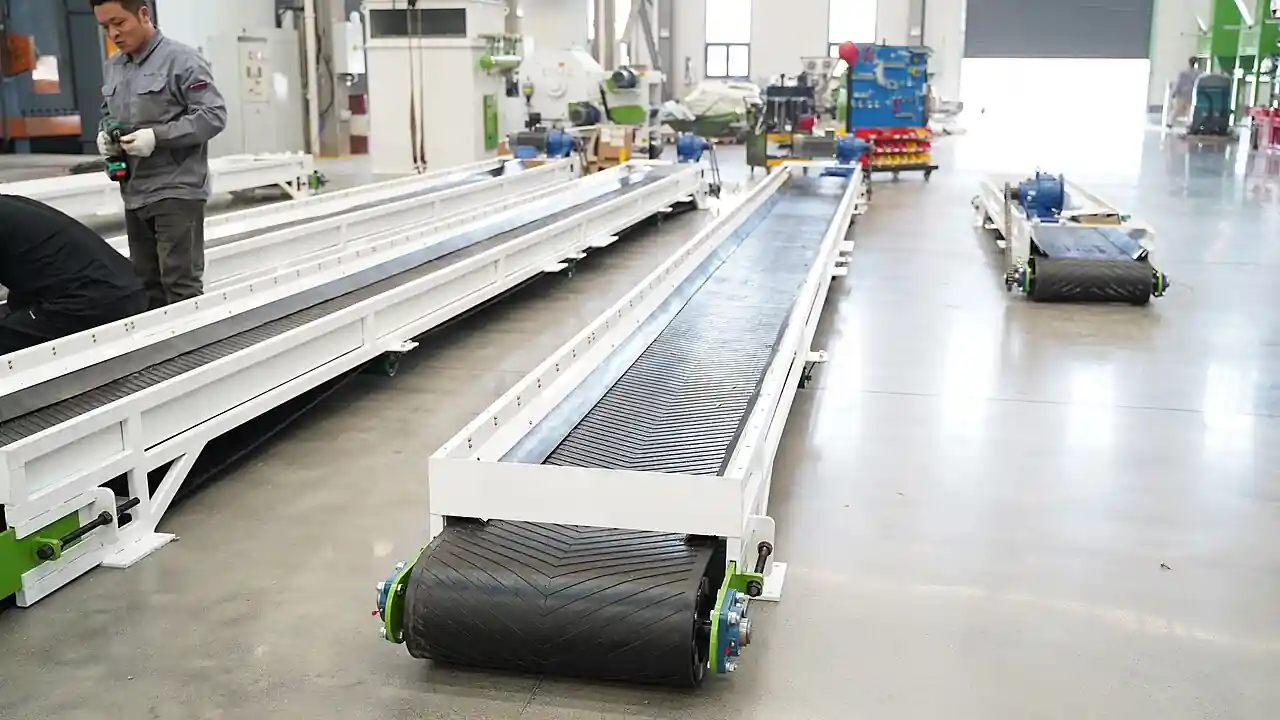
A trommel screen is a slowly rotating, slightly inclined cylindrical drum whose surface is apertured, perforated plate, woven or wedge wire mesh, rubber, or polyurethane panels, so that material fed into one end tumbles as it advances and the undersize falls through the apertures while the oversize carries out the discharge end. The tumbling action is the machine's signature: unlike a vibrating screen, which stratifies material by throwing it on a shaking deck, the trommel turns its charge over continuously, opening pockets, freeing blinding particles, and letting spray water wash slimes from stone in wet duty. Mill discharge trommels bolted to SAG mills are the class's most demanding application, and standalone units screen aggregates, waste, compost, and alluvial gravels, and this page treats the complete machine, drum, panels, drive, and support, as the purchasing object.
This page is written for the engineer specifying a trommel screen for mill discharge, scrubber, aggregate, or waste duty. It works through what the machine does and what is actually being bought, how the tumbling bed and the apertures do the work, which design choices such as drum geometry, media, and drive separate one offering from another, the parameters that recur on vendor data sheets, and the selection factors and RFQ language that decide whether the screen holds its cut and capacity on the real material for a wear budget that stays predictable.
The decision concentrates in five places: the duty, mill discharge, scrubber, aggregate, or waste, because it sets the feed, the cut, and the washing; the drum diameter and length that set the screening area and residence; the speed and inclination that set the tumbling and transport; the panel media and aperture, which decide cut sharpness, wear life, and blinding behavior on the actual material; and the drive and support arrangement that keep the drum turning for years between liner changes. Get those right and the feed chute, sprays, and product chutes follow with little freedom.
Chapter 1 / 06
What a Trommel Screen Is and What Is Being Decided
The machine this page describes is a cylindrical steel drum, from under a meter to more than four meters in diameter and from a few meters to over twenty long, fitted externally or internally with apertured panels, supported on trunnion rollers, tires, or flanges, and rotated by a chain and sprocket, gear, or friction drive at a few revolutions per minute. The drum sits at a slight inclination, a few degrees, so material fed at the high end advances by gravity and tumbling to the low end, undersize drops through the apertures into a collection launder or conveyor, and oversize discharges at the head into a chute. Spray bars run inside in wet duty, and internal lifters or splash plates direct material in scrubbing applications. Standalone trommels are complete machines on frames; mill discharge trommels bolt directly to the grinding mill discharge and turn with it.
What is being decided when a trommel screen is purchased is a cut and a capacity statement on the real material. The buyer is purchasing the ability to pass a stated tonnes per hour of a stated feed at a stated aperture without the drum pegging with near-size particles, to deliver an oversize that is clean enough for its destination, a pebble crusher in mill circuits, a stockpile in aggregates, and, in wet duty, to wash the slimes and fines through with the undersize. Everything on the vendor data sheet, diameter, length, open area, speed, media, exists to support that statement, and honest vendors size from the material's size distribution, moisture, and stickiness rather than by copying the last project.
The trommel sits in the screening family with well-defined neighbors that this encyclopedia treats separately. It is not a vibrating screen, the flat shaking deck that does most fine and medium screening duty faster and sharper; the trommel wins where material is wet, sticky, or heavy with slimes, where blinding kills flat decks, and where the duty wants gentle tumbling rather than violent throws. It is not a rotary drum screen in the wastewater sense, the internal-fed fine screen at treatment plant headworks that this encyclopedia covers on its own page; that machine removes fine solids from water, while this machine sizes and washes bulk solids. Upstream it takes mill discharge from a SAG mill or scrubber discharge in mining duty, or crusher product and run-of-pit feed in aggregates, often delivered by an apron feeder or belt conveyor; downstream, undersize pulp goes to sumps and a slurry pump in mill circuits while oversize reports to a cone crusher or stockpile.
Different buyers buy the same machine for different duties. A concentrator buys the mill discharge trommel as part of its grinding mill, scalping oversize pebbles for the crushing circuit and passing pulp to the cyclone feed sump. A gold alluvial operation buys a scrubber trommel, a drum that washes and breaks clay-bound gravels before the material reaches sluices or a cyclone separator. An aggregate producer buys a standalone trommel to wash and size sand and gravel where flat decks blind. A waste or compost processor buys a slow trommel to sort oversize from fines in stringy, wet, hostile material. The duty changes the media, the speed, and the washing; the drum concept does not.
The economics deserve their own paragraph because trommels are cheap to buy and expensive to under-size. A trommel pegged with near-size, or blinded by sticky fines, cuts the grinding circuit's throughput, because in mill duty the trommel is the passage every tonne must pass; plants measure trommel health by the pressure drop across the mill, and a blinded drum backs the whole circuit up. Panel wear is the recurring cost, and media choice, polyurethane against abrasive sand, chromium steel plate against hard rock, sets it. Against a vibrating screen the trommel trades area efficiency for blinding tolerance, so the honest comparison on a wet sticky feed is not catalog capacity but capacity after weeks of running.
A short tour of named duties makes the machine concrete. At a SAG mill discharge, the trommel, bolted to the mill and turning with it, scalps pebbles from pulp; pebbles chute to a conveyor and a pebble crusher, and undersize falls into the sump that feeds the cyclone separator battery. At an aggregate wash plant, a standalone trommel with spray bars takes run-of-pit gravel, washes the sand fraction through apertures into sand screws, and rolls the clean stone out to stockpiles whose tonnage the plant reads from a belt scale. At a composting facility, a slow trommel pulls oversize plastics and wood from fines. Each duty names the same knobs, diameter, length, speed, aperture, and spray water, with numbers that scale while the tumbling physics barely changes.
Chapter 2 / 06
How the Tumbling Bed and Apertures Do the Work
The mechanism is repeated turnover against an aperture field. As the drum rotates, material is carried up the rising side until it reaches its dynamic angle of repose and slides or cascades down the bed surface, and in sliding it turns over, bringing buried fine particles to the bottom where the apertures are. Each particle gets many chances to present itself to the screen surface as it advances along the drum, which is why trommels tolerate difficult feeds: near-size that would peg a flat deck instantly is worked loose by the next turnover, and agglomerates are broken by the gentle tumbling rather than packed harder by vibration.
Drum speed is a fraction of critical, the speed at which centrifugal force would carry material around with the shell. Practical speeds run around a quarter to a third of critical for screening duty, fast enough to lift and cascade the bed, slow enough that material does not ride the shell past the apertures. Too slow and the bed slides without turning over, cutting the screening rate; too fast and centrifugal pinning closes the bed to the apertures and material rushes through unscreened; standalone drums usually take a variable frequency drive on the gearmotor so the plant can trim speed to the feed. Scrubber and washer drums run somewhat faster and with lifters to hurl the charge and do deliberate attrition work.
Inclination transports the charge. A degree or three of fall per drum advances the material by rolling downslope components, and internal helical fins or lifters in some designs help the hardest duties. Longer drums give more residence and more presentation chances, but at a cost in steel and floor space, and the practical sizing tension is between diameter, which sets the pool cross-section and the aperture area per unit length, and length, which sets the number of chances. Vendors state effective screening area from both, and the buyer should check the basis, since the fully useful aperture area is the lower portion of the drum where the bed actually sits.
The aperture field does the separation. Perforated steel plate suits hard rock and heavy duty, wedge wire and woven mesh give finer cuts with high open area, rubber panels flex and resist pegging on abrasive feeds, and polyurethane panels carry the wear and aperture-tolerance argument in sand and gravel. Apertures run from a few millimeters in fine duty to tens of millimeters for pebble scalping, and progressive, stepped apertures along the drum split multiple products in one pass in some aggregate designs. Open area, the apertured fraction of the drum surface, sets the tonnage per unit area; pegging, near-size wedging in the apertures, eats it, and media flex and tumbling action are the countermeasures.
Spray water does the washing in wet duty. Spray bars along the drum's upper inside break agglomerates and carry slimes and fines through the apertures with the undersize, and the water rate, pressure, and bar placement are part of the machine's duty definition, not an afterthought. Too little water leaves oversize dirty and pegs apertures with fines; too much drowns the screen and overloads the undersize handling. In mill duty the pulp itself is the transport, and the trommel's spray system mostly keeps the panel surface flushed. Downstream of the wash, the undersize slurry reports to sumps and pumps, sand screws or cyclones close the sand circuit, and process water recirculates through a gravity thickener with a filter press or screw press on the sludge in closed plants.
Wear runs along the bottom of everything. Panels thin and open their apertures ragged, shell liners gouge under heavy feed, flights and lifters erode, and support tires and trunnion rollers wear their rolling surfaces in the long standalone drums. Media life is the number the vendor should state for the named material in hours or tonnes, and the maintenance pattern it sets is panel segments exchanged from outside on a planned cadence, with drum shell and drive components on longer cycles. A trommel whose media cannot be exchanged without cutting the drum apart was specified for the wrong plant.
Chapter 3 / 06
Trommel Types, Duty Positions, and Machine Boundaries
Mill discharge trommels are the class's heavy end. Bolted to the grinding mill discharge flange and turning with the mill, they scalp oversize from the pulp with replaceable panels, chromium steel or polyurethane, on a structural steel frame, with internal splash or wear linings and an external wear shell; their capacity is tied to the mill's, their outages are mill outages, and their design life matches the mill's reline cycle. Scrubber trommels and wash drums are heavier still in concept, running lifters and higher speed to clay-break and attrit the charge before screening. Standalone screening trommels, on their own frame and drive, serve aggregate, mineral, and waste duty with the full media catalog.
Duty positions name the trommel's job. In a concentrator, the trommel closes the SAG mill discharge, passing pulp to the cyclone feed sump and pebbles to the pebble circuit, often a conveyor to a cone crusher or high pressure grinding roll with the crushed product returned. In alluvial and scrubbing duty, the drum washes and liberates ahead of gravity or cyclone separation. In aggregate plants, trommels wash and size sand and gravel, splitting products by stepped apertures, with the sand fraction dewatered by screws or cyclones and the stone stockpiled by conveyors. In waste, compost, and wood duty, slow trommels scalp oversize from fines in material flat screens refuse. The duty sets speed, media, water, and wear expectations, and the RFQ must name it.
Adjacent machines mark the boundary. The trommel is not the vibrating screen, which takes the dry, free-running feeds at higher efficiency and does most of the world's screening; plants choose the drum when the feed is wet, sticky, or blinding and the gentle tumbling pays. It is not the bar screen of a wastewater headworks, which racks coarse solids from channel flow, nor the rotary drum screen of a treatment plant, which strains fine suspended solids from water internally; both are liquid duties this page leaves to their own leaves. It is not a cyclone separator, which classifies by hydrodynamics in pulp rather than by aperture. Upstream, mining duty feed arrives from the grinding mill itself or from crushers and apron feeder pockets, metered in some plants by a weigh feeder where blending matters; downstream, oversize goes by screw conveyor or belt to pebble crushing or stockpiles and undersize to sumps, screws, pumps, and the plant's separation train, flotation cells in base metals, magnetic separators in iron ore.
Support and drive arrangements distinguish the standalone classes. Small and medium trommels ride on trunnion rollers under tires or rings, with thrust rollers holding axial position, and are chain driven from a shaft-mounted or foot-mounted gearmotor; the rollers and tires are wear components with their own surfaces to inspect. Larger drums move to flange or gear drives, and scrubbers to gear and pinion arrangements like grinding mills. Mill discharge trommels have no drive of their own; they are rigidly coupled to the mill shell and their design must respect the mill's rotation, start, and barring loads. Enclosures, dust extraction in dry duty, and spray and launder systems in wet duty complete the installed machine and belong in the purchase scope.
Panel media classes deserve their own paragraph because they set the operating cost. Perforated steel plate, plain or hardened, chromium alloyed in mining duty, is the durable default for coarse cuts and hard rock; wedge wire and woven mesh panels raise open area for finer cuts at shorter life; rubber panels flex and shed pegging in abrasive stone; polyurethane panels carry the best wear-per-cost in sand and fine duty and hold aperture tolerance over their life. Progressive designs mix media along the drum, plate in the feed zone for impact, polyurethane down the length for wear. The vendor's media proposal should state expected life for the named material and the aperture growth over that life, because a worn trommel cuts coarser than the day it was installed.
Chapter 4 / 06
Key Specification Parameters
The vendor data sheet for a trommel screen centers on drum geometry, speed, media, and area, and each number carries a duty consequence. The table below lists the parameters that recur across manufacturers' catalogs from mill discharge machines to aggregate and waste drums, with typical ranges a buyer will see. Values for a specific project come from the feed's size distribution, moisture, and stickiness plus the required cut, and the ranges here are orientation, not a substitute for that engineering.
Parameter
Typical catalog range
What it decides
Drum diameter
1 to 4.5 m
Pool cross-section; aperture area per meter; capacity
Drum length
3 to 20+ m
Residence; number of presentation chances
Speed
25 to 35 percent of critical
Cascade regime; screening rate versus pinning
Inclination
2 to 7 degrees
Transport rate; residence time
Aperture range
3 to 100 mm common
Cut size; product splits; pegging exposure
Open area
roughly 15 to 60 percent by media
Tonnage per unit area
Capacity
tens to 1,500+ t/h duty dependent
Machine sizing at the stated cut
Spray water, wet duty
site water balance dependent
Wash quality; undersize transport
Media life
weeks to years, material specific
Wear budget; exchange cadence
Drive power
2 to 75 kW class dependent
Start under load; scrubbing torque
Three of these numbers deserve the buyer's suspicion when they arrive without a basis. Capacity quoted without the feed's moisture and near-size fraction is a dry-material brochure number that wet duty will not reproduce. Open area quoted as total perforated fraction rather than the working bed area overstates the effective screen. Media life quoted without naming the material and aperture is a placeholder. An RFQ that asks for the basis of each figure, feed data, reference plants on similar duty, or vendor standard practice, separates engineered offers from assembled ones.
Materials and construction follow the duty. Drum shells are rolled steel plate with internal wear liners in the feed zone; panels are bolted segment sets in the media of the duty; frames on standalone machines are fabricated steel with trunnion or tire supports and thrust rollers; drives are gearmotor chain or gear per class; and wet duty adds launders, spray bars, and corrosion allowances throughout. Enclosures and dust extraction belong to dry duty and spray containment to wet. Every wear interface, panels, liners, tires, rollers, has a stated replacement expectation for the named material, and the buyer should hold the offer to that basis.
Chapter 5 / 06
Selection Decision Factors and RFQ Language
Selection starts with the material and the duty, not the catalog. The feed's size distribution, particularly the fraction near the intended aperture, its moisture and clay content, and its abrasiveness, decide whether a trommel is even the right machine class against a vibrating screen, and if so they set the media, the speed, and the water. The cut and the downstream destinations, pebble crushing, sand screws, stockpiles, set the aperture program and the splits. Test screening on the actual material, or a reference plant on the same feed, beats any calculation imported from another commodity.
The duty position decides the machine's refinement. A mill discharge trommel is engineered as mill equipment, matched to the mill's geometry, rotation, and outage calendar, and its media life is scheduled against relines. A scrubber trommel adds lifters, higher speed, and structural mass for the attrition duty, with the washing water balanced against the plant's water system. An aggregate or waste trommel is a standalone machine where panel exchange access, enclosure, and drive serviceability decide years of operating cost. Buying one class for another duty wastes steel in one direction and availability in the other.
The table below organizes the decision into the factors that recur across projects, with the questions the buyer should be able to answer before the RFQ goes out. Each row is a place where an incomplete answer becomes an underspecified drum and a capacity argument later.
Decision factor
What the buyer must state
Consequence if left open
Material
Size distribution with near-size fraction, moisture, clay, abrasion
Media and capacity guessed; drum pegs or blinds
Duty and cut
Mill discharge, scrub, aggregate, waste; aperture and splits
Wrong machine class or aperture program
Capacity
Design and peak tonnes per hour, dry and wet basis
Drum undersized; circuit backs up
Washing
Required oversize cleanliness, water rate and pressure, containment
Dirty oversize; aperture pegging; spillage
Media
Plate, wedge wire, rubber, or polyurethane intent; life basis
Oversize destination, undersize pumps or screws, water return
Chute and launder disputes late
RFQ language for a trommel screen should name the duty and the material. A workable specification states: duty position and circuit context; feed size distribution and moisture with the near-size fraction at the intended cut; design and maximum tonnes per hour; aperture program and product splits with required oversize cleanliness in wet duty; drum diameter and length expectations with vendor free to propose geometry; speed range and inclination; media class with expected life for the named material and the aperture growth over life; spray system scope with water rate and pressure; support and drive arrangement with restart-under-load capability; enclosures, dust or spray containment; instrumentation, speed and drive monitoring; and the acceptance basis, capacity and cut verified on the actual feed with pegging behavior observed over an agreed run. Naming the interface equipment, the apron feeder or belt conveyor on feed, the slurry pump and sump on undersize, and the cone crusher or stockpile conveyors on oversize, lets vendors bid the connections correctly.
Chapter 6 / 06
Installation, Standards, Failure Modes, and Maintenance
Installation is a structure and alignment job. Foundations or support steel take the drum's static and dynamic loads with the charge aboard; the drum is set on its tires or trunnions and aligned so it runs centered between thrust faces; the drive is aligned to its sprocket or gear; and feed chutes, product launders, spray headers, and enclosures install with the machine because the circuit cannot run without them. Commissioning turns the drum empty first, checking tracking and drive behavior, then with feed in steps, observing bed behavior, cut quality, pegging, and the undersize and oversize streams to their destinations. In mill duty the trommel installs as part of the mill outage, on the mill's calendar, and its commissioning is the mill's.
Standards for trommel screens are machine and plant codes rather than a single machine standard. Frames and supports follow structural practice for the jurisdiction; rotating machine safety follows guarding practice around drums, chains, and sprockets, which are unforgiving entanglement hazards; drives and motors follow rotating machinery and electrical specifications; and dust or spray containment follows the environmental practice of the site. There is no single international trommel standard that governs the machine end to end, so the RFQ must name the applicable structural, mechanical, and electrical codes and the vendor's own manufacturing standards for drum shell, panel retention, and drive qualification. Any edition reference should be verified current at purchase rather than copied from an old specification.
The recurring failure modes are wear-and-materialing patterns with honest symptoms. Panel wear opens apertures and shifts the cut coarse, caught by product sampling, until segment exchange restores geometry; pegging and blinding raise carryover of undersize to oversize and, in mill duty, back pressure on the mill, caught by sampling and mill differential; trunnion rollers and tires wear flat or step and let the drum wander axially, caught by tracking marks; and drive chains stretch and sprockets hook on chain-driven drums, caught by noise and slack. Structural cracks at panel bolt rows and launder attachments appear in the heaviest duty and are surveyed at outages. None of these are surprises; all of them are calendar items in a plant that measures.
Maintenance planning is interval driven and access shaped. The table below lists the recurring items with the typical cadence a plant will schedule, assembled from common vendor practice; actual intervals follow the material's abrasion and the plant's utilization and should be reset from the first year of survey data.
Item
Typical action
Typical cadence
Screen panels
Sample products, survey apertures, exchange segments at limit
Weeks to months, material specific
Internal liners and lifters
Inspect feed zone and splash liners, renew at wear
Each major outage
Spray bars and nozzles
Clear and flush, check pressure and coverage
Weekly
Trunnion rollers and tires
Inspect surfaces, grease, check tracking and thrust
Monthly
Drive chain, sprockets, gear
Check tension and wear, lubricate, align
Monthly to quarterly
Chutes and launders
Renew wear plate, clear buildup
Monthly checks
Enclosure and dust or spray systems
Verify containment, filters, and drainage
Monthly
Long-term care keeps the cut honest as the feed drifts. As mining or pit conditions change, the near-size fraction and clay load move, and the media program that was right at commissioning slowly becomes wrong; periodic product surveys and pegging audits against the baseline caught at selection schedule the media changes before throughput does. Panel media upgrades, better aperture shapes, and exchange-handling retrofits pay back on existing drums. The plant that treats the trommel as the circuit's gatekeeper, measured every outage and adjusted, is the plant whose pebble circuit sees clean oversize and whose pumps see clean pulp in year ten.
FAQ
What is the difference between a trommel screen and a vibrating screen?
A vibrating screen throws material on a flat shaking deck, stratifying it so fines pass; it is the efficient default for dry, free-running feeds. A trommel screen tumbles material along inside a rotating apertured drum, turning the bed over continuously; it is slower per unit area but tolerates wet, sticky, clayey, blinding feeds that shut flat decks down, and it washes as it screens. The honest selection rule is duty, not catalog: dry and free-running favors the vibrating screen, wet and hostile favors the drum, and borderline feeds deserve test screening on both.
Why do trommel screens turn slowly?
Drum speed is held to roughly a quarter to a third of critical speed, the point where centrifugal force would carry material around with the shell. Slower than that the bed slides without turning over, and fines never present to the apertures; faster and material pins to the shell, riding past the apertures unscreened and rushing through the drum. The slow cascade is the working regime, and scrubber drums run somewhat faster with lifters precisely because their duty is attrition, not gentle presentation.
What media should a trommel screen use?
Match the media to the material. Perforated steel or chromium alloy plate for hard rock and coarse cuts where impact and abrasion rule; wedge wire or woven mesh for finer cuts needing open area; rubber panels where abrasive stone pegs rigid media, since flex sheds near-size; polyurethane for sand and gravel duty where it holds aperture tolerance and wins on wear cost. Mixed programs along the drum, plate at the feed zone and polyurethane down the length, are common. The vendor should state expected media life and aperture growth for the named material, because a worn drum cuts coarser than installed.
How is trommel capacity determined?
By working aperture area and bed behavior, not total drum surface. The effective screen is the lower arc of the drum where the bed sits, times the drum length, with capacity per unit area set by the media's open area and the feed's near-size and moisture. Residence comes from length, inclination, and speed together. Vendors quote capacity from feed data; buyers should check the basis, whether the quoted open area is the working bed or the whole perforated surface, because the dry brochure number rarely survives a wet clayey feed.
What is a mill discharge trommel and why does it matter?
It is the trommel bolted to the discharge end of a grinding mill, turning with the mill, that scalps oversize from the pulp. In a SAG circuit it passes fine pulp to the cyclone feed sump and directs pebbles to the pebble crusher circuit; in scrubbing service it follows the scrubber drum. Because every tonne the mill grinds must pass it, the trommel's health is the circuit's health: pegged panels back pressure onto the mill and cut throughput, and its media exchanges are scheduled against mill relines. It is mill equipment, specified with the mill, not an accessory.
What wear parts drive trommel screen operating cost?
Panels dominate: they thin, open apertures ragged, and exchange on a cadence set by the material's abrasion, weeks in hard sand duty to years in gentle waste service. Internal liners in the feed zone, spray nozzles, trunnion rollers and tires on standalone drums, and drive chains and sprockets complete the list. Vendors should state expected life per component in hours or tonnes for the named material, and buyers should budget on the exchange cadence and access arrangements, since panel service that needs the drum cut open was specified wrong.
What should a trommel screen RFQ include?
State the duty position and circuit context; the feed with size distribution, near-size fraction at the cut, moisture, and clay or stickiness; design and peak tonnes per hour; the aperture program, product splits, and required oversize cleanliness in wet duty; geometry expectations with vendor free to propose diameter, length, speed, and inclination; media class with life and aperture-growth basis for the named material; spray system scope with water rate and pressure; support and drive arrangement with restart capability; enclosures and containment; instrumentation; and the acceptance basis, capacity and cut verified on the actual feed with pegging observed over an agreed run. Naming the interfaces, apron feeder or belt conveyor on feed, slurry pump on undersize, cone crusher or stockpile on oversize, lets vendors bid the connections correctly.