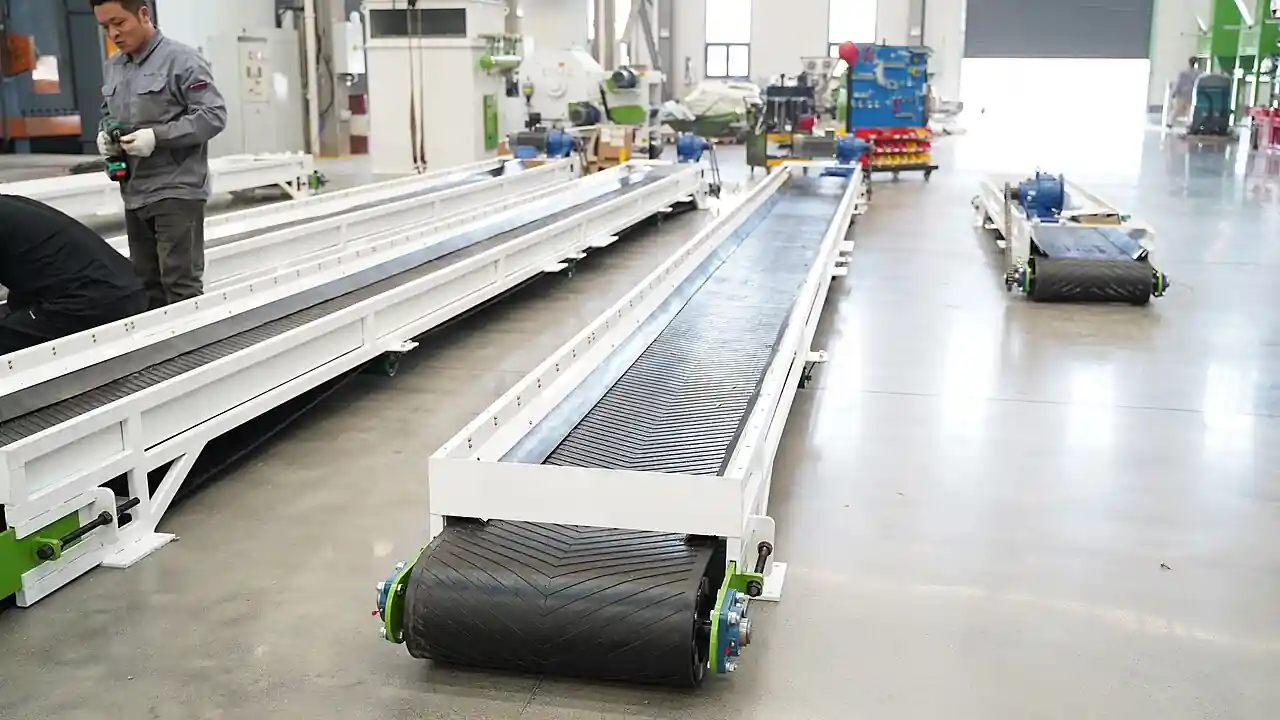
A magnetic separator is the machine that removes or captures magnetic particles from a flowing stream using a magnetic field: a rotating drum with internal magnets lifting magnetite from a slurry, a high-intensity roll or matrix pulling weakly paramagnetic minerals from a dry or wet stream, or an overband magnet suspended above a conveyor belt lifting tramp iron out of crushed rock before it reaches a crusher. Eriez wet drum separators and Metso low-intensity magnetic separators are representative industrial catalogs, and this page treats the complete machine, magnet system, drum or matrix, tank or suspension, and drive, as the purchasing object.
This page is written for the engineer specifying magnetic separators for an iron ore concentrator, a heavy media circuit, an industrial minerals upgrade, or tramp metal protection across a crushing and conveying plant. It works through what the machine does and what is being bought, how field intensity and gradient translate to capture, which machine classes fit which duties, the parameters that appear on vendor data sheets, and the selection factors and RFQ language that decide whether the separator meets its grade and recovery for a drum and liner budget that stays predictable.
The decision concentrates in five places: what is magnetic in the stream and how strongly, the duty, concentrate the valuable mineral or remove the tramp, the stream state, wet slurry or dry solids, the machine class, wet drum, dry drum, roll, or matrix, whose field intensity and gradient match the mineral's susceptibility, and the tank or suspension geometry that presents the particles to the field. Get those right and the drum size, magnet grade, and wear parts follow with little freedom.
Chapter 1 / 06
What a Magnetic Separator Is and What Is Being Decided
The machines this page describes share one principle and differ in geometry. A wet drum separator is a rotating stainless drum housing a fixed magnet arc, turning through a tank of slurry so magnetic particles pin to the drum surface, ride out of the tank, and rinse off as concentrate, while nonmagnetic pulp flows on to tailings. A dry drum presents the same field to a thin stream of dry ore falling or fed onto the drum. A roll or induced roll machine passes dry feed over a high-intensity roll; a high-gradient machine packs a matrix of expanded metal or steel wool into a strong field so that even weakly paramagnetic particles trap on the matrix and flush out in cycles. An overband or crossbelt magnet suspends a field above a belt conveyor and lifts tramp metal clear of the stream.
What is being decided when a magnetic separator is purchased is a grade and recovery guarantee, or in tramp duty a capture guarantee, backed by a wear statement. The buyer is purchasing a stated magnetic concentrate grade at a stated recovery from a stated feed, or the reliable removal of tramp iron of a stated size from a stated belt load, at drum wear rates the vendor should bound for the stated abrasion. Everything on the vendor data sheet, drum diameter, magnet arc position, field intensity, tank style, matrix loading, exists to support those guarantees, and the honest vendor sizes from Davis tube and fractionation tests on the actual ore rather than from an analogy to someone else's deposit.
The magnetic separator sits in the mineral processing family with defined neighbors. It is not a vibrating screen, which sizes particles by geometry, though the two often work in series, screens protecting the separator from oversize, the separator cleaning the screen's product. It is not a cyclone separator, which classifies by density and size in a centrifugal field, though in iron ore circuits cyclones and wet drums share the same flowsheet. It is not the flotation cell, which separates by surface chemistry and works the nonmagnetic iron oxides, hematite and goethite, that a low-intensity drum leaves behind; magnetite circuits run the drum first and may float the residue.
Different buyers buy the same machine for different ores and purposes. An iron ore concentrator buys wet drums in rougher and cleaner duty concentrating magnetite, the classic application, with drums in series and tanks chosen for the stage. A heavy media plant, coal, diamonds, crushed stone, buys wet drums recovering magnetite or ferrosilicon from the drain and rinse dilute streams, where recovery near total is the contract and the media loss is the number. An industrial minerals plant buys high-intensity rolls or high-gradient machines removing iron-bearing contaminants, ilmenite, hematite stains, from silica, feldspar, and ceramics raw materials. A quarry or scrap yard buys overband magnets protecting crushers and cleaning products. The specification language differs, but the susceptibility physics is shared.
The economics deserve their own paragraph because magnetic separation is the cheapest concentration step in most flowsheets. It consumes no reagents, its energy is a drum drive and a magnet that costs nothing to run once bought, and in heavy media duty it is the difference between a media plant that bleeds dollars of magnetite or ferrosilicon per tonne and one that does not. In tramp duty the separator is insurance priced against a single crusher event: one tramp iron episode in a gyratory crusher or a cone crusher pays for the overband several times. Against these stand drum and liner wear in abrasive service and, in high-gradient machines, matrix replacement and flushing water, and a buyer who compares offers on drum price alone has ignored the wear column where the money actually lives.
A short tour of named duties makes the machine concrete. At a taconite concentrator, ground magnetite from the ball mill circuit, classified by cyclones, feeds rows of wet drum roughers, their concentrate re-treated in cleaner drums, the final concentrate thickened in a gravity thickener and dewatered by a filter press, tailings to the pond with process water recovered through a clarifier. At a coal heavy media cyclone plant, drain and rinse screens feed media recovery drums in a closed loop. At a silica sand plant, a dry high-intensity roll pulls ilmenite and staining iron oxides from the dried sand ahead of loading. At a limestone quarry, an overband above the feed belt to the crushers lifts bits of loader teeth and rail iron. Each duty names the same knobs, susceptibility, field, geometry, with numbers that scale while the capture physics barely changes.
Chapter 2 / 06
How Field Intensity and Gradient Do the Work
The capture force is the product of susceptibility, field, and field gradient. A particle in a uniform field feels torque but no net pull; it accelerates toward the magnet only where the field changes over distance, and the force scales with the particle's volume, its magnetic susceptibility, and the product of field intensity and its gradient. Ferromagnetic materials, magnetite, ferrosilicon, tramp steel, have susceptibilities so high that modest drum fields capture them from fast slurries; paramagnetic minerals, hematite, ilmenite, garnet, monazite, need both higher field and the steep gradients a matrix or roll surface provides. This is why the two numbers, gauss and gradient, belong on every data sheet, and why intensity alone is a half truth.
Competing forces set the capture window. In wet drum duty, magnetic attraction must exceed drag as particles sweep the drum, gravity settling, and the turbulence of the tank; particle size matters at both ends, very fine particles lack the magnetic mass to hold against drag, and coarse ones hold but entrain nonmagnetic gangue mechanically. In dry duty, roll speed and feed depth are the corresponding terms, the particle must reach the roll surface within its residence time and the bed must be thin enough that buried particles feel the field. Every operating variable, drum speed, tank flow, matrix loading, roll speed, belt speed, is a handle on one of these balances, and the machine class fixes the range within which the handles move.
The magnet system is the heart and mostly a static one. Modern wet drums carry permanent magnet arcs, strontium or neodymium ferrite assemblies in a fixed position inside the rotating shell, with the arc position, rougher, cleaner, scavenger, chosen for the duty; electromagnetic drums and rolls serve where fields beyond permanent materials are needed or where the field must switch, and induced roll machines generate their field in the roll itself. Magnet stability is a genuine specification item: a drum's field decays only slightly over decades, but temperature, physical shock, and poor storage can degrade an arc, and vendors quote both the nominal surface field and its measurement basis, the height above the shell at which the gauss figure applies, because the two numbers move together in marketing and apart in physics.
Tank geometry turns the field into a machine. Concurrent tanks carry the feed in the direction of drum rotation so magnetic particles ride out with minimal entrainment, favoring higher grade; counter-rotation tanks feed against rotation so particles get two passes near the field, favoring higher recovery at coarser feeds; counter-current, or Stevens, tanks combine features for fine feeds and cleaner duty. Feed box design sets the presentation, the depth of the stream at the drum, and the pulp density is an operating variable with real consequences, too dense and drag defeats capture, too thin and the plant pumps water. In dry machines the same role is played by the feeder, a vibratory feeder or a gravity chute, whose duty is a monolayer presentation of dry, appropriately sized feed.
The separation has honest limits. Susceptibility is a material property, and a separator cannot make a diamagnetic mineral magnetic; the buyer's first question is always what fraction of the target mineral is actually recoverable at what field, answered by Davis tube and fractionation tests. Locking is the second limit, valuable mineral locked inside nonmagnetic particles reports to tailings regardless of field, and only grinding, more ball mill time, liberates it. Moisture is the third in dry machines, damp fines bridge and cake on rolls and feeders. None of these are machine defects, but each changes the flowsheet around the machine, which is why the ore characterization precedes the machine selection in every serious specification.
Circuits use the machine in stages. Rougher drums take the full feed and make a coarse concentrate, scavenger drums retreat the rougher tailings for recovery, cleaner drums re-treat the rougher concentrate for grade, and stage counts trade capital against the grade recovery curve. In heavy media recovery, single-stage drums at high recovery close the media loop. In high-gradient machines, the matrix cycles, energize, feed, rinse, flush, and the cycle timing is set by the matrix loading rate. The vendor's contribution is the stage and tank recommendation matched to testwork, and an RFQ that carries the testwork results receives an engineered answer instead of a catalog guess.
Chapter 3 / 06
Separator Types, Duty Classes, and Machine Boundaries
Wet drum low-intensity separators, LIMS, are the workhorse of magnetite and media duty. Permanent magnet arcs in drums from seven hundred fifty to twelve hundred millimeters diameter, in tanks concurrent, counter-rotation, or counter-current by stage, they run in single drums or stacked multiples, roughing, scavenging, and cleaning with the same hardware in different tanks. Their field class is the low-intensity band, sufficient for ferromagnetic magnetite and ferrosilicon, and their competition is only the sizing and the wear life: a wet drum is bought by diameter, tank, and arc position, and its operating cost is a stainless shell and bearings.
High-intensity and high-gradient machines serve the paramagnetic field. Wet high-intensity separators, WHIMS, and high-gradient magnetic separators, HGMS, pass slurry through a matrix, steel wool, expanded metal, grooved plates, inside a strong electromagnetic or modern permanent field, trapping weakly magnetic particles and flushing them in cycles; they concentrate hematite, ilmenite, and other paramagnetics and clean industrial minerals of iron stains. Dry high-intensity rolls and induced rolls treat dry, finely sized, thin feeds, standard in mineral sands and ceramics raw material purification. The classes trade capacity and cycle complexity against the field-gradient product they can deliver, and the boundary between them is drawn by the ore's susceptibility distribution.
Dry drum separators serve where the stream is already dry: crushed ores, sands, and secondary recovery from old tailings. They present a free-falling or belt-fed stream to a drum field and split magnetic and nonmagnetic fractions by trajectory, with splitters adjusted to the cut. They avoid the water balance and the dewatering train a wet circuit needs, at the price of the moisture sensitivity already named and a finer size discipline. Tramp iron machines are the dry family's protection arm: overband magnets above belt conveyors, magnetic pulleys at belt heads, plate magnets in chutes, and drum magnets in feed lines, capturing bolts, liner bits, and wire before they reach crushers, screens, and process equipment.
Stage and duty names organize the purchase. Rougher duty maximizes recovery on the full feed, scavenger duty polishes the rougher tailings, cleaner duty maximizes concentrate grade on the rougher concentrate, and media recovery duty maximizes media return at minimal media loss. Desliming and sizing upstream, screens or cyclones, protect wet machines from oversize and slimes, and washing, rinse sprays on the drum, upgrades the magnetic fraction mechanically. Within the tramp family, duty is named by position, over the conveyor head, in the chute, on the feeder, and by capture requirement, what size and mass of tramp iron must be caught at what belt loading.
Adjacent machines mark the boundary. A magnetic separator is not a metal detector, though the two team up on the same belt, detection and marking, capture; not an eddy current separator, which repels nonferrous metals with alternating fields and belongs to recycling rather than ore duty; not an electrostatic separator, which separates by conductivity in mineral sands circuits; and not a self cleaning filter, which polishes process liquids mechanically though magnetic rod variants blur into this machine's family. In the plant it stands between the mill and the concentrate: screens and cyclones upstream, the gravity thickener and filter press downstream, the flotation cell working the nonmagnetic fraction, the rotary kiln receiving concentrate for pelletizing. The RFQ should name the stream and the duty, not just the machine.
Chapter 4 / 06
Key Specification Parameters
The vendor data sheet for a magnetic separator centers on field, geometry, and throughput, and each number carries a sizing consequence. The table below lists the parameters that recur across manufacturers' catalogs, with typical ranges for the main classes; values for a specific project come from testwork on the actual feed, and the ranges here are orientation, not a substitute for a Davis tube or pilot run.
Parameter
Typical catalog range
What it decides
Drum diameter
600 to 1,500 mm wet drums
Capacity per drum; capture residence; shell wear life
Surface field, LIMS
1,500 to 5,000 gauss at shell
Capture of ferromagnetic feed at tank flow
Field, WHIMS/HGMS
10,000 to 20,000 gauss in matrix
Paramagnetic capture; cycle and matrix design
Tank style
concurrent, counter-rotation, counter-current
Stage behavior, recovery versus grade
Feed percent solids
15 to 45 percent by mass wet
Presentation density; drag versus capture
Drum speed
1 to 6 m/s peripheral
Carry capacity; entrainment; wear
Matrix cycle, HGMS
30 to 300 s by feed
Capacity; flushing water; yield
Overband suspension depth
50 to 400 mm above belt
Tramp capture size and mass at field
Three of these numbers deserve the buyer's suspicion when they arrive without a basis. Surface gauss quoted without the measurement height flatters the field, a number at the shell face and a number ten millimeters out are different machines to a particle. Tank recommendations quoted without the stage's objective, grade or recovery first, produce banks that work against themselves. HGMS capacity quoted without the cycle basis, feed solids and matrix loading, hides the flushing water and yield the plant will actually live with. An RFQ that asks for the test basis of each figure separates engineered offers from assembled ones.
Materials and construction follow the stream. Wet drums run stainless steel shells in the abrasion class the ore demands, harder duplex or ceramic wear tiles on the shell and tank in silica service, rubber lined tanks where the chemistry argues, and bearings and drives sealed for washdown. Dry rolls carry wear surfaces against abrasive sands; overbands carry sealed bearings and self-cleaning belts with cleats and trackers; electromagnetic machines add coils, rectifiers, and cooling with their duty cycles. Rinse and flush water systems, splitter assemblies, and covers complete the machine, and their presence in the quote is a quick test of whether the vendor has served this duty before.
Chapter 5 / 06
Selection Decision Factors and RFQ Language
Selection starts with the material, not the catalog. Davis tube tests and magnetic fractionation give the recoverable magnetic fraction at each field class, locked-cycle work gives the grade recovery curve, and the choice of class follows the susceptibility distribution: ferromagnetic feed says wet drums, weakly paramagnetic says high-intensity or high-gradient, tramp protection says overband or pulley. The stream state, wet or dry, and its size distribution, screens and cyclones having done their work, set the geometry, and the flowsheet position, rougher, scavenger, cleaner, or media recovery, sets the tank and stage count. A buyer who skips the testwork buys a drum that belongs to someone else's ore.
The duty context chooses within the class. Media recovery drums are bought on recovery and media loss guarantees and tank simplicity; magnetite concentration on stage count and cleaner design; contaminants removal in industrial minerals on field class and matrix choice with product purity the only number; tramp duty on capture of the specified worst-case mass at the specified suspension depth and belt speed. Retrofit slots, a drum in an existing tank, an overband over an existing conveyor with its loading and belt speed fixed, constrain the choice and should be stated in the RFQ with the fixed numbers, because the vendor cannot move the steel that is already there.
The table below organizes the decision into the factors that recur across projects, with the questions the buyer should be able to answer before the RFQ goes out. Each row is a place where an incomplete answer turns into an underspecified machine and a recovery argument later.
Decision factor
What the buyer must state
Consequence if left open
Material characterization
Susceptibility distribution, liberation, Davis tube and test results
Class wrong; guarantee void
Duty
Concentration, media recovery, contaminant removal, or tramp protection
Stage and tank design mismatched
Stream state
Wet percent solids or dry moisture and size distribution
Presentation fails; capture drops
Throughput
Dry tonnes per day or slurry flow per machine
Drum count and size wrong
Stage intent
Rougher, scavenger, cleaner positioning and targets
Bank works against itself
Wear environment
Abrasiveness, chemistry, expected shell and tank life
RFQ language for a magnetic separator should name the material and the basis of guarantee. A workable specification states: feed material and its testwork basis, magnetic fraction and grade recovery data; dry feed rate or slurry flow at stated percent solids and size distribution; duty and stage position with targets, concentrate grade and recovery, media loss, or tramp capture mass; machine class intent, wet drum, dry drum, roll, or matrix, with field class and measurement basis; tank or suspension geometry including any retrofit constraints; wear materials for the stated abrasion with expected shell, tank, and matrix life; rinse and flushing scope; and the acceptance basis, water commissioning and a performance window against the testwork predictions. Naming the neighbors helps the vendor, the screens and cyclones upstream, the gravity thickener and filter press downstream, the flotation cell on the nonmagnetic stream, and any overband protecting the jaw crusher or cone crusher feed, so the interfaces land in the right bids.
Chapter 6 / 06
Installation, Standards, Failure Modes, and Maintenance
Installation is a mechanical job with an alignment core. Wet drums are set in their tanks with the drum level and the magnet arc position verified against the drawing, feed boxes and splitters adjusted to the design flows, and rinse headers balanced; pipework arrives for feed, tailings, concentrate, and rinse water, with a slurry pump on each stream the elevation requires. Overbands are suspended at the specified height above the belt conveyor with the discharge chute set to clear the lifted tramp, and dry machines are aligned to their feeders so the presentation is the design's monolayer. Water commissioning proves drives, arcs, tanks, and safety interlocks before feed enters, and the first days of operation tune drum speeds, splitter positions, and rinse rates to the ore.
Standards for these machines are mechanical and electrical rather than separation specific. Drums, tanks, and suspensions follow the plant's structural and mechanical practice, guarding follows machinery safety rules for rotating drums and nip points, and electromagnetic machines add coil, rectifier, and electrical room practice with their control interlocks. There is no single international magnetic separator standard that governs the machine end to end, so the RFQ must name the applicable electrical, guarding, and structural codes and the vendor's own standards for magnet assembly verification and field measurement. Any edition reference in project documents should be checked against the current issue at purchase rather than copied from an old specification.
The recurring failure modes are wear and presentation. Shell wear in abrasive slurry thins the stainless until magnet exposure or dewatering performance forces renewal, and wear tiles or harder shells are the paid remedy. Bearing and drive faults follow ordinary rotating machinery statistics, announced by vibration long before failure. Presentation failures are the quiet ones: worn feed boxes starve a drum arc, misplaced splitters send middlings the wrong way, spray nozzles plug and the concentrate carries entrained gangue, and in dry machines moisture cakes the roll or feeder until the monolayer fails. Tramp machines add belt wear and tracker drift on self-cleaning overbands. Magnet degradation is rare and almost always a shock or heat event, and field verification at the documented height settles the argument.
Maintenance planning is interval driven around the wear parts. The table below lists the actions with the typical cadence a plant will schedule, assembled from common vendor practice; actual intervals follow the ore's abrasion and the plant's utilization and should be set from the first months of operating data.
Item
Typical action
Typical cadence
Drum shell and wear tiles
Thickness survey, replace at limit
6 to 36 months
Tank, feed box, splitters
Inspect wear, clear hangups, adjust
Monthly
Rinse and flush systems
Clean nozzles, verify pressures and flows
Weekly to monthly
Bearings and drives
Lubricate, vibration survey, alignment
Quarterly
Magnet field verification
Measure gauss at documented height
Annual to biennial
Overband belt and trackers
Inspect cleats, tracking, discharge chute
Monthly
Matrix, HGMS
Inspect for packing and wear, replace per loading
Per cycle data
Long term care keeps the bank honest against the ore's drift. As the mine moves, the magnetic fraction and its liberation shift, and the drum settings that were right at commissioning slowly become wrong; periodic Davis tube checks on plant samples, splitter and rinse tuning, and occasional re-staging recover the grade or recovery that quietly left. Shell upgrades, harder materials and tile systems, extend life in abrasive service, and modern magnet materials allow retrofit arcs with stronger fields in legacy drums. The plant that treats its separators as measured instruments of the flowsheet, not static plant, is the plant whose media loss and concentrate grade are still on specification in year ten.
FAQ
What is the difference between low-intensity and high-intensity magnetic separation?
Low-intensity separators, the wet and dry drum machines, run fields in the low thousands of gauss, sufficient to capture strongly magnetic, ferromagnetic materials such as magnetite, ferrosilicon, and tramp steel from fast moving streams. High-intensity and high-gradient machines run much stronger fields with steep gradients in a roll or matrix and capture weakly paramagnetic minerals such as hematite, ilmenite, and garnet. The feed's susceptibility distribution, established by testwork, chooses the class before any vendor conversation begins.
What tank styles exist for wet drum magnetic separators?
Concurrent tanks carry the feed with the drum rotation so magnetic particles lift out with minimal entrainment, favoring grade; they serve rougher and cleaner duty on finer feeds. Counter-rotation tanks feed against rotation so particles pass the field twice, favoring recovery on coarser feeds and heavy media duty. Counter-current tanks combine a long magnetic path with overflow control, serving fine feeds and scavenging. Stage objectives, grade first or recovery first, select the tank.
How does a magnetic separator recover heavy media?
In dense media plants, magnetite or ferrosilicon suspends the separating density, then rinse and drain dilute streams carry the media away from the products. Wet drum separators capture that media from the dilute streams and return it to the circuit, and their performance is quoted as media recovery, near total, and media loss per tonne treated, the operating cost the plant feels directly. Single-stage drums in media recovery tanks close the loop with minimal complexity.
Can a magnetic separator remove iron contaminants from silica or feldspar?
Yes, and that is a major application of high-intensity machines. Iron staining and iron-bearing minerals in glass sand, feldspar, and ceramics raw materials are paramagnetic, so dry high-intensity rolls or wet high-gradient matrix machines pull them from the product stream, often after attrition scrubbing and desliming. The specification is product purity, parts per million of iron oxide, and the vendor's testwork on the actual sand sets the achievable number.
What is the difference between an overband magnet and a magnetic pulley?
An overband magnet is a self-contained field suspended above a belt conveyor, usually with a self-cleaning belt that carries lifted tramp iron away to a chute, so it protects the machinery downstream while the process belt runs. A magnetic pulley replaces the conveyor's head pulley and pulls tramp around the discharge trajectory into a separate split. Overbands suit continuous protection and heavier tramp; pulleys suit lighter duty and tight retrofits; plants with severe tramp load often run both.
How is magnetic separator wear managed in abrasive service?
The wear parts are the stainless drum shell, the tank and feed boxes, and in high-gradient machines the matrix. Abrasive silica and hard rock service moves shells to harder duplex materials or adds ceramic wear tiles, tanks are rubber or ceramic lined, and survey intervals are set by measured thickness rather than calendar. Vendors should state expected shell and liner life in operating hours or tonnes for the stated ore, and buyers should budget wear on that basis rather than on parts price alone.
What should a magnetic separator RFQ include?
State the feed material and its testwork basis with magnetic fraction data, dry feed rate or slurry flow at stated percent solids and size distribution, duty and stage position with concentrate grade and recovery or media loss or tramp capture targets, machine class intent with field class and measurement basis, tank or suspension geometry with retrofit constraints, wear materials and target life for the stated abrasion, rinse and flush scope, and the acceptance basis against the testwork. Naming upstream screens and cyclones and downstream thickener or filter interfaces lets vendors bid the connections correctly.