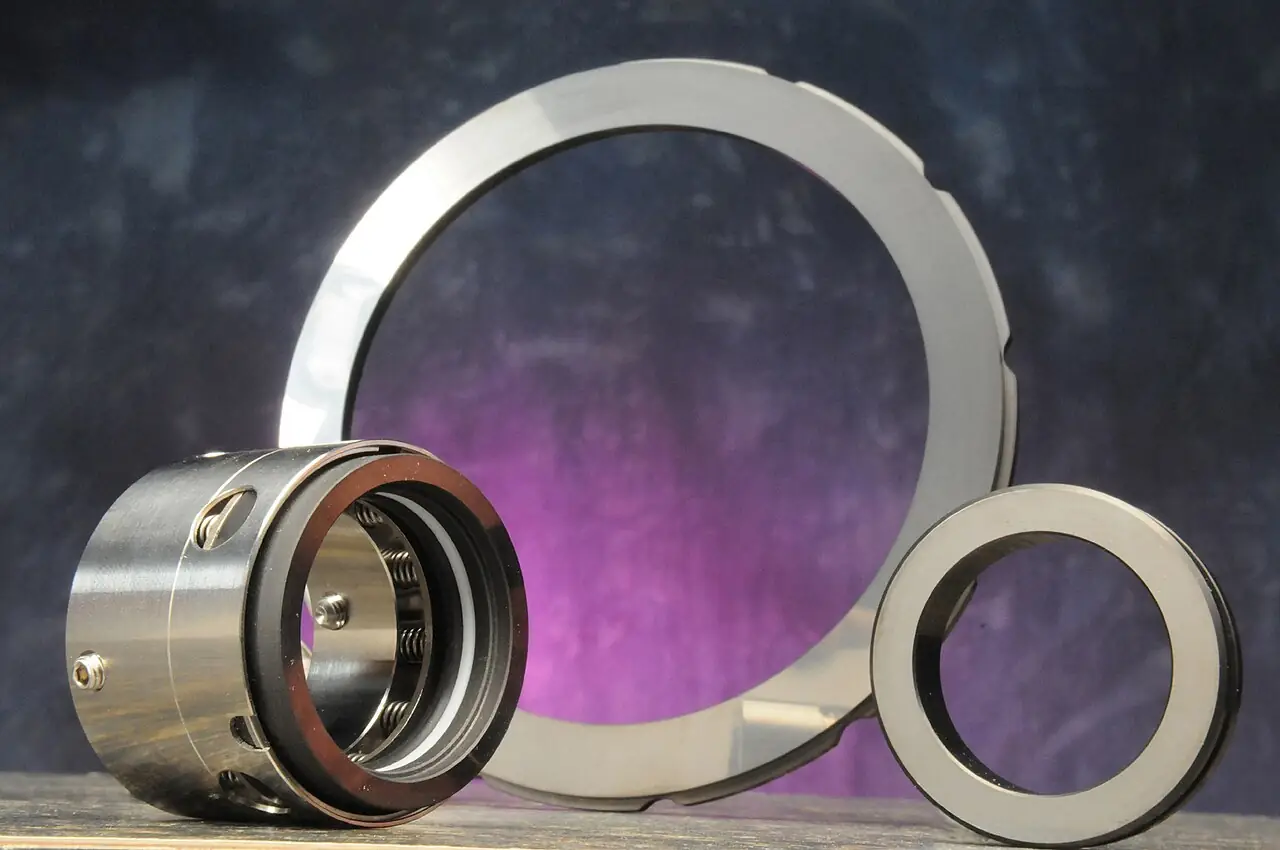
A high-shear mixer drives a multi-blade rotor at high speed inside a close-clearance stator, a perforated ring or screen with a narrow gap; material is accelerated through the gaps where it experiences intense shear and turbulence, breaking droplets, deagglomerating particles, and wetting powders in a single pass or a recirculating batch loop. It is the machine that finishes what a conventional agitator cannot, emulsions tight enough to hold, dispersions fine enough to stay suspended, powders inducted without fisheyes, in minutes instead of hours.
This page treats the high-shear mixer as a purchasing object: how tip speed and stator geometry set droplet and particle size, what batch and in-line formats and powder induction options each buy, how sanitary construction, clean in place, and mechanical seal choices shape the machine, how heat rise and scale-up constrain the duty, and which specification lines decide the offer. It is written for process engineers in chemical, food, cosmetic, and pharmaceutical manufacturing.
Photo: U.S. Department of Energy / Argonne National Laboratory, public domain, via Wikimedia Commons
The decision concentrates in six places: the process result, droplet or particle size target and batch time, the format, batch, in-line, or powder induction, the workhead family and tip speed, the materials and hygiene class, the seal and drive engineering for the duty, and the scale-up path from trial to production.
Chapter 1 / 06
What a High-Shear Mixer Is and What Is Being Decided
The mechanism is mechanical energy concentrated in a tiny volume. The rotor blades accelerate product into the stator gaps at high relative velocity; the fluid experiences extension and shear that deform and rupture droplets and agglomerates, and the intense local turbulence distributes the fragments before they recoalesce. The energy density in the workhead region is orders of magnitude above a tank agitator, which is why five minutes of rotor stator work can replace an hour of impeller mixing, and why the machine's design conversation is all about where that energy goes, into the product result or into heat.
What is being decided is the process result and its economics. An emulsion has a target droplet size distribution that sets stability and appearance; a dispersion has a particle fineness target that sets performance, pigment strength, abrasive action, dissolution rate; a powder wetting duty has a fisheye-free time target. The mixer choice, format, workhead, tip speed, passes or time, delivers that result at a batch rhythm, and the specification that states the result and the rhythm gets machinery sized for both; the specification that states only horsepower gets machinery sized for a catalog.
The family boundary is the rotor stator principle itself. This page is the authority for the high-shear mixer in its batch, in-line, and powder induction forms, the machine class sometimes sold as a high-shear homogenizer. Its neighbors divide the mixing world: the static mixer disperses in-line without moving parts at far lower shear, the agitator turns over tanks at low shear, colloid mills and pressure homogenizers reach finer emulsions at higher capital and energy for pharma-grade results, and the jacketed-reactor page covers the vessel this machine usually works inside. High shear occupies the productive middle: far finer than an agitator, far cheaper than a homogenizer line, and the right tool for the majority of industrial emulsions and dispersions.
Applications cluster by industry. Chemicals: pigment and additive dispersion, emulsion polymerization finishing, catalyst slurries. Food and beverage: sauces, dressings, mayonnaise and stable emulsions, beverage stabilization, reconstituted ingredients. Cosmetics and personal care: creams and lotions, sunscreen dispersion. Pharmaceuticals: pre-mix and dispersion ahead of milling. The common thread is a liquid system whose quality lives in particle or droplet fineness and whose throughput lives in batch time, both of which the rotor stator machine improves simultaneously, and each industry brings its hygiene and documentation regime along with it.
The energy economics reward honesty about the target. Half the power of the machine is often spent chasing the last micron of fineness that the product never needed, and the trial curve, fineness versus time, almost always shows a knee: rapid improvement to a plateau, then slow grinding toward the theoretical limit. Buying the machine and the batch time that reaches the knee, not the limit, is the economical selection, and stating the plateau target in the specification keeps every quotation anchored to the product's actual quality requirement rather than to brochure microscopy.
Scale economics are gentle and modular. Batch machines from 0.5 to 75 kilowatts, in-line units in similar range with pump capability, and the scale-up from pilot to production is well understood in this product class because the workhead geometry scales; the same rotor stator principle at the same tip speed delivers comparable shear at 5 liters and 5,000, with corrections for circulation time. The consequence for buyers is that a serious trial on a small machine predicts the production machine honestly, which is one of the category's quiet advantages over more empirical scale-ups.
Chapter 2 / 06
How Tip Speed, Workheads, and Residence Do the Work
Tip speed is the primary variable. The rotor's peripheral speed, commonly 5 to 40 meters per second by machine and duty, sets the shear and turbulence in the gap, and with it the fineness achievable in a given pass or time; general industrial duty runs mid-range, tight emulsions and demanding dispersions run at the top, and heat sensitive products deliberately run lower with more passes. Variable speed drives, standard on serious machines, let one machine cover multiple products, and the specification should state the speed range rather than a single point, because the product portfolio usually needs the range.
The stator geometry tunes what the energy does. General purpose slotted screens give high flow and circulation for batch work; fine hole and round-hole screens concentrate shear for emulsions; square-hole and disintegrating screens with blades rather than holes handle deagglomeration and solids reduction; and scrapes and special heads serve sticky and textured products. The gap between rotor and stator, tenths of a millimeter to a few millimeters, is a precision manufacturing feature, and the interchangeable workhead system, one drive, many heads, is how one machine serves a multi-product plant, so the workhead set belongs in the RFQ with the machine.
Screen condition is the quiet variable inside every workhead. The stator's holes and slots set the exit geometry of the shear zone, and wear rounds them, enlarges them, and redistributes the flow until the head looks identical and performs measurably worse; plants with fineness-critical products keep a reference screen and gauge, or simply log the measurement at every head changeover against the as built value. A five minute dimensional check at each changeover, recorded, is the entire condition monitoring program this component needs, and it is the difference between a machine that holds its trial numbers for years and one that drifts while everyone argues about the recipe.
Residence and circulation decide the batch math. A batch machine turns over its vessel through the workhead repeatedly; the result follows from passes per unit volume, the circulation rate against batch size, and the shear per pass. An in-line machine processes once through, or recirculates from a vessel, and its result follows from passes through the pipe loop and the shear in the head. The duty states which architecture fits, continuous process wants in-line, batch plant wants in-tank, and the trial that measures droplet size versus passes is the data that both the buyer and the vendor need.
Workhead family
Character
Typical duty
General purpose slotted screen
High flow, high circulation
Batch dispersion, rapid blending
Fine hole emulsor screen
High shear concentration
Tight emulsions, creams
Disintegrating blade head
Cutting and impact
Deagglomeration, fruit and tissue
Powder induction head
Vacuum under the rotor
Fisheye free powder wetting
In-line workhead with stator
Single pass, pumpable
Continuous and recirculating duty
Air entrainment and cavitation are the two operating pathologies that degrade the work. A vortexing batch entrains air that both spoils the product and cushions the shear zone, cavitation bubbles form when suction conditions starve the head and collapse violently against the stator; the defenses are submergence depth, baffles or off-center mounting against vortex, and adequate suction line design on in-line duty. A machine set up correctly runs quieter and colder than the same machine fighting air, and the difference shows directly in the droplet data.
Heat rise is the energy budget made visible. Nearly all the shaft power becomes heat in the product, and a 30 kilowatt machine in a 500 liter batch warms it roughly one degree per minute per rough arithmetic; tight emulsions demanding minutes at full shear on heat sensitive products need jacket cooling on the vessel, and the thermal calculation belongs in the selection alongside the droplet target. The trial measures the temperature curve with the droplet curve together, and the production machine inherits both.
Chapter 3 / 06
Formats: Batch, In-Line, and Powder Induction Machines
Batch machines lower the workhead into the vessel on a stator, tripod, or flange mount, and the machine both shears and circulates the batch directly. They suit multipurpose batch plants, products that move between vessels, and duties where the machine doubles as the agitator for the mixing stage; the vessel needs baffling or off-center mounting at low shear stages to prevent vortexing, and the machine's mounting, lifting columns and vessel changeovers, is part of the plant design. Batch format is the entry point most plants buy first, and its flexibility is genuine: the same drive and head set serves next year's product.
In-line machines put the workhead in a casing with ports, becoming a shear pump in the pipe. Product recirculates from a vessel through the head and back, or passes once in continuous duty; the machine's pumping action eliminates a separate pump in many duties, and the controllable single pass geometry suits fixed recipes and closed, contained, or sanitary processes. In-line format is the choice for continuous plants, for sterile and closed handling, and for large batches where in-tank circulation times become impractical, and its workhead changeover is as fast as a clamp joint.
In-line sizing has one rule that saves projects: size the machine for the recirculation duty, not the transfer duty. The head must deliver enough pumping against the loop's static and friction losses to keep velocity up without cavitating, and the drive must carry the viscosity at startup as well as the shear at speed; a machine chosen on flow rate alone starves at the head the first time the product thickens. Give the vendor the loop sketch, the viscosities at both ends of the batch, and the NPSH available at the suction, and the in-line machine arrives as a working part of the loop rather than an optimistic pump.
Powder induction machines exploit the rotor's own pumping to create a vacuum that draws powders directly into the high shear zone, wetting them instantly, eliminating fisheyes, dusting, and the long hydration times of surface addition. The induction port and venturi arrangement turns the mixer into an integrated powder disperser, and versions built around a jacketed-reactor or process vessel convert whole batch routines, powder in, shear, done, from hours to minutes. For products built on gums, thickeners, and difficult powders, the induction head is the feature that justifies the machine, and it deserves explicit specification rather than hopeful inclusion.
Closed and contained duty is where the format choice becomes an engineering project. Sterile and solvent processes run bottom entry or in-line machines with double seals, sterile connectors, and clean and steam in place on the head itself; containment duty adds the seal barrier monitoring and the validation documentation the industry expects. The mixer then arrives not as a machine on a stator but as a component of a contained processing system, and its specification carries the process containment class alongside the shear duty, because the machine must satisfy both simultaneously.
Bottom entry and hygienic formats complete the family. Bottom entry machines mount the workhead through the vessel base, eliminating the shaft in the headspace for sealed, pressure, or sterile duty; sanitary machines throughout the family carry tri-clamp-fitting connections, polish, and clean-in-place provisions, and the food and pharma variants are engineered around drainage and validation. The format choice interacts with the vessel purchase, a jacketed reactor bought for its own reasons may host any of these formats, and the mixer and vessel specifications belong in the same project file for exactly that reason.
Chapter 4 / 06
Key Specification Parameters
The lines below decide the machine. The process result, droplet or particle size and batch time, is the contract; the format and workhead set follow it; the power and speed range size the drive; the materials and hygiene class set the build; and the seal, sealant, and elastomer choices against the chemistry close the engineering.
The trial data deserves specification status. A serious purchase references a trial on your actual product: droplet or particle size measured by a stated method versus time or passes, temperature rise, and the head and speed that achieved it; vendors run trial labs for exactly this, and the production quotation should attach the trial report as its performance basis. Machines bought on catalog curves inherit the catalog's optimism, and the emulsion that fails stability testing six weeks later fails commercially in six months.
Abrasive products deserve their own engineering paragraph. Pigments, filled polymers, ceramics, and metal powders erode the rotor stator gap the way they erode everything, and the machine's precision is its vulnerability: as the gap widens from tenths toward whole millimeters, shear decays and the product quietly coarsens. Hardfaced rotors, ceramic-coated stators, and deliberately lower tip speeds with more passes extend the interval between gap restorations, and the specification for abrasive duty should ask for the wear part life expectation and the gap measurement method, because that conversation is the difference between a machine and a consumable.
Instrumentation and control lines finish the machine. Speed indication and control from the variable frequency drive, motor load indication, product temperature in the vessel or loop, and the batch or line integration, timers, recipe control through the plant system, turn the mixer from a motor into a unit operation. On multi-product plants, recipe-managed speed and time per product protects the portfolio from the operator who found a faster setting.
Chapter 5 / 06
Selection Decision Factors and RFQ Language
Selection starts with the result, measured. Define the acceptance test, droplet size distribution by laser method, particle fineness by grind gauge or microscopy, stability by centrifuge or shelf protocol, and the time or passes budget to reach it; then run the trial that connects those numbers to a machine, head, and speed. Everything downstream, power, format, cost, follows from that connection, and the plants that skip the trial buy the vendor's optimism at production scale, which is the most expensive version of this machine.
Then match format to plant reality. Batch flexibility against in-line containment and repeatability against powder induction speed, and the plant's existing vessels, jacketed reactors, and piping decide which fits; the multi-product plant usually starts batch or in-line recirculating, the continuous plant goes in-line once through, and the powder-heavy product buys the induction head regardless. The viscosity profile across the portfolio matters as much as any single product, since the machine must circulate the thickest product at start and shear the most demanding one at finish.
Then buy the engineering under the head. The mechanical seal on a high speed shaft is the machine's precision component, its plan, flush or dry running, double arrangement for solvents and containment, decides the maintenance story; the bearings and the runout tolerance of the rotor stator gap decide the machine's life at gap-critical duties; and the variable frequency drive and its control quality decide whether multi-product speed recipes are real or folklore. These three items, seal, gap precision, and drive, separate the machine classes within identical-looking brochures.
Trial logistics are easier than most plants expect. The established vendors run trial laboratories as a core sales function: send a few kilograms of each key formulation, attend the run or receive the video and the data, and the report comes back with head, speed, time, temperature, and measured fineness, usually inside two weeks. The cost is trivial against the purchase, and the report becomes the performance basis of the quotation; the only genuine risk is sending an unrepresentative sample, so send the real product with its real solids and its real viscosity range, not the convenient drum from the corner of the warehouse.
State the process: product family, phases, target droplet or particle size with measurement method, and the time or passes budget per batch.
State volumes or flows: batch size range and cycle time, or continuous flow rate, with the viscosity range across the portfolio.
State the format preference or require a justified recommendation against the plant architecture, vessels, piping, containment.
State the workhead set expected and the interchange method, clamp or flange, with the machine.
State materials and hygiene class: wetted materials, surface finish, clean in place and sterilize in place requirements, and connection standards.
State the chemistry for seal and elastomer selection, solvents, pH extremes, and any containment or sterile requirement on the shaft seal.
State power and speed range with variable frequency drive, and the control integration expected, recipe management, motor and temperature signals.
Require the trial: witnessed run on actual product, droplet or particle data versus time, temperature rise, and the production quotation referencing the trial as performance basis.
The multi-product plant should buy the system, not the machine. One drive with a workhead set, a lifting arrangement or a quick-change in-line spool, recipe-managed speed and time, and the sight-glass and sampling provisions to verify each product's endpoint, together these turn a single machine into the plant's finishing station for the whole portfolio. The vendors who serve this market sell exactly this architecture, and the plants that buy it as a system change products in minutes while the plants that bought a motor with a head change them in arguments.
Two neighbor comparisons belong in the record without turning this into a comparison page. Against the static mixer, high shear buys orders of magnitude finer results at the cost of power and machinery; the static mixer is the choice for blending miscible fluids and gentle in-line duties, and the two coexist on the same skid more often than they compete. Against the colloid mill and pressure homogenizer, high shear buys adequate fineness at a fraction of the capital and energy; when pharma-grade sub-micron emulsions are the actual target, those machines own the duty, and knowing which target you truly have is the entire selection.
Chapter 6 / 06
Installation, Standards, Failure Modes, and Maintenance
Installation is rotating machinery plus hygiene engineering. Batch machines mount on lifts or flanges with the workhead position in the vessel deliberate, off-center or baffled to prevent vortex, deep enough to entrain without cavitating; in-line machines join the piping with their ports oriented for drainage and their straights respected on the suction side; bottom entry machines integrate with the vessel nozzle and its support structure. Commissioning verifies rotation, gap clearance as built, seal flush operation, and then runs water or first product through the recipe while the trial numbers are reproduced, the acceptance moment for the whole purchase.
Standards and documentation by industry: food and pharma machines arrive with material certificates, surface finish documentation, clean in place protocols, and validation support packages; chemical duty machines arrive with the seal plan documentation and the area classification compliance where flammables are present. The machinery safety conformity, guards on the drive, lockout provisions for workhead changeover, applies across the family, and the workhead changeover procedure deserves the same safety discipline as the machine itself, a head swapped with the drive live is the industry's classic avoidable injury.
Failure modes concentrate in four places. Seal wear leaks at the shaft and is accelerated by dry running and abrasive products; the defenses are the correct seal plan, flush discipline, and abrasive duty running lower speeds with harder faces. Rotor stator gap erosion on abrasive dispersions slowly coarsens the shear zone; the defenses are hardfaced or ceramic-coated components on abrasive duty and scheduled gap measurement. Bearing degradation announces itself by vibration and is a scheduled replacement item; and workhead damage from tramp metal, a bolt in the batch, is prevented by upstream magnets and screens. The machine is precision equipment operated in a dirty world, and its maintenance schedule respects both halves of that sentence.
Symptom
Likely cause
First response
Emulsion coarsening over months
Gap erosion or speed drift
Measure gap, verify drive calibration
Leak at shaft
Mechanical seal wear or dry run
Service seal, verify flush plan
Motor load rising
Viscosity up or head partly blocked
Inspect head, check product rheology
Powder induction weak
Worn venturi or port blockage
Inspect induction head, verify rotor speed
Vibration increasing
Bearing wear or unbalanced head
Trend vibration, schedule head service
Operator discipline is the multiplier on everything above. The head changeover drill with lockout, the submergence and vortex habits, the recipe adherence on speed and time, and the habit of reading motor load as product feedback are all trainable, and the trial that anchored the purchase should anchor the training too; the recipe card that says 18 minutes at 2,400 rpm is the trial result operationalized. Plants that keep the trial report beside the machine and retrain on it annually get production that matches the trial, which is the quiet definition of a successful purchase in this category.
Maintenance is precision care on a schedule. Daily: seal flush check and leak inspection; per batch on hygiene duty: clean in place verification; monthly: workhead inspection for gap and damage, fastener torque on head changeovers; annually: bearings, seal replacement on condition or interval, drive alignment and calibration. Keep spare workheads or at least screens and rotors for the critical products, a full seal cartridge kit, and the gap specification from commissioning; the as built gap is the reference that every future coarsening investigation reads against, and the plants that keep that number diagnose in minutes what others diagnose in arguments, which on a Friday afternoon before a shipment is worth more than the whole maintenance manual.
The mixer's plant context finishes the specification. A flow meter and level transmitter close the batch loop on in-line duty, a temperature controller holds the thermal schedule the shear generates, and a centrifugal pump feeds the head from the vessel or the feed tank on the suction side. Each neighbor page links from here because the mixing plant is bought as one engineering conversation, and the plants that read them together commission lines whose first batch meets the trial numbers.
FAQ
What is the difference between a high-shear mixer and a normal agitator?
An agitator turns over a tank at low shear, blending and suspending; a high-shear mixer forces product through a rotor stator gap where intense shear breaks droplets and agglomerates. The high-shear machine delivers fineness the agitator cannot, in minutes, and the two often work together, agitation for turnover, high shear for the result. For droplet and particle fineness targets, the agitator is the wrong tool.
Batch or in-line high-shear mixer: which should I buy?
Batch format suits multipurpose plants, vessel flexibility, and duties where the machine also mixes; in-line format suits continuous processes, contained and sanitary duty, and repeatable single pass or recirculating recipes. If your plant runs many products through shared vessels, start batch or in-line recirculating; if it runs continuous or closed processes, go in-line.
What tip speed do I need for my emulsion?
Tight emulsions typically need the upper range of the machine, roughly 20 to 40 meters per second tip speed, with fine-hole emulsor screens and sufficient passes; general dispersion runs mid-range. The honest answer comes from a trial measuring droplet size versus time and speed on your actual formulation, and the production quotation should reference that trial.
Can a high-shear mixer induct powders without fisheyes?
Yes, powder induction workheads use the rotor's own pumping to draw powder under vacuum directly into the shear zone, wetting it instantly. This eliminates fisheyes, dusting, and long hydration, and turns gum and thickener batches from hours into minutes; specify the induction head explicitly if this duty is yours.
How hot will my product get during high-shear processing?
Nearly all shaft power becomes heat: rough arithmetic, a 30 kilowatt machine in a 500 liter batch warms it about one degree Celsius per minute. Heat sensitive products need jacket cooling on the vessel or shorter passes; the trial records the temperature curve with the droplet curve so the production machine inherits both.
What seal do I need on a high-shear mixer?
Standard duties run single mechanical seals with flush; solvents, sterile, or contained duties run double seals with the appropriate flush plan; abrasive products need hard faces and flush discipline. State the full chemistry in the RFQ, because the seal is the machine's precision component and its selection against your fluids decides the maintenance story.
How does scale-up from lab to production work?
The rotor stator principle scales at constant tip speed and geometry: the same head design at the same speed delivers comparable shear at pilot and production scale, with circulation time and passes corrected for volume. A serious trial on a small machine predicts the production result well, which is why this product class scales more honestly than most; insist the production quotation reference the trial data.