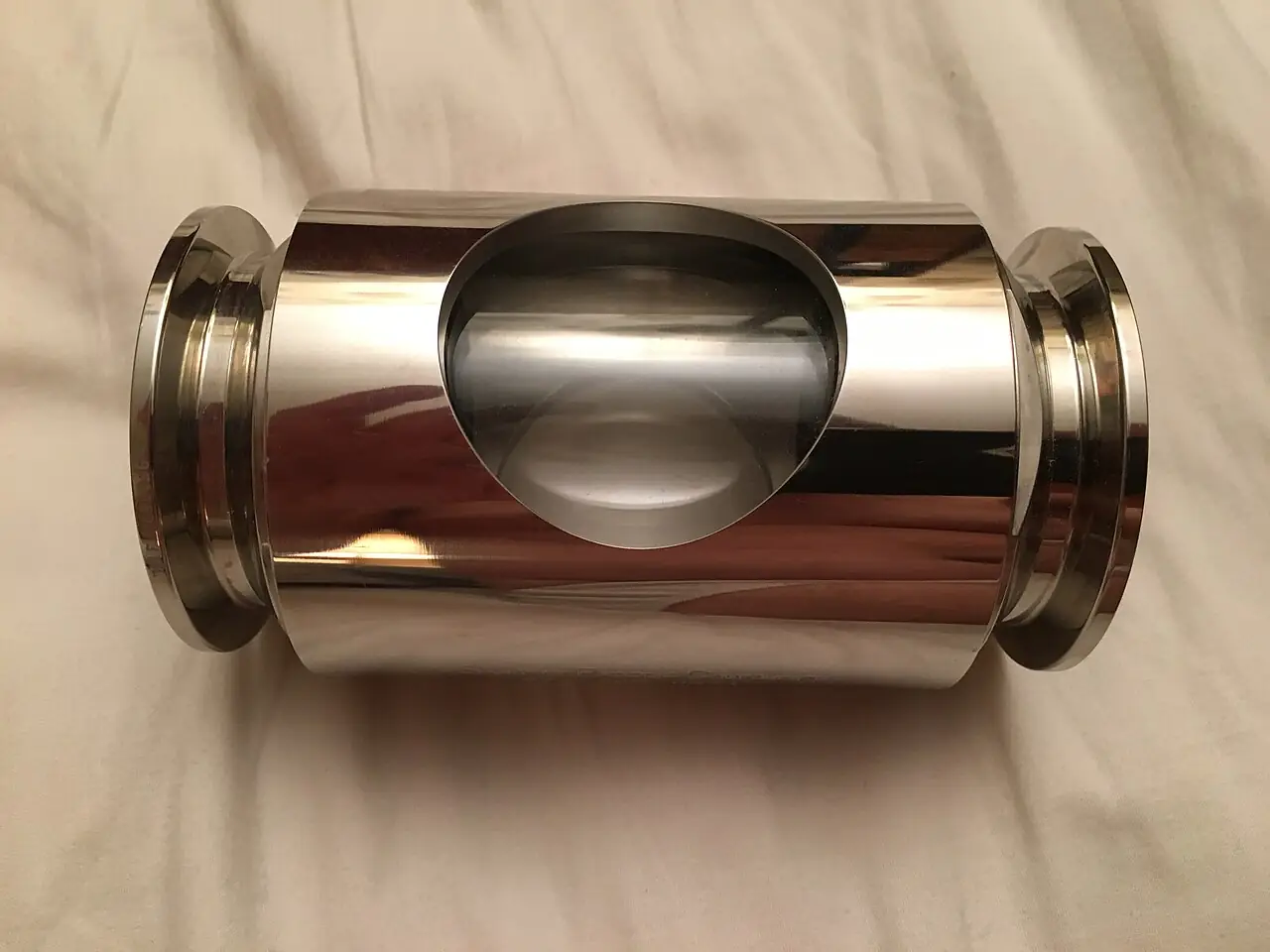
A jacketed reactor is an agitated process vessel whose outer wall carries a heat transfer jacket: a second skin, or coils welded to the skin, through which steam, hot oil, cooling water, or glycol flows to add or remove heat from the batch inside. The vessel is the reaction vessel and the heat exchanger at once, and the jacket style, conventional, half-pipe, or dimple, sets how much heat duty the geometry can move and at what pressure and cost. It is the central piece of equipment of batch chemical, pharmaceutical, and specialty process plants.
This page treats the jacketed reactor as a purchasing object: how jacket style and heat transfer coefficients size the duty, how agitation, baffles, and geometry drive both reaction and heat transfer, what glass-lined and stainless or alloy construction each buy, how DIN and ASME design codes shape the offer, and which specification lines, working volume, chemistry, jacket service, relief philosophy, decide the machine. It is written for process and project engineers buying reaction vessels.
The decision concentrates in six places: the working volume and the chemistry that sets materials, the heat duty the jacket must move with its service fluid, the agitation the reaction demands, the vessel code and pressure rating, the jacket style that reconciles duty with pressure and cost, and the relief and nozzles that make the vessel safe and operable.
Chapter 1 / 06
What a Jacketed Reactor Is and What Is Being Decided
The vessel has two jobs that fight each other politely. As a reactor, it must hold the chemistry: corrosive or clean, vacuum or pressure, with agitation that suspends solids, disperses phases, and mixes additions fast enough to prevent local hot spots. As a heat exchanger, its wall must move heat between the batch and the jacket fluid, and the same agitation that serves the reaction also scrubs the wall with fresh batch material, making the inside film coefficient the controllable half of the transfer pair. The buyer is purchasing a compromise optimized for one specific process, and every line of the specification is a lever on that compromise.
What is being decided first is scale honesty. Working volume, the volume the batch actually occupies, not the total volume, sets the heat load through the reaction enthalpy and the ramp rates the process requires; total volume runs typically 1.3 to 1.6 times working to leave headspace for foaming, additions, and pressure. The classic purchase error is sizing the vessel for the recipe and the jacket for the average duty, then discovering that the required heat-up ramp in the coldest week, or the exotherm at the fastest addition rate, exceeds what the jacket can move. The specification must state the ramp rates and the maximum exotherm, not just the volume.
The family boundary is product, not chemistry: this page is the authority for the jacketed agitated vessel itself, the equipment, in its batch and continuous stirred tank forms. The chemistry around it lives on its own pages, the corrosion protections of an industrial coating belong to coating technology, the heating elements of an immersion heater belong to electric heating, and the static mixer belongs to in-line mixing. The reactor's closest equipment neighbors are the heat supply, steam or hot oil systems, the vacuum pump, the charging and discharge equipment, and the instrumentation that watches the batch, and a well specified reactor names those interfaces explicitly.
Codes shape the purchase from the first drawing. Design pressure and temperature on both the inner vessel and the jacket, full vacuum or positive, external pressure or internal, drive the wall thickness calculations under ASME Section VIII or the European pressure equipment framework, and DIN-standard vessels from European manufacturers arrive with their own geometry series, nominal volumes, and nozzle standards that differ in detail from ASME practice. Neither is better; they are catalogs, and the buyer should decide early which catalog the plant's inspection regime, spare gaskets, and neighboring equipment speak, because mixing them quietly raises every fitting and instrument order for twenty years.
Project timing shapes the buy as much as thermodynamics. A jacketed reactor is a code vessel with lining or alloy content and an agitator integration; lead times run from a few months for catalog glass-lined units to three quarters of a year for large alloy vessels with exotic materials, and the documentation package travels slower than the steel if the vendor's quality department is thin. Buyers planning a plant around this equipment should fix the vessel order date first and build the project schedule backward from it, because the reactor arriving late stops everything downstream, while most other items can be expedited or substituted.
Scale runs from 5 liter laboratory vessels through 50,000 liter production reactors, with agitation from a fraction of a kilowatt to hundreds. The design content shifts across that range: small vessels are catalog items where geometry and jacket style come fixed; large vessels are engineered projects where the jacket style, agitation system, and nozzle layout are designed for the process. Between them sits the bulk of the market, 500 to 10,000 liters, where catalog geometry and engineered options meet, and where the specification lines in this page earn their keep.
Chapter 2 / 06
How Jacket Style, Heat Transfer, and Agitation Do the Work
The conventional jacket is a plain outer shell spaced 25 to 100 millimeters from the vessel wall, sealed at top and bottom, with a spiral baffle or nozzle arrangement that pushes service fluid around and down the annulus. It is the cheapest jacket to fabricate and the least efficient per liter of service fluid: the annulus runs low velocity, the film coefficients are modest, and the outer shell must carry the full service pressure as a pressure vessel component, which limits steam pressure and makes pressure service expensive. It serves steam and water duty at moderate pressures, and its great virtue is that the vessel wall remains a smooth, glassable, inspectable surface.
The half-pipe jacket welds a channel of pipe, split and formed, in a spiral onto the vessel wall. The channel carries high service pressure cheaply, routinely 10 to 20 bar and beyond, because the pipe wall does the containing, and the flow velocity in the channel gives strong film coefficients; the penalty is cost, many meters of welding, and that the outer surface is no longer suitable for glass lining, so half-pipe belongs to stainless and alloy vessels. Hot oil systems and high pressure steam plants choose half-pipe for exactly the pressure and temperature reach, and cryogenic or high delta-T service benefits from the channel's ability to accept thermal stress without the plain jacket's bulging.
The dimple jacket welds thin dimpled sheet to the vessel wall, creating thousands of small pockets that stiffen the sheet so a thin outer skin carries significant pressure; it sits between conventional and half-pipe in cost and performance, serves steam and water and moderate oil duty well, and adds less mass than half-pipe. Its limits are the weld population, every dimple is a weld, which sets a fatigue and inspection story of its own, and a pressure ceiling below half-pipe. For glass-lined vessels, a conventional jacket with its smooth inner surface remains the standard pairing, and the heat duty shortfall is met with higher service temperature difference or internal surfaces.
Jacket style
Service pressure character
Heat transfer character
Best suited
Conventional annular
Low, vessel-code shell
Moderate, baffled flow
Steam and water, glass-lined vessels
Half-pipe channel
High, pipe wall
Good, high velocity
Hot oil, high pressure steam
Dimple sheet
Moderate, dimple stiffened
Good
Water and steam, mass sensitive
The overall heat transfer coefficient is the arithmetic of two films and a wall, and the buyer controls one film. Inside, the batch film coefficient rises with agitator power and tip speed: a vigorous impeller sweeping the wall can double or triple the inside coefficient against a lazy one, and viscosity sets how much vigor costs in motor power. Outside, the jacket film depends on style and service velocity. The wall adds its own resistance, glass linings adding a real penalty, roughly 1 to 2 millimeters of glass acts like 5 to 10 millimeters of steel thermally, which is why large glass-lined reactors sometimes need internal coil surfaces to hit their duty. Ask for the coefficient breakdown per offer, inside film, wall, outside film, and you can see which side limits your vessel.
Agitation is a parallel specification with its own physics. Impeller type, axial or radial, hydrofoil or turbine or anchor, turns over the batch, suspends solids, disperses gas or second phase, and feeds the wall film; baffles convert rotation into turnover and are required above modest viscosity on center-mounted agitators. The process states what it needs, turnover times, suspension criteria, drop sizes, and the agitator vendor sizes the impeller, speed, and power. The reactor purchase must carry the agitation duty because nozzle layout, baffles, and the mechanical design of the agitator mount are part of the vessel, and an agitation specification bolted on after the vessel is ordered always costs schedule.
Chapter 3 / 06
Construction: Glass-Lined, Stainless, and Alloy Vessels
Glass-lined steel is the pharmaceutical and fine chemical standard for good reasons. A layer of borosilicate-type glass fused to the steel substrate gives broad corrosion resistance across acids and halides that pit stainless, an utterly clean surface that cleans in place and validates, and visibility of the batch through sight glasses that share the lining. The penalties are the thermal resistance noted above, fragility to mechanical shock and rapid thermal transients, and repair logistics, damaged lining needs repair plugs, reglassing, or acceptance. Glass-lined vessels arrive with conventional jackets in standard DIN geometries, and the market for them, documented in the sources below, is a mature catalog world from 63 to 40,000 liters and beyond.
Stainless steel, 304 and especially 316L, is the default where the chemistry allows: strong, thermally efficient, weldable, available from dozens of fabricators in ASME or DIN form, and compatible with half-pipe and dimple jackets for aggressive service duties. Its weakness is chemistry specific, chlorides above thresholds pit and stress crack it, strong acids and bases attack it, and the answer then moves to alloys. Nickel alloys, the Hastelloy and comparable families, buy the aggressive acid and halide services at multiples of stainless cost, and duplex and super duplex cover chloride duty in between; titanium owns wet chlorine chemistry alone. The RFQ should state the full chemistry, concentrations and temperatures, and let the materials recommendation come back with the metallurgy reasoning attached, not as a price line.
Delivery quality assurance is part of the purchase. Witness points worth specifying: material verification at receipt, welding and nondestructive examination per the code applied, glass lining thickness and spark test with the report attached, pressure and vacuum testing of vessel and jacket separately, and a final dimensional and nozzle orientation check against the approved drawing. Each witness point is a paragraph in the contract and a day of someone's calendar, and each one prevents a class of commissioning surprise that costs weeks; the vessel that arrives with complete paper starts up on schedule, and the one that arrives with promises starts up in meetings.
The choice interacts with everything else on the page. Glass-lined pushes the jacket to conventional style, adds wall resistance, and pushes vessel geometry to the DIN catalog; alloy construction opens half-pipe jackets, internal coils, and custom nozzle layouts, and changes the gasket and fitting universe of the plant around it. Cleanability and validation push glass or electropolished stainless; abrasion from suspended catalyst pushes away from glass toward alloy or hard coatings. This is why the specification states the process first, including the chemistry's future plans, and lets construction follow it.
Chapter 4 / 06
Key Specification Parameters
The lines below decide the vessel. Volume split, working and total, with the fill range the agitation must tolerate, anchors the geometry. Design conditions on both the vessel and the jacket, pressure, full or partial vacuum, temperature, drive the code calculations. The heat duty statement, ramp rates both directions, maximum exotherm, and the service fluids available at their temperatures, drives the jacket sizing. The chemistry drives materials, gaskets, and glass lining. Relief and nozzles close the safety and operability of the machine.
The heat duty statement deserves numbers, not adjectives. A heat-up ramp of so many degrees per minute at working volume, a cool-down ramp, and a maximum exotherm removal at the worst-case addition rate, all with the service fluid at its supply temperature, let the vendor compute required area and service flow and quote against physics. Specifications that say adequate heating and cooling receive whatever jacket the catalog had, and the commissioning argument that follows has no numbers to stand on. The same paragraph should state the service regime, steam and cooling water, single oil system, or changeover, because switchovers during a batch complicate the valve and control scope.
Instrumentation and control interfaces deserve specification lines because the reactor is the process's stage. A temperature transmitter in a thermowell deep in the batch, a pressure transmitter on the headspace, jacket supply and return temperature measurement for the duty calculation, and level or weight indication for charging all live on nozzles bought with the vessel. The control narrative, ramp control on service valves, interlocks on addition and agitation, and the emergency actions, decides which valves and signals belong in the vessel package; writing it down at purchase keeps the reactor, skid, and control system vendors from each assuming another owns the batch temperature.
Relief and nozzles are where safety and operability live. The relief sizing scenarios, external fire, runaway reaction, blocked outlet, and the chosen devices, rupture disk, safety relief valve, or both in series for corrosive service, belong in the vessel package with the process data behind them. The nozzle schedule is the vessel's future: manway, sight glasses, additions, dip tube, temperature and pressure instrumentation, sampling, charging, and the bottom outlet valve type all live on it, and spare nozzles with blank flanges are the cheapest future-proofing in the whole purchase. Plants outgrow reactors through the nozzles they did not buy.
Chapter 5 / 06
Selection Decision Factors and RFQ Language
Selection starts with the process, stated in full: chemistry and concentrations at temperature extremes, phases and solids, the reaction's heat behavior, the cycle times and turnaround expectations, and the cleaning regime between products. From that, three decisions follow in order: materials of construction, glass-lined or alloy, because it constrains geometry and jacket style; the jacket style and service fluid, because it must meet the duty statement; and the agitation system, because it serves both the reaction and the inside film. Vendors who engage with that order are quoting a vessel for the process; vendors who start with a price list are quoting a tank.
The second decision axis is the plant context. Steam plant pressure and temperature set what a conventional jacket can do; a hot oil loop at 280 degrees C changes the economics toward half-pipe and adds a heat transfer fluid system to the project; cooling water temperature in the warmest week sets the exotherm ceiling, and chilled glycol extends it at the cost of a service system. The reactor cannot be selected honestly without the service systems' real numbers, and the RFQ should carry them, supply temperatures and pressures at the reactor manifold, both summer and winter.
The third axis is the future. Multi-product vessels want spare nozzles, a conservative corrosion allowance, and agitation with variable speed range; single-dedicated vessels optimize everything to one duty and save capital. Changeover time between batches argues for clean in place provisions, bottom outlet valve choice, and surface finish; twenty-year plants argue for lining repair strategy or alloy redundancy. Ten percent of purchase price spent on the nozzle schedule and the agitation turndown is the cheapest capacity the plant will ever buy.
State the process: chemistry with concentrations and temperatures, phases and solids loading, reaction heat behavior, cycle times, and cleaning regime.
State volumes: working, total, and the fill range over which agitation must perform, with headspace reasons if foaming or additions demand it.
State the heat duty as numbers: heat-up and cool-down ramps at working volume, maximum exotherm removal rate, and the service fluids with supply temperature and pressure, summer and winter.
State design conditions for vessel and jacket separately: pressure, vacuum, temperature, and the design code, ASME VIII or the European framework, with the plant's preference stated.
State the agitation duty: turnover, suspension, or dispersion targets, viscosity range, and the speed range and drive type expected.
State materials expectations, glass-lined or specific alloys, and require the metallurgy recommendation with reasoning against the stated chemistry.
State relief philosophy: sizing scenarios, device types, and whether the rupture disk or valve is in the vessel package scope.
State the nozzle schedule including spares, the instrumentation scope, bottom outlet valve type, and delivery expectations for gaskets and spares.
The second-hand market deserves a paragraph because it is large and legitimate. Glass-lined reactors in particular change hands for decades, and a relined or well kept used vessel can serve a new duty at a fraction of new cost. The discipline is the paper: the original code documents, the lining thickness and spark test history, the design conditions against your service, and a reglassing quote as the fallback. A used vessel without its history is a pressure vessel of unknown parentage, and most inspection regimes will treat it accordingly; with its history, it is simply an older machine that already proved it can hold a batch.
Two neighbor considerations belong in the record without making this a comparison page. Against an external loop heat exchanger with a pump, the jacket wins on simplicity and containment, the loop wins when the duty exceeds any reasonable jacket area, and large exothermic reactors often carry both, jacket for trim and loop for the peak. Against dedicated heating equipment, an immersion heater or a fired system serves fluids not vessels, and belongs to the service systems conversation that the specification above already includes.
Chapter 6 / 06
Installation, Standards, Failure Modes, and Maintenance
Installation is vessel and agitator engineering together. The vessel arrives with legs, lugs, or a skirt matched to the structure; the agitator, whether flange mounted on the vessel or a separate beam mounted unit with a stuffing box or mechanical seal, needs alignment and its own support logic on larger machines. Jacket service piping needs the thermal expansion and changeover arrangement designed, and the bottom outlet valve, usually a specialty valve chosen for the product, deserves the same installation care as the vessel nozzles above it. Glass-lined vessels add their own handling rules, no direct impacts, torque sequences on glassed flanges, and a spark test on receipt, and those rules travel with the crew, not just the manual.
The documentation package at delivery should include the vessel code certificate and calculations summary, the jacket pressure test records, material certificates for wetted parts, the glass lining thickness and spark test reports where applicable, the agitator documentation and performance curve, the gasket schedule, and the relief device calculations. For plants under validation regimes, surface finish and cleanability documentation matters as much as the steel. Local registration of the pressure vessel follows local law, and the package assembled at purchase is what those inspections run on for the vessel's life.
Failure modes concentrate in four places. Glass lining damage, from mechanical impact, thermal shock, or slow chemistry at a pinhole, announces itself as product contamination or corrosion of the steel substrate; the defenses are handling discipline, thermal ramp limits in the control system, and periodic spark testing with repair plugs on the shelf. Jacket fouling, scale in cooling water service or carbon deposits in overheated oil, quietly steals duty until the ramps miss; the defenses are service water treatment and a periodic flush. Agitator seal wear leaks vapor or product at the shaft; the mechanical seal, its flush plan, and its condition monitoring are a small system with large consequences. Gasket and nozzle leaks at glassed flanges come from torque practice; the defense is the torque table and the trained wrench, both cheap.
Symptom
Likely cause
First response
Ramp rates slowing over months
Jacket fouling or service degradation
Flush jacket, check service supply temperature
Product discoloration or iron pickup
Glass lining pinhole or gasket attack
Spark test, inspect gaskets, plan repair plug
Vapor leak at agitator shaft
Mechanical seal face wear
Service or replace seal, review flush plan
Jacket pressure instability
Trapped gas or baffle bypass in annulus
Vent jacket high points, verify baffle welds
Agitator vibration at speed
Bent shaft, fouled impeller, resonance
Inspect impeller, check natural frequency
Spares strategy closes the purchase. The parts that stop a reactor are rarely the vessel and almost always its interfaces: agitator seal cartridge, bottom outlet valve rebuild kit, the gasket set matched to the nozzle schedule, a spare rupture disk of the correct burst rating, and for glass-lined vessels a small stock of repair plugs and the tools to install them under product. Price these with the vessel, because buying them later means buying them urgently, and the urgent version of a seal cartridge ships at multiples and arrives at the worst point in the production calendar.
Maintenance is scheduled by the vessel's four systems. The jacket: water treatment monitoring and periodic flushing, oil analysis on thermal fluid loops. The lining: spark test at annual turnarounds, repair plugs for small damage, reglassing economics when the tally grows. The agitation: seal plan service, gearbox oil, vibration trend on the drive. The relief and nozzles: relief device testing on the code interval, gasket inventory matched to the schedule, and the torque table posted where the crew can see it. A reactor maintained on those four rhythms runs decades; the plants that skip the spark test and the oil analysis are the ones that buy reglassing on an emergency schedule at premium freight.
The vessel's service scope connects to the wider plant through pages of their own. A shell and tube heat exchanger serves the hot oil loop that heats many reactors, a plate heat exchanger handles the water side, and the ph meter and orp meter track batch chemistry through the nozzles specified earlier. Chemical additions arrive by metering pump through the dip tube, and the dispersion stages inside run a high shear mixer where the chemistry demands it. Each of those purchases shares interfaces with this vessel, and the links above connect their specification pages to this one.
FAQ
Conventional, half-pipe, or dimple jacket: which do I need?
Conventional jackets suit steam and water at moderate pressures and are the standard on glass-lined vessels. Half-pipe carries high pressure service fluid, hot oil at 10 to 20 bar or high pressure steam, with good heat transfer, on stainless and alloy vessels. Dimple sits between them in cost and pressure, good for water and moderate steam. Choose by service fluid pressure first, heat duty second, and vessel material third.
Why does my glass-lined reactor heat slower than the old stainless one?
The glass lining adds real thermal resistance, roughly equivalent to five to ten times its thickness in steel, so the overall coefficient drops against a bare stainless wall. Options are a larger temperature difference in the service, internal coil surfaces on large vessels, or accepting slower ramps. The coefficient breakdown in the offer datasheet shows exactly how much the lining costs your duty.
How do I size the heat duty for the RFQ?
State three numbers at working volume: heat-up ramp in degrees per minute to process temperature, cool-down ramp, and maximum exotherm removal at the fastest addition rate, each with the service fluid at its actual supply temperature. Vendors compute required jacket area and service flow from exactly these numbers, and a specification without them receives a catalog jacket.
DIN or ASME vessel geometry: does it matter?
Both are competent code frameworks, but they differ in volume series, flange standards, and gasket universes, and your plant's inspection regime and spare fittings will speak one of them natively. Mixing standards quietly complicates every instrument, gasket, and fitting order for decades, so pick the catalog your plant and its neighbors already use and say so in the RFQ.
What agitation goes with a jacketed reactor?
Match the impeller to the job: hydrofoils for turnover and heat transfer at moderate viscosity, radial turbines for gas dispersion and reaction mixing, anchors and helices for high viscosity, and baffles to convert swirl into turnover. Specify speed range with a variable frequency drive for multi-product duty, because one fixed speed serves only one product well.
How is a jacketed reactor protected against runaway?
Relief sizing covers the fire case, blocked outlets, and credible runaway scenarios, usually with a rupture disk, a safety relief valve, or both in series for corrosive service, and the sizing basis belongs in the vessel package. Operationally, the jacket's cooling at worst-case water temperature, the addition rate limit, and an emergency quench or dump plan complete the story; the device is the last line, not the plan.
Can I add internal coils to increase heat duty later?
On alloy vessels, yes, if the nozzles and supports were designed for them; on glass-lined vessels, internal coil options exist at order but retrofitting is a major project, so decide at purchase. The cheaper future capacity is always spare nozzles and a generous agitation turndown bought with the original vessel, because every later addition starts with a shutdown and an opening of the vessel.