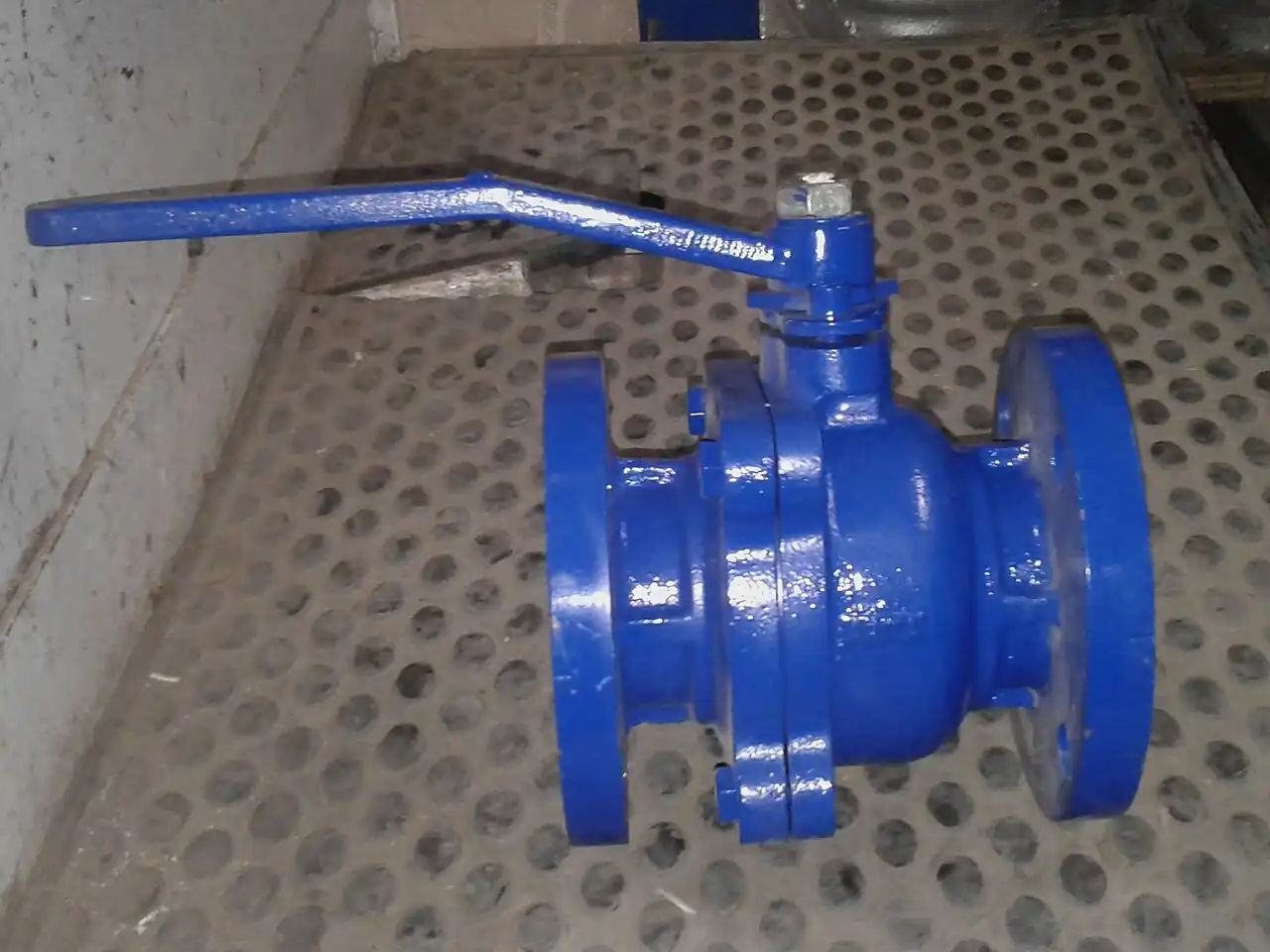
A metal-seated ball valve is a quarter-turn isolation valve in which both the ball and the seat rings are metal, engineered and coated so that a hard ball land seals against a hard seat face without any polymer in the sealing path. The seats are usually chrome carbide or tungsten carbide overlaid or coated, sometimes stellite, often spring energized so they follow the ball through thermal cycles, and the ball receives a matching hard layer lapped to a surface finish measured in micrometers. The result is a valve that isolates abrasive slurries, catalyst fines, steam, and hot gases at temperatures far beyond any elastomer and keeps doing it for thousands of cycles.
The specification questions that reach a buyer are engineering questions rather than catalog questions: what leakage class the metal seats can honestly meet and hold, which coating system survives this specific abrasive or temperature, whether the seats are self or spring energized, what torque the hard seats demand at temperature so the operator is not undersized, and what the fire test and fugitive emission qualifications cover. A metal seated valve specified loosely arrives as an expensive valve that passes water tests and leaks steam; specified tightly, it is the isolation answer for the services no soft seat can touch. This page carries the numbers, coatings, and standards that make the difference.
This page treats the metal-seated ball valve as an engineering purchase: how hard seats achieve controlled leakage, which coating systems belong in which abrasive and temperature regimes, how trunnion and floating architectures carry the seat loads at size, what API 608, API 607, and API 6FA type tests establish, and how to write an RFQ that forces the leakage class, coating, torque, and qualification evidence into the offer where it can be compared.
Chapter 1 / 06
What a Metal Seat Is and What Is Being Decided
In a soft seat ball valve, a polymer ring does the sealing, deforming elastically to erase every machining mark; leakage through the seat is effectively zero and the engineering is in the polymer's chemical and thermal limits. In a metal seated ball valve, the sealing pair is ball land against seat face, both metal, both finished to surface roughness values around Ra 0.2 to 0.4 um and lapped so the contact band carries the seating load evenly. Sealing is achieved by a combination of fine finish, precise geometry, seating force from springs or line pressure, and in the best designs a slight conformal lapping between the specific ball and its seats. Leakage is therefore not zero; it is a class, and the class the valve meets at test and holds in service is the central purchase parameter.
What is being decided is whether the service truly requires the metal seat, and then which grade of metal seat engineering. The services that do require it are well defined: abrasive and erosive media, including mineral slurry, catalyst, fly ash, and tailings; high temperature beyond roughly 260 to 300 deg C where polymer seats are gone; steam isolation at pressure; oxygen and other chemistries that attack elastomers; nuclear and other qualified duty; and processes demanding fire survival without secondary soft seals. For each of these the alternative valve types exist, including knife gate valve patterns for slurry isolation and globe throttle patterns for steam control, and the buyer's first decision is that the quarter-turn, tight shutoff, high cycle character of the ball valve is what the process needs with the hard seat making it possible.
The second decision is the leakage expectation honestly stated. API 608 and the associated test standards let metal seated valves meet seat leakage classes with measurable rates, commonly ISO 5208 rate B through D or class IV analogs depending on grade, while premium lapped designs reach rate A or class V on liquid tests at moderate pressure. Gas service at high temperature is the hardest case: seat rates stated at ambient water tests do not predict hot gas leakage, and seasoned buyers demand the test at conditions or the field reference list. The trade is explicit: metal seats buy temperature, abrasion, and fire survival, and pay for it in leakage class, torque, and price.
The third decision is architecture at size. Small metal seated valves, DN 15 to about DN 100, exist in floating ball construction; above that, trunnion mounted designs carry the hydraulic loads on bearings with spring energized seats, and that trunnion ball valve architecture dominates the serious abrasive and steam installations. The floating ball leaf on this site covers the small bore pattern; this page carries the seat and coating engineering that both share, because the ball and seat interface, not the mounting, is what the buyer is paying for in a metal seated valve.
Finally, the buyer is deciding the qualification stack: API 608 as the ball valve design baseline; API 607 or ISO 10497 for fire type testing, where metal seated designs hold their leakage through fire by nature of the construction; API 6FA for fire test qualification of the valve as an assembly; API 598 or ISO 5208 for the seat and shell acceptance tests; ISO 15848 for fugitive emissions at temperature; NACE MR0175 or ISO 15156 for sour service materials; and ASME B16.34 for the class pressure temperature envelope. Each of these appears as a line in the RFQ of any hydrocarbon, steam, or mineral plant that audits its isolation valves.
Chapter 2 / 06
How Hard Seats Seal and How They Wear
The sealing mechanics set expectations for everything else. When the valve closes, the ball lands contact the seat faces; springs behind trunnion seats push the seats onto the ball with a defined force, and line pressure adds hydraulic seating force on upstream designs. At the contact band, lapped surfaces separated by a residual roughness of a fraction of a micrometer leave flow paths whose total area determines the leakage rate. Unlike a polymer seat, metal does not conform to erase the roughness, so the class achieved depends on finish quality, seating load, pressure assist, and the fluid: hot gas leaks measurably more than cold water through identical geometry, which is why the test condition defines the class.
Wear in service has three mechanisms and each has a countermeasure. Abrasive erosion: particles in the flow cut the seat and ball surfaces each cycle; the countermeasure is coating hardness selected above the particle hardness, typically tungsten carbide family overlays for quartz and silica duty, plus velocity control at the port. Adhesive wear and galling: metal to metal rotation under load with insufficient hardness differential or lubricity; the countermeasure is a hardness offset between ball and seat, commonly 5 to 10 HRC, and coatings with embedded lubricant phases such as chrome carbide with fluoropolymer in some systems. Thermal cycling wear: differential expansion unloads and reloads seats, fretting the contact band; the countermeasure is spring energized seats with the spring stack rated for the cycle count and expansion bellows or live loaded packing on the stem.
Torque on metal seats is substantially higher and less forgiving than on soft seats. The seat friction coefficient on lapped carbide pairs with high seating load produces breakaway torques commonly 2 to 4 times those of a soft seat valve of the same size and class, and at temperature the numbers move again as clearances and coating friction change. Operators and actuators, whether gear, electric actuator, or hydraulic and pneumatic valve actuator packages, size on the vendor torque curve at service temperature with the standard 1.25 to 1.5 factor. Undersized operators on metal seated valves are the classic commissioning failure, and the failure mode is worse than a stall: a partial turn at high differential drags abrasive across the seat once and permanently downgrades the class.
Cycling and dither behavior separate the engineering grades. A well designed metal seated valve can dither, modulate slightly around a position, in limited duty because the seats are hard; but sustained throttling at high pressure drop drives erosive jetting at the partial open port, and the valve that survives is the one with port and coating engineered for it, or the application belongs to a control valve built for recovery. Cycle life expectations run from a few thousand cycles on severe slurry service between refinishes to hundreds of thousands on clean steam with premium coatings; the vendor curve of leakage class versus cycles is the honest deliverable, and the RFQ asks for it in these words.
Temperature capability follows the coating and body stack. Standard metal seated designs serve to about 400 deg C continuously; with graphite packing, expanded clearances, and the right overlays, 500 to 650 deg C versions serve in steel and power plants; above that, specialty alloys and cooling designs appear. The class pressure temperature table governs as always, and the buyer checks two derates: the body shell derate at temperature, and any coating system limit, because a carbide overlay that oxidizes at 600 deg C does not care that the Inconel body beneath it is happy.
Leakage testing closes the chapter with the acceptance protocol. Factory tests per API 598 or ISO 5208 apply water at stated pressures to each seat with the cavity vented, and high pressure gas tests apply for the classes that demand it. For hot service, the premium evidence is a test at temperature or a documented field reference at the same service; both cost the supplier something, which is why the RFQ that demands them sorts the engineering suppliers from the catalog suppliers in the first pass.
Chapter 3 / 06
Coatings, Construction, and Duty Boundaries
The coating system is the heart of the valve and deserves its own vocabulary. Hard chrome plating, a classic and economical choice, gives roughly 60 to 68 HRC equivalent surfaces with good lubricity, serving clean and moderate abrasive duty. Stellite and other cobalt hardface overlays, applied by welding, give tough surfaces with good hot hardness to around 600 deg C class, the traditional steam and general process choice. Tungsten carbide coatings, applied by high velocity oxy fuel spray or laser cladding, give 1000 to 1300 HV class surfaces with outstanding erosion resistance, the choice for mineral slurry, catalyst, and ash service. Chrome carbide overlays serve hot erosion duty and pair against themselves with a hardness offset. Ceramic coatings and solid ceramic inserts extend the erosion ladder at higher price and fragility. Each system pairs against a counterface: identical coatings against each other risk galling, so suppliers engineer the pair, coating against coating, coating against hard substrate, with the hardness differential stated.
Construction follows the trunnion architecture at serious sizes: body in two or three piece or fully welded design; ball supported on trunnion bearings; seats as separate rings, spring energized, sometimes with piston or elastomer assist rings eliminated in the fully metal design; and the stem with live loaded graphite packing and anti blow out shoulders. Extended bonnets serve hot service above roughly 400 deg C so the packing and operator see a lower temperature. Fully welded bodies serve buried and pipeline duty. The floating metal seated architecture appears at small sizes, DN 15 to 100 class, where seat load from line pressure alone suffices; the floating ball valve leaf covers that geometry's load arithmetic.
Materials match the envelope: WCB and WC6 or WC9 chromoly bodies serve steam to their class limits; CF8M and CF3M serve corrosion; duplex 2205 and super duplex serve chloride and sour; Inconel 625 overlays and monel serve the chemical and offshore ends; and 17-4 PH, 440C, or carbide faced trims carry the internals. NACE MR0175 hardness limits constrain the hard coating choices on sour service, one of the places where a naive coating selection fails the audit: the overlay system must be qualified to the hardness and cracking criteria the standard applies, and suppliers carry letters stating exactly that.
Duty boundaries are sharp. Metal seated ball valves own abrasive isolation, hot isolation, and steam isolation at high cycle counts; they do not own precision modulating control, which belongs to control valve and globe valve patterns built for recovery; they do not own zero leakage bubble tight water duty, where a soft seat trunnion ball valve is the economical answer; and they are usually not the choice for settling large particle slurry at low pressure, where a knife gate valve or wedge gate valve pattern isolates more cheaply, though with poorer cycle life and no tight shutoff claim. Oxygen service demands specially cleaned and qualified constructions; cryogenic service demands extended bonnets and the right seat geometry for thermal contraction.
The construction map pairs the major services with the seat and coating construction that survives and the one that returns as a dispute.
Service
Suitable construction
Construction to avoid
Mineral and tailings slurry isolation
Trunnion, tungsten carbide both faces, hardness offset, full bore
Hard chrome seat pairs, galling and rapid erosion
Catalyst and fly ash handling
Trunnion, carbide overlay, purge ports, live loaded stem
Soft seat valves of any price; stellite pairs at high velocity
Saturated and superheated steam isolation
Trunnion, stellite or chrome carbide, graphite packing, extended bonnet above 400 deg C
Soft seats above about 260 deg C; non extended bonnets with standard packing
Hot oil and thermal fluid
Trunnion, hard chrome or carbide, fire safe API 607
Unqualified seat coatings that soften at service temperature
Sour hydrocarbon with abrasives
NACE MR0175 qualified overlays, duplex or alloy trim
Coatings without sour service qualification letters
Clean water tight shutoff
Soft seat trunnion ball valve, not this leaf's duty
Paying metal seat prices for polymer seat duty
Oxygen service
Oxygen cleaned qualified metal seat construction
Any valve without oxygen cleaning and material certificates
Chapter 4 / 06
Key Specification Parameters
The decode table lists the datasheet lines that decide whether a quoted metal seated valve matches the service; commentary follows on the lines suppliers blur.
ISO 5208 rate A to D; class IV to V analogs at test conditions
The shutoff the process actually receives and audits
Seat and ball coating
Hard chrome, stellite, chrome carbide, tungsten carbide, ceramic
Abrasion and temperature survival of the sealing pair
Hardness offset
5 to 10 HRC between ball and seat faces
Galling resistance of the rotating pair
Seat energization
Spring, piston assist, pressure assist
Seating load through thermal cycles and wear life
Temperature rating
minus 29 to 400 deg C standard; to 650 deg C special
Coating and packing stack, extended bonnet need
Breakaway torque at temperature
2 to 4 x soft seat equivalents
Operator and actuator sizing without stalling
Design and test standards
API 608, ASME B16.34, API 598 or ISO 5208
Design examination and acceptance tests applied
Fire qualifications
API 607, ISO 10497, API 6FA
Post fire shutoff credibility on flammable service
Emissions and sour
ISO 15848; NACE MR0175 or ISO 15156
Stem leakage class and material qualification
The leakage class row is the contract's center. Demand the class with the test standard and condition: fluid, pressure, and temperature, for example ISO 5208 rate B at 50 bar water, ambient, each seat. For hot gas or steam, demand the class at temperature or the field reference; ambient water rates do not predict hot gas behavior, and every engineering supplier knows it. The leakage class versus cycle count curve belongs in the offer for abrasive duty; a class stated at cycle zero is a test report, not a service promise.
The coating rows carry the wear economics. The offer should name the coating system per face, ball and each seat, the applied process, weld overlay versus thermal spray versus plating, the resulting hardness, and the hardness offset engineered between the pair. For abrasive service, name the particle and its hardness in the RFQ: silica at roughly 1100 HV rules out chrome plating at 68 HRC equivalent roughly 700 to 800 HV, and the honest answer is the tungsten carbide family at 1000 to 1300 HV. For sour service, the NACE qualification letters for the overlay system close the audit question before it opens.
Torque rows feed the operator decision. Demand breakaway and running torque at maximum service temperature and differential, with the coating friction at that temperature stated or tested. Gear operators dominate manual metal seated service; automation packages, pneumatic valve actuator with spring return or hydraulic valve actuator on the largest sizes, size on the same curves with margin. The undersized actuator on a metal seated valve does not merely stall; it half strokes the valve under differential and wipes the seat once, so the commissioning stroke test against full differential is a pass fail event for the valve as well as the operator.
Budget planning ranges follow; USD at quantity one for the valve only, industrial quality, moving down 20 to 40 percent at project quantities depending on class and options.
Configuration
Class
Budget range USD
DN 50 flanged floating, hard chrome seats
CL600
600 to 1,400
DN 100 trunnion, stellite, steam service
CL300
2,500 to 5,500
DN 150 trunnion, tungsten carbide, slurry
CL300
6,000 to 14,000
DN 200 trunnion, carbide, fire safe, NACE
CL600
14,000 to 32,000
DN 300 trunnion special, 600 deg C service
CL600
30,000 to 70,000
Actuated package DN 150 CL300 gear plus electric
per project
9,000 to 20,000
Chapter 5 / 06
Selection Decision Factors and RFQ Language
The decision list compresses the page into the order that writes the RFQ.
Confirm the service demands the metal seat: temperature beyond roughly 260 to 300 deg C, abrasive or erosive media, steam at pressure, oxygen or elastomer hostile chemistry, or fire survival without soft seats. Otherwise, stop and specify a soft seat trunnion or floating ball valve and save the budget.
State the fluid completely: chemistry, particle loading, particle hardness and size, temperature maximum and cycling, and differential pressure with the credible maximum.
State the leakage class required with its test standard and condition, and for hot gas or steam, demand the class at temperature or field references at the same service.
Select the coating system from the particle and temperature: tungsten carbide family for hard abrasives, chrome carbide for hot erosion, stellite for hot general service, hard chrome for clean moderate duty; confirm the hardness offset of the pair.
Fix architecture and size: floating to about DN 100, trunnion above, full bore where pigging or solids passage requires; extended bonnet above roughly 400 deg C.
State the qualification stack by number: API 608 design, API 598 or ISO 5208 tests, API 607 or ISO 10497 and API 6FA fire, ISO 15848 emissions, NACE MR0175 sour where applicable.
Demand torque curves at service temperature and size operators with margin; specify the commissioning stroke test against full differential as an acceptance step.
Demand the service evidence: leakage class versus cycles curve for abrasive duty, reference installations at comparable service, and the coating qualification letters including sour where relevant.
The recurring comparison is metal seat against soft seat at the overlap services, and the table below frames it for a DN 150 CL300 isolation duty.
Attribute
Metal seated ball valve
Soft seat trunnion ball valve
Seat leakage, new
rate A to D by grade, stated at test
bubble tight, rate A routine
Temperature ceiling
400 deg C standard, 650 special
about 200 to 260 deg C by polymer
Abrasive service
yes, coating matched to particle
no, seats cut rapidly
Fire survival
inherent, qualified by test
requires qualified secondary metal seal
Breakaway torque
2 to 4 x soft seat
baseline
Relative cost DN 150 CL300
about 3 to 6 x
baseline
Natural duty
steam, slurry, catalyst, hot gas
clean hydrocarbon, water, gas tight shutoff
The RFQ block for metal seated ball valves should read: quantity and line list with size, class, ends, and bore; full fluid statement including particle hardness and loading; service temperature with cycles; required leakage class with test standard and condition; coating system per face with process and hardness, and the pair's hardness offset; seat energization type; body and trim materials with sour qualification letters where applicable; fire and emission qualifications by certificate reference; torque data at service temperature and maximum differential; operator or actuator specification with fail action; test requirements per API 598 or ISO 5208 including any at temperature seat test; and documentation: material certificates 3.1, coating process records, seat lapping records, and the IOM with the recommended refinish interval. A quotation that answers the leakage line with "bubble tight" has misread the service and is answering a different valve.
Neighbor equipment lines close the loop as they do across the valve family: if the line runs from or to a progressive cavity pump or gear pump on slurry, state the pressure pulses the seat will see; if the isolation sits beside a safety relief valve, state the set pressure so the class and body derate are evaluated against it; and if the scheme pairs with a check valve or Y strainer, state it so the supplier confirms the class stack and bore continuity in one pass.
Chapter 6 / 06
Installation, Standards, Failure Modes, and Maintenance
Installation practice protects the lapped seat pair. Pipe strain matters more than on soft seat valves because it distorts the seat rings relative to the ball; support the line and align the flanges before bolting. Never use the valve as a pipeline jack or a dog point. Flush before first stroke, because the first closure against welding slag on a carbide seat is a grinding pass that downgrades the class at cycle one. Stroke the installed valve gently the first time against modest differential, then prove the operator at full differential per the commissioning plan. On hot service, follow the vendor's heat up procedure so the bonnet, packing, and seats expand in the intended order; thermal shock at 500 deg C seat assemblies is a defect injection event.
The standards stack is the backbone of the qualification file and is worth citing in full in the RFQ: API 608 for ball valve design and examination; ASME B16.34 for class and pressure temperature; API 598 and ISO 5208 for inspection and seat and shell testing; API 607 and ISO 10497, plus API 6FA for fire type testing of the assembly; ISO 15848 for fugitive emission qualification of the stem seal at temperature; NACE MR0175 or ISO 15156 for sour service material and hardness qualification, including the hard coating systems; and cleaning and packaging standards for oxygen or high purity service where applicable. Each number in the file answers an audit question that will otherwise arrive as a shutdown.
Failure modes cluster into five families in field history. Seat erosion and class decay: particle velocity and coating mismatch; remedy is coating upgrade at refurbish and velocity discipline at the port, and the class versus cycles curve demanded at purchase becomes the maintenance planning tool. Galling and seizure: hardness offset lost through coating wear or wrong pair; remedy is refinish by the OEM rather than local regrinding, which destroys the lapped geometry. Stem leakage: packing relaxation at temperature; remedy is live loaded graphite packing adjusted per the procedure and reverified each turnaround against the ISO 15848 class. Thermal binding: clearance loss at temperature on designs without the right expansion compensation; remedy is the heat up procedure and the correct clearance class at order. Operator undersizing and half strokes: torque curves ignored; remedy is the commissioning acceptance stroke at full differential and periodic exercising so the true torque never drifts unobserved past the operator envelope.
Maintenance intervals scale with service severity. Steam isolation valves: exercise quarterly, repack per observation, refurbish seats and coatings at major turnarounds, commonly 4 to 8 years. Slurry valves: monitor leakage class at test connections where fitted, plan seat refinish on the cycles curve, commonly 1 to 3 years in hard mineral service, and keep the OEM refinish route rather than local grinding. All services: annual external inspection including the packing, body joints, and any purge ports, and stroke verification on automated packages with the instrument layer checked on the plant's safety schedule. Records are the maintenance currency: serial number, coating system, clearance class, leakage class as tested, torque curve, and the refinish history per valve, written into the system at commissioning.
Refurbishment economics usually justify the OEM route. Seat relapping and recoating restore the class at 30 to 50 percent of new valve cost, and the OEM holds the geometry records; a locally ground seat renews the metal and loses the lapped pair, and the leakage class decays from the first cycle after. The plants that get two decades from metal seated valves are the ones that bought the documentation with the valve and treated the refurbish as a planned engineering event with the curve in hand.
FAQ
What leakage class can I honestly expect from a metal seated ball valve?
Expect ISO 5208 rates from A to D depending on grade and condition, with premium lapped designs achieving rate A or class V on ambient water tests at moderate pressure, and standard grades holding rate B or C. Hot gas and steam leak measurably more than ambient water through identical geometry, so demand the class at your temperature or field references at comparable service. A quotation claiming bubble tight metal seats at 500 deg C steam is answering a different question than you asked.
Which coating should I choose for abrasive slurry?
Match coating hardness to particle hardness. Silica and quartz at roughly 1100 HV rule out hard chrome and demand the tungsten carbide family at 1000 to 1300 HV via high velocity spray or laser cladding; softer ash and limestone service accepts chrome carbide or stellite. Confirm a 5 to 10 HRC hardness offset between ball and seat faces to prevent galling, and state particle hardness and loading in the RFQ so the supplier owns the recommendation.
Are metal seated ball valves fire safe by default?
The construction is inherently fire resistant because the sealing path is metal, but fire safety in procurement language means a type test certificate: API 607 or ISO 10497, and API 6FA for the assembly qualification. Demand the certificate reference for the exact model. Soft seat valves can also be fire safe with qualified secondary seals, but on hot abrasive service the metal seat valve carries the qualification more naturally.
Why does my metal seated valve turn so hard compared to a soft seat one?
Hard lapped pairs under high seating load generate seat friction with breakaway torque commonly 2 to 4 times a soft seat equivalent, and torque rises again at service temperature. Operators and actuators must be sized on the vendor torque curve at temperature with a 1.25 to 1.5 margin. An undersized actuator does not just stall; it half strokes the valve under differential and wipes the seat once, permanently degrading the leakage class.
When should I choose a metal seat over a soft seat trunnion valve?
Choose metal seats when temperature exceeds roughly 260 to 300 deg C, the fluid is abrasive or erosive, elastomers are chemically excluded, or fire survival without secondary soft seals is specified. Choose soft seats for clean services within polymer limits where bubble tight shutoff is required, at one third to one sixth the cost. Paying metal seat prices for clean water duty, or soft seat prices for catalyst service, are the two classic misallocations.
Can a metal seated ball valve throttle or modulate?
Only in limited duty. The hard seats tolerate dither and partial travel better than soft seats, but sustained throttling at high pressure drop drives erosive jetting at the partially open port and erodes the coating. If modulating control is the duty, specify a control valve or globe valve built for pressure recovery, and reserve the metal seated ball for isolation with brief travel in between.
How often do metal seats need refinishing?
Severe mineral slurry service commonly needs seat refinish every 1 to 3 years; clean steam service commonly reaches 4 to 8 years between turnarounds. Plan from the leakage class versus cycles curve demanded at purchase, monitored by periodic seat tests where the valve has test connections. Refinish through the OEM, which holds the lapping geometry; local regrinding renews the metal and loses the class.