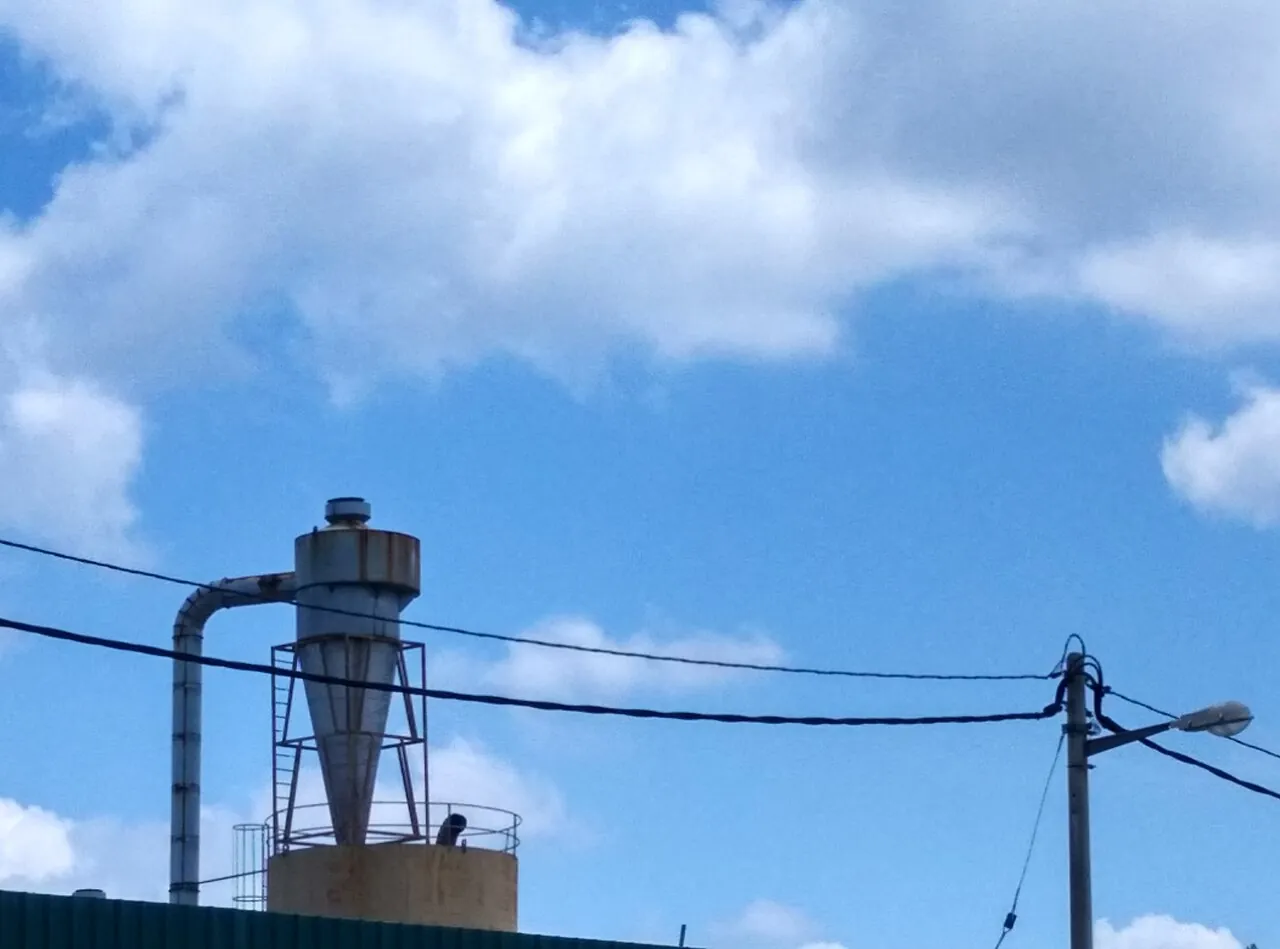
A rotary kiln is a long, inclined, slowly rotating drum, refractory lined and fired to high temperature, that processes bulk solids continuously: calcining limestone to lime, burning cement clinker, roasting ores, drying and incinerating waste, or carrying any reaction that needs solids held at 800 to 1,600 deg C for tens of minutes to hours. Feed enters the high end, gravity and rotation carry it down the slope while lifters and the kiln's own turning roll it through the hot zone, and product discharges at the low end into a cooler. In the direct fired form, flame and gas sweep through the drum in contact with the solids; in the indirect form, the drum is enclosed in a furnace and heat passes through the shell, keeping process atmosphere and combustion separate.
This page treats the rotary kiln as a purchasing object: how reaction temperature and time size the drum, how slope, speed, and internals set residence, how direct versus indirect firing follows from the product and atmosphere, and how refractory, seals, drive, and the off gas train, cyclone, bag filter, or scrubber, decide whether the machine meets its duty for a decade. It stands apart from the rotary dryer, which dries at far lower temperature, and from the fired heater, which heats fluids rather than solids.
The decision concentrates in five places: the process duty, reaction or calcination temperature and the time the solids must spend at it, the firing architecture, direct flame on the solids or heat through the shell, the refractory and shell cooling that hold the machine together at temperature, the seals that keep air in or atmosphere out, and the off gas train that meets the permit. Get those right and diameter, length, slope, and drive follow.
Chapter 1 / 06
What a Rotary Kiln Is and What Is Being Decided
The machine is the workhorse of high temperature solids processing because nothing else combines three properties at once: it holds a large, dense moving bed at temperature for a controlled time; it tolerates the worst feeds, sticky, abrasive, dusty, lumpy, molten at the hot end, that would defeat a grate or a fluid bed; and it scales from a meter-long pilot drum to a five-meter-diameter, seventy-meter-long cement machine turning out thousands of tonnes a day. Rotation does the transport: the drum inclines 0.5 to 5 degrees to the horizontal and turns 0.2 to 5 revolutions per minute, and each revolution advances the bed a step down the slope while folding it across the hot cross section, exposing fresh surface to flame and gas some thousands of times on the way down.
The drum is a shell of boiler plate, 20 to 100 millimeters thick, riding on tires that rest on trunnion rollers at piers, turned by a gear and pinion or friction drive through a gearbox sized for the stubborn starting torque of a full bed, with thrust rollers keeping the whole rotating mass located on its axis. Inside, one or two courses of refractory, brick or castable, insulate the shell from the process temperature; outside, shell cooling fans or water spray keep the steel below its surrender point where the refractory is thin. At each end, seals, the humble and decisive components, close the gap between rotating drum and stationary hood: feed end and discharge end seals keep unwanted air out of controlled atmosphere processes and keep flame, dust, and fume in the off gas system instead of the building.
What is being decided, in purchasing terms, is five things. First the thermal duty: what reaction at what temperature, and how many tonnes per hour of product that implies. Second the residence time the chemistry demands, which with the volumetric loading sets drum size. Third the firing architecture: direct fired for most mineral and waste duty, indirect for atmosphere control, product purity, or materials that must not see flame. Fourth the materials plan: refractory selection against chemistry and temperature, shell cooling, and metallurgy at the hot faces. Fifth the balance of the machine: seals, drive, and the off gas train sized for the dust and fume the process actually makes. The paragraphs that follow work these in order.
A duty tour grounds the machine. Cement clinker burns at 1,400 to 1,500 deg C in kilns up to 5 meters diameter, the largest rotating thermal machines built. Lime kilns calcine limestone around 900 deg C in sizes an order smaller. Ore roasting and direct reduction run 700 to 1,100 deg C on dusty, abrasive feeds. Hazardous waste incineration kilns hold 2 seconds at 1,100 deg C class residence against regulation. Petroleum coke calcining, magnesia, alumina, pigments, and specialty sands fill the middle of the market. The same machine, sized and lined differently, serves them all.
Chapter 2 / 06
How Slope, Speed, and Residence Time Do the Work
Residence time in a kiln is a transport equation with a chemistry meaning. For a given bed depth and loading, the bed advances a distance per revolution set by slope and by the bed's repose behavior, and the classic working relations give residence time in proportion to length and slope and inversely to diameter, speed, and feed velocity factors: roughly, time equals a constant times length divided by diameter times slope times speed, adjusted for the internals and the gas flow direction. Designers use it in reverse: the chemistry says thirty minutes at temperature, the throughput says bed cross section, and the equation hands back a length and a slope and speed to run it at.
Bed behavior is the physics underneath. The bed slides, slips, and rolls; rolling, where material lifts partway up the turning wall and cascades down, is the good regime that mixes and exposes surface, and slipping, where the bed slides against the shell without turning over, wastes heat and scours refractory. Dams at the discharge end hold bed depth, and lifters, chains in the drying end of long wet kilns, or internal constriction rings shape the profile along the drum. Gas flow direction adds its own term: co current gas, traveling with the solids, gives cold feed the hottest gas and suits drying and gentle heating, while countercurrent gas, opposing the solids, gives the hottest gas to the hottest product and defines the classic cement and lime kiln.
The drive package is sized by the machine's worst morning. A kiln at rest with a full bed takes several times its running torque to start, and the gearbox, gear, and motor, commonly an ac motor through a gearbox driving a girth gear, or a friction drive riding the tire, must deliver it; turning gear, the auxiliary low speed drive, keeps the drum slowly rotating during power loss or maintenance so the bed does not sag the shell hot. Variable speed across the 0.2 to 5 rpm range is the operator's residence time lever, and the vfd that provides it belongs on the specification along with the drive's ability to hold precise low speeds, because kiln chemistry is tuned in tenths of a revolution.
Heat transfer splits along the firing architecture. In the direct fired kiln, an industrial burner at the discharge end fires down the axis, flame and combustion gas sweep countercurrent over the exposed bed surface and the refractory walls, and radiation from flame and wall does most of the heating at cement temperatures; the gas leaves the feed end hot and dusty into the off gas train. In the indirect kiln, the drum runs inside a furnace shell heated by burners or electric elements, heat conducts through the drum wall, and the process atmosphere inside stays whatever the process wants, inert, reducing, or simply combustion free; product purity and volatile recovery drive this choice at a significant energy cost per kilogram.
The off gas train is half the machine and deserves equal engineering. Dust rates from a kiln are large: the feed end gas carries fines entrained at gas velocities set by drum diameter, and the train behind it, dust settling chamber, cyclone separator for the coarse fraction, then a bag filter or electrostatic precipitator for the fine, and a wet scrubber or dry scrubber where acid gases need control, is sized on the true dust load and gas volume at temperature. An induced draft centrifugal fan at the cold end holds the kiln draft slightly negative so fume stays in the system, and its control is the process's pressure lever. The train that treats the gas and the kiln that makes the product are one purchase.
The heat balance is the document that ties the machine together, and its terms are worth naming. In come the fuel's combustion heat, the feed's sensible heat, and any reaction heat the chemistry releases; out go the product's sensible heat at discharge temperature, the off gas's sensible and latent heat at the feed hood, shell losses, and the reaction's endothermic demand. Every term is measured or assigned in practice: fuel by flow, feed by the weigh feeder whose load cells anchor the mass balance, product by a belt conveyor scale or weigh belt on discharge, off gas by analysis and temperature. The balance is where fuel per tonne is predicted and where, later, the operating drift that raises it is diagnosed, and a plant that runs its kiln without a living heat balance is driving with the meter covered.
Chapter 3 / 06
Direct Fired, Indirect, and Long and Short Dry Designs and Duty Boundaries
The direct fired kiln is the default wherever product can meet flame and combustion gas: cement, lime, most ore roasting, waste incineration. Its energy efficiency is the argument, heat passes from flame to solid directly and the off gas still carries recoverable heat into preheaters and the feed drying end. Within the direct family, the long dry kiln, with internal chains and lifters in the feed end drying and preheating on countercurrent gas, and the short kiln with external preheaters, grate or cyclone preheater towers that do the drying and calcining start before the solids enter, divide the practice; the preheater kiln dominates new cement capacity for its fuel economy and the long kiln survives where simplicity and feed variability win.
The indirect kiln, or rotary calciner, serves where the atmosphere inside must not be combustion gas: reducing or inert processing, volatile recovery where the off gas is a product stream, food and pharmaceutical purity, materials that oxidize or flame-smoke. The drum is alloy, often heated in a furnace enclosure to 500 to 1,100 deg C shell temperature, with rotating seals at both ends holding the controlled atmosphere and a small purge flow carrying volatiles to condensers. Slope and speed do the same transport work at smaller scale, and the whole machine is smaller because heat through a wall, at 5 to 20 kilowatts per square meter of shell, is a patient business compared to direct flame.
Duty boundaries against the neighbors deserve plain language. The kiln is not a rotary dryer: the dryer removes free moisture at 100 to 300 deg C gas temperatures with light drums and no refractory, and treating a drying problem with a kiln pays for refractory it will never heat. The kiln is not a fired heater: the fired heater raises process fluids, oil or gas, in tubes, and solids never enter it. It is not the incineration chamber of a liquid waste plant, though the hazardous waste kiln is its own serious branch with its own residence and temperature law. And where the duty is truly a drying duty followed by a small calcining step, the honest train is a dryer feeding a small kiln, one machine for each temperature regime.
Feeding and discharging complete the boundaries. A weigh feeder meters the dry feed rate that defines residence and heat balance together; a screw conveyor or slinger throws feed into the upper hood of a direct kiln, while pumpable sludges enter a waste kiln through lances or a scroll feed. Product leaves the lower hood onto a grate or drum cooler that recovers its heat to combustion air, through a rotary airlock where the next process is sealed. The cooling and feed systems, in the best plants, are engineered with the kiln as one heat balance, because the clinker cooler that preheats the burner's air is worth a tenth of the kiln's fuel.
Design
Typical duty
Where it wins
Watch-outs
Direct fired, long dry
Cement, lime, minerals
Simple, feed tolerant, no preheater tower
Higher fuel per tonne than preheater designs
Direct fired with preheater
New cement and lime capacity
Fuel economy, compact kiln
Preheater fouling on difficult feeds
Indirect rotary calciner
Atmosphere control, purity, volatiles
Combustion free process atmosphere
Shell heat flux limits throughput; alloy cost
Hazardous waste kiln
Regulated incineration
Residence and temperature compliance
Slagging, refractory attack, permitting
Construction segmentation is a real selection factor on large machines. A 60 meter drum ships in sections, field welded or flanged, and the specification should state the shipping envelope and the field joint philosophy because they move real money: shop welded sections with final field welds and stress relief demand skilled site crews and schedule, while flanged joints ease erection and complicate alignment forever after. Small and mid kilns, and nearly all indirect calciners, ship in one piece and erect in weeks. The site's crane capacity, the route to it, and the erection contractor's capabilities belong in the purchase conversation early enough to shape the drum's design rather than to veto it late.
Chapter 4 / 06
Key Specification Parameters
The specification is built from the chemistry outward. The process set states feed rate and composition with particle size and moisture, the reaction, its onset and completion temperatures, and the residence time at temperature the process is proven to need. The performance set states product temperature, conversion or loss on ignition, and throughput. The design set states drum diameter, length, slope, and speed range with drive sizing basis, firing architecture and burner duty, and refractory classes by zone. The mechanical set states shell thickness and design temperatures, tire and roller arrangement, seals class, and shell cooling provision. The emissions set states the off gas volume and dust load and the train behind it.
Two lines in that table deserve the sharpest pencil. Residence time, because it is the number the chemistry owns and the machine must honor: undersized time is off specification product no control loop can fix, and the honest basis is pilot or reference plant data at real feed, not correlation optimism. Refractory life, because it is the outage clock: zone by zone, brick against the chemistry's slag and alkali attack, the life between relines decides availability more than any other single item, and the specification should demand the vendor's zoning rationale with the wear mechanism named.
Instrumentation completes the machine: shell scanners, infrared cameras or contact pyrometers riding the length, drawing the shell temperature profile that reveals refractory loss as a hot spot before it becomes shell damage; product and off gas temperature transmitters at the hoods; pressure transmitter at the feed hood for draft control; drive load trending as a bed and coating indicator; and the gas analysis, oxygen and carbon monoxide at minimum, that closes combustion control. The kiln's plc runs the speed, draft, and firing loops and interlocks the drive trips. Feed rate on the weigh feeder closes the mass balance into the same system.
Chapter 5 / 06
Selection Decision Factors and RFQ Language
Selection starts with the material's behavior at temperature, tested at scale. A kiln is not sized from a brochure: the feed's reaction kinetics at temperature, its sticking and slagging tendencies, its dusting at gas velocity, and its bed behavior, rolling versus slipping, must come from a pilot kiln run or a genuinely comparable reference, and the vendors who ask for the pilot data are the vendors to shortlist. The test program varies feed rate, temperature, and speed, maps product quality against each, and hands the design its residence time and temperature with evidence.
The firing architecture follows the product's tolerance and the atmosphere's chemistry. Direct firing wins on energy wherever combustion gas in the bed is acceptable; indirect firing buys atmosphere control and volatile recovery at a wall flux that caps throughput; hybrid arrangements, direct kiln with an indirect feed tube, for instance, fill niches. Fuel choice threads through it: gas firing is clean and simple, coal and petcoke bring ash chemistry into the bed and the refractory decision, alternative and waste fuels bring chlorine and alkali that attack refractory and form rings, and electric indirect suits small high purity duty where power is the honest currency.
Refractory and shell design follow the chemistry's attack plan. Basic brick in the burning zone of a cement kiln, alumina brick mid drum, castable and insulating layers at the ends, each zone against its wear mechanism, slag attack, alkali burst, mechanical abrasion, thermal shock on stops. Shell cooling, fans or water, buys refractory life where design temperature runs the shell hot, and the shell's design must allow the growth the temperature imposes on tires and rollers. Seals follow the process's air discipline: efficient labyrinth or overlapping ring seals for mineral kilns, positively purged or double seals where atmosphere or emission control demands it.
A complete RFQ states, on one process data page: feed analysis, rate range, particle size, and moisture; the reaction with its temperature and time basis from test or reference; required product specification; fuel available with analysis; firing architecture preference or openness; refractory expectations by zone; allowable shell temperatures; seal class; drive and speed range with turning gear; off gas volume, dust, and acid gas expectations; the emissions train scope boundary, kiln only or including cleaning; and the plot and shipping constraints that bound drum sections. Vendors quoting against that page quote the same machine, and their sizes, drive powers, and refractory zonings become comparable engineering.
The off gas and heat recovery scope deserves its own paragraph in the purchase because it is where economics live. The preheater or drying tower that takes heat off the feed end gas, the clinker or product cooler that returns heat to combustion air, and the dust train, cyclone separator, bag filter or electrostatic precipitator, wet scrubber or dry scrubber, that meets the permit, together move the machine from possible to economical. Ask bidders to state the fuel per tonne of product with and without each recovery element, and the integrated number becomes the comparison the board sees.
Availability economics deserve their own arithmetic because a kiln earns nothing when it is down. Campaign life, the months between refractory outages, sets the annual production ceiling; a 10 month campaign at full rate beats a 14 month campaign interrupted by a shell hot spot repair. The levers are the zoning quality bought at construction, the chemistry discipline run day to day, and the scanner and drive trend data that schedule the outage before the machine schedules it. Buyers should ask vendors for campaign life references on comparable chemistry, and for the wear parts list with expected intervals, because those two lines, campaign months and parts intervals, predict the machine's economics better than its price.
Chapter 6 / 06
Installation, Standards, Failure Modes, and Maintenance
Installation is heavy rotating equipment work with an alignment discipline: piers and foundations to tolerance, tires and rollers set and crowned so the drum runs true on its axis, girth gear mesh to backlash specification, and the drum's cold alignment set deliberately off so that hot growth brings it true. Refractory installation is its own craft, brick by brick or castable by form with curing schedules honored. Commissioning dries and heats the refractory on a controlled curve, its first and most important thermal program, then brings feed up in steps while the shell scanner learns the machine's normal face.
The governing references are mechanical and environmental rather than a single kiln standard: the machinery codes for rotating equipment alignment and gear practice, the pressure and combustion practice for the burner system, and the emissions regulations that define the off gas train on each site. Vendor engineering literature, FEECO's rotary kiln design references among the accessible ones, documents the residence time and sizing methods the industry uses. The hazardous waste branch answers to its own regulatory temperature and residence law. As with all rotating thermal machines, the reference plant list and the pilot data outrank any certificate.
Failure modes are thermal, mechanical, and chemical in permanent rotation. Refractory loss shows as shell hot spots on the scanner and is answered by zoning redesign or chemistry management, not by thicker brick alone. Rings and balls, buildup that dams the bed, form where chemistry and temperature conspire, and are attacked with shell cooling, chemistry change, or the cleaning gun. Tire and roller wear, thrust and alignment drift, show in drive load and shell runout and are corrected by realignment between stops. Seal failure shows as air in leakage shifting draft and oxygen or as fume out into the building. Stopped-hot sag, the shell bow that a power failure leaves, is why turning gear and its drill are maintained religiously.
Symptom
Likely cause
First action
Shell hot spot on scan
Refractory loss or coating drop
Cool the zone, plan repair, review chemistry and flame impingement
Ring or dam forming mid drum
Chemistry and temperature convergence
Shell cool the zone; adjust flame and feed chemistry; clean at next stop
Drive load climbing
Coating, ring, or alignment drift
Trend against feed and coating history; measure shell runout; realign tires
Draft unstable, oxygen wrong
Seal air in leakage or hood blockage
Inspect seals; verify id fan control and hood openings
Shell bowed after trip
Stopped hot without turning gear
Run turning gear on every stop; assess runout before restart
Routine maintenance is the discipline of big slow machines: daily shell scan review and drive housekeeping, weekly tire and roller lubrication and thrust checks, monthly alignment verification, and the annual or campaign outage for refractory survey, gear inspection, and seal renewal. Lubrication practice on tires and rollers, the right grease at the right film, is the quiet difference between kilns that run decades on their original bearings and kilns that replace them. The shell scanner's history, kept honestly, is the machine's medical record and the refractory planner's main input.
The institutional item is thermal discipline on every stop and start. Each uncontrolled cooling of a hot refractory lining spends its thermal shock budget; each start ramp faster than the curve spends it again. The plants that log every stop, run the turning gear without exception, heat and cool on schedule, and treat the scanner's every new warm stripe as a work order keep availability in the ninety percent class, and the plants that treat stops as parking spend their outages rebuilding what the discipline would have preserved.
People close the maintenance story. A kiln wants operators who read a shell scanner like a gauge and a drive load trend like a pulse, and it wants one engineer who owns the heat balance and the refractory history as a personal ledger. Vendors offer training programs at commissioning and at relines, and the specification should buy both: initial operator and maintenance training, and a follow up visit after the first campaign to review the wear patterns with the crew that will run the next ten. The machines that run well are the ones whose people were taught by the people who built them.
FAQ
How is a rotary kiln sized?
From the chemistry's two demands, temperature and residence time, crossed with throughput: the reaction fixes the hot zone temperature and the time at it, the feed rate fixes bed cross section, and the transport relations convert slope, speed, and loading into a drum length and diameter. Pilot kiln data or a genuine reference plant supplies the time and temperature; vendors who size without it are extrapolating someone else's chemistry.
Direct or indirect firing, which do I need?
Direct where solids can meet combustion gas: cement, lime, roasting, waste, with the best energy efficiency. Indirect where atmosphere or purity demands it, inert or reducing processing, volatile recovery, food and pharma, at the cost of heat through a wall that caps throughput per meter. The product's tolerance for combustion products decides.
What is the difference between a kiln and a rotary dryer?
Temperature and purpose: the dryer removes free moisture with 100 to 300 deg C gas in a light unlined drum, while the kiln drives chemical reactions at 800 to 1,600 deg C in a refractory lined machine with an entirely different drive, seal, and off gas scale. Feeding a drying duty into a kiln buys refractory and fuel the job never needs.
Why do kilns have seals at both ends, and what kinds?
Because the rotating drum must pass through stationary hoods, and that gap decides the machine's air discipline: uncontrolled air in changes oxygen, draft, and atmosphere; fume out is emission and hazard. Labyrinth and overlapping ring seals serve mineral kilns; positively purged and double seals serve controlled atmosphere and strict emission duty, and seal condition belongs on the daily walk.
What shortens refractory life the most?
Chemistry attacking the brick, alkali and slag in cement, chlorine in waste fuels, plus thermal shock from unplanned stops and mechanical damage from rings. The countermeasures are zoning the lining against the actual wear mechanism, managing fuel and feed chemistry, and above all disciplined heating and cooling, because most linings die of shock, not of steady wear.
How is the off gas system sized?
From the true gas volume at temperature and the true dust load, both set by the kiln's diameter, firing, and feed: a settling chamber and cyclone separator take the coarse, a bag filter or electrostatic precipitator takes the fine, and a wet scrubber or dry scrubber handles acid gases where the chemistry makes them. An induced draft fan holds the kiln negative, and its draft loop is the process pressure control.
What does the drive system need beyond a motor?
Starting torque several times the running load for a full cold bed, precise variable speed in tenths of a revolution, and above all turning gear, the auxiliary drive that keeps the drum rotating through power loss and stops so a hot shell does not sag into a bow. The gearbox and girth gear are sized on the worst morning, not the running afternoon.