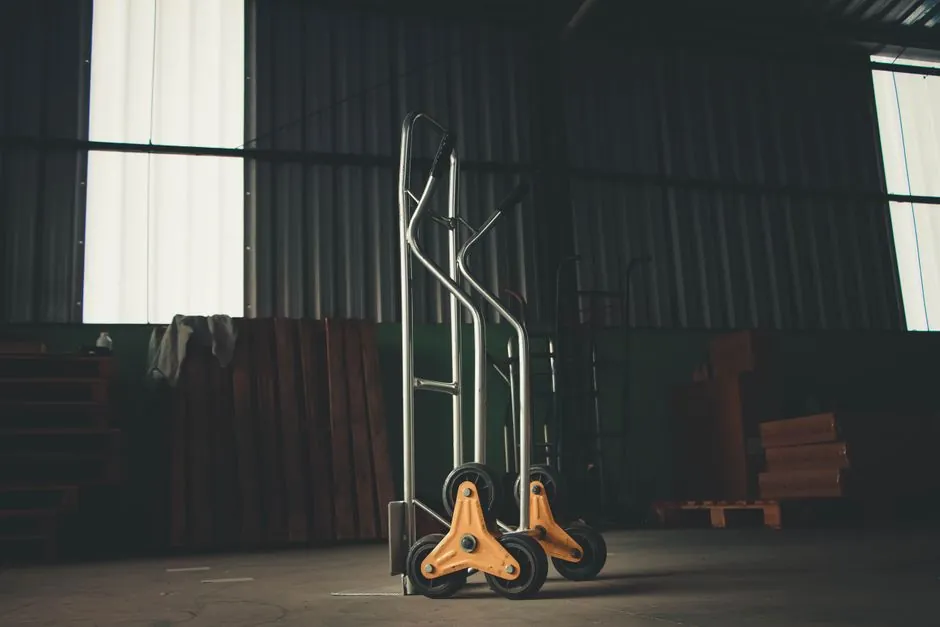
Material handling conveyors, AGVs, sortation tables, and palletisers draw on four bearing families in 2026: chrome steel deep groove ball bearings, stainless steel variants, hybrid ceramic (Si3N4 balls, steel races), and full plastic or polymer-caged assemblies, with selection driven by load, speed, contamination, and washdown exposure [S1][S6].
China-based manufacturers such as Dongguan Zoty Bearing and Wuxi-based NH Bearing ship ISO 9001 production lines covering chrome steel deep groove types down to miniature sizes, with ZOTY's range explicitly tagged to conveyor systems, material handling systems, and AGV applications [S1][S3]. BearingWorks complements that picture with custom hybrid ceramic and full ceramic ball bearing solutions for harsh and critical applications [S5].
Load, Speed, and the Deep Groove Chrome Steel Default
Deep groove ball bearings in 52100 chrome steel remain the default workhorse for powered conveyor rollers, gravity skate-wheel conveyors, and pallet stackers, because they accept combined radial and axial load in either direction and tolerate the modest misalignment typical of belt conveyors [S1][S3].
ZOTY's catalogue lists deep groove ball bearings alongside flanged variants, thrust bearings, and needle bearings under the chrome steel family, all positioned for automation equipment, robotics, conveyor systems, and material handling systems [S1]. NH Bearing's deep groove line is similarly split into home appliance, office automation, automotive, and general industrial applications, with lubrication, sealing, and maintenance covered as separate engineering disciplines rather than afterthoughts [S3].
For lightly loaded gravity-roller lanes, plastic-coated versions of these bearings, such as ZOTY's PU Series polyurethane wheels, BS Series flat shape rollers, and BST Series two-bearings POM rollers, drop in where quiet running and floor protection matter more than peak capacity [S1]. The trade-off is straightforward: chrome steel gives the highest dynamic load rating per bore, polymer-coated rollers give damping and noise control at the cost of speed and temperature ceiling.
Contamination, Washdown, and the Stainless vs Hybrid Ceramic Gate
Stainless steel ball bearings, typically AISI 440C or 304 cages with 440C balls, become mandatory once water, detergents, or food-grade washdown enter the picture, and ZOTY groups its stainless steel ball bearings, flanged stainless, miniature SMR/SMF, and ZZEE extended inner ring variants as a dedicated material handling family [S1].
ZOTY Bearing (S1) and BearingWorks (S5) list hybrid ceramic bearings among their product offerings, with BearingWorks (S5) marketing them for harsh and critical applications. BearingWorks markets these as the go-to for high-tech industries with harsh and critical applications, with short lead times on custom builds [S5].
For genuinely corrosive lines, including chemical dosing skids, plating cells, and marine terminals, full ceramic bearings in Si3N4 or ZrO2 remove the steel-race failure mode entirely; ZOTY lists Si3N4 and ZrO2 full ceramic series plus silicon carbide bushings as separate families for that duty [S1]. The selection gate is simple: chrome steel below the corrosion and temperature line, stainless when washdown dominates, hybrid ceramic when speed plus moderate corrosion meet, full ceramic when chemistry or non-magnetic requirements rule out steel races.
Sealing, Lubrication, and Maintenance Windows
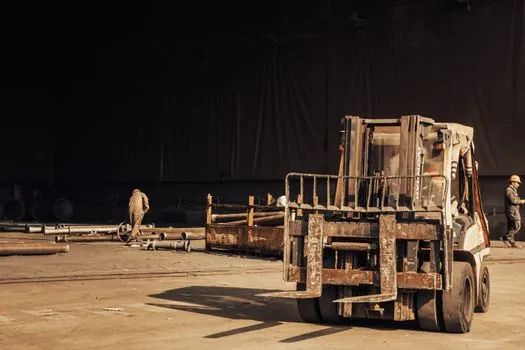
Seal choice (RS rubber seal, ZZ metal shield, 2RS double rubber, EE extended inner ring) decides whether a conveyor bearing survives dusty recycling lines, food-grade washdown, or outdoor weather, and ZOTY's family coding makes the 2RS, ZZ, and EE suffixes readable at a glance [S1]. NH Bearing treats lubrication as a standalone engineering line, with dedicated grease, oil, and solid-lubricant guidance, because the same bearing in a hot gearbox and a cold palletiser cannot share a grease spec [S3].
Material handling plants running 24/7 typically relubricate on a six to twelve month interval for sealed-for-life 2RS units, and replace rather than relubricate when the seal lip has visibly hardened. Plastic ball bearings, such as the CSB-PRB series with high-performance plastic races and selectable ball materials (glass, stainless, or polymer), trade load capacity for self-lubricating, corrosion-free behaviour in light-duty roller and guide applications [S6].
Two practical rules come out of the catalogues: (a) match the seal to the dirtiest fluid the bearing will see, not the cleanest; (b) on AGV and sortation conveyor duty, prefer sealed-for-life 2RS over open or shielded types to keep grease in and grit out for the full design life [S1][S3].
Specialty Bearings: Thrust, Flanged, and Insert Types
Thrust ball bearings handle the axial load on screw-driven lifts, hoist sheaves, and palletiser turntables, while flanged ball bearings simplify mounting on sheet-metal conveyor frames where shoulder bolts or pressed-in studs are not practical [S1]. Insert bearings (stainless SUC series) allow drop-in replacement on through-shaft idlers, which keeps maintenance time per roller low on a long roller conveyor line [S1].
For AGV and automated sortation machines, ZOTY also lists omni wheels, mecanum wheels, universal hubs, and single rollers for omni/mecanum wheels as a separate category, since these depend on precision small-bore bearings with tight runout and low noise rather than high radial load [S1]. BearingWorks echoes the same specialisation, focusing on custom ball bearing solutions with short lead times for critical timing [S5].
Comparison: Bearing Families for Material Handling Duty
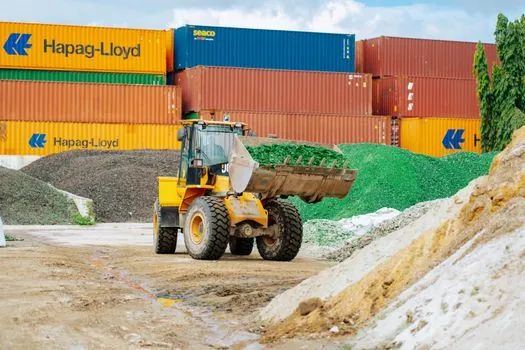
Four material families cover the bulk of conveyor and storage handling bearings, and the decision turns on load, corrosion, speed, and noise. Chrome steel deep groove is the lowest-cost, highest-capacity option for dry, indoor, general-purpose rollers. Stainless steel raises corrosion and washdown resistance at roughly two to four times the unit cost of chrome steel for the same bore. Hybrid ceramic (Si3N4 balls, steel races) sits in the middle on cost and adds high-speed and temperature headroom, plus electrical insulation. Full ceramic (Si3N4 or ZrO2) is the premium, non-magnetic, fully corrosion-resistant option for chemical, medical, or semiconductor lines, with the lowest dynamic load rating in the comparison [S1][S5][S6].
Plastic ball bearings, such as CSB-PRB with selectable ball materials, fill the niche of light-load, self-lubricating, non-magnetic rollers where steel of any grade is unacceptable, with trade-offs in capacity and temperature ceiling [S6]. For mining-style contamination loads on a material handling line, a related deep dive on ball bearing selection for mining walks through sealing and material gates that overlap with heavy-duty conveyors.
Failure Modes and Common Sourcing Traps
Counterfeit or sub-spec chrome steel is a known risk on commodity 6200 and 6300 series, so plants running high-cycle conveyor lines increasingly demand ISO 9001 certification and mill traceability; ZOTY's factory profile cites ISO 9001 and SGS verification, with 16 years of manufacturing experience and OEM/ODM support based on drawings, samples, or application requirements [S1]. NH Bearing matches that with a dedicated quality and environment programme covering both R&D and production [S3].
For belt-driven lines in particular, ensure the bearing's limiting speed (rpm × bore factor) is not exceeded by the driven roller's surface speed; a 50 mm bore 6205-grade deep groove bearing, for example, typically allows several thousand rpm with grease, but a wider, slower pallet conveyor is almost never speed-limited, while a high-speed sorter may be. When in doubt, look at the bearing data sheet section first, not the marketing line [S3].
Quick Selection Workflow and Trackable Signals
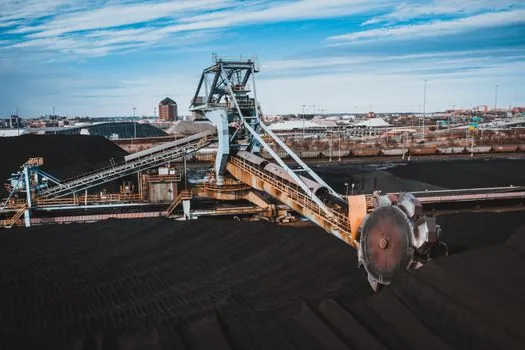
A practical sequence for a new or replacement conveyor roller bearing in 2026: (1) size the bore and required dynamic load from roller diameter, payload, and belt pull; (2) pick the material family using the contamination and washdown table above; (3) pick the seal and lubrication class for the duty cycle; (4) confirm limiting speed and temperature class against the driven roller's surface speed and ambient; (5) validate against ISO 9001 documentation and a recognised brand or audited mill [S1][S3].
For applications that bleed into adjacent heavy industries, the same decision tree shows up in ball bearing selection for steel mills, where heat and contamination, not washdown, are the dominant gates, and in the broader industrial gear types and applications map, which sits one stage upstream of the bearing on most conveyor drivetrains. Track the next OEM catalogue refreshes for AGV-rated hybrid ceramic 6200/6000 series and for any updates to plastic-caged deep groove units aimed at food-grade lines, since both are the most active 2026 development bands visible across the S1, S3, and S5 sources.