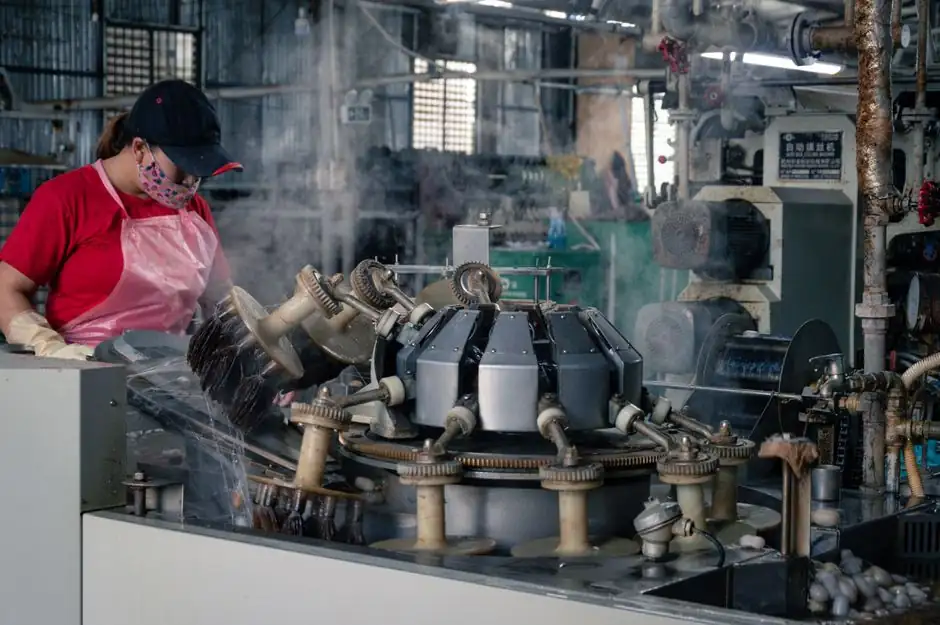
Three regional clusters carried the bulk of industrial spring manufacturing activity in the August 2026 sourcing window: the Yangtze River Delta and Pearl River Delta in China, the Rajkot-Ahmedabad-Mumbai corridor in India, and a smaller UK engineered-products tier led by European Springs [S1][S2][S3][S4][S5].
Chinese custom wire forming and SUS304 stainless tension springs are routinely quoted in the US$0.01-0.99 per piece band on Made-in-China.com, with double-hook extension springs at US$0.14-0.35/piece and double-coil carbon-steel torsion springs at US$0.03-0.12/piece, all on manufacturer-direct MOQ terms [S8]. Indian multi-plant producers such as Asha Spring & Engineering (ISO 9001:2015, CRISIL certified, established 2000) cover compression, torsion, die, extension, and spiral spring families to client drawing, while Santosh Industrial Springs (ISO 9001:2008, founded 15 August 1982) holds the legacy tension and torsion line [S3][S6].
How spring type maps to load function and typical wire range
Compression, extension, and torsion springs cover roughly 80% of the industrial enquiry volume and are the three families a spec engineer should be able to distinguish before opening a supplier RFQ [S2][S5]. Compression springs carry axial load and are offered in cylindrical, conical, concave (barrel), convex (hourglass), and nested-pitch variants; conical designs reach a solid height of roughly two wire diameters when fully compressed, which is the geometric limit a designer should respect [S2].
Tension and extension springs store energy by elongation and are usually supplied with formed end loops or hooks, with SUS304 stainless dominating the corrosion-resistant tier at the 0.14-0.35 USD/piece band [S8]. Torsion springs apply or resist rotational force about an axis and, in the Indian supply base, are commonly listed alongside compression in the same product family because both share coil-winding capacity [S2][S6]. Disc springs (also called belleville washers) and constant-force springs occupy the higher-force-per-unit-volume niche and are separately catalogued by both European Springs and the Indian crusher-spring makers [S2][S5]. For buyers who need to anchor a bolted joint against vibration loss, a spring washer is the flat-disc variant of the same engineering principle and shares material selection rules with disc springs.
Regional supplier map: what each cluster actually does well
The Songjiang district of Shanghai hosts precision spring factories serving export OEM demand, with Shanghai Bobei (Dongjing, Songjiang) positioned as a manufacturer/factory on metal stamping, precision springs, and spring slices [S1]. The Hebei and Guangdong clusters layer in furniture-grade and wire-forming capacity: Woxin Industries in Langfang lists sofa elastic webbing and furniture hardware alongside spring work under ISO 9001 certification, while Zhongshan Baishun Hardware runs a combined wire forming, spring, and CNC hardware line as both manufacturer and trading company [S7].
The Indian cluster is structurally different: Rajkot and Ahmedabad are the historical heavy-spring hubs, and Mumbai adds the safety-lock and tablet-press spring niche, where Supreme Spring quotes polished-metallic finishes in the 0-5 mm thickness band [S4]. Asha Spring's range of bogie suspension, railway, and grid-spring couplings shows the Indian supply base is also strong on railway and power-transmission spring assemblies, not just general industrial coils [S3]. The UK tier, represented by European Springs, layers pressing, stamping, garter springs, constant-force springs, and assemblies on top of the core four families, and frames itself around sustainability and reliability rather than commodity price [S5].
Certification, materials, and what the factory profile actually proves
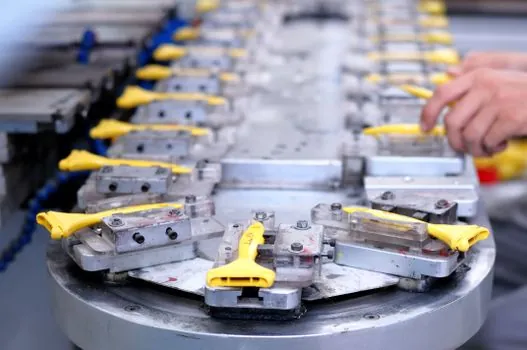
ISO 9001:2015 is now the baseline quality-system claim across the Indian multi-plant tier, with Asha Spring and Santosh both publishing certificates, though Santosh still references the older ISO 9001:2008 line for its 1982-established operation [S3][S6]. The Chinese cluster shows ISO 9001 audit marks on the larger factory profiles (Woxin Industries) but smaller Songjiang trading-style factory listings do not always display a certification badge, which is a flag for RFQ clarification rather than a hard rejection [S1][S7].
Material-grade disclosure is inconsistent across the three clusters. Made-in-China listings explicitly name SUS304 stainless and carbon steel as the two dominant stock wire grades, and the price ladder (US$0.01-0.09/piece for stainless wire-form clips versus US$0.03-0.12/piece for carbon-steel torsion springs) closely tracks raw-material cost [S8]. Indian and UK catalogues describe "high-grade" wire and "stainless steel" without routinely publishing a UNS grade, which means the procurement engineer should add an EN 10270-1 (patented carbon spring wire) or EN 10270-3 (stainless spring wire) callout to the RFQ when fatigue life matters. For buyers also specifying industrial adhesive bonding of spring assemblies or surface treatment, a parallel material data sheet should be requested because the spring supplier does not always control the coating line.
Selection rules: matching load class, deflection, and environment to a factory
For static, low-cycle industrial applications (cabinet latches, light valves, vending-machine coil springs), a Chinese custom wire-forming factory quoting in the US$0.14-0.99/piece range is the cost-default choice and lead times are typically 15-30 days for custom lots [S8]. For mid-cycle automotive and white-goods work (extension springs under repeated tension, die springs in stamping tooling), the Indian ISO 9001:2015 plants with dedicated compression and die-spring capacity are a stronger fit, especially when the buyer needs a client-drawing-controlled run rather than a catalog item [S3].
For high-cycle or safety-relevant applications (railway bogie suspension, elevator buffer springs, crusher springs, grid-spring couplings), the selection should narrow to factories that publish relevant application references and a documented quality system, because the failure cost of a spring in these duties is many times the piece price [S2][S3]. Constant-force springs, garter springs, and assemblies are the niche where the UK engineered-products tier is most competitive, and European Springs' explicit positioning around pressing, stamping, and assembly work is a reasonable indicator of capability in this band [S5]. When the application is a structural or conveyor line adjacent to spring selection, the spec logic overlaps with conveyor chain and screw conveyor selection; the screw conveyor vs conveyor chain comparison lays out the same load/deflection trade-off in a different mechanical form, and the chain conveyor selection map repeats the pattern for a related drive-train choice.
Price bands, MOQ reality, and what to put in the RFQ
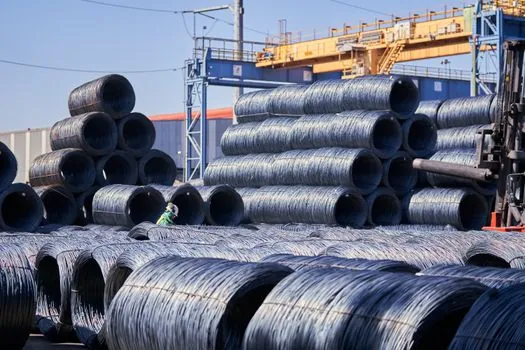
The verifiable per-piece bands in the August 2026 window are: stainless wire-form clips US$0.01-0.09, SUS304 double-hook tension springs US$0.14-0.35, vending-machine compression coils US$0.14-0.99, carbon-steel double torsion springs US$0.03-0.12, and stainless cable-hanger wire forms US$0.03-0.69, all on direct-from-factory MOQ terms on Made-in-China [S8]. Indian and UK suppliers publish application-list pricing ("Ask Price") rather than per-piece bands, which is consistent with their higher mix of custom-drawing work and lower catalogue dependence [S2][S3][S5].
An RFQ that produces a comparable quote from all three clusters should specify: wire grade to EN 10270-1 or EN 10270-3 (or ASTM A228 for music wire), free length, outer diameter, wire diameter, total coils, active coils, end type, load at a defined deflection (or deflection at a defined load), fatigue life requirement, surface finish, and any required ISO 9001:2015 certificate copy. Adding the duty cycle, operating temperature window, and corrosive environment (salt spray hours if relevant) lets the factory quote against the same engineering envelope and removes the usual 20-30% price spread caused by unspecified scope. For spring-assisted mechanisms that also involve sensors or closed-loop control, the photoelectric sensor selection rules article covers a complementary spec discipline, and a controller-side reader should pair it with the PID controllers and SIL reference when a spring-loaded actuator is part of a safety instrumented function.
Limits, failure modes, and what the catalogues will not tell you
Spring catalogues systematically understate three failure modes: stress-relaxation at elevated temperature (carbon steel wire above roughly 120 degrees C loses load rapidly without stress-relief heat treatment), corrosion fatigue in chloride-bearing environments (SUS304 is not a substitute for SUS316 in marine or de-icing salt exposure), and notch sensitivity at the end-coil transition where most custom-designed extension and torsion springs actually fracture. None of the supplier pages in the August 2026 research set publish a stress-relaxation curve or a salt-spray rating, so the buyer has to demand those data points explicitly [S1][S2][S3][S4][S5][S6][S7][S8].
For visual inspection of spring coils in received goods, an industrial borescope is the practical tool to verify end-coil condition on small-diameter extension and torsion springs without destructive disassembly. For surface protection in humid or mildly corrosive plant rooms, a coating specification in the RFQ is more reliable than relying on a stock finish, and a parallel industrial adhesive data sheet is worth requesting if any assembly is potted or bonded. Trackable signals for the next sourcing window: Songjiang and Zhongshan factory counts on the Made-in-China spring category page, additions of EN 10270 grade disclosure on Indian ISO 9001:2015 profiles, and any explicit constant-force or garter-spring line from a new Indian entrant that would compress the UK tier's pricing.