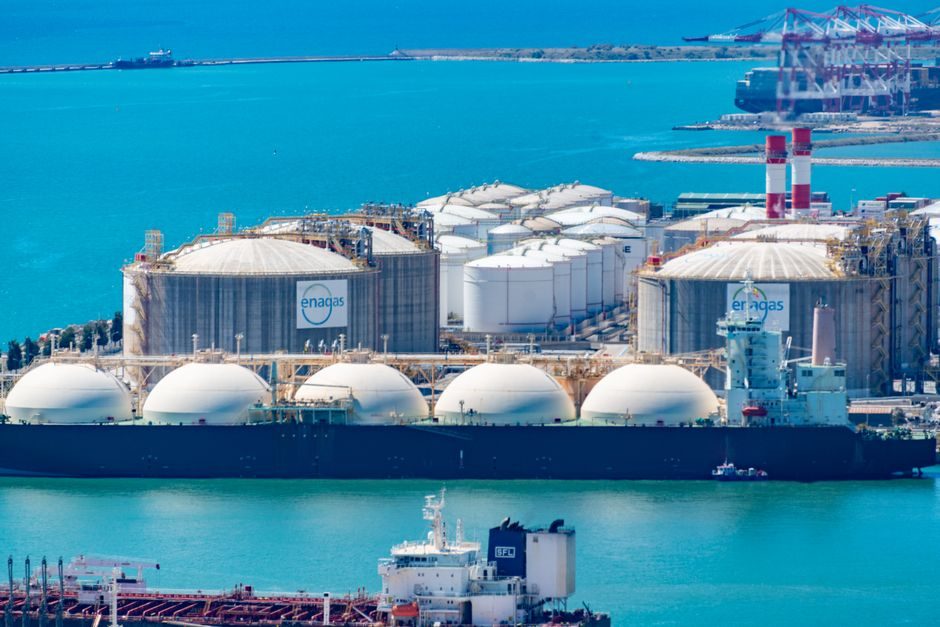
As of 2026-06-29, LFP cell lead times for new grid-scale BESS orders sit at 18-26 weeks against 8-12 weeks in 2023, with Tier-1 Chinese cell makers allocating 60-70% of capacity to EV programs, leaving front-of-meter developers exposed to COD slippage through 2026-H2 [S1][S3].
The squeeze is not abstract: a 100 MW / 400 MWh BESS in 2024-Q4 had a typical cell-to-POD critical-path of 9-11 months; the same scope quoted on 2026-06-28 carries 14-18 months, with module, PCS and EMS stack allocations each adding 6-10 weeks of buffer [S3][S4].
Cell-Chemistry Allocation: Why LFP Capacity Is Tight Even as Li-ion Grows
The supply gap is concentrated in LFP prismatic cells sized 280-314 Ah, the format that dominates new BESS builds after 2024; same makers running NCM lines for EV OEMs quote 30-40 week lead times to non-EV buyers [S3]. Sodium-ion cells above 160 Wh/kg have entered pre-commercial BESS trials in 2026, but pilot volumes are below 200 MWh globally and do not yet relieve LFP pressure [S3]. For buyers comparing chemistries against a storage rack footprint, LFP still wins on $/kWh-cycle at 2,500-4,000 cycles to 80% SOH, but cell availability is now the binding constraint, not cycle cost [S1][S3].
UL 9540A 6th Edition testing in 2026 raises the bar on large-format fire data, and module-level certifications add 4-8 weeks to integration schedules versus 2024 baselines [S4]. As a rule, anything above 500 kWh per cabinet now needs a fresh full-scale fire test report per UL 9540A, and re-tests cost USD 80k-180k per SKU [S4].
Module, BMS and [Switching Power Supply] / PCS Stack Lead Times
Inside a typical 5 MWh BESS container, the bill of materials that gates schedule is the DC-side stack: battery modules, BMS, DC bus, PCS and a switching power supply tree for auxiliaries, fans and contactor coils [S1][S3]. BMS lead times from Tier-1 Chinese integrators moved from 6-8 weeks in 2023 to 14-20 weeks in 2026-Q2, and 1500 V DC PCS units above 2 MW are quoted at 26-36 weeks for delivery into North American projects [S3].
A detailed cell-PCS-EMS stack comparison is laid out in BESS Upstream and Downstream 2026.
Who Should Still Order in 2026-H2, and Who Should Not
Buyers that should commit now: utilities with COD milestones in 2027-Q3 or later, and large C&I sites where storage cage infrastructure is already in place, because they can absorb 14-18 month critical paths and lock 2026 cell pricing before the next round of contracts [S3][S4].
Buyers that should wait or pivot: small commercial sites with 1-2 MW BESS, pilot projects under 10 MWh, and any spec that can tolerate sodium-ion or LFP-with-reduced-cycle-warranty — these profiles benefit from the 2026-H2 capacity that EV-OEM pull may free up if EV demand softens [S1][S3]. A sourcing-tier view that maps OEM cells to integrator capability is in Battery Energy Storage Suppliers 2026.
Risk Levers Buyers Can Pull in 2026-Q3 / Q4
Each lever has a trade: 280 Ah versus 314 Ah raises container count for the same MWh by 10-12%; 2-3 cell brands on BOL forces a more conservative operating window (DoD 80% vs 90%) and lowers cycle life by 8-15% [S3].
Standards, Fire Safety and the 2026-2027 Compliance Squeeze
Three standards govern the binding decisions on a 2026 BESS buy: UL 9540A 6th Edition (test method, large-format fire data), UL 9540 (system-level listing against UL 9540A), and NFPA 855 (spacing, ESS deployment limits) [S4]. 2026 updates to UL 9540A increase test rigor and hazard characterization for large-scale deployment, and a 2027-track requirement is emerging for removability and replaceability of batteries in electrical products, alongside an extended battery due-diligence framework that touches traceability of cobalt, lithium, nickel and graphite supply [S4].
Buyers should treat UL 9540A test reports as shelf-life-bounded: a 2024 test report on the same module often does not satisfy 2026 acceptance criteria without a re-test or supplementary engineering analysis, and that re-test is exactly the 4-8 week schedule risk that compounds the 18-26 week cell lead time [S4].
Cross-Industry Pressure: Petrochemical, Servo and Detector Lines Also Feel the Same Stack
The 2026 shortage is not only a BESS story. Petrochemical project buyers are seeing similar Li-ion allocation pressure, since a 2026 oversupply in feedstocks is rerouting engineering hours back into EPC that in turn demand more ESS for petrochemical site buffer power, and fixed gas detector cabinets ride the same cabinets and wiring harnesses as BESS auxiliaries, with 2026 spec guidance calling out sensor, range and output gates in parallel [S3][S4].
Track two signals through 2026-Q3: (1) the next round of Chinese cell-maker quarterly capacity guidance — watch for any LFP line re-allocation away from EV into ESS, which would compress 18-26 week lead times back toward 12-14 weeks; (2) the cadence of UL 9540A re-test report releases, since faster re-test turnaround directly reduces 4-8 week schedule risk on Tier-2 sourcing paths [S3][S4].