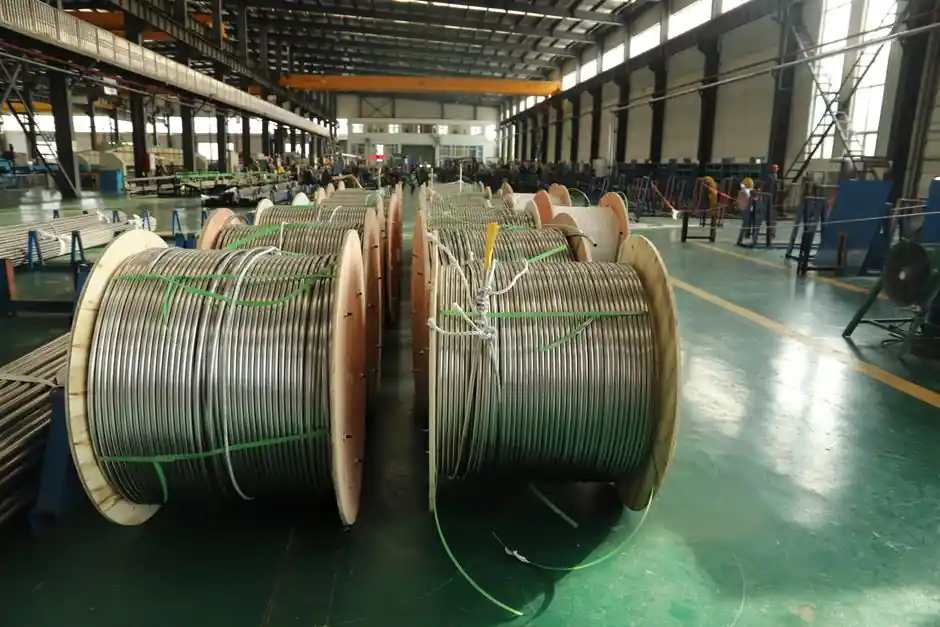
Chinese cable gland manufacturers listed between June and August 2026, including DIFVAN, Gordon Electric, VIOX, Wenzhou GSH, SINO Connector, Jixiang, and Hoonsun, are now offering factory-direct IP68 brass and nylon glands in metric, PG, and NPT threads for OEM and EPC buyers [S1][S3][S5][S8].
The active product range spans M12 to M40 metric thread sizes, PG7 to PG29, and equivalent NPT fittings, with body materials split between free-cutting brass with nickel plating, PA66 nylon (UL94V-2), and SS304/SS316L stainless steel [S3][S5][S7]. Explosion-proof variants carry ATEX and IECEx Ex d IIC Gb markings for Zone 1 and Zone 2 hazardous areas, and EMC/EMI versions are listed for shielded-cable retention [S1][S6].
Material families and the rating trade-off
Brass cable glands with free-cutting brass bodies and standard nickel plating remain the default industrial choice, with IP68 (10 bar) sealing offered as the standard rating and zinc plating available on request for cost-sensitive builds [S3]. The brass option delivers high mechanical strength and good conductivity but adds weight compared to plastic, making it the typical pick for control cabinets, power distribution, and outdoor panels [S1].
Nylon (PA66) glands with UL94V-2 flammability rating and NBR or EPDM sealing elements dominate low-voltage and indoor automation work, with working temperature windows typically published at -40 °C to 100 °C for short-thread and standard PG bodies [S5][S7]. IP66 and IP68-5Bar ratings are both stocked, and metric threads such as M16×1.5 are the most common catalog entry for control-cabinet and junction-box builds [S5][S7].
Stainless steel SS304 and SS316L glands target hygienic, pharmaceutical, and marine classification-society projects, where corrosion resistance and FDA-compliant finishes outweigh the higher unit cost [S1]. For long-term reference on how these glands sit inside a full cable-management assembly, the cable gland encyclopedia entry covers sealing ring geometry and torque practice.
Thread systems and clamping range
Three thread families coexist in 2026 catalogs: metric ISO (M12×1.5 through M40×1.5), PG (PG7 through PG29), and NPT tapered pipe threads, with G (BSP) listed by some makers for European panel builders [S2][S5][S7]. The metric M16×1.5 entry is the single most-stocked variant across the surveyed Chinese suppliers, reflecting its dominance in 4 mm² to 10 mm² control-cable work [S7].
Multi-cable glands with multiple elastomer holes are now offered as a separate product line by DIFVAN in brass, stainless steel, and nylon, allowing two or more cores to pass through one body while maintaining a single IP68 seal [S4]. For non-armored cable retention, Jixiang publishes a single-compression design focused on indoor and light-industrial enclosures, with double-compression bodies reserved for armored-cable retention in high-vibration sites [S1][S9].
Ingress protection and sealing technology
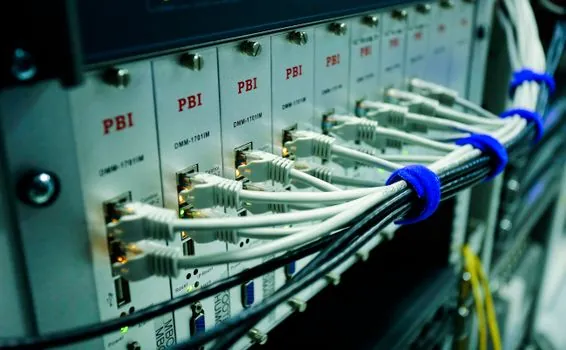
IP68 at 5 bar or 10 bar is the headline rating across brass and nylon families, with multi-seal NBR or silicone rubber elements behind the compression nut to handle both radial and axial cable movement [S1][S3][S5]. For comparison, IP66 nylon glands are typically chosen for general outdoor cabinet entries where continuous submersion is not expected, and IP54 nylon screw plugs close unused M-thread entries on the same enclosure [S5].
The sealing design choice interacts with the gland's gland packing function on dynamic or high-temperature lines, where elastomer compression set and chemical compatibility with the cable jacket become the limiting factors. Silicone seals extend the upper temperature limit; NBR remains the cost default for mineral-oil and general-purpose environments.
Hazardous-area, EMC, and special-function bodies
Explosion-proof glands certified to ATEX and IECEx Ex d IIC Gb are listed for petrochemical, natural gas, coal-mine, and dust environments, using a flame-path design that prevents internal arc propagation to the outside atmosphere [S1][S6]. EMC/EMV/EMI/RFI variants from SINO and similar makers add 360° shielded-cable termination, which is required when the cable gland sits in the bonding path of a VFD or instrumentation loop [S6].
Marine-grade glands, flange-type glands for large-diameter cables, and metal-hose variants for flexible corrugated protection round out the special-function set, each tied to classification-society or panel-design requirements rather than to a single IP number [S1]. On the broader enclosure side, the same IP and material logic drives the lamps and light fittings used in Zone 1 lighting, where gland and luminaire certifications must be matched.
Comparison of the three main body materials

For typical industrial specifying, brass, nylon (PA66), and stainless steel line up against four decision criteria: corrosion resistance, upper temperature limit, typical IP rating, and relative unit cost. Brass with nickel plate offers good corrosion resistance, a working ceiling around 100–120 °C with standard NBR seals, IP68-10Bar as standard, and a mid-range unit cost [S3]. Nylon PA66 offers fair corrosion resistance, a -40 °C to 100 °C window, IP66 or IP68-5Bar, and the lowest unit cost [S5][S7]. SS316L offers the best corrosion resistance, the widest temperature envelope, IP68 ratings, and the highest unit cost [S1]. Engineers should pick by environment first, IP second, and cost last, because an under-specified marine or chemical site will fail long before the cheaper gland pays back.
How 2026 suppliers position for OEM and EPC buyers
DIFVAN publishes factory-direct brass and multi-cable gland lines with bulk, OEM, and custom-size quoting routes, and lists IP68 nickel-plated brass as its standard finish with zinc plating on request [S3][S4]. Gordon Electric runs an M16, PG21, PG29, and short-thread nylon catalog with SGS, CE, ROHS, IP68, and REACH documentation, plus a corrosion-resistant and weather-resistant metal sub-line for outdoor industrial work [S5].
VIOX organizes its range by function: cable entry matching, thread and clamping range, sealing requirements coordinated with enclosure design, and special functions covering armour, EMC, or strain relief [S8]. Wenzhou GSH Electric and SINO Connector list the broad commodity spread (nylon, brass, stainless, EMC, spiral, bend-protection) on B2B portals, and Jixiang focuses on metal and nylon non-armored retention for OEM cable-assembly shops [S2][S6][S9]. For project engineers mapping these suppliers against instrumentation and control-cabinet builds, the cable gland sizing and selection guide walks through the same metric-versus-PG and IP-versus-zone decision tree.
Limits, mis-specs, and what to verify before ordering
Cable gland failures in the field are rarely the body's fault: they trace to elastomer-to-jacket chemical incompatibility, missing entry-thread engagement length, or a single-compression gland on an armored cable [S1]. Specifiers should also confirm EN 62444 strain-relief testing, the ATEX/IECEx certificate scope (gas group IIC versus IIB, dust group IIIC), and the IP test depth and duration rather than the IP number alone.
For buyers sourcing from Chinese factory-direct channels, the next node to track is the published EMC gland test data for shielded-cable retention and the marine classification-society certificate lists, both of which are updated on each supplier's product page through the rest of 2026. Pairing that with a clean cable tray and construction equipment layout closes the mechanical loop on a gland-to-tray build.