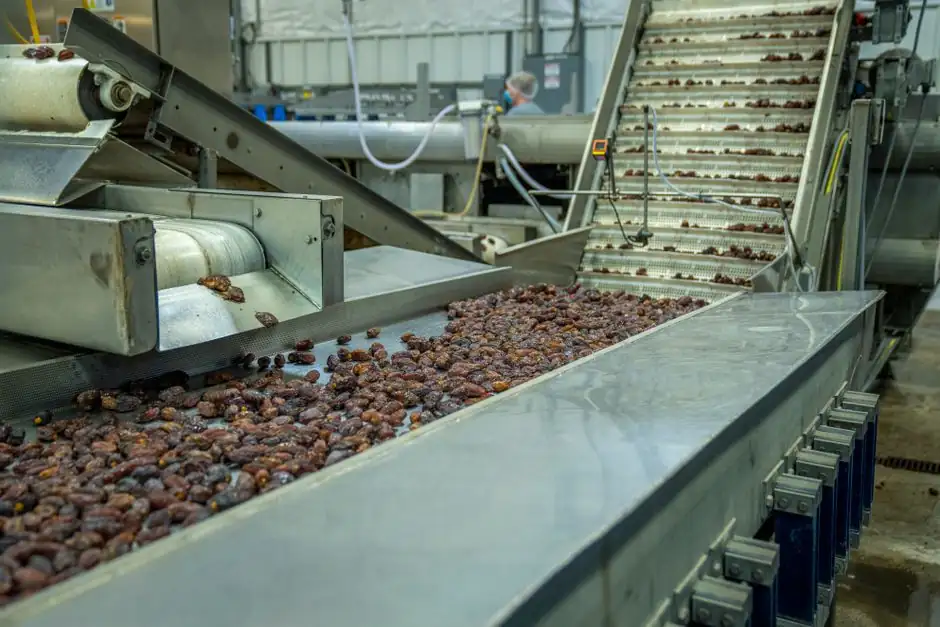
Chain conveyors divide into five distinct operating families: double-strand, center, vertical, plate, and tubular drag, with each geometry matched to a specific load profile, route shape, and sanitation requirement, per current manufacturer line cards [S1][S2].
Across the Singapore and Chinese OEM catalogs surveyed, the dominant material-handling niches are paper-stock feeding to hydrapulpers, food and bulk-solids transfer between floors, and bulk waste handling in marine and steel-mill service, each pinned to a different chain topology [S1][S2][S3].
Double-Strand and Center Chain Conveyors for Heavy Bulk Loads
Double-strand and center chain conveyors run two parallel strands of chain through a common trough, so each strand shares the load and the chain cannot twist under shock loading, a topology widely listed for mill-duty and bulk-handling service [S1]. Double-strand chain is the default pick for coarse, lumpy, or high-density bulk: scrap, bales, slabs, and ore. Plate width commonly sits in the 300-1200 mm band, with chain pitch in the 100-200 mm range on mill-duty units, and throughputs typically between 30-200 t/h on paper-stock and scrap lines [S1][S3]. In paper mills the trough plate is stamp-formed in one piece, paired with a hardened-face reducer, which the vendor cites as the durability differentiator versus welded-plate competitors [S3].
Plate and En-Masse Conveyors for Waste-Paper and Pulp Lines
Plate chain conveyors (often called en-masse conveyors) carry material on flights attached to a single chain running inside an enclosed casing, the standard feed to a hydrapulper in waste-paper and OCC lines [S3]. V-shaped back plates on both sides of each chain plate lift carrying capacity and shed tramp debris away from the sprocket, a feature that the vendor credits with a measurable service-life gain on contaminated furnish [S3]. Operating speed is operator-adjustable to match the hydrapulper demand curve, with typical chain speeds of 0.1-0.5 m/s on stock-feed duty [S3]. Periodic grease-gun lubrication through zerk fittings is the standard maintenance schedule, and an elastic take-up on the chain plate prevents derailment as the chain stretches in service [S3].
Vertical Chain Conveyors for Tight-Footprint Lifts

Vertical chain conveyors use flights or buckets on a continuous chain to lift bulk material in a fraction of the floor space of an inclined belt, with marine and bulk-solids plants listing them for hatch, silo, and elevator service [S1]. The enclosed-cage design also limits dust release, which matters in food and chemical plants where cross-contamination is a sanitary-design issue, not just a nuisance [S1]. For high lifts, the limiting factor is chain pitch elongation rather than motor power, so specification should track working load, lift height, and the number of take-up adjustments rather than tonnage alone [S1].
Tubular Drag (Chain-Vey Style) for Gentle, Multi-Plane Food and Chemical Transfer
Tubular drag conveyors move product on circular discs pulled by a chain through a sealed tube, with the layout able to run horizontal, vertical, and any combination in between, which is why large-scale food, coffee, and bulk-solids producers pick them for between-floor and between-building transfer [S2]. The fully enclosed dust-tight tube prevents product declassification, sifting, and separation, and the disc-on-chain geometry lets the line change over between ingredients without cross-contamination, a key reason co-packers adopt the technology [S2]. Clean-in-place is structured in three tiers by the OEM, with Tier 1, Tier 2, and Tier 3 ratings defining wash-down intensity, retrieval access, and dry-clean suitability, so sanitary spec writing maps directly to those published tiers [S2]. Capacities, U-tracks, tensioners, inlets, and discharges are all configurable per application rather than selected from a fixed model matrix [S2].
Comparison: Five Chain-Conveyor Topologies on Four Selection Criteria
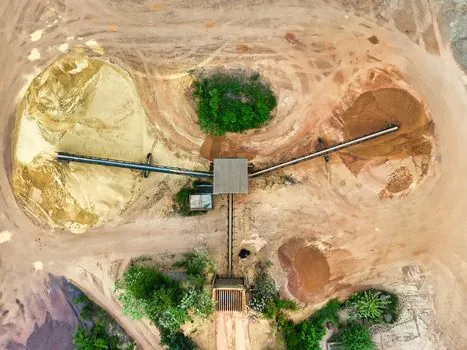
Selection hinges on four axes, and the matrix below is what a spec-first buyer should walk through before vendor talks begin.
Double-strand and center chain: best for heavy, lumpy, abrasive bulk in a single horizontal or shallow-incline run; lowest unit cost per ton; weakest at multi-plane routing; sanitation class typically industrial, not wash-down [S1][S3]. Plate (en-masse) chain: best for paper stock, wood chips, and granular feed at moderate inclines up to roughly 45 degrees; enclosed casing helps dust control; chain stretch is the main maintenance trigger [S3]. Vertical chain: best for high-lift, tight-footprint service in mills, grain, and marine terminals; space-efficient but limited on horizontal run length [S1]. Tubular drag (Chain-Vey style): best for gentle, sanitary, multi-plane transfer of food, chemicals, and free-flowing powders; highest unit cost; clean-in-place tiers map to regulated industries [S2]. Roller conveyors cover a different operating envelope: they are unpowered or motorised roller frames for carton and tote flow, not for the bulk-tonnage or sanitary-multi-plane jobs that chain conveyors target. For buyers deciding between bulk-material transport modes, the belt vs chain conveyor spec-driven selection guide lines the two technologies up against the same throughput, incline, and maintenance criteria.
Selection Criteria: Material, Route, Sanitation, and Wear
Four criteria drive model selection more than any headline tonnage number.
Material character decides topology: lumpy or abrasive bulk belongs on double-strand or plate chain with hardened sprockets; free-flowing powders, granules, and fragile flakes belong on tubular drag where the disc-on-chain geometry protects particle integrity [S1][S2][S3]. Route geometry decides between single-plane and multi-plane: horizontal or shallow-incline work fits double-strand, center, and plate chain; multi-plane, between-floor, or between-building runs fit tubular drag, with vertical chain reserved for the lift segment of a hybrid system [S1][S2]. Sanitation class decides sealing: dust-tight enclosed tube and CIP tiers are required for food, dairy, and chemical duty, while industrial scrap and ore duty tolerates open or gasketed troughs [S2][S3]. Wear and maintenance decide consumable spec: chain pitch, sprocket hardness, take-up type, and lubrication interval are the real life-cycle cost drivers, and a chain plate with V-type back plates plus an elastic take-up is the typical durability package on paper-stock duty [S3]. For a closer look at how the broader conveyor family lines up, see vibrating conveyor selection for food and beverage lines, which covers a related but distinct bulk-handling topology.
Standards, Maintenance, and Failure Modes to Spec Against
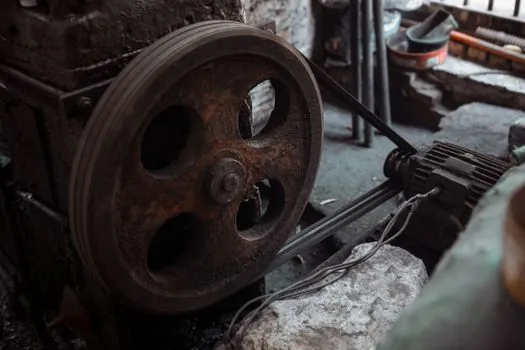
Chain conveyors are not governed by a single universal standard, so spec writing draws from chain standards, drive standards, and food-contact or ATEX requirements depending on the duty. [S2]
Chain and sprocket geometry generally references ISO 606 (short-pitch transmission chain) and ISO 1977 (conveyor chain) for dimensional compatibility, with attachment chain and bucket elevator chain cited as separate sub-families by mill-equipment vendors. Drive trains typically reference IEC 60034 for motor duty and an in-line helical-bevel or shaft-mounted reducer, with hardened-face gear sets cited as the heavy-duty option [S3]. Sanitary duty pulls in food-contact material rules (FDA / EU 1935/2004) and clean-in-place definitions tied to the OEM's published tiers rather than a single external CIP standard [S2]. The most common failure mode across all five topologies is chain pitch elongation from wear, which the vendor addresses with an elastic chain-plate take-up that prevents derailment before elongation reaches the sprocket-tooth skip threshold [S3]. Lubrication is the second recurring failure driver: grease-zerc service at fixed intervals is the standard schedule, and under-lubrication is the usual cause of premature pin and bushing wear [S3].
For working reference, chain conveyor, conveyor chain, and cable drag chain cover the engineering fundamentals behind the five topologies; buyers should also confirm whether roller chain or silent chain sub-types apply to their specific drive or attachment geometry before locking the BOM.