
Worldwide CNC controller demand is projected to reach USD 3.4 B by 2026, up from the 2021 baseline, with growth split roughly evenly between hardware and software/services offerings across 2-axis through multi-axis machine types [S5]. The parent CNC machine market it feeds is forecast at USD 96.85 B in 2026, expanding to USD 187.54 B by 2033 at a 9.9% CAGR [S6].
That parent figure matters more to a buyer than the controller line on its own: every new lathe, mill, or plasma cutting table that ships carries a motion controller and increasingly a PLC-style logic core on the same board, so the controller attach rate is functionally tied to machine-build volume, not to retrofit cycles [S1][S6].
Embedded PC-Based Hardware Now Leads New Product Listings
As of 2026-06-01, the DirectIndustry embedded CNC controller index lists 8 manufacturers and 19 active products, with Tex AUTOMATION alone contributing 8 entries — the single largest share of that catalogue [S1]. The Tex Z32 CNC dc FlorenZ runs a Linux-based FlorenZ OS in an optional Windows VM, while ANCA Motion's 900 series uses an Intel Baytrail Celeron N2930 quad-core at 1.83 GHz with 4 GB RAM, and D.Electron's AMC5 platform steps up to a current-generation Intel Core i7 with SSD storage for combined HMI and real-time control [S1].
What unifies these listings is the architectural shift from proprietary DSPs to commercial-off-the-shelf x86 silicon with deterministic real-time layers: Hypertherm's EDGE Connect CNC, Delta Tau's RC300 robot controller, and ESA's Power B (a PAC — programmable automation controller) all expose PLC function blocks, USB backup, and fieldbus networking on the same unit that drives interpolated axes [S1]. For a spec engineer, that collapses three bills of materials — HMI panel, PLC, and motion card — into a single SKU, which is why the embedded form factor is crowding out legacy standalone controllers in sub-5-axis machines [S1].
Lathe Controllers Cluster at 3- to 5-Axis With 29-Axis Flagships
The 2026-03-30 DirectIndustry lathe CNC controller index carries 7 manufacturers and 18 products, with Tex AUTOMATION again dominant at 7 entries and GSK CNC Equipment and FAGOR each at 4 [S2]. Axis-count filter data shows 3-axis at 4 products, 4-axis at 3, 5-axis at 3, and a long tail of high-end flagships at 8-axis, 12-axis, 28-axis, and 29-axis (one product each) [S2].
Mass-market turning therefore remains a 3- to 5-axis problem, while the multi-axis entries address mill-turn and multi-spindle Swiss-type machines where 12+ axes of interpolated motion are common [S2][S3]. On the price side, made-in-China listings for CNC turning controllers cluster between USD 220 and USD 458 per set at MOQ 1, with Shenzhen Guanhong Automation's 4-axis TCP rotary-table controller in the upper band and Chongqing SiyueEr's TCP boring-tool controller in the lower band [S4]. A buyer should expect sub-USD 500 per axis-pair hardware for Asian-market 4-axis turning controllers, with European and US equivalents sitting 2-3x higher on lead time rather than raw BOM cost [S2][S4].
Milling Controllers Track 4- and 5-Axis With 28/29-Axis Outliers
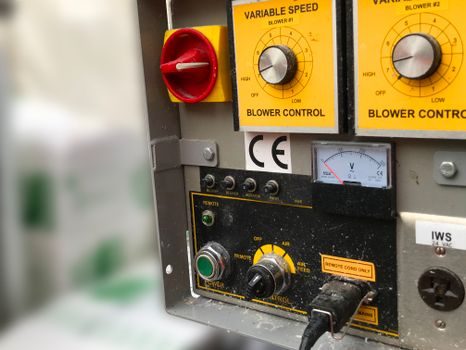
As of 2026-04-17, the milling CNC controller index holds 9 manufacturers and 22 products, with Tex AUTOMATION (7), BZT Maschinenbau (4), GSK (4), and WeiHong Electronic (2) leading the count [S3]. Axis distribution mirrors the lathe side: 4-axis at 6 products, 3-axis at 4, 5-axis at 4, and a 28- and 29-axis product each marking the high end of simultaneous interpolation [S3].
For a process engineer choosing a 3-axis mill controller, the practical decision axis is no longer the controller itself but the upstream CAD/CAM post-processor and the fieldbus choice — EtherCAT, PROFINET, or CANopen — and the downstream PID controller loop on spindle and servo drives, all of which now ship as integrated software stacks rather than separate cards [S1][S3]. One consequence: a single 3-axis mill retrofit is increasingly a software upgrade plus a panel swap, not a cabinet rebuild.
Cutting and Plasma Controllers Diverge on Real-Time Latency
Cutting-machine CNC controllers, including Hypertherm's EDGE Connect and the ESA S 505 plasma/oxyacetylene platform, show a different design point: the cut-quality loop runs in microseconds, so these platforms lean on proprietary Phoenix-class CNC software and CoDeSys Soft-PLC integration with CANopen networking rather than general-purpose Linux [S1]. The Hypertherm unit pairs that real-time core with a Microsoft Windows 7 Embedded HMI on a 15-inch IPC, a configuration that buyers should match against IEC 61508 SIL-2 functional-safety expectations if the table feeds a safety-integrated production line [S1].
Cutting tables are also where the "PAC" label reappears most: ESA's Power B explicitly markets as a programmable automation controller, not a pure CNC, with up to three interpolated axes and a hardware-independent CoDeSys runtime, blurring the line between PLC and CNC for OEM machine builders shipping at scale [S1]. Spec sheets published through 2026 do not yet converge on a single standard for PAC-CNC convergence, so buyers should pin functional-safety and EMC requirements to the end-application standard, not to the controller's marketing category [S1].
Lathe vs Milling vs Cutting Controller: Selection Criteria
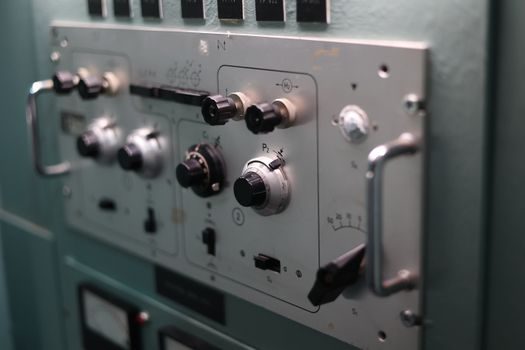
Across the three DirectIndustry indexes, a direct comparison against four decision criteria clarifies which form factor fits a given build [S2][S3][S1]:
1) Axis count ceiling — Lathe and milling indexes both cap mainstream offerings at 3-5 axes with 28- and 29-axis flagships, while cutting controllers cluster at 3 axes for plasma/oxyacetylene [S1][S2][S3]. 2) Real-time OS — Lathe/milling listings split between Linux (FlorenZ) and Windows Embedded, with cutting platforms favouring proprietary Phoenix-class CNC over general-purpose Linux [S1]. 3) PLC integration — Cutting and robot controllers (Delta Tau RC300) expose native PLC function blocks and fault logging; lathe/milling units generally leave PLC logic to a separate PLC in the cabinet [S1]. 4) Price floor — China-made 4-axis turning controllers land at USD 220-458/set at MOQ 1; European and US equivalents for the same axis count are not listed below roughly USD 1,500 once software licence and post-processor support are bundled [S2][S4].
The matrix outcome: for sub-5-axis retrofit on a lathe or mill, the embedded PC-based category dominates on price-performance; for safety-rated cutting tables, a PAC-class platform with explicit PLC integration is the lower-risk path even at higher unit cost [S1][S2][S3].
Component and Networking Constraints to Watch
Three constraints showed up repeatedly in the 2026 catalogue data and should be locked in early on a buyer's spec. First, x86 silicon dependency: every embedded CNC controller indexed in 2026 uses an Intel Celeron, Core i7, or older Baytrail part, which exposes the supply chain to the same allocation cycles that are tightening the wider PAC supply in 2026 and that buyers have already flagged in the machine-vision component shortage [S1]. Second, OS support horizon: Windows 7 Embedded and Windows CE 4.2 still appear on 2026 spec sheets, and Microsoft has ended mainstream support on both, so any controller specifying those OS images needs a maintenance contract before the unit ships [S1]. Third, fieldbus choice locks the I/O ecosystem — CoDeSys-based platforms tend to lean on CANopen, while higher-end PACs offer EtherCAT and PROFINET, and a controller swap mid-life-cycle typically forces an I/O migration [S1].
Trackable Signals for the Next Two Quarters
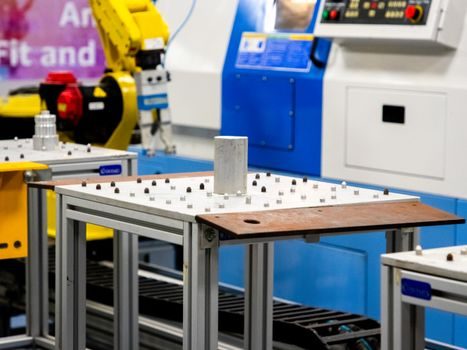
Two indicators are worth monitoring as a buyer or specifier through Q3-Q4 2026. First, the ratio of new embedded PC-based entries to legacy DSP-based entries on DirectIndustry's embedded and lathe indexes — the 2026-06 and 2026-03 snapshots already lean 8-of-8 manufacturers toward PC-based architectures, so any reversal would signal a silicon-supply or functional-safety shift [S1][S2]. Second, axis-count distribution movement on the milling index, where 4-axis and 5-axis each sat at 6 and 4 products as of 2026-04-17; a re-weighting toward 5-axis would confirm the 9.9% parent-market CAGR is being driven by complex-part machining rather than commodity 3-axis volume [S3][S6]. The published USD 3.4 B 2026 baseline for the controller line itself was set in 2021 and has not been re-issued, so any 2026 H2 update to that figure is the cleanest single check on whether the embedded-Linux, x86-CPU trend is pulling controller revenue above or below the original trajectory [S5].