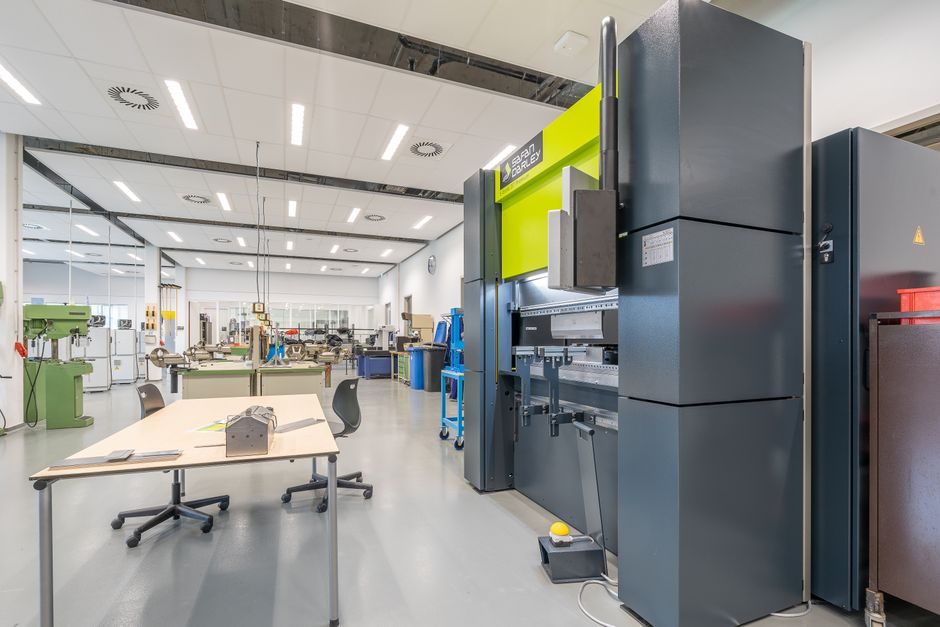
A modern CNC controller is no longer a single-axis pulse generator bolted to a mill — it is a multi-axis motion controller that simultaneously drives spindles, servos, robots and machine-vision loops from one G-code interpreter, with 24-bit servo resolution and EtherCAT-style deterministic buses now standard on mid-range 2026 product lines [S3].
The 2026 deployment pattern is dominated by two routes: retrofit kits that swap obsolete controllers on existing machine frames, and greenfield cells where a CNC, a collaborative robot and a vision-guided loader share one PID controller network. Universal-controller architectures advertised by Asian OEMs such as SYNTEC explicitly position themselves as cross-machine glue — one controller platform mapping onto lathes, mills, laser cutting heads and robotic cells with a single programming surface [S3].
Architecture of a 2026 smart CNC controller stack
A 2026-class smart CNC controller breaks into four hardware tiers: the human-machine interface, the real-time motion kernel, the servo/IO layer, and the field-level safety bus, with 24-bit absolute encoders and high-resolution servo drives now common in the mid-range rather than premium tier [S3]. SYNTEC's published product data lists servo drives with 24-bit resolution and 16 million pulse units per revolution, paired with a controller it describes as a "universal controller system that is compatible with all machines" — meaning the same HMI and motion kernel can be re-flashed for milling, turning, grinding, laser, and robotic profiles [S3].
That same universal-kernel philosophy shows up in the academic literature on automatic tool-changing manipulators, where the motion controller is split into trajectory planning, position-loop, and tool-handshake sub-modules, each running on its own real-time task and exchanging state over a deterministic fieldbus rather than a generic Ethernet link [S1]. Chinese researchers at the University of Science and Technology Beijing formalised this split in 2016, and the design pattern has migrated into commercial stacks — separate trajectory planning, position loop, and I/O handshake tasks running in parallel on the same controller, with the tool-magazine handshake gated by an I/O-handshake task rather than the motion kernel [S1].
Where CNC controllers add real value in a smart cell
Automatic tool changing is the single highest-ROI upgrade on a CNC cell because it is the bottleneck that turns a 5-axis mill into a lights-out asset, with manipulator-based tool swap reducing non-cutting time from tens of seconds to under five seconds per tool change on a properly designed motion controller [S1]. The original Springer paper frames automatic tool change as a system-level problem, not a mechanics problem — the controller has to coordinate the spindle orientation, the magazine index, the gripper open/close, and the draw-bar release as a single synchronised state machine, otherwise the cycle time advantage evaporates [S1].
Beyond tool change, the same controller platform drives three other in-cell functions that pay back fastest: COBOT tending of the work envelope, in-process vision inspection, and on-machine probing for closed-loop dimensional feedback. SYNTEC markets a COBOT designed specifically for flexible automation, safe human collaboration, and "easy integration in smart manufacturing" — i.e. dropping onto an existing CNC cell without fencing, with safety-rated monitored stop replacing traditional hard guarding [S3]. The economic case for that integration is the same one that made CNC itself dominant: a digitally controlled part is reproducible to design tolerance regardless of operator skill, so the production rate depends on the controller and the cell layout, not the machinist on shift [S2].
Selection criteria: controller vs. controller retrofit vs. full smart cell

For a process engineer choosing a 2026 CNC controller platform, four decision criteria carry the most weight: open architecture versus vendor lock-in, real-time bus type, servo resolution, and field-service footprint. SYNTEC quotes 100% technical support coverage, 24-hour service-request response, and 8 international branches on its corporate page — concrete service metrics that matter more than peak axis count when the cell is a production bottleneck [S3].
The three practical deployment options compare as follows on the criteria that drive purchase order sign-off:
Option 1 — New universal controller on a retrofit machine frame: lowest capex (typically 30-50% of a new machine), high flexibility, vendor lock-in is moderate because the controller is the new addition. Best when the mechanical structure is sound but the original control is obsolete, the spare-part chain is broken, or maintenance frequency is "often" [S3]. Option 2 — Vendor-matched controller plus native servos plus native drives: highest closed-loop performance, tightest integration, but highest capex and hardest to migrate. Best for new high-end 5-axis or multi-channel machines where thermal and geometric error compensation must be tuned at the factory [S1]. Option 3 — Universal controller plus third-party COBOT plus smart camera for tending: the fastest path to a lights-out cell, but requires the controller to expose a clean OPC UA or EtherCAT master so the robot and the vision loop are deterministic, not best-effort [S3].
Use cases that justify the smart-controller premium
Aerospace structural parts, medical implants, and short-run automotive prototyping are the three verticals where CNC machined parts carry a documented precision and repeatability premium over manual machining — the digital design file is reproduced exactly on every cycle, with variability driven by the machine's thermal and mechanical error sources rather than by operator skill [S2]. The implication for controller selection is that thermal error compensation and geometric error compensation have to be implemented in the controller, not just measured offline — which is why academic work on real-time compensation of geometric and thermal error has been a continuous research thread since 2012 and still influences commercial firmware design [S1].
Material flexibility is the second commercial argument. CNC works across aluminium, steel, plastics and composites, and the controller has to expose a material-aware post-processor (feeds, speeds, jerk limits, coolant commands) without forcing a controller swap per material family [S2]. Liquid-metal amorphous alloys and high-silicon aluminium die-cast blanks are emerging material challenges the controller has to handle through the post, not through hardware changes — the controller's material library is now a procurement-grade asset [S2].
Limits, failure modes, and what the controller cannot fix
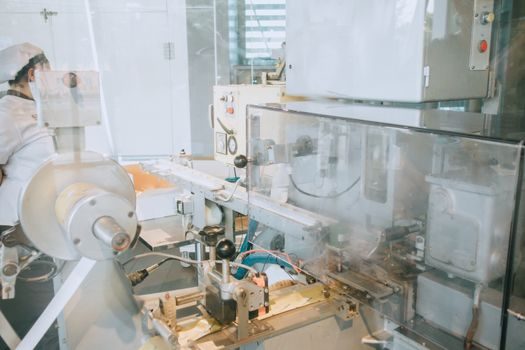
A smart controller cannot rescue a worn mechanical structure: backlash, ways wear, spindle taper damage, and ball-screw preload loss dominate the final part tolerance long before the controller's loop bandwidth does. The SYNTEC retrofit pitch implicitly accepts this — its "low performance / no spare part / often maintenance" pain points are mechanical, and the controller swap addresses only the control half of the problem [S3].
Reliability allocation studies on CNC machine tools show that the controller is typically a small fraction of total system downtime; mechanical and hydraulic subsystems dominate, which is why fuzzy-reliability allocation by task and statistical tool-life models are research fields in their own right rather than controller features [S1]. Engineering takeaway: budget the controller for what it can do (interpolation, synchronisation, error compensation, cell orchestration) and run a parallel mechanical refurbishment plan for what it cannot.
Standards, sourcing, and trackable signals
No single IEC or ISO standard governs the smart-CNC cell as a unit; the build is layered — IEC 61131-3 for PLC programming on the controller's soft-PLC, ISO 23247 for digital-twin frameworks in manufacturing, IEC 61800 for the servo drive family, and ISO 10218 plus ISO/TS 15066 for the COBOT safety layer. Sourcing in 2026 is dominated by Asian OEMs (SYNTEC, Fanuc-class, GSK-class) competing on universal-kernel flexibility and on regional service footprint rather than on raw axis count [S3].
For the cell-level architecture, G-code loop stacks and mainline vendor architectures are the reference pair, while ball-screw closed-loop stages cover the mechanical half of a retrofit, and aluminium extrusion alloy and tolerance logic covers the workpiece side of the cell's material flexibility story.