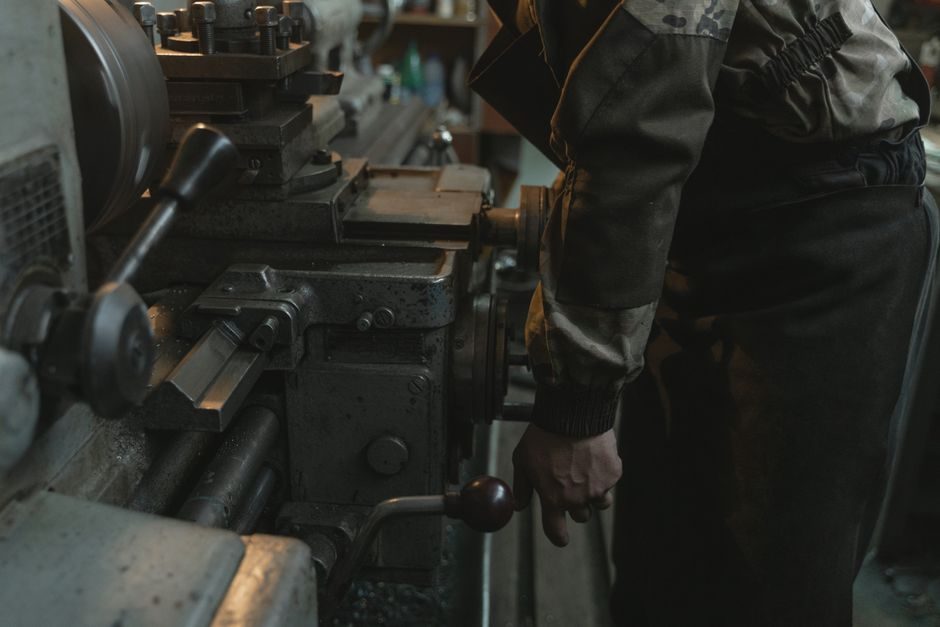
Cobalt is not mined as a standalone primary product — virtually all of the ~290,000 tonnes of refined cobalt produced in 2025 was recovered as a by-product of copper and nickel operations, with the Democratic Republic of Congo (DRC) accounting for roughly 76% of mine supply and Indonesia contributing the bulk of the remainder through laterite-nickel HPAL [S1].
That concentration shapes every technology decision downstream: a spec engineer choosing between a hydrometallurgical sulfate circuit, a chloride leach, or a black-mass recycling line is, in practice, choosing how to handle a feed whose mineralogy, sulfur-to-metal ratio, and impurity envelope are dictated by the host Ni or Cu operation [S1].
Feedstocks and the mineralogy that drives the flowsheet
The two feedstock families that matter in 2026 are Cu-Co oxide ores from the DRC Copperbelt and Ni-Co laterite / sulfide feeds from Indonesia, the Philippines, Australia, and Madagascar [S1]. DRC oxides are typically heterogenite and malachite-style minerals in friable dolomitic-shale hosts with Co grades in the 0.3–1.0% range and Cu:Co ratios commonly between 5:1 and 15:1; laterite feeds are limonite/saprolite horizons with Co at 0.05–0.15% locked in manganese-oxide lattices, and sulfide feeds (Sudbury, Norilsk-style) carry Co pentlandite-hosted at similar low grades.
That mineralogy difference is decisive: oxide ores are amenable to direct sulfuric acid heap leach followed by solvent extraction, while laterites require high-pressure acid leach (HPAL) at 250–270 °C and 40–55 bar in titanium-clad autoclaves, and sulfides must be roasted or pressure-oxidised to liberate cobalt from the lattice [S1].
Black-mass feed — spent Li-ion NMC and NCA cathode scrap — has become the third meaningful feedstock, with Co content typically 5–15% by weight and the chemistry dominated by lithium, nickel, manganese, and graphite impurities that must be removed before the cobalt can be sold into battery-grade channels [S1].
Primary hydrometallurgical route: sulfate leach + SX + EW
The dominant cobalt flowsheet in 2026 remains sulfuric acid leaching followed by solvent extraction (SX) and either electrowinning (EW) or hydrogen sulfide / oxalate precipitation to a Class 1 (≥99.8% Co) intermediate [S1]. For DRC oxide ore, the sequence is crush → agglomerate (with H2SO4 and sometimes reductant such as SO2 or ferrous sulfate) → heap leach (60–180 days residence) → pregnant leach solution (PLS) at pH 1.5–2.5 with 1–6 g/L Co and 10–40 g/L Cu → Cu SX (LIX 984N or Acorga M5640 reagents) → Co SX (D2EHPA / Cyanex 272 or P507 in saponified form) → loaded organic stripped with spent electrolyte → cobalt EW at 200–400 A/m² using Pb-Sn or Pb-Ag anodes and stainless-steel cathodes.
The HPAL variant, used on Indonesian and New Caledonian laterites, runs at 250–270 °C with 40–55 bar autoclave pressure, sulfuric acid addition of 200–400 kg/t dry ore, and 60–90 minute residence, producing a PLS that requires sequential Fe/Al removal (typically by staged neutralisation to pH 2.5–4.5 with limestone or lime) before mixed Ni-Co SX and Co-Ni split SX. This route is capital-intensive — autoclave lines commonly run USD 1.0–1.8 billion for a 30–60 kt Ni / 3–6 kt Co per-annum project — and the neutralisation tailings (often called "gypsum stacks") remain the principal ESG constraint on new HPAL builds [S1].
Pyrometallurgical and chloride alternatives
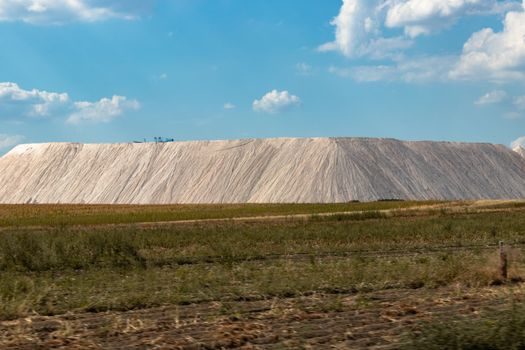
For sulfide concentrates and alloy feeds, the pyrometallurgical route is still standard: roast in fluidised-bed or rotary furnaces at 600–900 °C to drive off sulfur as SO2 (often captured for sulfuric acid), water-quench the calcine, then sulfuric acid leach of the water-soluble cobalt sulfate [S1]. When the feed is a Ni-Co matte or alloy (typically 30–60% Ni, 5–15% Co), the chloride route becomes attractive because it allows electrolytic separation of Ni and Co at the matte-leach stage.
In the Mattesbury / Falconbridge-style chloride circuit, matte is leached in HCl or FeCl3-NaCl brine at 70–90 °C, cobalt is selectively extracted with a tertiary amine (Alamine 336 or similar) or precipitated as CoS with H2S, and nickel is recovered downstream as NiCl2 for electrowinning or as NiSO4 after a sulfate swap [S1]. The chloride pathway's main lever is reagent cost: chlorine regeneration is energy-intensive, and titanium-clad equipment is mandatory above 120 °C to resist pitting.
For battery scrap, the dominant 2026 flowsheet is a pyrometallurgical pre-treatment (roasting at 400–700 °C under controlled O2 to burn off carbon and electrolyte solvents) followed by sulfuric acid leach and the same SX-EW train used for primary feed, with the additional step of selective Li recovery (typically as Li2CO3 via Na2CO3 precipitation) before the Co SX stage [S1]. Hydrometallurgical-only black-mass routes (direct acid leach of shredded cells, often with H2SO4 + H2O2 as reductant) are gaining share because they recover graphite as a sellable by-product, but they demand far more rigorous off-gas treatment for the HF released from LiPF6 electrolyte decomposition [S1].
Product forms, grades, and the spec sheet that matters
The bulk of 2026 cobalt output is sold as one of four product forms, and the spec sheet — not the route — decides which battery, superalloy, or chemical buyer will accept the lot [S1]. The four mainstream forms, with their typical specification envelopes, are:
1. CoSO4·7H2O (battery-grade cobalt sulfate heptahydrate): ≥20.5% Co, Ni ≤50–100 ppm, Cu ≤5–10 ppm, Fe ≤5–10 ppm, Ca ≤10 ppm, Mg ≤10 ppm, Na ≤20 ppm, Zn ≤5 ppm, pH 4.0–6.0 (10% solution), solution clarity ≤5 NTU. This is the form consumed by NMC/NCA cathode precursor (pCAM) makers and the dominant growth segment.
2.
3. Co(OH)2 (cobalt hydroxide, often called "Class 2 cobalt"): ≥60–63% Co on a dry basis, Ni ≤0.5%, Cu ≤0.05%, Fe ≤0.05%, S ≤0.5%, moisture 5–15% for filter cake. Sold to feed wet-pCAM lines that re-dissolve in-house.
4. Co metal briquette / rondelle (Class 1, ≥99.8% Co, often 99.9%): Ni ≤0.05%, Cu ≤0.005%, Fe ≤0.005%, S ≤0.005%, C ≤0.005%. The historic superalloy and cemented-carbide form; volumes shrinking as battery sector scales [S1].
Comparison: four flowsheet options against decision criteria
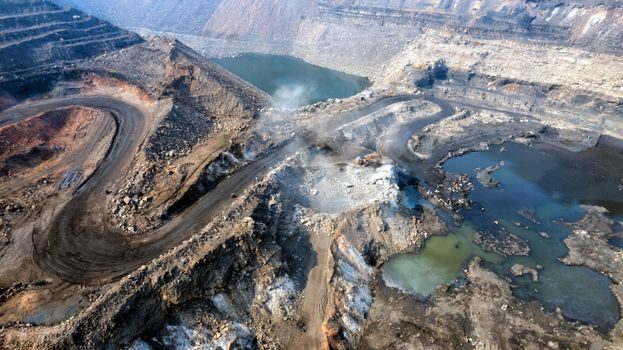
For a project team choosing a route in 2026, the four realistic options line up against the criteria a process engineer actually weighs as follows [S1]:
Sulfide matte pyromet + chloride SX: capex USD 60,000–120,000/t annual Co, 36–48 month build, very high recovery (>95%) and clean separation, but locked into a host Ni-Cu operation and dependent on a stable matte supply contract.
Black-mass recycling (pyro + hydromet): capex USD 10,000–25,000/t annual Co (greenfield) but feedstock supply is the constraint, recovery 90–95% Co, and the route is the only one where the sellable by-product slate (Li2CO3, NiSO4, graphite) can be economically larger than the cobalt revenue itself in 2026 pricing [S1].
Process control, instrumentation, and where the spec engineer actually intervenes
Inside the cobalt plant, the measurement and control hardware mirrors a standard pressure transmitter and flow meter deployment in base-metal hydrometallurgy: PLS density is tracked with coriolis or guided-wave radar on thickener underflow lines; autoclave temperature and pressure are redundant-measured on each of the 4–6 compartments with high-temperature pressure transmitters rated for 70 °C+ slurries; acid addition is controlled by Coriolis mass-flow meters on the H2SO4 line with feedback from inline pH probes at the leach discharge; and the SX settler interface is monitored by ultrasonic interface detectors on the organic-aqueous boundary, with level loops driving the aqueous-organic phase circulation rates. [S1]
PLC interlocks on the autoclave train typically meet SIL 1–2 per IEC 61511, and the PLC controlling reagent dosing is segregated from the safety PLC that trips the autoclave on over-temperature or over-pressure; the split-rail architecture is the standard practice at every new HPAL build since 2022. Cathode-stripping cranes and EW rectifier sequencing are typically driven by a separate servo-motor controlled cell-start/stop logic to keep the cathode deposit uniformity inside the ±5% weight tolerance the cathode strippers expect [S1].
Procurement, ESG, and the sourcing signals to watch
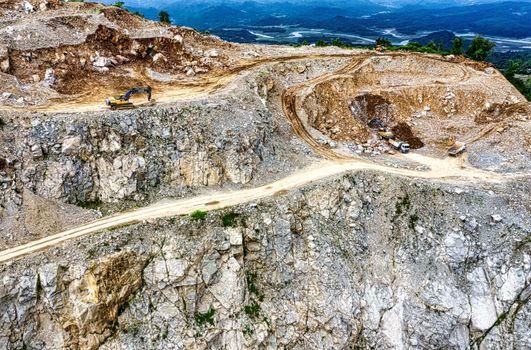
For context on the parallel nickel and lithium flowsheets that share much of the same SX-EW and HPAL infrastructure, the Lithium Production Technology in 2026: Routes, Specs and DLE Economics breakdown covers DLE sorbent selection and the lithium side of the same HPAL tailings story, while broader Top Mining Equipment Companies 2026: OEM Spec Race and Procurement Levers covers the autoclave and thickener OEM landscape that cobalt-HPAL buyers actually procure against. Track the Q4 2026 MHP and CoSO4·7H2O spot differentials, the EU Battery Regulation 2023/1542 Article 77 cobalt recycled-content threshold setting, and the next DRC artisanal-mining formalisation policy update as the three nodes that will reset spec sheets and contracts in the next buying cycle.