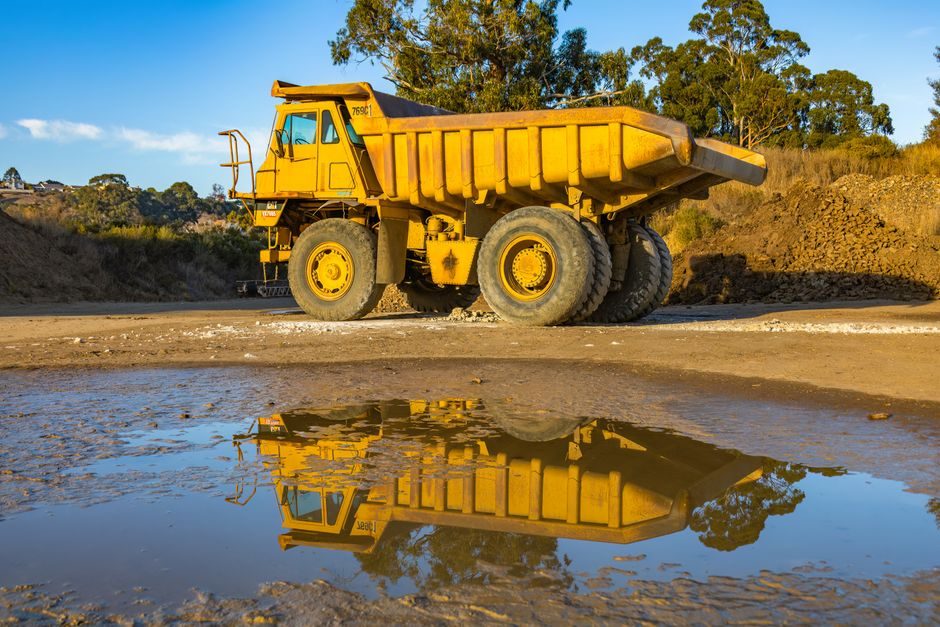
Caterpillar, Komatsu, Sandvik, Epiroc, Liebherr, Volvo CE, Hitachi Construction Machinery, Doosan, XCMG and SANY sit at the top of the 2026 mining-equipment OEM ranking, defined by 100–400 t mining dump truck platforms, autonomous haulage systems (AHS) and the first commercial 100-t-class battery-electric loader pilots [S4].
Mining Equipment Services spend is forecast to reach $103,382.8 million by 2030, up from 2024 base, with the largest OEMs capturing the bulk of new machine orders and the largest service-revenue share [S4]. For procurement, the practical shortlist is no longer 30 names — it is roughly 5 majors + 2 Chinese challengers + 1 niche underground specialist.
Mining Equipment Market Size 2026: What the Forecast Says
IndustryArc's 2024-2030 outlook lifts Mining Equipment Services spend to $103,382.8 million by 2030, with services (parts, rebuilds, autonomy retrofits, condition monitoring) growing faster than new-machine revenue [S4]. The same report places surface mining equipment — rigid-frame haul trucks, hydraulic shovels, large wheel loaders — as the dominant revenue pool, well ahead of underground loaders and drills.
For a buyer in mid-2026, that means the OEM shortlist is dictated less by headline list price and more by total cost per tonne moved, which is where the pressure sensor count per truck, AHS-ready wiring and battery-electric driveline options swing the decision. The broader market context — and where diesel-electric drive vs battery-electric pilot projects sit on the 2026 sourcing map — is broken down in Mining Equipment 2026: Market Size, Power-Source Split and Procurement Levers.
Tier 1 OEM Lineup: Who Actually Builds the 100-t+ Class
Only five OEMs mass-produce 100-t+ rigid-frame haul trucks in volume for 2026: Caterpillar (793F, 797F, 798 AC), Komatsu (930E, 980E, 980E-5), Liebherr (T 264, T 274), Hitachi Construction Machinery (EH4000AC-5, EH5000AC-5) and XCMG (XDE130, XDE260). On the loader side, Caterpillar 994K, Komatsu WA1200-7, Liebherr L 586 and XCMG LW1200KN cover the 25–30 t payload class [S4].
Selection at this tier is driven by four concrete criteria: payload envelope (100–400 t), drive architecture (AC-drive / diesel-electric / trolley-assist), AHS compatibility (Cat MineStar Command for hauling, Komatsu FrontRunner), and parts logistics via the OEM's regional rebuild centre. The XCMG and SANY 100-t+ entries are now credible on price and on delivery lead-time, but tier-1 buyers still cite lower mean time between failures (MTBF) on drive-alternator subsystems versus the Japanese and US incumbents.
Underground OEMs: Sandvik, Epiroc and the Loader-Drill Split
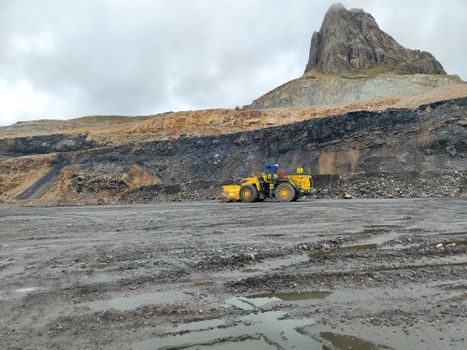
Sandvik and Epiroc together control the bulk of the 2026 underground hard-rock equipment market — loaders (Sandvik LH621i, Toro TH663i), trucks (Epiroc MT65, MT90), and jumbo drills (Sandvik DD422i, Epiroc Boomer M2). Both OEMs now ship production-ready battery-electric LHDs: Sandvik LH518B (18 t payload) and Epiroc Scooptram ST14 SG (14 t) [S2].
The practical 2026 buy-decision for an underground hard-rock mine is a three-way filter: diesel vs battery-electric, automation-ready vs manual, and the OEM's fleet-management platform (Sandvik OptiMine, Epiroc 6th Sense). Diesel loaders still win on capex per unit and on energy density per shift; battery-electric wins on ventilation cost (a real number in deep mines), on heat load and on Tier-4 diesel particulate rejection. Underground gas monitoring is the adjacent spec gate — see the Multi-Gas Detector Selection Criteria: 2026 Spec Gate Map for the cert/sensor side of that decision.
Chinese OEMs: XCMG, SANY, Doosan and the 100-t Question
XCMG and SANY now ship 100–130 t mechanical-drive haul trucks (XCMG XDE130, SANY SKT130S) into open-pit coal and iron-ore operations, with the XCMG XDE260 (260 t) qualifying on the export shortlist for non-tier-1 buyers. Doosan (owned by HD Hyundai) holds the mid-range hydraulic excavator and 60–100 t truck slot (DA60, DX1000LC) [S2].
Spec-for-spec in 2026: XCMG and SANY undercut Cat/Komatsu list price by roughly 25–35 % on rigid-frame haulers, but charge more for AHS retrofits and have thinner regional service networks outside of Africa, Central Asia and Latin America. The honest call: spec Chinese on price-driven greenfield projects; spec Japanese/US on autonomy-driven brownfield expansions. The trade-off is documented across the Truck-Mounted Concrete Pump vs Concrete Batching Plant: 2026 Buyers Spec Cut comparison format — same logic of capex vs lifecycle applies to trucks.
Driveline Shift: Diesel-Electric, Trolley and Battery-Electric in 2026
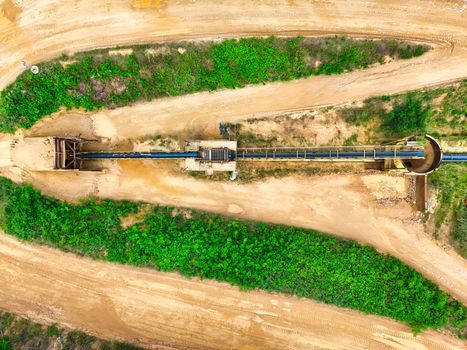
The dominant 2026 driveline on 100-t+ rigid-frame trucks is diesel-electric with AC-drive motors (Cat 798 AC, Komatsu 980E-5, Hitachi EH5000AC-5). Trolley-assist — overhead pantograph on grade — is now a paid option on Komatsu 930E and Liebherr T 264 at specific mine sites, cutting diesel burn on ramp [S4].
Battery-electric remains pilot-scale in 2026: the headline programs are Caterpillar 793 CEV (prototype), Komatsu Proof-of-Concept 930E BEV, and Sandvik/Epiroc production LHDs in underground hard rock. Charging infrastructure (1.5–2.5 MW per stall for a 100-t truck) is the binding constraint, not the truck itself. For auxiliary systems, pressure transmitter count per truck has climbed from ~30 on 2010-era units to 60+ on AHS-ready builds — a non-trivial line item on the BOM.
Selection Criteria: A 4-Axis Comparison for 2026 Buyers
Four axes govern the 2026 shortlist for a 100-t+ haul truck: (1) Payload — 100, 150, 200, 240, 360 t; (2) Driveline — mechanical, diesel-electric AC, trolley-assist, battery-electric; (3) AHS — none, OEM-bundled (Cat Command, Komatsu FrontRunner), third-party (ASI), or retrofit-ready; (4) Service network — 3 OEM rebuild centres within 2,000 km vs single regional hub. [S1]
On those axes: Cat 797F vs Komatsu 980E-5 vs Liebherr T 264 vs XCMG XDE260 — Cat wins on AHS maturity and global service depth; Komatsu wins on fuel efficiency and FrontRunner autonomy breadth; Liebherr wins on T 264 AC-drive efficiency and European OEM support; XCMG wins on capex and lead-time, loses on AHS and service network. The format — concrete options vs concrete criteria — is the same cut used in Safety Relief Valve 2026 Buying Guide: Set Pressure, Orifice, Material and Cert Levers for valve selection.
Procurement Levers That Actually Move 2026 Order Cost
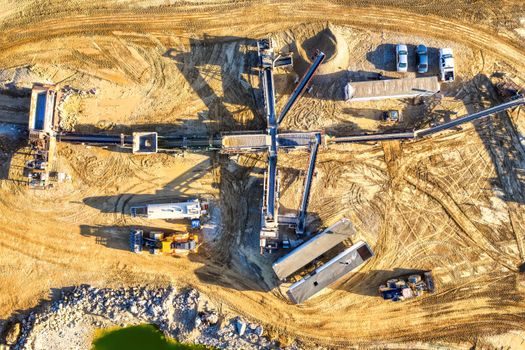
Three levers consistently move 2026 OEM order cost: payment terms (60 % on commissioning vs letter of credit at sight moves price by 3–6 %), AHS-bundled vs AHS-retrofit pricing (retrofit costs 40–60 % of a new AHS-ready unit), and parts kit commitment (3-year or 5-year kit plus consignment stock). Mine-site electrification readiness — trolley, charging, substation — is the fourth lever for battery-electric pilots [S4].
The honest 2026 procurement sequence is: lock the payload class → shortlist 2–3 OEMs → request AHS-ready quotes → benchmark service network radius → negotiate parts kit + AHS retrofit bundle together. Buyers who skip the service-radius step typically find 18–24 month MTBF gaps between OEM-nameplate specs and field results. For plant-side flow and pressure instrumentation that follows the truck into the processing circuit, the flow meter and industrial valve selections on tailings and slurry lines are the next downstream gate.