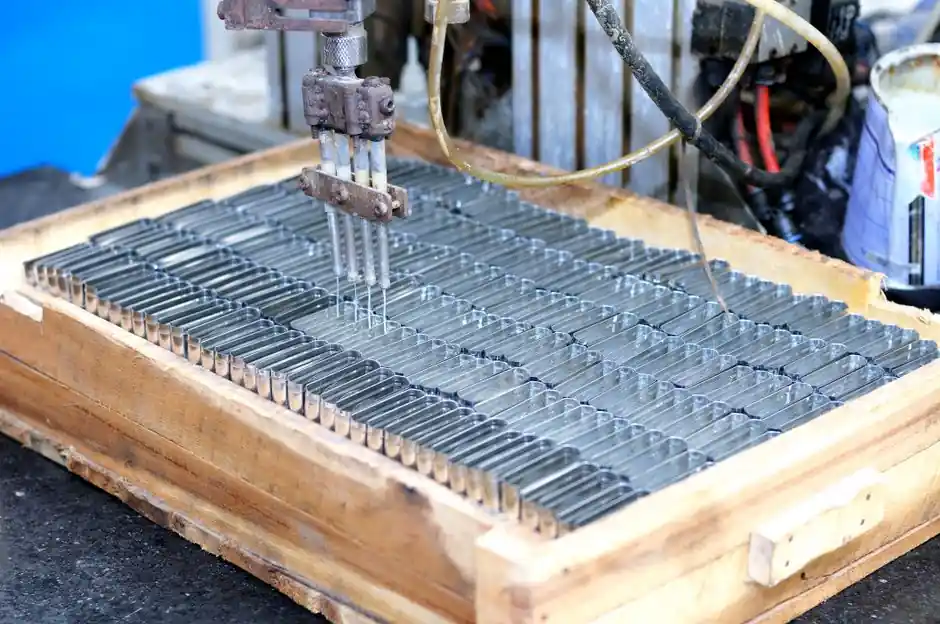
In a warehouse-automation build, the coding and marking station is the last point a carton, tote, or pallet is identified before it leaves the dock, which is why line speed, substrate, and required resolution (typically 300-600 DPI for 2D codes) drive the equipment choice more than any single brand [S4][S6].
Continuous inkjet (CIJ), thermal inkjet (TIJ), laser, and print-and-apply (LPA) are the four workhorse technologies specified across FMCG, retail, and 3PL fulfillment centers, with material handling layers (conveyors, sorters, AMRs) feeding the coder and warehouse execution software (WES) routing the data [S1][S5].
Match Coder Type to Substrate, Speed, and Mark Permanence
CIJ is the default for non-contact high-speed lines running 100-600 m/min on corrugate, plastic, glass, or metal, using fast-drying MEK- or acetone-based inks and character heights from 1-12 mm [S4]. The same FMCG reference notes that coders in food and beverage lines sit downstream of merge-divert logic and inline checkweighers, so the coder must trigger off a single photo-eye or scanner pulse without delaying the conveyor [S4].
TIJ (cartridge-based) suits case-coding cells under 30 m/min where the mark is short-lived and the substrate is absorbent: coated card, secondary packaging, shipping labels. It is solvent- and maintenance-light compared with CIJ, which matters on multi-SKU retail floors where changeovers are hourly [S4][S6]. Laser (CO2 for organics, fiber for metals and films) is specified when abrasion, solvents, or regulatory permanence (e.g., lot/date on pharma or automotive parts) rule out ink, and the substrate can take a 10-30 W beam without charring [S4]. For pallet and shipping-label work, labeling machine print-and-apply modules ride on a conveyor branch and apply pre-printed or real-time thermal labels at 30-120 cpm depending on label size and applicator stroke [S4].
Resolution, Code Type, and Throughput Math
GS1-128, DataMatrix, and QR codes on secondary packaging are commonly marked at module sizes between 0.25-0.50 mm, which requires a minimum print resolution of 300 DPI for 0.50 mm modules and 600 DPI for 0.25 mm modules per typical GS1 verification practice [S4]. A 600 DPI TIJ head printing a 50 mm wide DataMatrix band at 30 m/min delivers roughly 120 codes per minute before duty-cycle limits, while a CIJ head on the same line at 300 m/min holds 600+ cpm with character survivability over conformal-coated and waxed surfaces [S4][S6].
In practice, FMCG lines use CIJ for primary container coding (bottles, cans, flexible film) and TIJ or LPA for case coding, because the case mark is read by a downstream scan tunnel that also feeds the WMS, and a misread feeds the rejection lane and not the dock door [S4]. Where the upstream station is a cross-belt sorter, the coder must encode chute, route, and door number, so message length and field count (typically 30-80 characters including GS1 application identifiers) become a real spec line, not a marketing bullet [S4].
Integration with WMS, WES, and the Mobile Layer
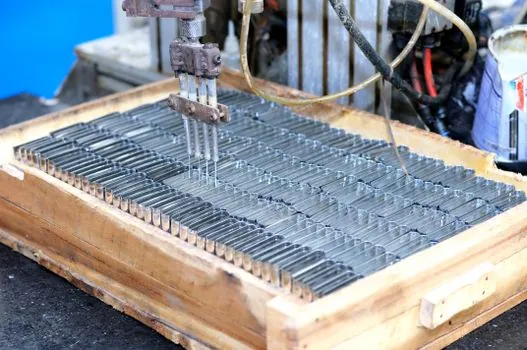
Modern coders speak protocols rather than proprietary cables: Ethernet/IP, PROFINET, and OPC UA are now the default fieldbus and IT-side handoff, with the WES acting as the broker between order data from the electrical automation layer and the message payload the coder renders [S1][S4]. A coder tied only to a PLC cannot follow SKU-specific artwork or lot rules, so most 2026 reference designs push a label-artwork server to manage recipes and version control [S1].
For operations that already run autonomous mobile robots or shuttle systems, a print-and-apply station can be mounted on the AMR charge lane or pallet-build cell, so the label is applied where the pallet is built rather than at a fixed conveyor location. This pattern shows up in retail distribution guides that frame the coding station as a node in a wider material-handling graph rather than a standalone printer [S1][S5]. If a facility is upgrading a coding machine line, the right sequence is WES/WMS data contract first, fieldbus gateway second, mechanical install third; reversing that order is the most common cause of go-live slippage in 3PL rollouts [S1][S3].
Cost, ROI, and the Real Comparison Axes
Across CIJ, TIJ, laser, and LPA, the four decision axes that actually move a spec are substrate range, throughput, mark permanence, and total fluid or consumable cost per 1,000 marks; capital cost ranks fifth in most published ROI models [S1][S7]. A 2025 practitioner note on automation selection is explicit that payback should be modeled on order volume, labor rates, and existing systems, not on sticker price, with many warehouse-automation projects hitting ROI inside 12-24 months once mis-scan, rework, and chargeback rates are baselined [S1].
For FMCG specifically, the operating case is that print-and-apply reduces label rework and compliance fines that hit thin margins, while CIJ reduces line stoppages from coder-induced jams [S4]. Comparable selection logic applies in adjacent handling equipment; for example, the chain conveyor spec map for warehouse automation uses the same throughput-versus-substrate lens, because the coder and the conveyor have to agree on dwell time at the print head.
Safety, Compliance, and the Failure Modes That Show Up in Audits
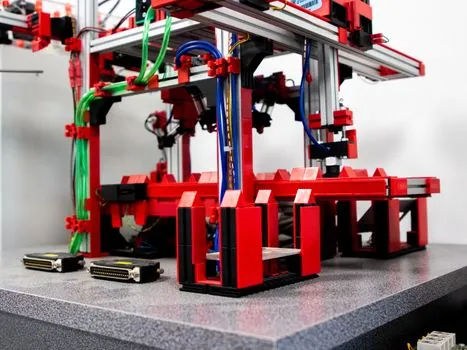
Laser coders are Class 4 when open and Class 1 when interlocked, so guarding and beam enclosure are part of the spec, not an accessory; CO2 laser exhaust must be vented when marking PVC or coated stocks to keep HCl below occupational exposure limits, and MEK-based CIJ fluids carry their own ventilation and storage rules under typical GHS and OSHA Hazard Communication labeling [S4]. Ink-flush cycles, print-head cleaning, and ribbon changeover on thermal LPA are scheduled tasks, and a missed schedule is the single most common cause of unreadable codes downstream of a labeling machine print-and-apply station [S4][S6].
Audit failure modes that have shown up in 2025-2026 warehouse selection reviews include unreadable 2D codes after a substrate change, missed lot/date updates during SKU reformulation, and label mis-application on multi-SKU pallet builds; all three trace back to recipe management and not to the printer itself, which is why the WES recipe layer is the highest-leverage spec in the bill of materials [S1][S3].
Where Coding Sits in a Broader Handling Stack
A coding and marking cell is rarely a standalone procurement: it sits between sortation, AS/RS, and shipping, and its trigger signals are shared with upstream conveyor and sortation equipment as well as downstream scan tunnels. In FMCG distribution, the print station is fed by the same WES that drives the cross-belt sorter and the AMR fleet, so a coder upgrade is really a recipe-management and fieldbus upgrade in disguise [S1][S4].
For operations scaling from manual to automated, the practical path is to fix the WMS data contract and the WES recipe model first, then specify the coder as a downstream device with known protocols; the same logic is documented in selection maps for stacker cranes in retail distribution and shuttle systems, where the data layer and not the machine ends up governing cycle time.
Trackable next signals for 2026-2027: how often vendors disclose duty-cycle and MTBF separately from throughput, and whether PROFINET- or Ethernet/IP-native coder controllers become the procurement default over the legacy serial interface still common in installed fleets [S1][S6].