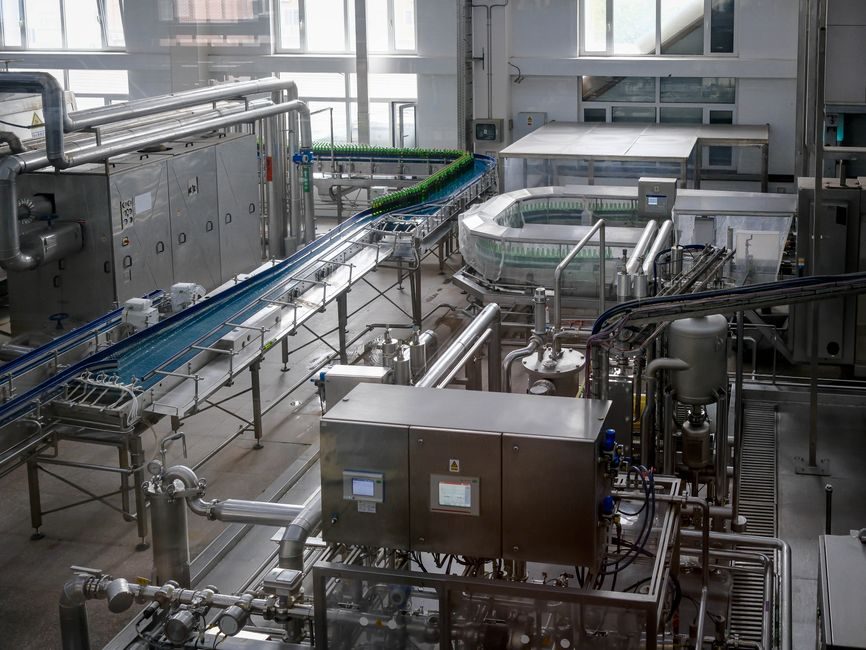
Crystalline-silicon cell production lines now pair electroluminescence (EL) imaging with a downstream laser isolation/cut station in a single robotic handoff, an architecture the Springer Intelligent Manufacturing paper Cell Doctor validated above 90% accuracy and recall for Cracks and Area Defects on monocrystalline-Si datasets and above 90% precision for the same two classes [S2].
The same paper reports 77% precision on Finger Interruptions, the realistic floor that drives the "diagnose then laser-isolate, do not scrap" rule now embedded in 2026 line designs, while the manufacturer reference set already covers BNEF Tier-1 incumbents with 11 consecutive years on the list, 13 GW of nameplate module capacity, and N-type cell technology as the efficiency baseline [S1][S2].
Cell Doctor closed-loop architecture: EL inspection, Gabor+PCA+Random-Forest classifier, laser repair
Cell Doctor ingests incoming mono-Si cells on a robotic arm, images them at an Electroluminescence diagnostic station, and routes the wafer to a laser station that performs isolation or cutting based on the detected defect class — replacing the legacy "detect and discard" path that wasted a significant share of finished wafers [S2]. The reported defect taxonomy is dominated by Cracks, Area Defects, and Finger Interruptions, with Finger Interruptions the hardest class at 77% precision versus above 90% precision for the other two [S2].
For engineers sizing a 2026 closed-loop cell-repair island, three spec numbers are the anchor: EL imaging resolution must resolve sub-millimeter finger geometry, classifier accuracy/recall must clear 90% on the two high-yield-loss classes, and the laser cut pitch must match the cell's busbar/finger grid to avoid collateral shunt paths. The load cell and load cell module layers underneath the wafer-handling arm are typically where line builders under-spec the closed-loop — finger-pressure setpoints on as-cut mono-Si wafers are tight, and a missed setpoint becomes the next shift's micro-crack population.
N-type cell baseline and laser-assisted doping: the 2026 process shift
N-type cells have displaced legacy p-type as the efficiency baseline in Tier-1 module portfolios, with Seraphim's N-type cell lines positioned as the lead efficiency product and the broader 13 GW module capacity footprint used to amortise the n-type capex [S1]. The manufacturing-method disclosure WO2025/066567A1 (PCT/CN2024/110419, published 2025-04-03) formalises a two-step route: diffusion doping on the first surface through a doping medium, followed by laser irradiation at preset parameters to form the selective emitter, with IPC codes H01L31/0224, H01L31/0216, H01L31/18 covering the cell architecture [S3].
The selective-emitter laser step is the single most non-trivial station to automate: laser parameters (fluence, repetition rate, pulse overlap) directly trade off contact resistance against shunt leakage, and the same laser source is being repurposed in the Cell Doctor repair island — so process and quality teams are converging on shared laser heads, shared beam-delivery optics, and shared vision feedback. This is the first time the smart camera class used for inline EL/AOI is being co-designed with the laser station, and the spec sheets now list common frame rates, common trigger latency, and common field-of-view as a single subsystem rather than two independent stations.
Defect taxonomy, yield economics, and the "diagnose-then-repair" decision rule
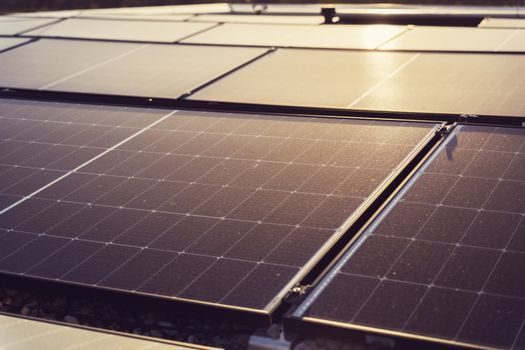
The defect taxonomy driving 2026 line design still reduces to Cracks, Area Defects, and Finger Interruptions, with manipulation errors, excessive mechanical pressure, and raw-material defects as the three root-cause families that map onto the three classes [S2]. Mono-Si cells — octagonal wafers cut from cylindrical ingots with a uniform look that signals high-purity — are the high-cost, high-efficiency substrate, while multi-Si cells (square wafers, frost texture) absorb the cost-driven capacity and tolerate the discard path that legacy inspection enforced [S2].
The economic crossover is straightforward: when finished-cell cost and silver-paste cost rise, "detect and discard" stops being cheaper than "diagnose and laser-isolate," and the Cell Doctor result — above 90% accuracy/recall on Cracks and Area Defects — is the threshold at which a closed-loop repair island pays back within a single tool's depreciation window [S2]. For multi-Si lines the threshold is reached earlier because the absolute loss per scrapped cell is lower, which is why the first deployments cluster on multi-Si capacity before mono-Si retrofits. Adjacent cell-format work in 2026 lithium cell production line design runs the same diagnose-then-isolate trade-off in electrode stacking, and the robotics pattern transfers directly.
Robotic handling, wafer-pressure spec, and the integration pinch point
Robotics are documented as "an important element in the manufacture of solar cells" in the Springer Robotics-Integration chapter on Solar Cell Manufacturing, which traces the use of robotic arms, vision systems, and inline characterisation stations across three EU-funded projects [S5]. The pinch point is not the arm itself but the end-effector pressure budget: a mono-Si wafer is brittle, the silver grid is on the front, the aluminium BSF is on the back, and the laser-cut edge from a previous repair island leaves a stress-concentration that the next pick must not load.
Engineers standardise three numbers in the spec stack: wafer-contact force in newtons (typically a few newtons for a 156/166 mm M6/M10 wafer), pick-and-place cycle time (sub-second for a GW-scale line), and vision-locate accuracy (sub-pixel to resolve finger geometry) [S5]. The robotics chapter frames these as the three axes on which cell-line automation either holds yield or quietly bleeds it, and the same three numbers feed into the load cell module spec used for end-effector force feedback.
Inline characterisation, I–V closure, and the digital-twin anchor
Cell Doctor closes the loop on a Solar Simulator station that characterises I–V curve and I–V parameters after the laser repair, giving the line a measured pre-/post-repair delta for every cell that goes through the repair island [S2]. The pre-/post-repair I–V delta is the single most cited KPI in 2026 yield reports, because it is the only number that converts a defect-classification accuracy into a watts-recovered figure that the CFO accepts.
Process engineers run the same I–V closure on the laser-doping stations, where the selective-emitter fluence window is the variable being optimised: WO2025/066567A1 calls out "laser having preset parameters" as the controllable knob, and the in-line I–V station is what turns that knob from a recipe into a closed-loop setpoint [S3]. The I–V traceability chain — wafer ID, EL image, classifier output, laser recipe, I–V delta — is also the data spine for any digital-twin deployment, and is the same spine used in the battery cell manufacturing 2026 spec stack for electrode-to-formation traceability, so process-IT teams are reusing the MES/traceability stack across cell factories.
Standards, sourcing, and Tier-1 anchor signals
No ISO/IEC/UL standard number is assigned in the 2026 cell-line spec stack to a specific defect-classification accuracy or a specific laser-fluence window in the research material, so the spec stack should be written as an internal KPI (e.g. "above 90% classifier accuracy on Cracks and Area Defects") rather than pinned to a named standard [S2][S3]. BNEF Tier-1 status, 11-consecutive-year incumbency, and a 13 GW nameplate module capacity are the three external anchor signals currently visible on a Tier-1 manufacturer's own product page, and they are the most defensible supplier-tier evidence an auditor will accept before a sourcing decision [S1].
Equipment sourcing for a 2026 closed-loop cell-repair island divides into four stations — robotic wafer handler, EL diagnostic station, vision classifier server, laser isolation/cut station — plus a Solar Simulator station for I–V closure, and the line-builder integration risk concentrates at the station-to-station handoff rather than inside any one station [S2][S5]. The smart valve positioner and smart meter classes that sit on the chemical-vapour-deposition and diffusion-doping gas panels are the third-tier integration pinch point most spec sheets miss: gas-flow drift on the doping medium is what degrades the selective-emitter uniformity that the laser step is supposed to recover.
Comparison: closed-loop repair vs detect-and-discard vs visual-only AOI
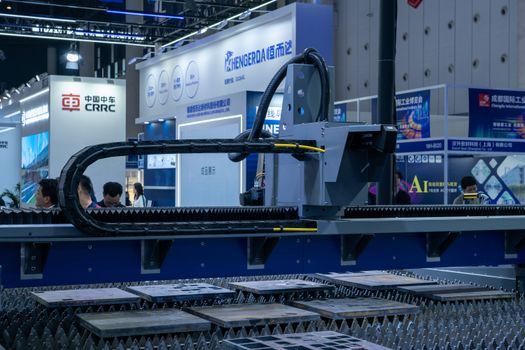
Three deployment options face a 2026 cell-line builder, and the decision is driven by four criteria: classifier accuracy on Cracks/Area Defects, precision on Finger Interruptions, scrap cost per wafer, and capex payback window. Detect-and-discard posts a baseline 100% accuracy on the wafer it lets through, but the 0% recovery rate on misclassified good cells is the dominant loss in 2026 silver-paste economics. Visual-only AOI lifts the catch rate but stops short of repair, leaving the same loss profile. Cell Doctor's closed-loop path delivers above 90% accuracy/recall on Cracks and Area Defects and 77% precision on Finger Interruptions, with the laser-isolation step converting a defect class into a sellable cell at a known I–V delta [S2]. For multi-Si lines the payback window is shortest because absolute cell cost is lowest; for mono-Si N-type lines the payback window is longer but the watts-recovered per cell is higher, which is why 2026 capex announcements are sequencing the multi-Si retrofits first.
The next trackable signal is whether the BNEF Tier-1 list refreshes its 11-consecutive-year incumbency threshold for the 2026 reporting cycle — Seraphim's product page claims 11 consecutive years, and any change to that tenure number on a Tier-1 manufacturer's own corporate disclosure is a Tier-1 anchor signal a sourcing team can read directly [S1]. A second signal is whether the laser-station consolidation pattern (process laser and repair-laser sharing optics and vision) appears in a second Tier-1 line-builder's press release within the 2026 calendar year; the Cell Doctor paper documents the architecture on a research line, and the first commercial replication is the data point a 2027 capex review will hinge on [S2][S5].