
The desalination system market is structured around two technology families: thermal (MSF, MED, MVC) and membrane (SWRO, BWRO), with the membrane side capturing the bulk of new contracted capacity in 2026 order books [S1].
SWRO is the default spec for greenfield seawater plants in the Middle East, North Africa, the Mediterranean and parts of the US Southwest; multi-effect distillation and mechanical vapour compression remain specified where feed salinity exceeds the membrane envelope or where low-grade waste heat is available [S1].
Process Selection: SWRO vs Thermal on Five Decision Criteria
SWRO units in 2026 typically run at 55–75 bar high-pressure pump discharge for standard seawater (TDS 35,000–45,000 mg/L), with energy recovery devices (ERDs) cutting specific power consumption toward the 2.5–3.5 kWh/m³ band on modern trains [S1]. Thermal MED plants sit at 1.5–2.5 kWh/m³ electric equivalent once low-pressure steam is co-fired, but require 0.05–0.12 t of steam per m³ of permeate; MVC drops the thermal ratio but raises electric demand to 6–9 kWh/m³ [S1].
For high-TDS brine (above ~50,000 mg/L) and zero-liquid-discharge pre-treatment trains, MED/MVC still set the spec because RO membrane flux and rejection degrade sharply at that concentration.
Pre-Treatment, Intake and High-Pressure Pump Train
Pre-treatment choice is a spec gate, not an accessory: open seawater intake + dual-media filtration + cartridge filtration remains the cheapest path for SWRO, but subsurface beach wells with no coagulation step are still specified where turbidity stays under 5 NTU year-round [S1]. Ultrafiltration (UF) membranes upstream of RO have moved from premium to default in tenders over 100,000 m³/day, with the spec for a 0.01–0.05 micron pore rating and dead-end backwash cycle.
High-pressure pump trains on 2026 SWRO builds pair centrifugal multi-stage pumps with isobaric ERDs; positive-displacement ERDs are used on lower-flow skids. The spec floor on feed pump discharge pressure is 70 bar for standard seawater, 80–85 bar for higher-recovery operation, with the pressure transmitter tapping the discharge header feeding the RO vessel array — see the pressure transmitter reference for the 4-20 mA + HART envelope that most plants still buy against.
Flow Metering, Valve Stack and Control Layer
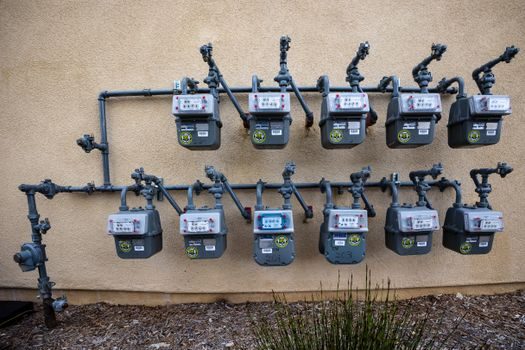
Bid-spec flow measurement on intake and permeate trains in 2026 splits between electromagnetic flow meters for raw water and product water, and ultrasonic clamp-on meters for brine and concentrate lines where intrusion is undesirable — the flow meter catalogue entry covers the class boundaries. RO high-pressure interstage and concentrate control valves are predominantly metal-seated globe or angle-pattern units with corrosion-resistant alloy trim (Alloy 625 / 6Mo super austenitic) sized for sustained throttling; the spec range for this duty sits in the industrial valve reference. [S1]
Brine recycle valves, CIP isolation blocks and the air-scour valve cluster on the UF skid sit in the industrial valve class as well, usually with EPDM or FKM soft seats. For automated isolation, electrically-actuated butterfly valves on intake and discharge headers are now common in the 2 kW–7.5 kW motor range; the servo motor class reference covers the actuator drive band where proportional control is required, and the PLC reference covers the control layer in the desalination MCC room.
Energy, Recovery and Brine Disposal Specs
Specific energy consumption is the headline number on every 2026 bid: best-in-class SWRO trains run 2.5–3.0 kWh/m³ with isobaric ERDs, while older plants without energy recovery stay at 6–8 kWh/m³. Renewable-powered SWRO has moved from pilot to small commercial scale, with solar-PV-driven trains in the Middle East running 15–25% lower capacity factor than grid-tied units due to diurnal solar output and RO membrane flux-temperature sensitivity. [S2]
Brine disposal regulates the siting envelope more than the process envelope: open-sea outfalls with multi-port diffusers remain the lowest-cost path where bathymetry allows; zero-liquid-discharge (ZLD) crystalliser trains are spec-locked in inland sites and require MED or brine concentrator pre-stage to bring TDS into the crystalliser envelope. On the membrane side, the pressure sensor spec class governs the interstage pressure drop monitoring that drives CIP cycles and replacement triggers.
Buyer Map: Who 2026 Desal Capacity is For, and Who Should Not Spec It
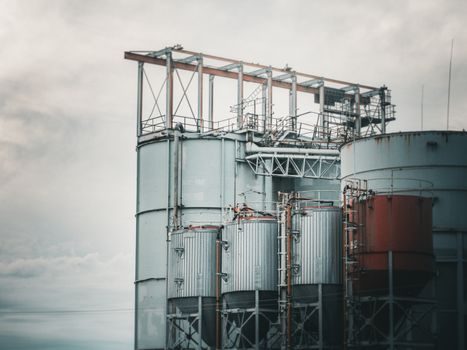
Municipal coastal utilities with TDS above 1,500 mg/L in their source water are the core 2026 buyer: SWRO gives them a drought-proof baseline that surface reservoirs cannot match. Industrial buyers — refineries, power plants, mining operations — are the second tier, and the spec driver is feed-water consistency rather than volume; the petrochemical industry 2026 oversupply and spec levers context applies where cooling-tower make-up demand intersects with brackish feed. [S3]
Buyers that should not spec seawater desalination in 2026: small communities under 5,000 m³/day with low-salinity surface or well water (BWRO is the right envelope), agricultural users where discharge brine cannot be returned to irrigation (energy and disposal cost outweigh benefit), and any project where the concentrate outfall cannot meet marine discharge criteria without dilution modelling. For BESS and grid-flexible plant buyers, note that SWRO energy load is a dispatchable demand asset — the BESS upstream/downstream 2026 reference covers the storage side of that pairing.
Failure Modes and Spec Watch-Items for 2026 Builds
Three failure modes dominate 2026 retrofit and warranty work: biofouling on RO membranes (driven by under-specified pre-treatment), scaling on the concentrate side where antiscalant dose is below the calcium carbonate saturation index, and ERD rotor erosion on plants running above nameplate recovery. The spec counters are: UF pre-treatment with SDI <3 on the RO feed header, antiscalant modelling against the concentrate ionic strength at peak recovery, and ERD isobaric efficiency verified at the FAT (typically ≥90% energy transfer). [S1]
Bid evaluation in 2026 should track the unit water cost (USD/m³) net of energy and chemicals, the guaranteed specific power consumption in kWh/m³, the membrane replacement interval expressed in years, and the availability guarantee (95–97% is the standard band). On the instrumentation side, insist on dual HART + Ethernet-APL pressure transmitter packages on new builds to keep the migration path open to higher-tier host systems, and verify that flow runs through the same protocol stack — the flow meter reference documents the protocol envelope.
Trackable signals for the next reporting window: monthly contracted capacity announcements on Gulf SWRO mega-projects, the 2026 commissioning of any solar-PV + battery + SWRO hybrid in the Middle East or North Africa, and any movement on Chinese EPCs quoting below $700/m³/day turnkey for brackish plants — the bonded-magnet downstream feed chain is not directly relevant, but the servo motor cost and controller stack reference applies to actuator procurement, and the power grid suppliers 2026 sourcing map governs the SWRO plant's MV/LV distribution side.