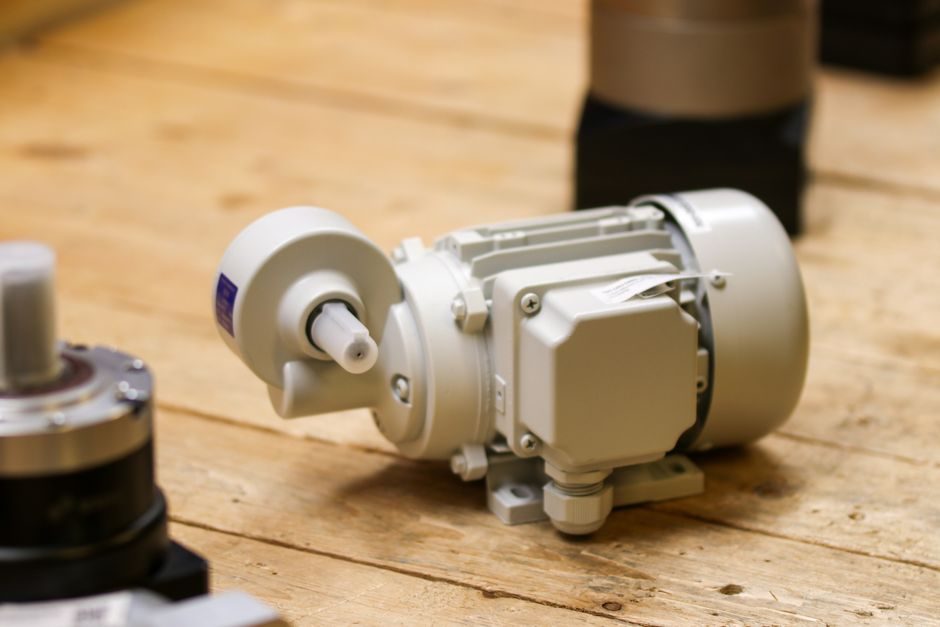
Across the 88 400 V servomotors indexed on DirectIndustry as of 2026-04-28, 33 manufacturers are active, with Parker Electromechanical and Kollmorgen Europe leading the count at 8 and 4 catalog entries respectively [S3]. The Chinese OEM channel is far deeper: 36,830 servo-motor listings sit on Made-in-China with brushless 24 V 172 W sewing-machine units starting at US$19.89 and 750 W NEMA-34 planetary gearboxes topping out at US$188 [S6][S8].
Power class is the single largest price lever. The SV-X6 series spans 50 W to 7.5 kW at 220 VAC / 380 VAC with 1500/2000/3000 rpm windings, covering the bulk of packaging, Li-ion cell handling and small-format CNC demand [S5]. At the high end, a 7 kW–111 kW permanent-magnet segment lists 10-piece MOQ and negotiable pricing — a deliberate signal that anything above ~7.5 kW moves to project quotation, not catalog [S5].
Power Band vs Price: Where the Real Spread Lives
Concrete price points pulled from 2026 listings: 12 V–220 V brushless DC servos for lawn-mower and consumer use sit at US$10–60 per piece (3-piece MOQ); 24 V 172 W brushless industrial servos for sewing machines list US$19.89 per sample with ISO 9001 / CCC paperwork; planetary gearboxes for 750 W servos run US$75–188; NEMA 34 planetary units run US$60–158; heavy-duty cycloidal crane-rated units jump to US$88–990; and hollow-rotary actuators for BLDC servo stepper systems reach US$1,600–1,700 per piece [S5][S6][S8]. A self-contained servo motor reference should always quote these in matched power-and-feedback pairs, not as bare list prices.
The Gunda COLIBRISERVO illustrates the European OEM envelope: brushless AC/DC, 400 V / 24 V / 48 V / 36 V / 30 V / 40 V / 42 V / 43.2 V / 60 V / 380 V supply options, IP65/IP54/IP64 protection, and power from 120 W to 4,400 W with built-in encoder and EtherCAT, CANopen, PROFIBUS DP, ProfiNet, RS-232 and RS-485 in a compact frame [S1]. That is the price-stack pressure point: every added fieldbus or encoder option is a 5–15 % adder on the bare motor.
Controller Stack: Standalone Drive vs Integrated vs PCB Board
Three pricing tiers exist for the controller half of the motion axis. Tier 1 is the integrated "motor-plus-drive" package such as COLIBRISERVO, which collapses cabling, panel space and commissioning hours into a single IP65 module [S1]. Tier 2 is the classic separate servo drive feeding a standalone servomotor, the configuration most 400 V Parker, Kollmorgen, Lenze and KEB catalogs are built around [S3]. Tier 3 is the bare PCB PCBA controller board typified by Tecoo's EMS103 single-phase unit, which is priced for OEM embedded use, not for retrofit on an existing line [S2].
DirectIndustry's separate "servo motor + servo controller" index tracks 22 products across 12 manufacturers, with Siemens Safety Integrated, Baumüller, Tolomatic, ASCON and Coe all present alongside three Tecoo board-level entries [S4]. For a build engineer weighing these tiers, the rule is: integrated modules win on cabinet space and EMC, separate drives win on swap-out MTTR, and board-level controllers only make sense when the housing, encoder and comms are already designed in.
Feedback, Brake and Fieldbus: The Hidden 20–40 % Markup
The cheapest AC servo motor on a 400 V catalog line is rarely the motor that ships. A 750 W unit with incremental 2500 ppr encoder sells against the same motor with 23-bit absolute multi-turn encoder, holding brake, IP67 sealing and ProfiNet — and the option stack is the largest single cost multiplier after power class [S1][S3]. Industrial-grade encoders (Tamagawa, Nikon, Hengstler-equivalent resolution) routinely add 15–25 % to the motor price, and a failsafe 24 V spring-set brake typically another 8–12 %.
Fieldbus choice is a quieter but real cost. EtherCAT and ProfiNet are now table-stakes on European OEM modules [S1], but adding EtherCAT, CANopen, RS-232 and RS-485 simultaneously to a single motor — as COLIBRISERVO does — signals a design built for retrofit and machine-builder skids where the end-user protocol is not known at order time [S1]. For a comparison of how these comms choices interact with the wider servo drive ecosystem, the 2026 selection cut between servo and stepper is laid out in Servo vs Stepper Motor: 2026 Selection Cut for Motion-Control Builds, and the AC-motor alternative is mapped in Servo Drive vs AC Motor: 2026 Selection Cut.
Repair vs Replace: When the Spare Servo Costs Less
ServoLab advertises 24/7 servo-motor repair across the UK and Europe with 99.8 % reliability and coverage of Siemens, Fanuc, Indramat and Yaskawa ranges [S7]. For high-kW Fanuc alpha-i or Indramat MAC permanent-magnet units where a new replacement sits in the four-figure band plus 6–12 week lead time, repair at a 24/7 bench is often the lower TCO path for one-off machine builders — but it does not move the spec sheet on a new line build, and the OEM warranty clock restarts only on a new motor.
Standards, Enclosure and Where the Price Sheet Bends

Ingress rating is the second price band after power. IP54 is the standard cabinet-room rating, IP65 covers washdown food and pharma lines, and IP67 / IP67K is the cell-phone-on-the-floor rating for automotive wet cells [S1]. Each step adds gasket, cable gland and connector cost; specifying IP65 when IP54 would do is one of the more common 10 % wastes on European machine-builder BOMs.
EMC conformity to IEC 61800-3 (adjustable-speed electrical power drive systems) and functional safety to IEC 61800-5-2 (STO, SS1, SLS) are baseline on every Siemens Safety Integrated drive indexed on DirectIndustry [S4]. For builds heading into the European market, an ATEX 2014/34/EU category-3 servo kit adds roughly 25–40 % on the motor and forces a matched ATEX-rated cable gland set; this is rarely worth retrofitting on a stationary indoor axis. Insulation class F (155 °C) windings with class B (130 °C) temperature rise are the default on Parker and Kollmorgen 400 V lines, and that thermal headroom is what lets a servo run continuously at rated torque without de-rating in a 40 °C cabinet [S3].
Order Sizing, MOQ and Lead-Time Realities
MOQ is the third hidden cost lever. Made-in-China catalog pricing assumes 3–10 piece minimums on most servo and gearbox listings [S5][S6][S8]. Tecoo PCBA controllers run with no stated MOQ but shift price by batch size [S2]. For 1–5 piece prototype builds the unit cost is roughly 1.5–2× the 100-piece price, and for 1,000-piece annual runs the same motor often lands 25–35 % below the published single-piece price once tooling amortisation is negotiated. The Chinese OEM channel also offers 220 VAC 50 Hz versions specifically for the African and Middle Eastern export market — a regional skew worth confirming before specifying a 380 V / 400 V European motor for a project outside the EU grid.
On a 2026-06-29 sourcing pass, the cost spread from low-power brushless DC to industrial hollow-rotary actuator is roughly 160×, and the same physical motor can be priced 1.5× higher or lower depending purely on feedback, brake and fieldbus options. A realistic engineering line item for a 750 W IP65 EtherCAT servomotor with absolute encoder and brake lands in the US$450–750 band in single-piece quantities, with gearbox adders of US$75–190 on top [S1][S3][S6]. Watch the next two cycles for further Chinese OEM hollow-rotary price compression and a possible IEC 61800-3 EMC revision impact on integrated drive modules. For a wider view of how servo pricing sits next to the rest of the motion-control catalog, the Servo vs Stepper Motor: 2026 Selection Cut for Motion-Control Builds article and the Servo Drive vs AC Motor: 2026 Selection Cut companion piece cover the cross-technology decision matrix.
For component-level specifications, see linear guide.