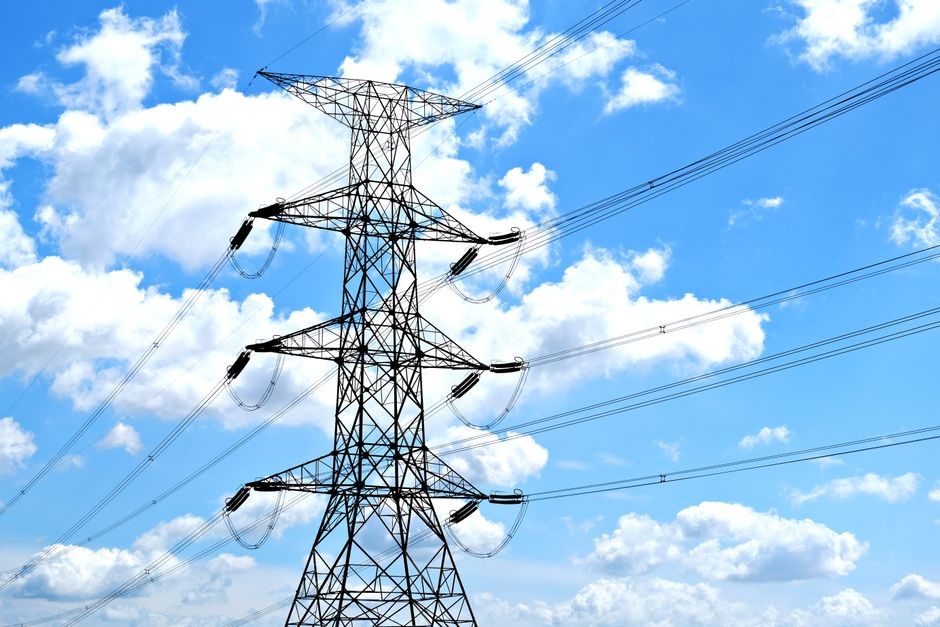
State Grid Corporation of China committed more than 500 billion yuan to power grid projects in 2022 alone, with company statements explicitly tying that spend to driving upstream and downstream industries back to work and production [S2]. Cumulative State Grid investment across the 13th Five-Year Plan window (2016-2020) reached 2.38 trillion yuan, framing the long-cycle demand baseline that 2026 planners still reference [S2].
For a process engineer the question is not whether grid spend is large, but which upstream inputs scale with it and which downstream loads the new lines actually serve. The chain runs from copper conductor, grain-oriented electrical steel, power transformers, HV/EHV power cable, switchgear, protection relays, power meters and control cabinets on the supply side, into data-center campuses, EV charging clusters, electrified rail, and industrial parks on the demand side. SOE construction activity in Hefei and other regional hubs in 2022 — residential blocks, trunk roads, substation civils — was reported as the visible downstream pull on the same grid cycle [S1].
Upstream: Metals, Steel and Insulating Materials Scaled to Grid Capex
Grid construction is a metals-intensive spec sheet: a 500 kV single-circuit tower line typically pulls 30-60 t of conductor per km depending on bundle and span, and the associated substation busbar plus power transformer windings layer in additional tonnage of copper and grain-oriented electrical steel (CRGO) per project. State Grid's 2.38 trillion yuan 13th Five-Year Plan spend directly determined rolling-mill order books for CRGO coil, copper rod, aluminium strand, and XLPE compound producers [S2].
SOE-led grid capex acts as the swing-customer for upstream mills because the volumes are visible, contractually pre-committed, and concentrated in a small number of qualified bidders. China Southern Power Grid's 24-hour power monitoring posture during the 2020 supply emergency and its preferential treatment for resuming industrial customers highlighted the operational feedback loop from grid operator to upstream supplier health [S4]. For 2026 planners, the practical lever is to read State Grid's annual project lists to anticipate CRGO, copper and dc power supply rectifier demand 12-24 months ahead of shipment, since substation civils lead the equipment order by roughly that window.
Equipment Tier: Transformers, Cable, Switchgear and the Metering Backbone
Power transformers, HV power cable and HV switchgear absorb the dominant share of equipment-side spend. The global transformer shortage of 2024-2026 — with 110 kV+ unit lead times stretching to 120-150 weeks at peak — was in significant part an upstream consequence of utility-scale grid capex colliding with data-center, renewables interconnect and rail electrification demand. [S1]
Below 35 kV the chain fragments into power mixer busway assemblies, low-voltage power cable trays, MCC buckets and moulded-case breakers, all of which the SOE distribution network re-orders in high-volume blanket contracts. Smart power meter deployments — typically DLMS/COSEM or IEC 62056 over PLC or RF mesh — are now specified at every LV secondary node, turning the distribution network into a continuous metering backbone rather than a passive radial grid [S3].
Downstream: Industrial Parks, Data Centers, EV Charging and Rail
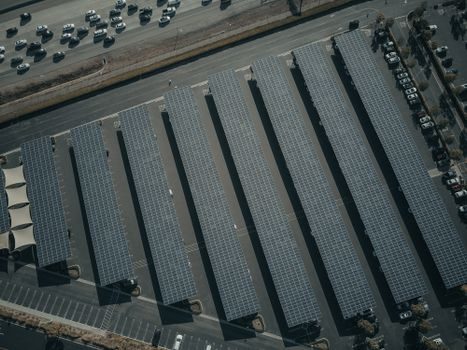
The downstream side is where the grid spend is monetised. State Grid's Central China branch technology meetings with provincial research institutes in 2021-2022 explicitly framed grid expansion as the trigger for downstream industrial development and load growth in the Hubei/Wuhan optics-valley corridor [S3]. That same dynamic — build the substation, the load follows — now drives the 2026 data-center upstream and downstream cluster planning around Guizhou, Inner Mongolia and the Yangtze delta, where grid availability is the gating constraint for hyperscale campus siting.
EV fast-charging plazas, electrified intercity rail and green-hydrogen electrolyser farms all stack on top of the same 110 kV-500 kV backbone. A typical 100 MW hyperscale data-center campus needs 4-6 dedicated 110 kV feeder positions plus 2-4 bulk power transformer bays, and the copper supply chain that feeds those windings is now a strategic-spec input for utility procurement teams rather than a commodity line item.
Selection Criteria for Spec'ing the Upstream-Downstream Interface
For a process engineer writing a substation spec in 2026 the practical criteria at the upstream-downstream interface come down to four numbers: (1) CRGO grade and core loss guarantee at 1.7 T / 50 Hz, (2) copper conductor cross-section vs continuous ampacity at the design ambient, (3) LV switchgear short-time withstand (Icw) and peak make (Ipk) at the declared short-circuit level, and (4) metering and SCADA protocol stack (IEC 61850-9-2 SV/SMV, DNP3, IEC 60870-5-104, DLMS) on the downstream automation side. [S2]
The equipment tier on the upstream side is identical; the spec differentiation is entirely in the downstream load profile.
Who Benefits, Who Bears the Risk, and the Sourcing Levers
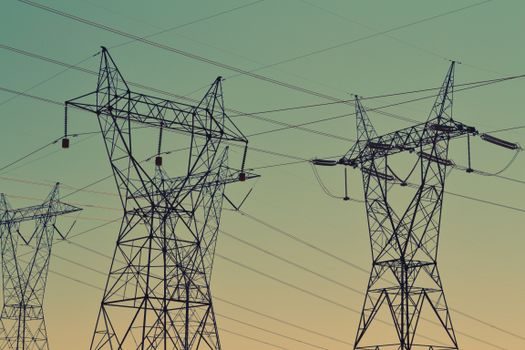
Who benefits: CRGO and copper mills with long-term SOE offtake, qualified power transformer OEMs holding IEC 60076 test reports, LV switchgear panel builders with CCC/PCCC certification, and metering vendors with power meter product lines carrying DLMS conformance. Who bears the risk: sub-tier copper fabricators without direct grid-utility qualification, and electric motor suppliers trying to feed the industrial-park load side because variable-frequency drive demand has not absorbed the magnet-cost shocks uniformly. [S3]
The 2026 sourcing levers engineers can actually pull are: dual-source CRGO between Baosteel and Nippon Steel, qualify two transformer OEMs for each voltage class, keep a 12-18 month safety stock of XLPE power cable at the drum level, and pre-book silicon wafer and IGBT slots for any power mixer rectifier assemblies used in HVDC or STATCOM applications. The PCB upstream and downstream chain is the parallel analog on the control and protection side — same cadence, same SOE pull.
Standards Governing the Interface
The interface is governed by a tight cluster of standards: IEC 60076 for power transformers, IEC 60840 / IEC 62067 for HV and EHV power cable, IEC 62271-200 for HV switchgear and controlgear, IEC 61850 for substation communication, IEC 62056 for power meter data exchange, and on the construction side IEC 61936-1 for HV AC installations exceeding 1 kV. Quality conformance at the upstream end is typically demonstrated through IECEx/ATEX for explosion-risk areas and KEMA/PCCC type tests for the main equipment. [S4]
On the customer side IEC 60364 governs LV electrical installations, NFPA 70 (NEC) applies in US-jurisdiction work, and GB 50054 / GB 50059 cover LV power distribution and substation design within China, which remains the most active 2026 build market. The 2020 pandemic-era SOE posture of 24-hour monitoring and preferential re-supply for resuming businesses is the operational precedent that 2026 grid operators still cite when negotiating dispatch priority with new industrial customers [S4].
Limits, Failure Modes and Where the Chain Binds
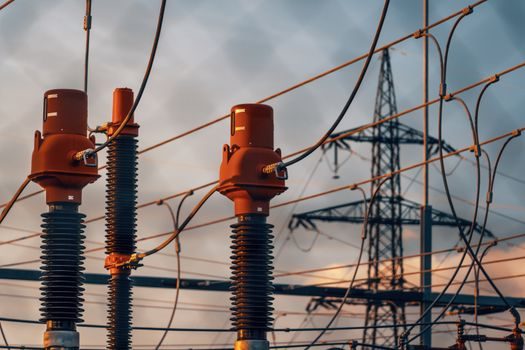
The chain binds first at CRGO, second at large power transformer build slots, third at HV power cable extrusion lines, and fourth at qualified switchgear assembly capacity. The State Grid 500+ billion yuan 2022 commitment was explicitly framed as a demand-side stimulus to these exact upstream tiers [S2]; when that stimulus is withdrawn, lead times for 110 kV+ units collapse back to 80-120 weeks within two procurement cycles.
Downstream, the binding constraints are substation land permits in tier-1 cities, 500 kV corridor right-of-way, and grid-forming inverter capacity for renewables interconnect. Process engineers writing a 2026 spec should treat upstream equipment lead time and downstream grid interconnect study as a single critical-path item, not two independent schedules, since a one-week slip in CRGO delivery slips the same project's downstream energisation by one week with no slack.
Trackable 2026 signals worth monitoring: State Grid's annual capex disclosure for the 14th Five-Year Plan tail, the third batch of 2026 CRGO export-licence decisions, the next DLMS conformance-certificate wave from metering vendors, and any new 500 kV substation commissioning notice in Guizhou or Inner Mongolia tied to a named data-center campus.