
Specifying an industrial dust collector starts with matching airflow to the connected tools, picking a filter class for the dust hazard, and setting a duct static-pressure trip (commonly 3" w.c. = 7.5 hPa) that triggers filter cleaning [S1].
Centralised systems in the 3 kW to 55 kW host-power range dominate furniture, metallurgy and building-materials plants, with cyclone, spray-tower and pulse-jet bag/cartridge trains offered across more than 10 sizes to suit different plant footprints and duct layouts [S3].
CFM and Static Pressure: The Two Numbers That Drive Every Other Choice
Two values determine whether a collector will do the job: volumetric airflow in CFM (m³/h) and the static pressure the duct can sustain before the filter is considered loaded. A woodworking-shop magnehelic gauge in field use flags "filter loaded" at roughly 3" of water column, which is 7.5 hPa or about 749 Pa [S1]. A wide-belt sander loads the filter far faster than a jointer, so the same duct pressure reading means very different cleaning intervals depending on which gates are open.
For a central system, the host fan power is the proxy for total airflow capability, and the 3 kW to 55 kW bracket cited by an ISO9001-2000-certified Chinese builder of central dust collection equipment (with more than 10 specification options available) is documented in S3. Under-sizing the fan is the most common commissioning failure, not filter media selection.
Filter Class Comparison: Baghouse vs Cartridge vs Cyclone
Three filter architectures cover almost every industrial case, and they are not interchangeable. A baghouse (fabric collector) handles high dust loads and coarse particles at moderate temperature; a pleated cartridge delivers higher filtration area per cubic metre of housing and suits fine, low-loading dust such as welding fume or pharmaceutical powder; a cyclone is a pre-separator only — it has no filter media and must be paired with a downstream bag or cartridge to meet fine-dust emission limits. [S1]
Suzhou Forst Filter's product line illustrates the split: a dedicated MFS self-clean air-filter equipment family sits alongside a cartridge dust collector line and a pleated-bag / panel filter media catalogue, all built around the same draw-in dust-laden air principle used in wind-turbine blade surface protection [S5]. For combustible dusts (wood, grain, metal), NFPA 654-style housekeeping plus explosion venting should be specified from the first sketch — the dust collection blog archive at dustcollectorguide.com dedicates an entire category to baghouse fires and explosions, with fabric-collector history going back to the early 1900s [S4].
Duct Monitoring and the 3" w.c. Cleaning Trigger

The simplest way to know when to clean a filter is a magnehelic gauge on the duct; the practical way to automate it is a microcontroller-based monitor that tracks static pressure per gate combination. The 9-step DIY build at Instructables demonstrates the architecture: an STM32-based monitor reads duct static pressure, learns the "clean" signature for each gate combination the operator actually uses (up to 32 stored profiles), and raises a clean-filter alert when the live reading exceeds the trained threshold — the demo forced cleaning by setting the threshold low, but the author's normal shop trips at 3" w.c. / 7.5 hPa [S1].
Two engineering points from that build are worth stealing for any industrial install. First, a static-pressure trip is only meaningful relative to a known gate configuration, because closing a blast gate raises duct pressure even with a clean filter. Second, the same board can double as a bin-level monitor using a float or ultrasonic sensor, with a flashing LED plus audio break-in on Bluetooth hearing-protector headphones as the operator alert [S1]. For larger plants the same logic scales to differential-pressure transmitters on each hopper and a dust detector at the discharge.
Selection Criteria and Sizing Workflow
A repeatable selection workflow has six gates, and skipping any one of them produces a system that underperforms or becomes a fire hazard. Step 1, list every dust-generating tool and its rated CFM at the hood; step 2, decide which run simultaneously and sum those CFMs; step 3, apply a 20–30% margin; step 4, pick a filter class (cyclone pre-separation + baghouse for coarse high-load wood or grain; cartridge for fine, low-load fume; cyclone alone only for coarse chip drop-out); step 5, pick a cleaning mechanism (reverse-pulse jet for continuous-duty baghouses, shaker or manual for intermittent-duty units); step 6, validate the host fan curve against the total duct equivalent length, counting one 90° elbow as roughly 10 m of straight pipe. [S2]
For combustible-dust service, layer NFPA 654 housekeeping, explosion venting sized to the hopper volume, and isolation dampers to prevent flame propagation into the duct — a fabric-collector fire that propagates back through the duct is the dominant failure mode the dust-collection blog archive flags [S4]. Operators should also treat duct static pressure as a dust particle meter proxy: a rising baseline between cleanings is the earliest signal that a filter element is blinding off, well before emissions spike.
Who This Is For — and Where a Cartridge Beats a Baghouse
A baghouse is the right call when the dust is coarse, the loading rate is high (kilograms per hour, not grams), and the temperature stays under the filter fabric's rating — typically 135 °C for polyester, 204 °C for Nomex, 260 °C for PTFE. A cartridge collector is the right call when the dust is fine, the loading rate is low to moderate, floor space is tight (cartridges deliver 3–5× the filter area of equivalent bags), and the operator wants a top-removal element change rather than bottom-bag access. A cyclone alone is rarely a complete system, but it is the right pre-separator upstream of either a baghouse or a cartridge when the dust contains chips, shavings or other large debris that would blind a fine filter. [S3]
For high-volume OEM procurement, the Alibaba dust-collector-machinery category groups centrifugal, pulse-jet, wet-scrubber and cartridge units under one filter, with manufacturers concentrated in Guangdong and Jiangsu and most units carrying ISO 9001 factory certification [S2][S3]. For self-built workshops, the Instructables build shows the monitoring electronics can be assembled for under USD 50 in parts and integrated with a dust mask protocol that mandates respirator use during filter changes — the dirty-filter swap is the highest-exposure step in any dust-collector's life cycle [S1].
Limitations, Failure Modes and Standards Anchors
Every filter class has a defined failure mode. Baghouses fail by bag breakage (emission spike, often after a pulse-jet over-pressure event) or by cake blinding (rising ΔP, falling suction). Cartridges fail by pleat collapse (often from reverse-pulse over-frequency) or by media loading that cannot be removed by backflush. Cyclones fail by re-entrainment of fines when the inlet velocity drifts out of the 15–25 m/s design window. Electric precipitators — covered by the US5466279A patent on oxidised collector electrodes with integrated ioniser-collector geometry — fail by electrode contamination and require wash-down cycles on a defined schedule [S6].
Standards anchors worth pinning on the spec sheet: ISO 9001 for manufacturer quality systems (the baseline cited by Aotong and other Chinese OEMs) [S3]; NFPA 654 for combustible-dust housekeeping; NFPA 68 and NFPA 69 for explosion venting and isolation, where dust explosivity is confirmed. For non-combustible dusts in general ventilation, OSHA's PEL table drives the required CFM per worker, and ACGIH industrial ventilation manual chapter 5.4 sets duct transport velocity — typically 3,500–4,000 fpm for wood, 4,000–5,000 fpm for plastic, above 5,000 fpm for metallic dust. The economic angle is laid out in our Pneumatic Conveyor System Price and Cost Guide 2026, which overlaps with dust-collector sizing on duct economics.
Procurement Specs and What's Worth Paying For
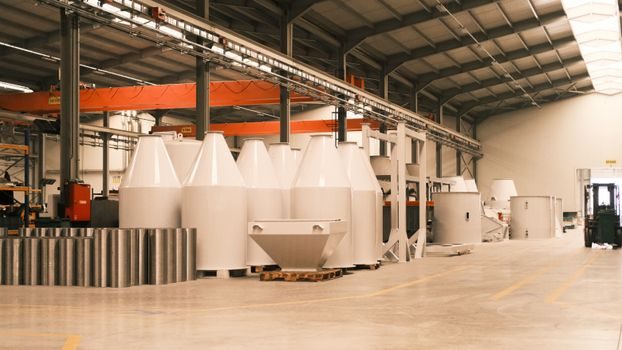
Three line items separate a workable dust collector from one that becomes a maintenance burden. First, the cleaning mechanism: a compressed-air reverse-pulse system at 5–6 bar with a 0.5–1.0 second pulse and a programmable sequence controller; cheap solenoid valves are the first components to fail, and the difference between a USD 30 valve and a USD 90 valve is roughly 10× the cycle life. Second, the filter media: spunbond polyester for general woodworking, PTFE membrane for sticky or hygroscopic dust, antistatic fibre for any dust with a minimum ignition energy below 30 mJ. Third, the monitoring: at minimum a ΔP gauge across the filter, ideally a transmitter wired to the plant SCADA so the ASRS system or maintenance dashboard sees the same trend the operator sees on the floor. [S4]
On a total-cost-of-ownership basis, the dominant cost is not the unit but the filter-replacement interval, the compressed-air consumption of the pulse system, and the downtime cost of an unscheduled cleaning. Operators with pneumatic-conveyour integration should reference the Air Pollution Control System Price & Cost Guide 2026 for APC-equipment cost cross-checks, and the Pallet Jack Price & Cost Guide 2026 for downstream material-handling economics when centralised collection feeds finished-goods palletising.
Trackable signals over the next quarter: the next NFPA 654 enforcement update from the US Occupational Safety and Health Administration, the next revision of the ACGIH industrial ventilation manual, and any new ISO 9001 audit findings against Chinese dust-collector OEMs in the Guangdong and Jiangsu clusters [S2][S3].