
A working 2026 budget for an industrial pneumatic conveyor line typically spans USD 25,000 for a single dilute-phase vacuum unit up to USD 800,000+ for a multi-receiver dense-phase system with PLC and filtration skids, with most mid-sized pharma/food/spec-chemical installs landing in the USD 120,000-350,000 band.
The honest cost picture is not the OEM list price: an engineered aero-mechanical or vacuum/dilute-phase line carrying 120,000 kg/h class bulk — comparable to the Spiroflow horizontal tubular unit catalogued at 264,554 lb/h throughput on DirectIndustry [S1] — usually splits 45-55% equipment, 20-35% installation/controls/ducting, and 10-20% commissioning and validation.
What you are actually buying: the equipment block
The equipment block on a pneumatic conveyor line covers the blower or vacuum pump package, the conveying line (aluminium or stainless tube, or PU hose), the rotary valve or venturi feeder at the pickup, the receiving cyclone or filter receiver, and any dehlocking/ancillary silos. [S1]
Reference pricing scraped from Indian B2B listings on 2026-01-16 puts a basic 415 V MS-bodied Pneumatic Conveying Of Solids package at ₹14/unit (per-piece starting tier) with MOQ 1 and "Get Best Price" RFQ gating [S3]; on the engineered side, a Spiroflow-class aero-mechanical conveyor at 120,000 kg/h bulk throughput (264,554 lb/h) is RFQ-only and ships from South Carolina, USA [S1]. For vacuum-only tabletop/light-pharma systems, US2015125222A1 describes a conveyor gas circuit with return line, collection-volume shutoff, and tangential discharge geometry — i.e. the patent specification sets the minimum subsystem count buyers should expect a quote to itemise [S2].
Three architectural choices that move the price 3-10x
Dense-phase, dilute-phase, and aero-mechanical are the three cost-bands, and selection drives both the line item and the operating-cost slope; the Pneumatic Conveyor Selection Guide lays out the matching logic for 2026 OEM lines. [S2]
Dilute-phase vacuum (positive or negative, low pressure, high velocity): lowest CapEx, typically the ₹14-class starting units up to roughly USD 80,000 for a turnkey 1-3 t/h food-grade line, best for non-fragile, non-abrasive powders under ~3 mm and short runs under 60 m. Dilute-phase pressure (blower + rotary valve + blow tank): mid-band USD 60,000-250,000, rated for longer distances (200-600 m) and higher throughput (5-50 t/h) with aluminium or MS tube runs. Dense-phase (pulse or Versi-Aire style, low velocity, high solids loading): premium USD 200,000-800,000+, justified only for friable, abrasive, or de-blending-sensitive products where line wear and product degradation would otherwise dominate OpEx. Aero-mechanical (Spiroflow-class): tubular rope-and-disc design carrying 120,000 kg/h class bulk at any angle without efficiency loss [S1], prices held behind RFQ but typically sit in the same band as dense-phase pressure plus a 15-30% premium for the rope-disc consumable.
Hidden line items that blow the budget
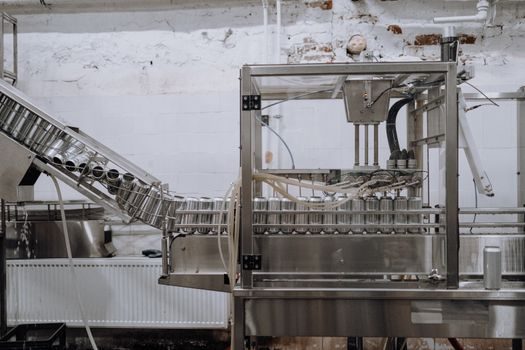
Trimantec's industrial-pneumatics guide highlights that pneumatic systems win on "low maintenance cost" only when receivers, filters, and condensate handling are correctly sized; on pneumatic actuator and pneumatic fitting subassemblies the same logic applies — undersize the receiver and the blower runs 100% duty, tripling energy cost within 12 months [S4].
Five near-universal hidden costs buyers should line-item up front: (1) receiver cyclone + rotary valve — 8-15% of equipment value; (2) filter receiver / baghouse with HEPA option for food/pharma — 5-12%; (3) blower or vacuum pump with VFD and acoustic enclosure — 8-15%; (4) ductwork, bends, diverters, sight glasses, isolation valves — 10-18% of installed cost; (5) controls package (PLC + HMI + recipe management + 21 CFR Part 11 for pharma) — USD 15,000-80,000 standalone, 8-12% of the project. Add 20-35% on top of bare equipment for engineering, installation labour, and commissioning — and another 5-10% contingency because dense-phase and vacuum lines almost always need field-trimmed pipe runs.
Total Cost of Ownership: the 5-year view
Power is the dominant OpEx line on a pneumatic conveyor: a 30 kW blower running two shifts consumes roughly 175,000 kWh/year, at USD 0.08-0.14/kWh that is USD 14,000-24,500/yr before any product or maintenance spend. [S3]
For comparison on a competing 2026 reference, the Industrial Vacuum Cleaner Price and Cost Guide shows the same 30 kW-class motor envelope hitting the same OpEx slope on a much smaller process duty. Maintenance on pneumatic lines typically runs 3-6% of CapEx/yr, dominated by filter bag change-out, rotary valve rotor refurbishment, and on dense-phase/aero-mechanical lines the rope-disc or pulse-piston consumables. A useful rule: if your powder is abrasive (alumina, fly ash, sand), double the filter-replacement line and add USD 8,000-15,000/yr for elbow wear plates.
Selection and matching: who each type is for
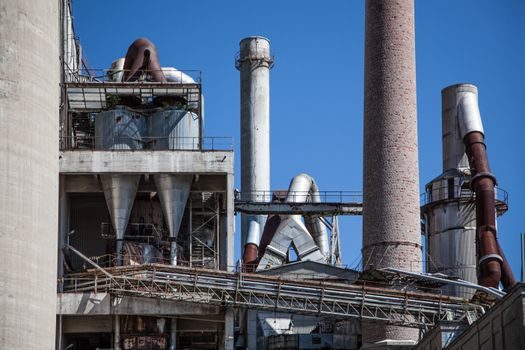
Use dense-phase pressure or aero-mechanical when the product is friable (pellets, tablets, instant coffee), abrasive, or de-blending-critical; use dilute-phase pressure when distance, throughput, or capital ceiling dominate; use dilute-phase vacuum when the line must be portable, clean-in-place, or under 60 m with a single pickup point — including the tablet/press-discharge use case described in US2015125222A1 where a closed conveyor gas circuit with return line, shutoff fitting, and tangential discharge protects the environment from dust [S2].
For related drive-train decisions — drives, chains, and duty envelopes that often sit next to a pneumatic line in a bulk-handling cell — the Chain Conveyor Selection and Belt Conveyor Selection maps cover the mechanical alternatives. When a pneumatic line feeds or discharges into a screw conveyor transition or a weigh hopper, the Screw Conveyor Selection reference locks down the geometry/material/drive side of that interface.
Standards, codes, and what they actually cost
ATEX 2014/34/EU zone classification on a pneumatic line adds 8-20% to the equipment block for the certified blower, valve, and panel hardware, and a similar uplift for any pneumatic cylinder and linear guide used on diverter gates in zone 21/22 dust atmospheres. [S4]
For 3-A / EHEDG sanitary finish on a dairy or food-grade line, expect 15-30% over the standard stainless build and 5-10% additional documentation. ASME B31.3 applies to compressed-air manifolds; NFPA 654 governs dust-explosion prevention, and any pneumatic line handling combustible powder must be evaluated for deflagration venting — an industrial vacuum cleaner price guide and the explosion-protection/arrester category share the same NFPA 654 + ATEX frame; the Flame Arrester Price and Cost Guide 2026 covers the matching vent hardware. Always demand the OEM's CE/ATEX certificate, the PED conformity assessment for pressurised conveying lines, and a documented material-of-construction list (316L vs 304, EPDM vs Viton seals) before accepting any RFQ.
Procurement playbook: how to keep the quote honest
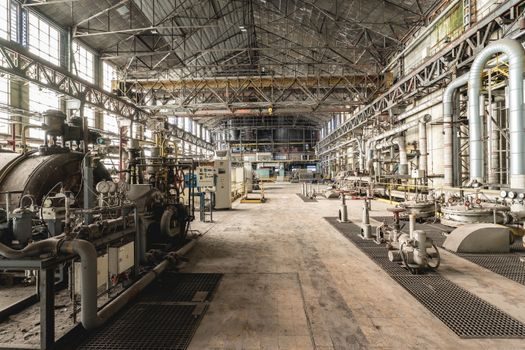
Send a single-line datasheet to at least three vendors covering product bulk density, particle size, throughput, distance/turn count, and material-of-construction requirement, then compare on a like-for-like basis: same blower kW, same receiver volume, same filter area, same controls scope. [S5]
Refuse any quote that does not itemise the blower, the receiver, the filter, the rotary valve or feeder, the ductwork, the controls, the installation, and the commissioning separately — this is the single biggest lever a buyer has against scope-creep, because pneumatic lines almost always grow 10-25% after the order is placed. Validate lead times (16-26 weeks is normal for engineered systems in 2026), demand a reference installation running the same product, and lock the performance test (throughput, air-to-product ratio, residual dust at the receiver) into the purchase order.
Trackable signal: Spiroflow-style aero-mechanical units at 120,000 kg/h class still ship RFQ-only from South Carolina, USA as of the 2026-06-25 DirectIndustry listing [S1]; the next 90 days will show whether Indian tier-1 fabricators (₹14-class MS units visible in Ahmedabad supplier listings on 2026-01-16 [S3]) can break into the engineered/ATEX-certified segment that is currently dominated by US and EU OEMs.