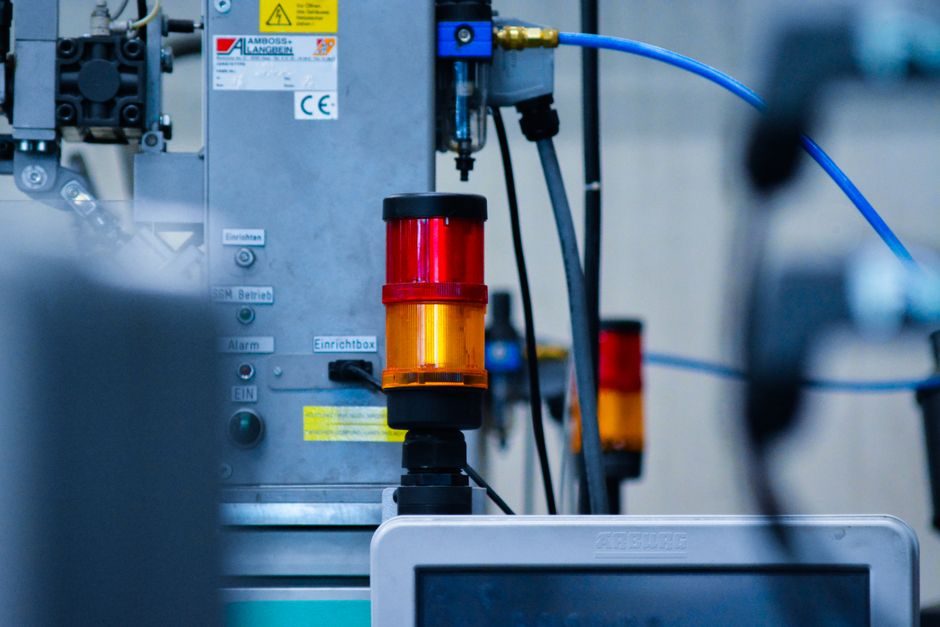
AI-driven production, digital twins, and 3D printing are now headline themes for EV traction motor smart manufacturing lines, with 32 interactive sessions and representation from 81% of automotive manufacturers scheduled for the 7th Annual Building Lighthouse Factories summit in Detroit on 10 September 2026 [S1].
Speakers confirmed as of 1 July 2026 include General Motors, Magna International, Lear Corporation, Continental, Toyota North America, Lenovo, and Wayne State University IntelliMake Research Hub — a roster that places traction-motor production software, AI compute, and MES architects in the same room as stamping and equipment-integration leads [S1].
Why the EV traction motor line is the next automation battleground
Traction-motor production differs from a generic DC motor line in three measurable ways: rotor magnet handling, hairpin stator welding, and end-of-line (EOL) dynamometer testing. A typical 250 kW permanent-magnet motor line now runs hairpin welding at 8-12 welding heads per stator, with each pin joint needing sub-millimetre positional control and 100% inline laser inspection [S3].
Process engineering for EV motors is converging with EV battery pack automation, where cell-to-pack laser welding, dielectric inspection, and torque-validated bolting have already pushed throughput above 60 packs/hour on the newest Asian gigafactories — a benchmark motor lines are now chasing to amortise the same cobot and vision capex — and a deeper walkthrough of EV traction motor line choices overlaps directly with the battery pack automation track discussed in the 2026 summit speaker agenda [S1].
Core processes that must be automated on a traction motor line
Process 1, stator manufacturing: electrical steel lamination, interlock stacking to 0.3-0.5 mm single-sheet thickness, paper or slot-insert insertion, and hairpin forming. Tonnage at the press stage runs 200-400 tonnes for 0.35 mm silicon steel; paper insertion cycle time is the line bottleneck and the highest-payback cobot application. [S1]
Process 2, rotor assembly: magnet insertion (bonded NdFeB or surface-mounted rare-earth segments), magnetising, and rotor balancing to G2.5 (ISO 1940-1) at the rated operating speed — typically 16,000 rpm for a 250 kW unit. Magnet handling is a contamination and ingress hazard, so most lines now specify dust-controlled HEPA-13 cobot cells for loading.
Process 3, final assembly and EOL test: housing close, rotor insertion, resolver and encoder alignment, coolant-vacuum fill, and EOL dynamometer test at rated load, regen, and overspeed (typically 18,000 rpm for 10 seconds). EOL is the only place an AC motor failure mode is positively caught, and modern dynamometer test cells now embed the same SCADA recipe that the supplier's quality lab uses, which shortens 8D turnaround from days to hours.
Smart-manufacturing stack: MES, digital twin, AI vision

Manufacturing Execution Systems (MES / OT–IT integration) and IIoT-connected factory infrastructure are the two tracks on the summit agenda that map directly to traction-motor lines, alongside data, AI, and manufacturing analytics roles such as General Motors' Manufacturing Execution Systems Architect function [S1].
Digital twin and simulation, predictive maintenance, and AR/VR for operations and training round out the agenda themes that align with motor-line digital thread — the rotor magnet temperature model, hairpin weld current trace, and dynamometer vibration FFT can all be mirrored in a virtual cell, fed back into the MES for first-time-right yield tracking. Lenovo's Chief Technology Officer of Smart Manufacturing and AI Technologist for North America Manufacturing are both slated to present, indicating that AI compute and edge inference hardware are positioned as enablers rather than outcomes [S1].
Robotics, cobots and motion control on a motor line
Robotic hardware stacks for motor lines divide cleanly into three groups: 6-axis articulated arms for stator handling (typically 10-20 kg payload), SCARA arms for paper insertion and slot liner placement, and cobots for screw-driving and connector mating where a fenceless cell is acceptable. Allied Automation's product menu for engineers lays out the relevant sub-categories — Cobots, 6-Axis, SCARA, EOAT/Grippers, Servo, Stepper, Encoders, and Gearbox — under the same shopfront used by US and EU integrators [S2].
Motion-control choices inside the line are dominated by servo and stepper, and the Allied Automation catalogue also surfaces the controls layer (PLC, Remote IO, HMI, Industrial PC, Control Panels) and the drive/motor layer (VFD, Reactors, Braking Resistors, Motors) that any traction-motor line must build into its control cabinet [S2]. Where high-torque and continuous-duty work is needed, hydraulic motion is generally only relevant on the press side for lamination blanking, not on the assembly cells themselves.
AI vision, quality inspection and predictive maintenance
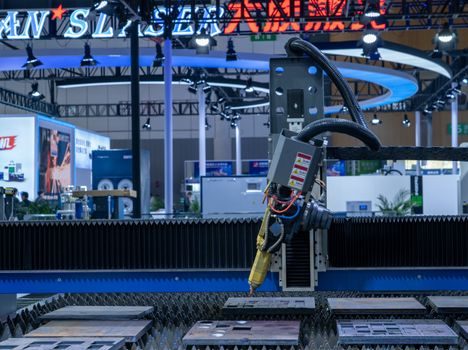
Inline AI vision replaces three legacy manual gates: hairpin weld bead inspection, magnet orientation check, and resolver airgap uniformity. The 2026 summit data themes — predictive maintenance, predictive analytics, and AI for manufacturing — are not abstract: a hairpin weld defect detected 4 mm off-position is the single most common field-failure mode in modern 800 V traction motors, and a vision system at the welding head with a 0.05 mm resolution is now the cheapest place to catch it [S1].
Cybersecurity (OT/IT) and cloud integration sit further up the stack, but the same predictive-maintenance model that catches hairpin resistance drift is the model that catches resolver bearing wear and coolant pump degradation, so the same MLOps pipeline serves the whole line. AR/VR for training is a separate theme on the Detroit 2026 agenda, and ties into first-time-right yield for new operators on hairpin welding cells [S1].
What is and isn't covered at the Detroit 2026 summit
The Detroit agenda is broader than traction-motor production: tariff and supply chain volatility, semiconductor constraints, fluctuating EV demand, and stamping production engineering (Toyota North America's Austin Ulerick is confirmed) are explicit 2026 industry pressures cited by the event organisers [S1].
What is NOT in the agenda is the chemistry and process line for traction-motor magnets — sintered NdFeB production, grain-boundary diffusion dysprosium sourcing, and hydrogen decrepitation are upstream topics covered by cathode and rare-earth material tracks rather than motor assembly. The Detroit summit also does not address offshore wind, hydrogen, or non-automotive motor production: topics like offshore wind foundation welding and green hydrogen electrolyzer stack-up are separate industry events with their own automation maps.
Selection criteria: where to invest first on a new traction motor line
Criterion 1, cycle time payback: hairpin welding and slot liner insertion are the two stations that gate throughput, and they have the highest cobot-or-6-axis-arm ROI on a new line — typically 18-30 months on a 100,000-unit annual volume. [S2]
Criterion 2, quality-defect cost: a field-failed traction motor costs the OEM warranty exposure, recall, and brand — roughly 8-15× the line cost of catching the defect. Inline AI vision at welding and EOL dynamometer test are the two highest-leverage points; manual inspection stations should be removed from the takt line entirely.
Criterion 3, software stack maturity: MES-to-dynamometer recipe integration is the most failure-prone integration, so suppliers with a published SCADA-to-MES bridge (e.g. OPC UA over TSN, or vendor-native) reduce ramp risk more than those with the best mechanical equipment. The summit's emphasis on data, AI, and manufacturing analytics signals that 2026 buyers are now asking MES-vendor-agnostic questions rather than equipment-only questions [S1].
Limitations, failure modes and what to watch next
Failure mode 1, hairpin weld drift: copper hairpin weld resistance climbs with electrode wear; the MES-level SPC rule must alert at +5% from baseline, not at the customer-spec upper bound, or the line ships borderline units. [S3]
Failure mode 2, magnet ingress: bonded NdFeB chips are the single most common line-killer for resolver and bearing life; an air-curtain + HEPA booth with positive pressure is the cheap fix that suppliers like Changzhou Smart Automation Motor Manufacturing Co. reference in their customisation options for DC and BLDC motors with robotics, vehicle, and industrial automation applications [S3].
Watch the September 10 2026 Detroit summit output for a public benchmark from GM or Magna on EOL test cycle time, and the next traction motor process map revision will likely fold the disclosed MES-to-dynamometer recipe into a measurable 2027 throughput target. The Rockwell Automation 11th Annual State of Smart Manufacturing report (2026 edition) is the second data node to track, with 2026 investment-trend numbers typically published before the Detroit event [S6].