The second edition of "Electric Vehicle Technology Explained" by James Larminie (Oxford Brookes University) and John Lowry (Acenti Designs Ltd), published by Wiley-Blackwell in 2012, is the most widely cited academic textbook on EV design, covering battery electric, hybrid electric and fuel cell powertrains in roughly 320 pages of engineering treatment [S1][S2][S3].
Although now 14 years old, the book's structure — energy sources, traction motors, energy storage, system integration and design case studies — still defines how universities teach EV production technology, and MathWorks maintains a Simulink companion page linking each chapter to simulation exercises used in classroom labs [S3][S4]. For a working engineer benchmarking a 2026 build, the Larminie/ Lowry taxonomy of component subsystems is the cleanest way to map a production line.
BEV vs HEV vs FCEV: Three Powertrain Architectures on One Line
Larminie and Lowry classify electric road vehicles into pure battery electric vehicles (BEV), hybrid electric vehicles (HEV) — further split into series, parallel and series-parallel — and fuel cell electric vehicles (FCEV), with the distinction resting on whether the traction energy buffer is a rechargeable battery, an engine-generator buffer, or a hydrogen fuel cell + secondary battery [S1][S3]. The BEV architecture eliminates the internal combustion engine and its gearbox entirely; the parallel HEV retains a mechanical path between engine and wheels; the series HEV uses the engine only as a range-extender driving a generator.
MathWorks' companion catalogue explicitly groups the book's case studies around these three architectures and supplies parameterised Simulink models for each, so a process engineer can pull a published motor map or battery equivalent-circuit block directly into a plant-throughput simulation [S3][S4]. The book dedicates separate chapters to energy storage (lead-acid, NiMH, Li-ion), DC and AC traction motor types, power electronics, and vehicle modelling, in that order — a sequencing that mirrors the upstream-to-downstream order of a typical EV build line, where electric pallet trucks move cell stacks between stations.
Traction Motor and Power Electronics: Selection Criteria for 2026 Specs
The textbook treats four motor families for traction duty — DC series, brushless DC (BLDC), induction (asynchronous) and permanent-magnet synchronous (PMSM) — and frames selection around specific power (kW/kg), peak efficiency, constant-power speed range, and whether field-weakening is acceptable [S1][S3]. PMSM is presented as the highest-efficiency option but is flagged for its reliance on rare-earth magnets; induction motors are positioned as the rugged, lower-cost alternative favoured by manufacturers willing to accept a small efficiency penalty.
Power electronics coverage focuses on the three-phase voltage-source inverter as the standard traction drive, with IGBT modules historically rated to 600-1200 V DC bus voltage for production passenger EVs [S1]. Battery pack sizing in the book is presented through the specific-energy (Wh/kg) and energy-density (Wh/L) axes, with Li-ion positioned at roughly 100-150 Wh/kg and 250-300 Wh/L — figures the 2012 edition used as forward projections and which 2026 production cells have since approached or matched on the energy-density axis. For a 2026 build, the textbook's selection rubric still maps cleanly: choose the motor family first, then size the inverter bus voltage from peak motor power, then iterate the battery pack to meet the energy and peak-power targets together.
Battery Pack and BMS: Sizing, Balancing and Safety Boundaries
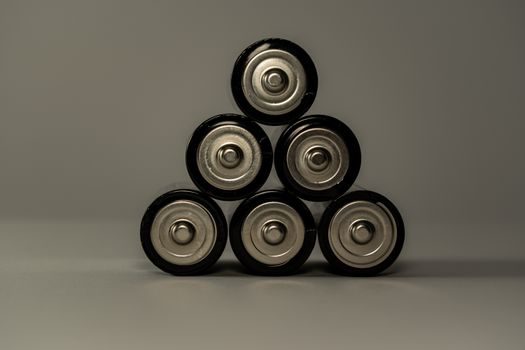
Larminie and Lowry treat the traction battery pack as a series-string of cells with a battery management system (BMS) handling state-of-charge estimation, cell balancing and fault isolation, and they derive pack energy as E_pack = n_series × n_parallel × V_nominal × Ah_capacity [S1][S3]. The textbook's design case studies use a 30-50 kWh pack for a compact BEV with a 150-200 km target range, computed against a vehicle energy budget of roughly 0.15 kWh/km for a small commuter car.
Cell-format and dry-room process detail for the Li-ion cells themselves is not the focus of this 2012 title — it predates the gigafactory dry-room era — but the BMS discussion still maps onto a 2026 pack line: each module needs cell-voltage monitoring, temperature sensing on at least one cell per parallel group, and a contactor that can interrupt full pack current on BMS command. Engineers specifying a 2026 pack build typically combine the Larminie/Lowry sizing equations with the production-process detail found in current EV battery production technology references, which cover electrode coating tolerances, dry-room dew point and formation cycling separately from the textbook's energy-budget treatment, and they also specify the electric actuators used in cell stacking at each module station.
Energy Management Strategies for HEV and Range-Extended Builds
For series, parallel and series-parallel HEVs, the book devotes a full chapter to energy management strategies (EMS), contrasting rule-based thermostating with optimisation-based approaches such as Equivalent Consumption Minimisation Strategy (ECMS) and dynamic programming [S1][S3]. The author's central engineering argument is that the EMS — not the engine map alone — determines real-world fuel consumption, because it dictates when the engine is allowed to run, charge the buffer battery, or assist the traction motor.
For a 2026 range-extended or plug-in hybrid build, the textbook's EMS taxonomy is still the cleanest way to communicate between the powertrain controls team and the battery pack team on what state-of-charge envelope each subsystem has to support.
Standards, Sourcing and the Simulation Workflow for Production Engineering
Wiley publishes the book with a companion website of simulation resources; the MathWorks Academia portal hosts the Simulink model library that maps each chapter's equations into reusable blocks, and these are the same models used in graduate-level EV courses at institutions that teach from the Larminie/Lowry text [S3][S4]. No edition update has been announced on either the Wiley author page or the MathWorks catalogue, so the 2012 second edition remains the current print version as of mid-2026 [S2][S3].
For a working engineer building a 2026 EV programme, the practical workflow is to use the Larminie/Lowry chapters as the system-level specification — sizing equations, motor selection rubric, BMS architecture, EMS taxonomy — and then source the component-level production detail (motor winding lines, pack dry-rooms, inverter IGBT sourcing) from current electric motor upstream and downstream and transformer manufacturing process references, with the line-side process equipment — for example, the flow meters governing electrolyte dosing on the formation line — falling outside the textbook's scope as well, because the 2012 text stops at component spec and does not address the gigafactory-level process chain. Two trackable signals to watch: a third edition announcement on the Wiley author page (none visible as of 2026-06), and any MathWorks Simulink library revision date bumping past the 2012 imprint [S2][S3].
