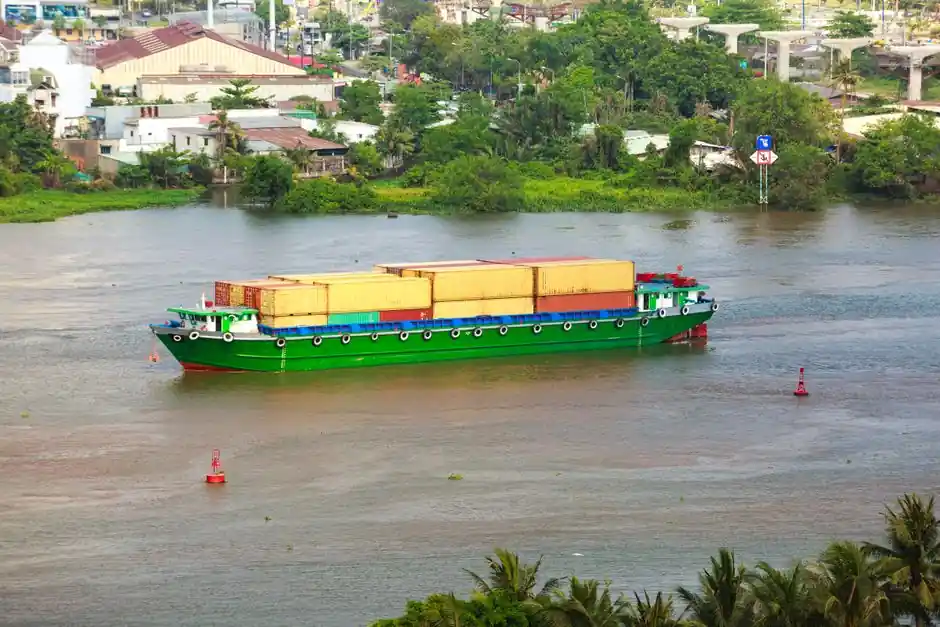
Global ferrochrome output reached 17.5 Mt in 2024, with South Africa alone supplying nearly 3.3 Mt from a domestic chromite base of over 72% of world reserves [S2]. The market is forecast to climb from USD 22.83 B in 2025 to USD 30.61 B by 2032 at a 4.28% CAGR, while the low carbon sub-segment grows faster at 7.17% CAGR to USD 375.05 M by 2032 [S2][S3].
High carbon ferrochrome (HC FeCr) still represents over 70% of global ferrochrome production and feeds the stainless, construction, and automotive value chains, while low carbon ferrochrome (LC FeCr) is shifting from a niche input to a specification-led, emissions-aware purchase driven by EU Carbon Border Adjustment Mechanism reporting and tighter carbon control in austenitic stainless chemistries [S2][S3]. Asia-Pacific, led by China, India, and Japan, accounts for over 60% of global demand, and a parallel reading of the ferrosilicon supply chain for 2026 shows the same electricity-cost and CBAM pressure now framing both ferroalloy families.
Upstream: Chromite Concentration and Power Cost as Binding Constraints
Four countries, South Africa, Kazakhstan, Turkey, and India, hold the bulk of chromite reserves and dominate FeCr output, with South Africa alone controlling over 72% of global chrome reserves and supplying nearly 3.3 Mt of 2024 production from a global pool of 17.5 Mt [S2]. FeCr smelting requires furnace temperatures around 2,800°C, and producers therefore compete on grid reliability and electricity tariff design more than on chrome chemistry alone [S2].
EAF adoption has lifted production efficiency by about 12%, and carbon-neutral smelting pilots have cut CO2 intensity by up to 67% in 2025, so the technical route is moving even where feedstock geographies are fixed [S2]. For a stainless melt shop, the practical implication is simple: a FeCr supplier without a credible power-source disclosure and grid connection data is now a higher risk under CBAM than a competitor with the same Cr and C chemistry but a documented lower-carbon power mix, a shift that mirrors what the vanadium value chain 2026 map shows for VRFB-grade ferrovanadium.
Midstream: HC FeCr Dominance and LC FeCr Specification Drift
HC FeCr accounts for over 70% of global ferrochrome production because it feeds the bulk of 300-series stainless, where chromium loadings typically sit between 10% and 20% of final melt chemistry [S2]. LC FeCr serves a different role: it lets steelmakers add chromium units while keeping carbon low, protecting corrosion resistance, weldability, and mechanical performance in austenitic, duplex, and superalloy grades [S3].
The LC FeCr sub-market is moving from a price-per-ton commodity frame to a multi-attribute procurement frame covering Cr recovery, impurity ceilings (C, Si, S, P), traceability, energy source, and logistics reliability, and this drift is reinforced by EU CBAM, stainless localization policies, and tighter chromium unit supply risk management [S3]. AI-supported process control is starting to optimize charge mix, slag chemistry, and energy use in LC FeCr refining, while commercial AI links stainless output, nickel and chromium indicators, freight, and power prices into a single demand forecast, an operating model that aligns with the broader spec-led sourcing pattern now visible in adjacent process inputs such as inline pipeline pump selection for 2026 builds, where buyers also evaluate energy and documentation, not only head and flow.
Regional Sourcing Tiers: Asia-Pacific, Europe, Africa
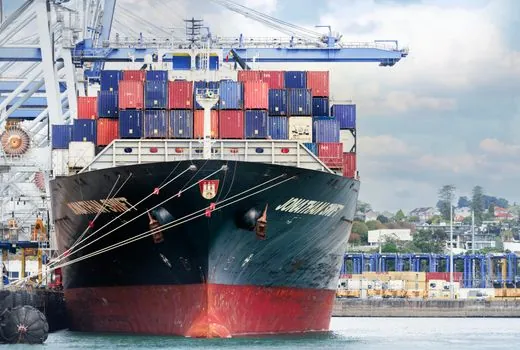
China, India, and Japan together drive over 60% of Asia-Pacific FeCr demand, with stainless steel mills acting as the dominant pull, and 2024 global stainless production stood at 50 million tons [S2]. Africa is structurally important because South Africa and Zimbabwe hold the bulk of chromite reserves, so regional power reliability, beneficiation policy, and export logistics (rail to port, port stockpile, and shipping reliability) directly set global FeCr availability and price floor [S3].
Europe is a standards-setting market where CBAM, industrial decarbonization rules, and traceability requirements now influence supplier shortlists, and LC FeCr buyers in the EU increasingly ask for documented chemistry, stable power, and lower emissions intensity before issuing long-term contracts [S3]. North America remains import-reliant for many chromium units, so supply assurance and certified quality (rather than spot price) dominate the procurement conversation [S3]. A practical comparison for 2026 sourcing looks like this:
South African HC FeCr: scale and reserve depth, 17.5 Mt global pool, 3.3 Mt from South Africa in 2024, but higher exposure to grid and port logistics; Kazakhstani FeCr: large integrated smelters with captive chromite, useful for counter-cyclical supply when South African rail is constrained; Chinese domestic FeCr: proximity to over 60% of regional stainless demand, but limited net export when domestic power tightens; LC FeCr specialty producers: smaller volume, higher Cr recovery and tighter C/Si/S/P control, premium for CBAM and superalloy buyers.
Selection Criteria for 2026 Procurement Teams
Spec-led buying is now built on four core criteria that mirror the LC FeCr shift: chromium and carbon chemistry, energy and emissions disclosure, logistics and power reliability, and traceability documentation [S3]. Producers that can document consistent chemistry, stable power access, and lower emissions intensity are better positioned with premium steel and alloy customers, and this applies even when headline FeCr price looks higher than spot [S3].
For HC FeCr, the dominant decision criteria remain Cr content, C content, Si and P ceilings, lump versus fine sizing, and freight-to-mill cost, and over 80% of world FeCr production still flows into stainless steel with China the single largest consumer [S2]. Outokumpu’s USD 45 million investment in a low-carbon ferrochrome pilot plant is one published example of suppliers trying to convert this spec gap into a contracted volume position [S2].
Limitations, Failure Modes, and Trackable Signals
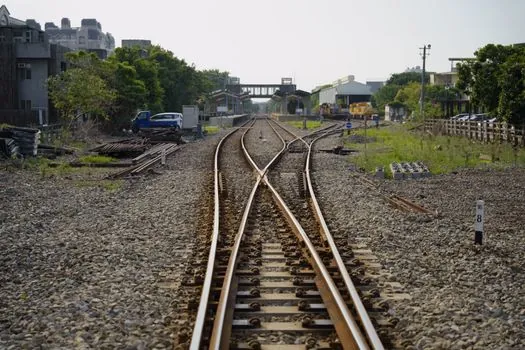
The main supply-chain risks in 2026 are not alloy chemistry but infrastructure: ferrochrome requires 2,800°C furnace temperatures, so any prolonged power interruption, rail disruption to South African ports, or CBAM documentation gap at the mill can remove a qualified supplier from a shortlist overnight [S2][S3]. Stainless demand softness, currently flagged as a near-term headwind on Chinese stainless output, and high chromium ore inventory at ports both suppress HC FeCr spot prices, which complicates long-term contract negotiation for new entrants [S1].
Trackable signals to watch through the rest of 2026: South African ferrochrome export tonnage and rail-to-port utilization; CBAM-related carbon disclosure filings from EU stainless importers (a proxy for LC FeCr premium demand); Chinese stainless output and nickel price correlation (a leading indicator for HC FeCr pull); and power-tariff and grid-availability disclosures from major FeCr smelters in South Africa, Kazakhstan, and India. A change in any one of these is enough to re-rank the 2026 sourcing tier list, the same way that grid and CBAM pressure is already re-ranking adjacent process-equipment categories such as pump and valve gravity die casting machine selection.
The underlying component specifications are covered under dc power supply, switching power supply, and industrial ups.