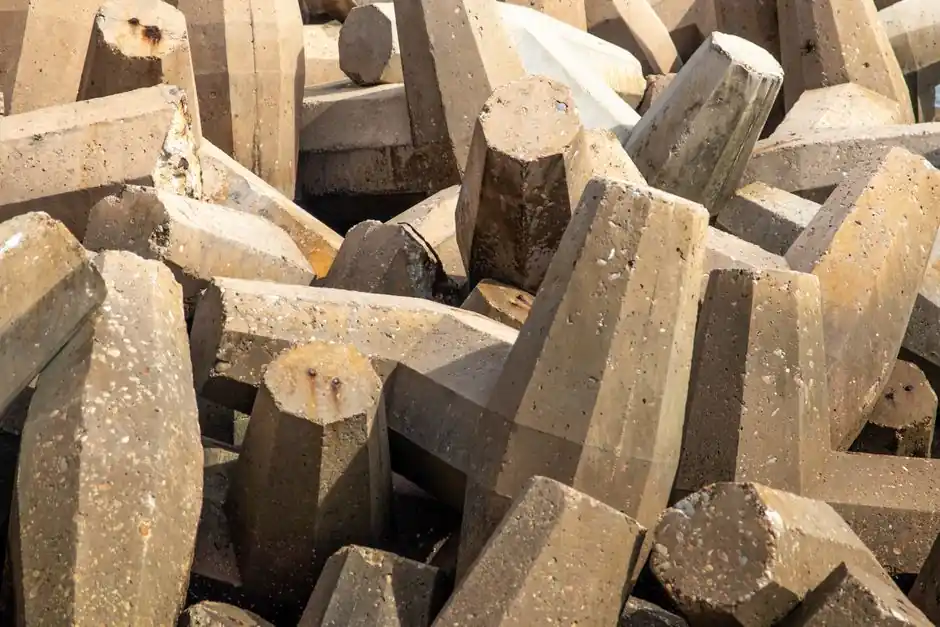
Between 2026 and 2027 the dominant supply risks for ferrosilicon (FeSi) are not price-driven but operational: power rationing in China, environmental enforcement cycles, CIS export friction, and the EU Carbon Border Adjustment Mechanism (CBAM) reshaping the European demand pool [S1][S2].
Global FeSi demand sits inside a USD 11.7–12.2 billion 2025 market growing at roughly 2.5%–3.1% per year, with Asia-Pacific above 60% of total consumption and India the fastest-growing node [S2]. Because submerged arc furnaces are not designed for frequent shutdowns, even short power cuts erode usable output, which is why the Global FerroSilicon Supply Risk Index 2026–2027 weights power access above reported nameplate capacity [S1].
What the Supply Risk Index Actually Measures
The index scores four dimensions: effective power access, regulatory and environmental enforcement, logistics and export reliability, and geopolitical or sanctions constraints [S1]. Each dimension captures whether installed megawatt capacity can physically reach an international buyer's warehouse, not how many furnaces exist on paper.
Installed capacity frequently overstates real supply because power limits, compliance downtime, and logistics friction cut the material that is consistently available to the market [S1]. For procurement teams the practical signal is that supply stress shows up in this index before it appears in spot prices, making it a leading indicator rather than a price forecast [S1].
China as the Single Largest Supply Variable
China remains the biggest market variable, and any tightening of energy or environmental policy in Inner Mongolia or Ningxia can pull global supply tight within weeks [S2]. Power-rationing mandates, carbon-intensity targets, and regional energy quotas hit furnace utilization with limited advance notice, and because Chinese FeSi production is coal-power-based, coal price moves flow directly into export offer prices [S1][S2].
The 2026 baseline remains one of structural oversupply with only slight improvement in global capacity utilization, so the risk is asymmetric: an adverse policy call from a single province outweighs several quarters of incremental capacity additions elsewhere [S2]. Standard export-grade FeSi 70–75% Si was being quoted at roughly USD 790–970 per tonne FOB in mid-2026 reference listings, illustrating how thin the price floor sits above Chinese cost curves [S3].
Energy Cost Is the Cost Driver, Not Labour or Capex
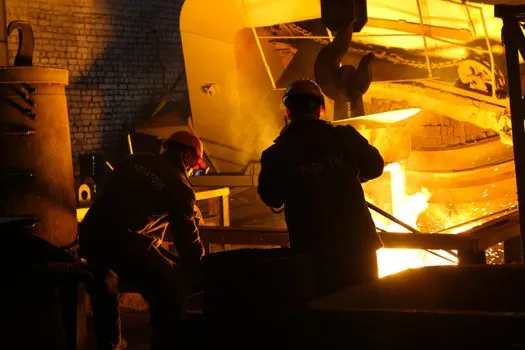
Ferrosilicon is electricity-intensive, which means the power price, not steel scrap or quartzite, sets the marginal cost of a tonne of FeSi [S1][S2]. Norway and Iceland use hydropower and run stable, low-carbon operations; China and India run on coal and inherit coal-price volatility directly into their offer prices [S2].
Scenario math from the 2026 outlook is straightforward: if coal prices fall, Chinese and Indian production cost drops and export offers become more competitive, pulling the global price centre down; if power cost rises, the price floor shifts up by roughly the same increment [S2]. A 1% change in Chinese power tariff therefore moves more tonnes of global supply than a 1% change in any other input cost.
Who Can Fill a China Supply Gap, and Who Cannot
Norway and Iceland are stable, low-carbon producers limited by small absolute scale and constrained expansion pipelines [S2]. India is the wildcard: it is simultaneously a fast-growing consumer and a fast-expanding producer, and a more self-sufficient India could begin competing for Middle East and Southeast Asia tenders through 2026 [S2].
CIS producers carry structural export and insurance friction even when their furnaces are running, which limits how quickly they can offset a Chinese outage [S1][S2]. The practical buyer takeaway is that no single region can replace a sustained Inner Mongolia or Ningxia pullback; the realistic response is inventory build, dual sourcing, and contract renegotiation rather than waiting for a like-for-like substitute [S1][S4].
CBAM and the Coming Low-Carbon Premium Split
The European Commission's Carbon Border Adjustment Mechanism forces European buyers to report embedded carbon on imported FeSi, which mechanically creates two markets: low-carbon (hydro-based) FeSi that can carry a premium, and standard coal-based FeSi that competes on price but carries a carbon cost pass-through risk [S2].
For foundries and steelmakers exporting finished goods into the EU, this is now a spec-level question, not a procurement preference, and it dovetails with the broader alloy strategy work seen in adjacent value chains such as the vanadium value chain 2026 upstream and steel plus VRFB map, where low-carbon inputs are starting to gate access to European end markets.
Demand-Side Risk for 2026
Steel is the dominant demand sink, and 2026 demand is exposed to weak global infrastructure spending and a slow property market, which keeps overall consumption growth in the 2.5%–3.1% range rather than at a cyclical peak [S2]. Indian and Chinese steel mills have been the most consistent incremental buyers, while European output has been pressured by energy cost, pushing more European demand onto the import market [S3].
For raw-material logistics tied to FeSi movement, the same port and bulk-handling pinch points that show up in equipment selection pieces like skid steer loader specs for port and terminal bulk handling apply here, since export tonnage from Bandar Abbas and other regional ports is sensitive to inland truck and bulk-vessel availability [S3].
Procurement Decision Map for 2026
Buyers who can tolerate a 1.5–3.0% carbon premium should pre-qualify a hydropower-based Norwegian or Icelandic source plus one Eurasian (non-sanctioned) backup; buyers locked into standard coal-based FeSi should hold at least two Chinese provincial sources (not both in Inner Mongolia) to diversify policy exposure [S1][S2][S3].
For new plant builds where foundry and steel deoxidation specs intersect with broader mill infrastructure, the upstream FeSi risk profile also feeds into decisions around process equipment such as inline pipeline pumps for mining spec map and selection gates, because a constrained FeSi supply line forces longer spares and inventory holding across the whole metallurgical flow.
Trackable Signals for the Rest of 2026
Watch three nodes: any Inner Mongolia or Ningxia power-rationing announcement (highest signal value), the EU CBAM reporting threshold for ferroalloy imports, and India's monthly FeSi export licensing data, since Indian export volumes are the cleanest proxy for whether Delhi is moving toward net self-sufficiency or surplus [S1][S2]. The next inflection point is the late-2026 European winter power market, which historically sets the European FeSi offer tone and indirectly tightens or loosens the global marginal tonne.
The underlying component specifications are covered under dc power supply, switching power supply, and industrial ups.