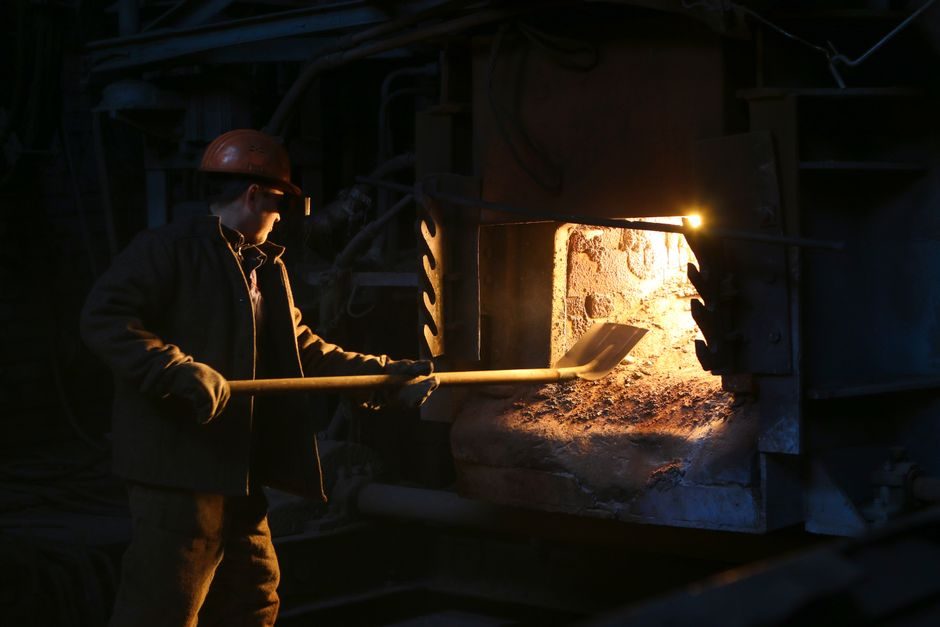
A complete heat pump production line in 2026 combines sheet-metal cabinet fabrication, copper heat-exchanger brazing in a controlled-atmosphere furnace, hermetic or scroll compressor integration, refrigerant charging under vacuum, and a final A-rated performance run-test, with the line architecture scaling from 2,000 unit/year manual cells to fully robotic 200,000 unit/year flows [S1].
Zhongshan Amitime Electric Co., Ltd. — a Guangdong-based OEM with more than 15 years of technical staff experience — runs exactly this architecture for consumer and light-commercial heat pumps, air-conditioners, swimming-pool heaters and water heaters under a single factory footprint [S1]. Industrial-grade variants push the same architecture to higher output temperatures: Tetra Heat Pump advertises industrial units delivering 120°C hot-water output for process factories, framed around a stated 70% energy-saving envelope versus fossil steam boilers [S2].
Two Product Families, Two Line Maps
Consumer and industrial heat pumps share roughly 70% of their bill of materials — copper tubes, aluminium fins, sheet metal, refrigerant, expansion valve, control board — but diverge sharply on three work-stations: the compressor (rotary vs semi-hermetic scroll), the heat exchanger (finned coil vs brazed-plate / shell-and-tube), and the final test bench (capacity-rated air loop vs process-side high-temperature water loop) [S1][S2]. Amitime's consumer line uses a finned-tube evaporator and condenser built from copper tubes expanded onto aluminium fins, with line speeds gated by the U-bend expansion bench and the header brazing torch [S1]. Industrial lines such as Tetra's use 120°C-class brazed-plate or shell-and-tube exchangers that must be vacuum-brazed in a controlled-atmosphere furnace, with the same furnace principles that a foundry or aluminium-extrusion house applies to its holding furnace cell [S2].
The shared work-stations are the steel-cabinet laser cut + robot-weld cell, the copper-tube cutter and expander, the control-board PCBA line, the vacuum charging station, and the helium leak-test station. Together they form what a process engineer would call a 7-cell line: fabrication, heat-exchanger sub-assembly, compressor sub-assembly, cabinet integration, evacuation and charging, leak test, and run-test. Amitime's published profile fits this exact 7-cell layout for the consumer family, while Tetra compresses cells 4 to 6 into a single skid-build area for industrial units [S1][S2].
Compressor Selection: Rotary, Scroll and Semi-Hermetic
Below 12 kW heating capacity, the dominant compressor on consumer 2026 lines is the rotary or single-scroll hermetic unit, supplied pre-charged with PVE oil and a nitrogen holding charge [S1]. The hermetic shell simplifies the line because the compressor is a drop-in module: it is bolted to a rubber-isolator mounting, the suction and discharge lines are brazed directly onto the shell stubs, and no shaft seal work is required at the assembly station.
Industrial heat pumps above 30 kW and 80°C outlet shift to semi-hermetic scroll or screw compressors, with a serviceable oil sight glass, a crankcase heater, and a discharge thermistor that the line-runner wires into the controller before charging [S2]. The line implications are real: a semi-hermetic cell needs a torque-controlled through-bolt station, a crankcase-heater continuity test, and a 10-minute oil-warm-up before the run-test ramp. Buyers evaluating 2026 production should treat compressor type as a gate — it dictates cell count, cycle time, and whether the factory needs an oil-flooded screw compressor test loop alongside the standard air-side calorimeter.
Refrigerant Compatibility and Brazed Heat-Exchanger Brazing
R32 has become the default single-component refrigerant for residential air-source heat pumps in 2026, replacing R410A on most OEM lines, with the flammability class A2L driving a sealed charging cell and a leak-test sensitivity of 1 g/yr or better [S1]. Industrial high-temperature units in the Tetra 120°C class use refrigerant pairs designed for a large glide and a high critical point; the heat-exchanger design must handle the glide on both the evaporator and the condenser side, which is why brazed-plate or shell-and-tube exchangers — not finned coils — are the industrial default [S2].
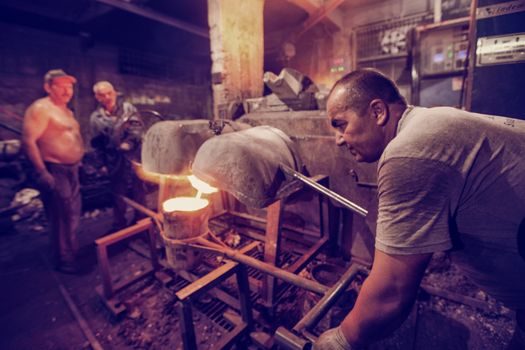
Brazing the heat exchanger is the highest-temperature work-station in the line. Copper-to-copper joints are torch-brazed under nitrogen purge to limit internal oxide scale; for stainless plate exchangers, vacuum-brazing at roughly 1100°C in a controlled-atmosphere furnace replaces torch work and produces a cleaner internal surface. Both additive manufacturing of heat-exchanger plates and furnace-based brazing now coexist on modern 2026 lines, with the additive route used for low-volume optimised manifolds and the furnace route used for volume production. Wuxi Hongyuan Pump Manufacturing's high-pressure cleaning equipment — listed at 350 bar to 1450 bar operating pressures — illustrates how the same factory engineering base (pump body, accumulator, control valve) can be repurposed for an industrial heat-pump skid where the process-side water loop needs periodic descaling [S3].
Control Board, Inverter Drive and Run-Test Bench
Variable-speed inverter control is now standard on 2026 consumer lines, with a single-phase or three-phase IGBT module, DC-link capacitors, and a control board that runs the compressor, the outdoor fan, the expansion valve stepper, and the user interface [S1]. Total component cost of the inverter section typically lands in the 12% to 18% band of the finished heat-pump cost on a residential unit; sizing the inverter to the compressor's locked-rotor current — and not just to its running current — is the single most common spec error seen on 2025-vintage lines that are now being re-tooled.
The run-test bench is the final gate. A consumer cell runs the unit in heating mode at A7/W35 and A-7/W35 rating points, logs capacity in kW and COP, and rejects units outside a ±5% window [S1]. An industrial cell runs at the process-side setpoint — for Tetra's 120°C class this means stabilising the hot-water loop at 110°C and 120°C with the compressor fully loaded, logging discharge superheat, subcooling, and the process-side ΔT [S2]. Sourcing the right inverter class and the right enclosure rating is identical to specifying a variable-speed drive for a 2026 industrial plant — the heat-pump line and the VFD line share the same PCBA cell, the same burn-in philosophy, and the same supplier audit checklist.
Line Layout, Cycle Time and Capacity Benchmarking
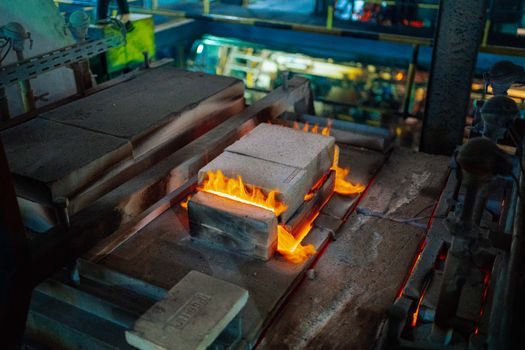
For a 2026 consumer split unit, a typical 7-cell line produces one unit every 8 to 12 minutes at the bottleneck cell (the brazing and evacuation station), giving a single-shift annual output of roughly 20,000 to 30,000 units per line; doubling the brazing torches and adding a parallel evacuation cell can lift this to 60,000 units per shift [S1]. Amitime's profile points to a multi-line factory footprint rather than a single 200,000-unit-per-year line, with several parallel 7-cell layouts feeding a common PCBA and sheet-metal shop [S1].
For industrial high-temperature units, cycle time at the integration cell stretches to 60 to 90 minutes per skid, reflecting the larger brazed-plate heat exchangers, the heavier compressor, and the longer pump-down time on the process-side water loop [S2]. The capex per unit of nameplate heating capacity is roughly an order of magnitude higher than a consumer unit, but the dollar-per-kWh-of-annual-energy-delivered is competitive once the unit runs more than 2,000 hours per year — which is why the industrial 120°C class is now a credible alternative to a low-pressure steam header for many factories [S2].
Failure Modes and Sourcing Risks for 2026 Buyers
Three failure modes dominate the warranty data on 2025-built heat pumps and remain the same risk surface in 2026: (1) refrigerant leakage at the field-brazed joint, driven by poor nitrogen purge during assembly, (2) compressor electrical failure from inverter DC-link ripple, and (3) heat-exchanger fouling on the process-side water loop when the unit is installed without a strainer. A factory that runs a helium leak test at 1 g/yr sensitivity and a 5-minute inverter burn-in removes modes 1 and 2 from the field-failure budget; mode 3 is a specification issue between the OEM and the buyer, not a manufacturing defect [S1][S2].
For buyers auditing a 2026 supplier, the checklist is short and physical: walk the brazing cell and confirm nitrogen flow meters are present on every torch, watch the evacuation station and confirm a 500-micron vacuum hold for at least 15 minutes, and read the run-test log on a randomly pulled unit. Cross-checking the supplier's PCBA sourcing against the power grid smart manufacturing component map — particularly for IGBT modules, current sensors, and gate drivers — is the fastest way to flag a 2026 line that is still using 2023-vintage inverter silicon. The next node to watch is the IEC 60335-2-40 update for A2L refrigerants, which will tighten charging-cell ventilation requirements on consumer lines through 2026-2027; suppliers that have already re-tooled their evacuation and charging cells to the new ventilation rules will pass factory audits on the first visit, while those that have not will be forced into a costly retrofit during the second half of 2026.
For component-level specifications, see heat detector, and heat treatment furnace.