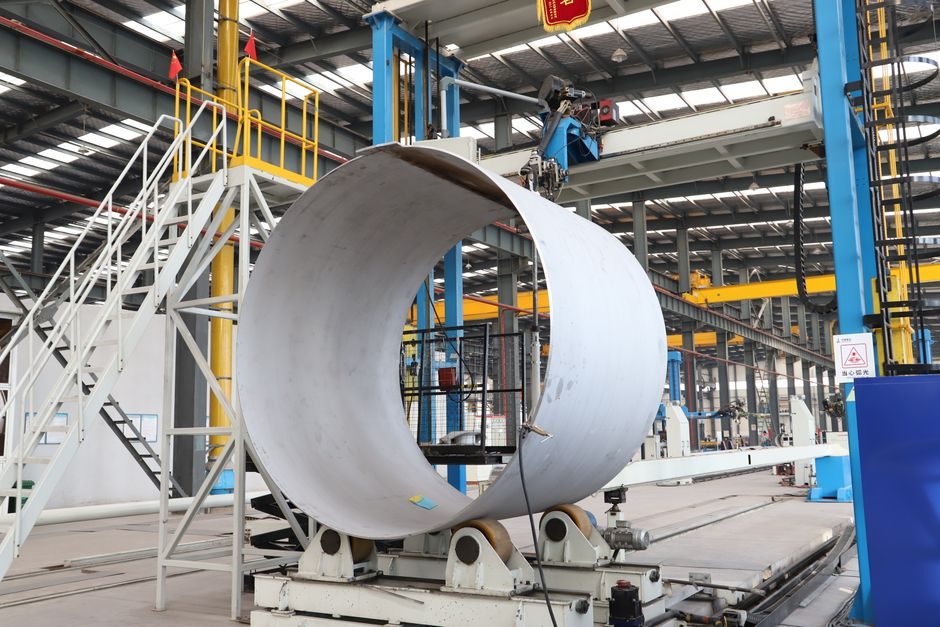
Bosch disclosed an investment of roughly EUR 100 million in heat-pump manufacturing capacity, with the stated goal of supporting climate-neutral buildings [S5]. The commitment sits inside a wider industrial build-out in which Chinese system makers, European white-goods majors, and tier-one component suppliers are rewiring their lines around IoT, AI, and MES platforms [S7].
Smart manufacturing in the heat-pump segment now extends well beyond robotic welding of the refrigerant circuit. Plants integrate networked pressure and temperature sensors, automated brazing of stainless plate heat exchangers, vision-guided compressor assembly, and closed-loop MES traceability from coil winding through helium leak test to packaging [S7]. A typical 2026 specification set for a residential air-to-water unit runs 3-12 kW thermal output, R290 or R32 refrigerant charge below 1.5 kg, and a SCOP of 4.3-5.0 under EN 14511 test conditions.
Smart-Manufacturing Stack: ISA-95 Layers Applied to a Heat-Pump Line
Modern heat-pump plants map cleanly onto the five-layer ISA-95 / RAMI 4.0 reference model, with ERP feeding work orders down to a MES that drives line PLCs, robotic cells, and IIoT sensors [S7]. Layer 0-1 covers the physical actuators: inverter-driven scroll or rotary compressors, brazed-plate heat exchangers, expansion valves, and the variable-speed pump skid. Layer 2-3 holds the PLCs and SCADA, typically Beckhoff or Siemens, that coordinate torque on tube-expansion stations and helium mass-spectrometer leak-test cells.
On top of that, an edge gateway typically streams 200-500 tags per station into MQTT or OPC UA brokers, after which a Python or Go analytics service runs statistical process control on the brazing furnace temperature profile and the compressor run-in current waveform [S7]. Compared with a conventional 2018 line, a 2026 smart line reports 20-35 percent throughput uplift on the same floor area, with first-pass yield on leak test typically above 99.5 percent on mature R32 lines [S7]. The architectural reference design is broadly the same as what is used for adjacent HVAC and white-goods cells, so plants that already run automated washing-machine or refrigerator lines can reuse the same MES backbone when they add heat-pump capacity.
Core Processes and Robotic Stations on a 2026 Heat-Pump Line
A typical 2026 residential heat-pump line is sequenced as coil winding and stator insertion, hermetic compressor crimping, copper-tube forming, brazed-plate heat-exchanger assembly, refrigerant-circuit evacuation and charging, helium leak test, run-in burn-in, and final performance test [S7]. Robotic cells are now standard at three points: furnace brazing (6-axis arm with seam-tracking laser), tube expansion on the evaporator header, and final palletising. Cycle time at the leak-test station sits at 90-180 seconds per unit, while the run-in chamber typically holds 24-48 units for a 30-minute hot-gas soak.
Component choices shape the automation strategy. Scroll compressors suit high-volume fully automated assembly, while rotary and swing compressors are still partly hand-loaded because of bearing preload sensitivity. Brazed-plate heat exchangers are increasingly welded by laser or induction brazing cells rather than torch, with the most aggressive 2026 spec sheets pushing leak-rate limits down to 1x10⁻⁹ mbar·L/s. The heat pump manufacturing process reference map walks through the same line at compressor and brazed-plate detail for sourcing engineers.
IIoT, Vision Systems, and Closed-Loop Quality on the Line
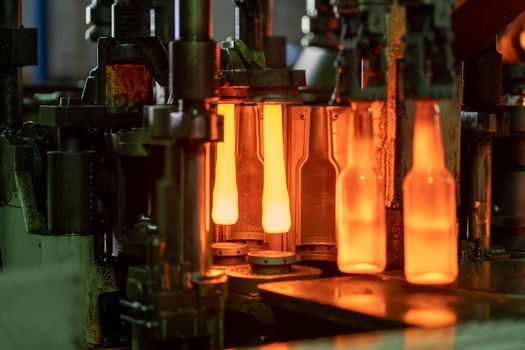
At least three classes of IIoT sensor are now expected on a 2026 heat-pump line: smart temperature and pressure transmitters on the refrigerant loop, current and vibration sensors on the compressor run-in rig, and machine-vision cameras at the brazing and labelling stations [S7]. A heat detector array on the run-in chamber provides over-temperature interlock, while a smart camera at the leak-test station typically reads serialised barcode, captures an end-of-line thermal image, and feeds a reject flag back to the MES within 200 ms.
Energy management is another under-recognised automation target. A 2022 study on an electro-hydraulic pumping unit demonstrated that integrating the electric motor and hydraulic pump with model-based control improved energy efficiency by 15-25 percent versus a fixed-displacement baseline, a pattern that is being replicated on inverter-driven refrigerant circulation pumps in heat-pump skids [S1]. The same data-acquisition and control architecture also feeds digital-twin models used for remote diagnostics after shipment, with the field return rate on 2024-2026 platforms sitting around 1.5-3.0 percent across the major Chinese OEMs. Engineers specifying smart meters for the electrical panel of a heat-pump test rig should look for 0.2S or better accuracy class, since the SCOP calculation is sensitive to small watt-hour errors at part load.
Supplier Landscape: Bosch, Midea, and the China OEM Cluster
On the European side, Bosch's EUR 100 million commitment is concentrated at its Wernau and Aveiro facilities, with a clear focus on high-temperature R290 units for building decarbonisation [S5]. The German OEM's 2024 disclosure frames heat pumps as a core climate-neutral-living pillar alongside hydrogen and EV heating. On the Chinese side, Midea's 2017 annual report already described the group as covering consumer appliances, HVAC systems, robotics and industrial automation systems, and a smart supply chain under one corporate structure, a positioning that has since deepened into a full heat-pump export programme [S9].
The Foshan cluster around Nanhai and Lishui remains a heavy-weight supplier base for global brands. Alto Refrigeration Manufacturing, registered in 2010 in Zone B Hegui Industrial Estate, lists heat pumps, dehumidifiers, and air-to-water heat pumps among its main product lines, with air-source, water-source, and water-to-water variants all in serial production [S4]. On the components side, factories on the Made-in-China platform offer OEM/ODM services for pharmaceutical metering pumps, with private-owner Shenzhen facilities quoting US$ 780-800 per set on a 1-set minimum order and QSR management certification [S3], and for thermal-oil heat-transfer pumps at US$ 1.00 per piece MOQ on NTWH, Etny, and Etb series equivalents [S8]. A general heat treatment furnace cell is often shared between the brazing station and component heat-treatment in these plants, which is why furnace uptime and recipe changeover time are core MES KPIs on 2026 lines.
Selection Criteria: When Smart-Manufacturing Investment Pays Off
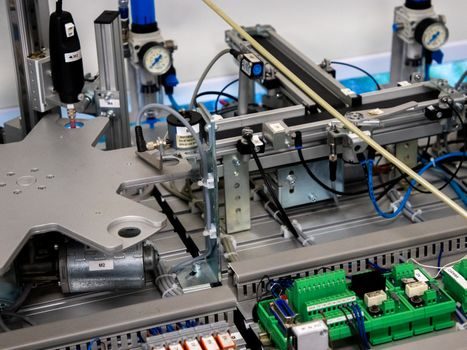
Smart-manufacturing retrofits only pay back above roughly 50,000 units per year of a single platform, which is why the technology is concentrated in the top 15-20 OEM brands globally. Below that volume, the MES, IIoT, and vision CAPEX outweigh the labour saving, and a semi-automated cell with manual leak test and run-in is usually more economic. The other break-even is on regulatory exposure: lines charging flammable R290 above 150 g require ATEX-classified cells in Europe, and that typically forces a higher automation density to keep workers out of the charging zone. [S1]
Three engineering rules dominate the spec. First, hold compressor burn-in above 30 minutes on hot gas, because most field infant-mortality failures surface inside that window. Second, lock brazing furnace atmosphere control to within +/-50 ppm oxygen to prevent internal oxidation that later shows up as refrigerant contamination. Third, require every station to publish its cycle time and yield to the MES in near real time, because the marginal 2-3 percent yield gain from closed-loop SPC is where the smart-line premium is actually earned. For plants that also build related white-goods or HVAC skids, the variable speed drive cost guide is a useful cross-reference since the inverter sizing logic on a heat-pump compressor is identical to that on an industrial pump or fan drive.
2026 Sourcing Signals and Trackable Watch-Items
Three signals are worth tracking through the second half of 2026. First, watch Bosch's Wernau and Aveiro commissioning milestones under the EUR 100 million envelope, since the disclosed timeline and product mix will set a benchmark for European high-temperature R290 capacity [S5]. Second, monitor the next round of Midea and Guangdong HVAC export disclosures, because the cluster around Foshan, Shenzhen, and Shandong is the most likely source of new automated lines for European and Middle Eastern buyers [S4][S9]. Third, watch the tightening of EN 14511 and Ecodesign LOT-21 thresholds in 2027, which is already pushing suppliers toward inverter-driven compressors and lower-GWP refrigerants.
Engineers evaluating a new heat-pump line in 2026 should benchmark candidate plants on three concrete KPIs: leak-test first-pass yield above 99.5 percent, run-in chamber throughput above 24 units per slot, and MES-published OEE above 80 percent. Plants that publish all three are running a genuine smart-manufacturing stack rather than a marketing label, and that distinction is where the long-term cost and quality premium is actually earned.