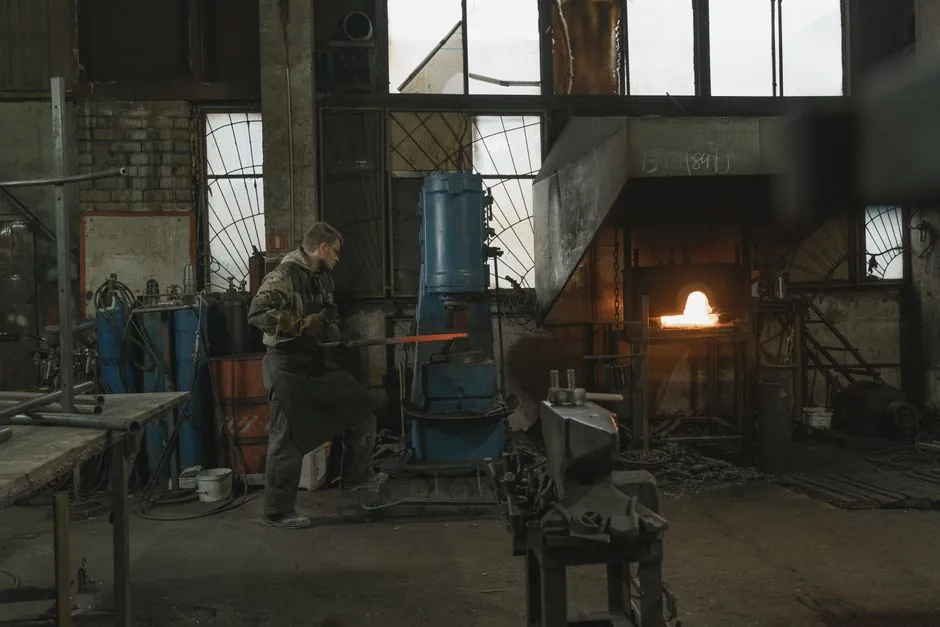
A holding furnace is a thermally insulated vessel whose job is to keep molten metal at a precise pour temperature, with no active melting, between the melting step and the casting or pouring station. For hardware manufacturers, selection hinges on the alloy poured (aluminum, zinc, brass, bronze, iron, steel, or superalloy), the throughput per shift, and whether the pour requires controlled solidification or a tight thermal window.
Hardware-making spans a wide process range, from die-cast cabinet handles (Zn or Al alloys poured at roughly 380-680 degrees C) to investment-cast marine and building hardware in 304/316 stainless, brass, or bronze at 900-1100 degrees C, to iron and steel castings above 1150 degrees C. Each band drives a different holding furnace configuration, lining, and heat-source choice, and the same machine can be misapplied across bands.
Heat Source and Process Role by Alloy
For aluminum and zinc hardware such as furniture handles, knobs, and shelf brackets, electric resistance holding and gas-fired crucible holding are the most common choices because bath temperature is moderate (typically 600-720 degrees C for Al, 380-450 degrees C for Zn) and melt loss from oxidation is the dominant cost. Resistance holding is preferred for low-tonnage cells under 1 t/h because the heating element is easy to maintain and power density is low. [S5]
For brass, bronze, and copper-alloy hardware (valves, sight glasses, marine fittings, building castings), gas- or oil-fired holding furnaces with silicon-carbide or clay-graphite crucibles dominate. The 900-1100 degrees C window combined with higher thermal mass pushes designers toward fossil-fuel burners, and refractory life in the spout and flue is the key spec to verify. Several Chinese OEM listings from 2026 place aluminum-melting/holding bundles and electric-arc EAF units in the same supplier catalog, confirming that hardware foundries often pair an EAF or reverb melter with a smaller holding leg downstream [S6].
For iron and steel hardware, including investment-cast stainless parts and structural castings, the holding leg is normally a channel- or coreless-induction furnace. A 2017 study in Heat and Mass Transfer characterized a vacuum holding induction furnace for investment-cast (lost-wax) turbine blades, using a reduced lumped-body model calibrated against two synthetic thermocouple signals and a Levenberg-Marquardt fit, with the explicit goal of controlling solidification parameters during the holding step [S1]. The same control philosophy applies to stainless and carbon-steel investment-cast hardware where metallurgical consistency across a pour is the spec.
Selection Criteria: Capacity, Delta-T, and Lining
Capacity sizing is driven by shot weight plus a transfer buffer, not by nameplate tonnage. A rule of thumb used in aluminum die-casting foundries is to size the holding furnace at 1.5-2.0 times the largest single shot, so a 250 kg shot implies a 400-500 kg holder. Under-sizing creates delta-T swings that drive porosity and cold-shut defects; over-sizing drives surface oxidation and fuel waste. [S1]
Delta-T uniformity across the bath, expressed as the maximum-to-minimum bath temperature spread, is the most underrated spec. Industry practice for aluminum holding targets a bath uniformity of plus or minus 5 degrees C; for brass and bronze, plus or minus 10 degrees C is common. Achieving that depends on convection in the bath and on the placement of burners or induction coils relative to the spout. For vacuum or sealed induction holding on superalloys and stainless, the uniformity is generally tighter because radiative heat transfer inside the cold wall dominates, as the FlexPDE / lumped-body model in [S1] quantifies through a calibrated heat-transfer coefficient.
Lining selection is the second major spec gate. Aluminum and zinc holders typically use a 150-200 mm castable or microporous calcium-silicate board with a hard surface layer. Iron and steel induction channels use silica, magnesia, or alumina-based dry-vibrated linings with a rated campaign life of several hundred heats. The supplier should publish the lining thermal conductivity at operating temperature and a documented pre-heat schedule; absent that, treat the lining claim as marketing.
Who a Holding Furnace is For, and Who Should Skip It
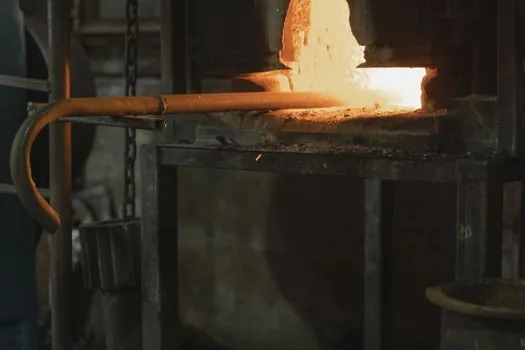
A dedicated holding furnace is worth the capex for any hardware line pouring more than 500 kg/h of the same alloy in a continuous shift, or for any line pouring an alloy with a narrow freezing range (most bronzes, all superalloys, and high-silicon stainless) where temperature drift translates directly into scrap. The return is the elimination of cold-melt recharging during the pour, which is the single largest source of casting scrap in mid-volume foundries. [S3]
Skip a dedicated holding step if the pour rate is below roughly 200 kg/h, if the alloy is forgiving (most commodity aluminum die castings tolerate a 15-20 degrees C swing), or if the foundry is running a single small furnace that already serves as both melter and holder. In those cases, the right answer is a dual-chamber melter/holder, not a separate holding leg. Holding is also unnecessary for lost-foam or sand-cast iron poured directly from a cupola, because the cupola discharge temperature is already close to the pour target.
For aerospace-grade or superalloy hardware (single-crystal or directionally-solidified turbine blades, structural stainless investment castings), holding is not optional. The vacuum induction holding furnace described in [S1] exists specifically because the solidification front velocity and thermal gradient during the hold and pour window are the metallurgical spec. The same logic now drives spec sheets for stainless and nickel-alloy investment-cast hardware, where buyers increasingly request a documented thermal model and pyrometer traceability per heat.
Control, Sensors, and Documentation
Three control layers define a usable hardware-foundry holder. First, a Type-K or Type-S thermocouple in a protective sheath, read by a PID loop on the burner or thyristor. Second, an optical or two-color pyrometer sighting on the bath or pour stream, used as a sanity check on the immersed thermocouple and as the primary control where the alloy is reactive. Third, a power or fuel-flow trim, holding the bath within a plus or minus 5-10 degrees C band depending on alloy. [S1]
The reduced-model approach in [S1] takes the next step: a finite-element model of the furnace (induction heat source plus transient radiation inside the cavity) is condensed into a lumped-body model with parameters fit to two synthetic temperature signals via Levenberg-Marquardt least squares. The fit model then drives an inverse estimator that reconstructs the full furnace thermal state from a small number of internal sensors. This is the engineering basis for the temperature-uniformity warranty most serious OEMs now offer, and is the spec a buyer should request when the hardware is safety-relevant.
Documentation requirements: a CE marking under the EU Pressure Equipment Directive (PED 2014/68/EU) for any vessel above the low-water threshold, an ATEX 2014/34/EU rating for any holder installed in a Zone 1 or Zone 2 around a pouring line, and a refractory-pre-heat log per campaign. The Yancheng Jiahe Hardware Manufacturing contact page (2026) shows a CE-marked product line and an ETA-adjacent certification pattern, which is the documentation baseline a small hardware OEM should match for EU exports [S4].
Vendor and Sourcing Landscape (2026)
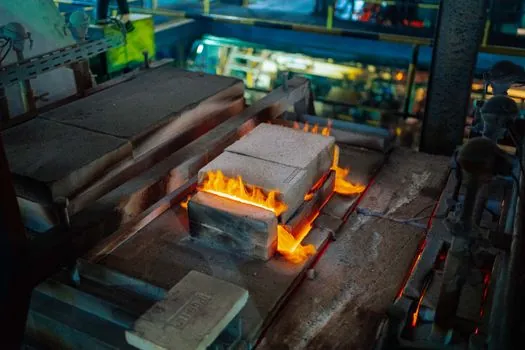
China remains the dominant manufacturing base for both hardware goods and the holding furnaces that feed them. The made-in-china.com holding-furnace category (page 5, indexed 2026-07-26) lists an electric-arc EAF EBT-10 t unit at roughly US$450,000 per piece from Liaoning Rongjun Machinery, alongside an aluminum melting + holding + refining bundle from Sichuan Jiuxun Technology, and a Y81K-400 hydraulic metal baler at US$41,000-59,000, illustrating the spread of metal-processing equipment in the same channel [S6]. A second 2026 made-in-china search groups holding furnaces with metal-recycling and slag-processing machines from suppliers including Guangxi Ruijie, confirming the cross-category listing pattern that procurement teams need to filter against [S7].
Hardware-side, the same channel lists 304/316 investment-cast building hardware, marine hardware, and CNC-machined fasteners from Ningbo-based investment casting suppliers [S3]. Furniture-handle and cabinet-hardware OEM Hangzhou Advance Hardware Manufacturing runs an in-house tool-and-die, die-casting, machining, polishing, and plating chain, with production based in Jinhua, Zhejiang [S5]. Zhejiang-based Grand Hardware Manufacturing posts brass and stainless oil-sight-glass, aluminum die-casting, and machined-parts trade leads dated 2021-2025, with a domed NPT 1/2" brass sight glass offer logged 2025-10-19 [S2]. The pattern is consistent: holding furnaces and finished hardware cross-list in the same B2B directories, which makes supplier vetting the procurement-side gate.
Comparison: Heat Source Options for Hardware Alloys
Three heat-source families cover essentially all hardware-foundry holding duty. Electric resistance holding is cheapest to install and easiest to automate, suits aluminum and zinc at sub-1 t/h rates, and gives plus or minus 5 degrees C bath control with low maintenance; it is the wrong tool above roughly 800 degrees C and for any bath above 2 t. Gas- or oil-fired crucible holding covers brass, bronze, copper, and small iron pours at 900-1300 degrees C, takes the largest single share of mid-sized hardware foundries, and is constrained by burner tuning and refractory life in the flue. Induction holding, both channel-type for iron/steel and coreless for superalloy and stainless investment casting, is the most controllable and the most expensive per ton of capacity, and is the only option when solidification-path control matters, as the model-based control framework in [S1] demonstrates.
For foundries already running a crucible furnace as the melter, a separate electric-resistance holding leg is the lowest-risk upgrade. For iron-cupola shops the cupola furnace discharge typically feeds a channel-induction holder, not a crucible, and a building pipe hardware line drawing on brass and bronze is best served by a gas-fired tilting crucible holder sized at 1.5x the shot. Cross-reference hardware foundries serving agricultural machinery, which pair holding furnaces to specific casting cells, in this 2026 spec note on agriculture machinery foundry furnaces and aerospace investment-cast work in aerospace holding furnace spec gates.
Trackable signals to watch over the next 6-12 months: tighter plus or minus 3 degrees C bath-uniformity warranties on aluminum holders as optical-pyrometer trim loops proliferate, more published lumped-model parameters on Chinese OEM datasheets as the [S1] control method diffuses out of aerospace, and a clearer PED/ATEX documentation baseline on small-hardware suppliers looking to export to the EU. Also watch for gas-fired crucible holding gaining share over oil-fired as EU foundries decarbonize, and for induction holding cost-per-ton to drop as IGBT medium-frequency supplies replace older thyristor stacks.