
Hot box core shooters built for automotive castings typically operate on 440 V 3-phase supplies with electric core-box heating, blow pressures of 4-6 bar, and shooting capacities of 5-20 kg per cycle, as documented in current Indian machine-builder spec sheets [S4].
The auto castings most often routed through a hot box core shooter are cylinder heads, valve bodies, pump housings, and parts with internal oil or water passages, all of which need sand cores strong enough to survive handling and pouring [S1].
Operating envelope and core weight class
Published 2026 spec sheets place the hot box core shooter working envelope at 5-20 kg core weight, 4-6 bar blow pressure, and 440 V 3-phase electric heating, with PLC-based fully automatic control and floor-mounted installation [S4]. The narrower 5-10 kg class is used for thinner shell cores, while the 10-20 kg bracket covers heavier valve-body and pump-housing cores that need thicker shell walls.
For automotive tier-1 buyers, the 5-20 kg range matches the bulk of engine block and transmission housing cores, where wall thickness typically drives the required shell build-up rather than raw shot weight. Buyers should also note that core-box mounting orientation (horizontal vs roll-over) is a hard-coded spec on these machines, not a field option [S4].
Why hot box over cold box for engine cores
Hot box curing uses heated tooling to harden a thermosetting binder, which gives a rigid shell with high surface finish, while a cold box core machine cures at room temperature using a gas catalyst, a route often picked for very large or complex internal passages where oven-uniform heating is impractical [S3].
For cylinder heads, intake manifolds, and thin-wall water-jacket cores, hot box is generally preferred because the heated shell cures fast, tolerates short cycle times, and produces the smooth internal surface that matters for coolant flow. Cold box dominates where deep undercuts or very large cores make oven heating uneconomical [S3].
Parting direction and shop-floor layout
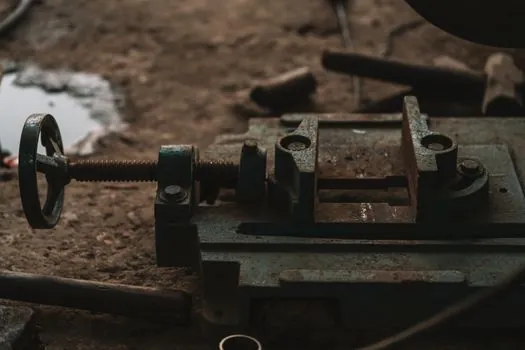
Vertical parted cold box machines open side-to-side and tend to eject deep or undercut cores cleanly, while horizontal parted machines open up-down and fit a more compact front-to-back footprint on the shop floor [S3]. For hot box, a related choice shows up in the core-box mounting spec: horizontal-mount machines dominate the 5-10 kg class, while roll-over mounts appear in the 10-20 kg bracket to support gravity-assisted shell build [S4].
Inline hot box cells (shooter, heating zone, ejection) typically need more side clearance than a horizontal cold box of equivalent tonnage, so plan line layout around the wider working envelope rather than the static machine footprint [S3].
Controls, safety, and Industry 4.0 layer
Current 2026 hot box offerings are PLC-based, fully automatic, and increasingly ship with SCADA, fault diagnostics, alarm logs, and safety enclosures with interlocks; the higher-end 10-20 kg class explicitly markets Industry 4.0 readiness and individual temperature controllers for each core-box half [S4].
Practical spec items to verify on the data sheet before sign-off: digital temperature control (mandatory for repeatable shell thickness), sand-level sensor (mandatory for consistent fill), and pneumatic or hydraulic clamping force sized to the projected core area. Buyers comparing two machines at the same core weight should weigh the control class first, because clamping and heating control drive scrap rate more than raw kW rating.
Production-volume sizing and machine class
For a single-head cell producing 5-10 kg cores, a standard horizontal-mount hot box unit is the common entry point, while higher-volume automotive lines step up to double-head or fully automatic 10-20 kg machines with hydraulic top and bottom cylinders [S2][S4]. The double-head configuration effectively doubles the throughput per operator without doubling floor space, which is why it is the typical answer for takt-time-driven engine programs.
When a foundry runs a mix of small and large cores, the practical pattern is a hot box cell for shells up to 20 kg paired with a separate shell core machine for very thin or highly contoured cores, keeping each machine inside its designed weight class. Mixing 30 kg cores into a 10-20 kg-rated unit is the most common cause of heating-platen warping and shortened heater life.
Limitations, failure modes, and selection guardrails
Hot box is the wrong choice when the core is too large for oven-uniform heating or when the binder chemistry does not tolerate the 200-300 deg C tool surface typical of phenolic-urethane hot box systems; cold box or shell-core routes handle those cases better [S3][S4].
Common failure modes buyers should price in: heater-element burnout from under-rated sand-level control, shell cracking from uneven platen temperature, and ejection damage when clamping force is mismatched to the projected core area. Specifying sand-level sensing and individual zone temperature control is the cheapest way to defuse the first two; the third is a tooling-side issue, not a machine-side one [S4].
For whom this spec class is (and is not) the right fit
The 5-20 kg hot box class is a fit for tier-1 and tier-2 automotive foundries pouring iron or aluminum cylinder heads, valve bodies, pump housings, and similar thin-wall shell cores, and for general engineering castings that need smooth internal surfaces [S1][S4]. It is not a fit for very large engine-block cores above the 20 kg bracket, for steel foundries that need alkaline-phenolic chemistry, or for job shops that change tooling weekly and need a binder route with shorter changeover.
Foundries running a stable mix of mid-size cores at 30-60 second cycle times will get the fastest payback on a PLC-controlled 10-20 kg unit with SCADA, while shops that need flexibility across core sizes should look at a core machine line that pairs hot box with a cold box cell rather than over-sizing one machine [S2][S3].
Standards and sourcing checklist
No single ISO or ASTM standard governs hot box core shooter selection; buyers should instead require documented compliance with IEC 60204-1 for machine electrical safety, the relevant IEC 60079 zone classification if any core-box heating is gas-fired, and the OEM's documented PLC program revision [S4]. For comparison across vendors, normalize the data sheet to the same fields: core weight range, blow pressure, platen temperature, platen size, clamping force, cycle time, and control platform.
Trackable signals to watch over the next procurement cycle: OEM movement toward Industry 4.0 / SCADA as standard rather than optional, broader adoption of individual zone temperature controllers in the 5-10 kg class, and roll-over mounts spreading from the 10-20 kg bracket into the entry-level 5-10 kg tier. Buyers comparing options similar to other process-equipment spec maps will recognize the same evaluation pattern used in adjacent selection guides such as the Marine Gearbox Selection: Helical, Bevel, and Planetary Spec Map for 2026 and the Industrial Gear Selection for Wind Power: 2026 Spec Map, where normalize-then-compare on a fixed set of criteria is the method that survives an audit.