
Hot box core shooters and V-process vacuum molding lines sit at opposite ends of the foundry equipment spectrum: one cures thermoset resin-bonded sand cores at 200-260°C inside heated matched tooling, the other bonds dry, binder-free sand at room temperature under a -0.06 to -0.08 MPa vacuum film stretched over a pattern [S2]. A hot box core shooter is a core-only machine feeding a separate molding cell, whereas a V-process line is a complete flaskless molding system with its own pattern table, sand fill, vibration table, and vacuum plenum train.
For buyers comparing the two as substitutes in 2026, they are not substitutes at all — they address different parts of the casting process. Hot box equipment produces sand cores that get placed into a separately produced green-sand or chemically bonded mold; V-process produces the entire mold body, flask included, and is typically paired with conventional dry-sand cores or shell cores rather than hot box cores.
Process Definition and Temperature Regime
Hot box core shooting uses a vertical or horizontal shoot head that blows resin-coated sand into a heated core box at 200-260°C; the thermosetting furan/phenolic binder crosslinks in 20-90 seconds and the core is ejected for storage or immediate mold assembly [S2]. The HBS-series vertical parting design published on 2026-06-08 by Lionstech Foundry illustrates the standard architecture: heated core box, sand hopper, shoot head with compressed-air blow, and a cure station integrated into one frame [S2].
V-process (vacuum sealed molding) replaces chemical binders with a thin 0.05-0.08 mm polyethylene film drawn over a pattern under vacuum; dry silica sand is then rained onto the film, a second film is laid on the back, and the entire flask is consolidated by a 30-90 second vibration table cycle before the vacuum is held through pouring and solidification [S1]. No heat input, no resin, no catalyst — the binding force is purely the atmospheric pressure differential across the film acting on the compacted sand pack.
Cycle Time, Throughput and Cure Budget
Hot box cycle time is governed by core mass and wall thickness: a 5-15 kg engine block water jacket core typically cures in 60-120 seconds at 230-250°C, with shot pressure in the 0.4-0.6 MPa range and compressed-air consumption of 0.6-1.2 m³ per shot on mid-size machines [S2]. For a deeper look at how shot weight and parting plane shape that budget, see the hot box core shooter selection write-up on shot weight and cure budget.
V-process cycle time is longer per flask and is paced by vacuum pump recovery plus vibration table dwell. A 1.2 × 1.0 m flask typically runs 180-300 seconds end-to-end including film heating, sand fill, vibration, and pattern stripping. The bottleneck on V-lines is rarely the molding step itself — it is the vacuum pump sizing (typically 30-75 kW rotary vane pumps on mid-capacity lines) and the sand cooling train downstream of the flask dump.
Material, Binder and Environmental Footprint
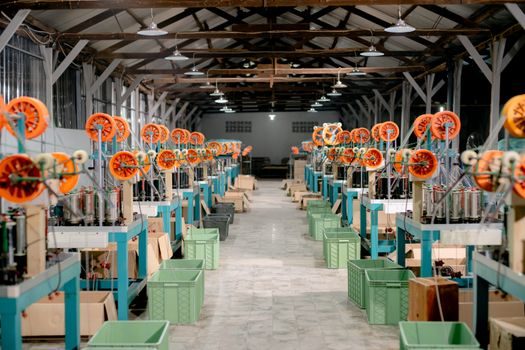
Hot box requires a controlled resin-coated sand mix: furan or phenolic resin at 1.0-2.0% by sand weight, latent acid catalyst (typically ammonium chloride or a sulphonic-acid solution) at 0.2-0.5%, and a silica or chromite aggregate. The process emits amine and formaldehyde vapors during curing, which mandates LEV (local exhaust ventilation) and usually an afterburner on the core box exhaust stream [S2].
V-process eliminates resin chemistry entirely. The consumable is the polyethylene film (a 0.05-0.08 mm EVA or LDPE sheet) plus the vacuum pump power. Sand is reused indefinitely with only dust removal and cooling, so the long-run consumable cost per flask is a fraction of a chemically bonded system. The trade-off is the film scrap stream and the energy cost of holding vacuum through pour, solidify, and shakeout.
Pattern and Tooling Cost Profile
Hot box core boxes are machined or cast aluminum/steel matched tools with integrated electric heating cartridges or hot-oil channels; tooling cost for a complex 6-cavity engine core can run USD 25,000-90,000 depending on cavity count and ejector complexity. Lead time is typically 6-10 weeks. [S1]
V-process patterns are far cheaper and faster: wood, epoxy, or filled plastic masters vacuum-formed against because the film conforms to the pattern surface and the pattern itself never sees molten metal. Pattern cost for a 1.2 m flask is commonly USD 5,000-20,000 with 2-4 week lead time. This is the reason V-process became the prototyping and short-run workhorse of jobbing foundries — pattern changes are cheap, and a foundry can run 5-10 different patterns per week on the same line.
Decision Comparison: Hot Box vs V-Process on 4 Buyer Criteria

Where the two systems diverge sharply enough that a buyer can score them: on part size, hot box wins for small-to-medium cores (1-50 kg); on tooling cost and changeover speed, V-process wins for short-run jobbing; on environmental compliance, V-process wins where formaldehyde/amine emissions are constrained; on capital cost per kg of daily output, hot box is cheaper for high-volume dedicated core cells, V-process cheaper for low-to-mid volume flask production. [S2]
For 2026 sourcing math on the hot box side specifically, the buying guide on spec gates, cost levers and sourcing breaks down where OEM markup concentrates — shoot head valve, heated platen, PLC retrofit. None of those cost levers exist on a V-line, where the entire capital conversation is about vacuum pump capacity, film feed, and vibration table sizing.
Limits, Failure Modes and Where Each System Fails
Hot box failures cluster around three modes: under-cure (binder not fully crosslinked, leading to core scuff on handling), over-cure (core becomes brittle, edge chipping at ejection), and blow-tube erosion (sand impingement wearing the shoot head nozzle in 6-18 months on abrasive chromite mixes). The cure budget is the hard gate — if your heated platen drifts below 200°C, the core never sets, and if it overshoots 280°C, the resin burns and the core smokes at ejection [S2].
V-process failures are vacuum-driven: a film puncture at pour drops the differential pressure, the mold collapses, and the casting scrap is total. The other chronic failure is sand bridging in deep pockets — areas where the dry sand cannot flow under gravity into the vacuum-formed cavity without vibration assist. Designers who ignore draft angle or who specify deep pockets >4:1 depth-to-width on V-process patterns are specifying a known defect mode.
Integration with Adjacent Foundry Cells
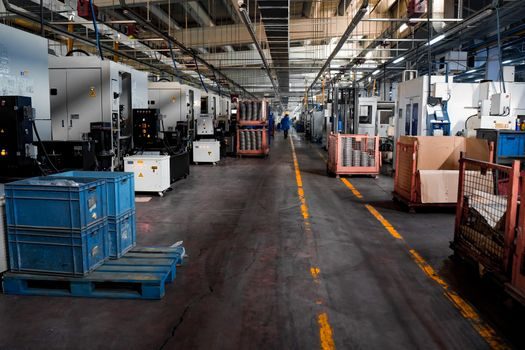
A hot box core shooter sits inside a core shop and feeds an existing molding line — green sand, chemically bonded sand, or even V-process molds. The HBS vertical-parting machine shown by Lionstech is designed to drop cores onto a conveyor or core rack for downstream storage, with a 1.5-3 t/h throughput band typical for the class [S2].
A V-process line is a stand-alone flaskless molding cell that needs its own pattern table, sand handling, vacuum ring network, and shakeout. It is rarely retrofitted into an existing green-sand foundry floor because the sand system is incompatible — V-process uses dry unbonded sand, green sand uses bentonite-bonded moist sand, and the two cannot share reclamation equipment.
Standards and Verification References
Foundry equipment verification on hot box machines typically references the OEM cure-temperature and shot-pressure test certificates required by ISO 9001 foundry quality programs; the resin-coated sand mix is verified against supplier certificates covering tensile strength (typically 1.5-2.5 N/cm²) and hot-strength retention. Both equipment classes fall under general machinery safety (ISO 12100) and the EU Machinery Directive 2006/42/EC for any European installation, regardless of process choice. [S3]
For a cross-foundry equipment comparison that touches the same spec-versus-cost decision logic this article uses, the servo drive vs AC motor selection cut is a useful read on the actuator-level trade-off that runs through both lines — V-process vibration tables increasingly specify servo-driven eccentric weights, while hot box shoot heads remain pneumatics-driven on mid-tier machines.
Trackable signals over the next reporting window: any 2026-Q3 release of PLC retrofit kits for legacy HBS-class shooters, and any disclosed shift in the 0.05-0.08 mm PE film supply chain (the single point consumable on the V-process side) — both would materially shift the cost-per-tonne math on each side of this comparison.
For component-level specifications, see shell core shooter.