
A wrapping machine is selected by product geometry first, throughput second, film system third: radial and axial reel wrappers handle cylindrical paper rolls, ring-type eye-through wrappers handle steel coils, pallet stretch wrappers handle unitised pallet loads, and high-speed profile wrappers handle aluminium extrusions. Each architecture carries its own PLC control scheme, film-tension window, and cycle-time band that must be checked against the buyer's actual line [S1][S2][S3][S4].
For procurement teams, the spec sheet — not the catalogue photo — drives the decision. Suppliers such as Qingdao Ausense (YUPACK) and FhopePack publish these values on a per-model basis rather than as a single brand-wide figure, which is why the wrapping machine reference page is organised by geometry family [S1][S2].
Match the Wrapper Architecture to the Product Geometry
Cylindrical reels — paper rolls, film rolls, fabric rolls — split into two architectures: the radial reel wrapper, which feeds film through the centre eye of the reel, and the axial reel wrapper, which spirals film around the outside diameter; the correct pick is set by the reel's inner-eye diameter (OD) versus its face width [S1]. For steel coils, the dominant architecture is the ring-type stretch wrapper with eye-through film delivery, built specifically for eye-to-skin coil protection, with FhopePack and similar OEMs offering diameter, width, and film-overlap variants matched to common slit-coil and master-coil dimensions [S2].
For palletised goods, the canonical answer is a turntable pallet stretch wrapping machine such as the TP2000FZ online automatic wrapper, which is PLC-controlled and intended to be dropped into an automatic packing line with upstream coding machine and downstream core machine stations [S3]. For aluminium extrusions, a high-speed profile wrapper uses precise tension control to protect edges, prevent profile shifting during film lay-down, and stream-line throughput versus hand-wrapping; the same tension-control logic also applies to long-bar and profile bundling [S4].
Decision Criteria: Throughput, Film Economy, Automation Depth
Three numbers separate a workable wrapper from a wrong one: cycle time, film pre-stretch ratio, and degree of integration. Cycle time for an inline automatic wrapper is published as seconds per pallet; for a reel wrapper it is published as seconds per reel. Integration depth runs from semi-automatic (operator places the load, machine wraps) through fully automatic inline (conveyor in, conveyor out, no operator) [S1][S3].
A practical comparison across the four main families: a radial reel wrapper prioritises inner-eye diameter and paper-roll face width; an axial reel wrapper prioritises roll OD and turntable load; a ring-type coil wrapper prioritises coil ID/OD, coil width, and eye-through film delivery; a pallet stretch wrapper prioritises pallet footprint, maximum load height, and turntable rotation speed. The shrink-wrapping machine is a separate family for sealed-film packs that pass through a heat tunnel, and should not be confused with stretch wrapping, which relies on film elasticity rather than heat-shrink recovery. For a complementary discussion of pallet-handling upstream equipment, see the order picker selection guide for warehouse lift and capacity spec bands.
PLC Control, Sensors and Integration with the Packing Line
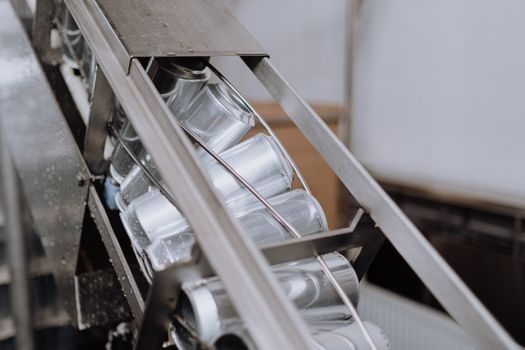
PLC control is now the default on automatic wrappers — the TP2000FZ inline automatic wrapper, for example, is PLC-controlled and designed to execute a complete set of packaging processes as part of an automatic packing line [S3]. Modern PLC platforms expose fault codes, wrap-pattern recipes, film-tension setpoints, and turntable-rpm parameters over a touchscreen HMI, which is what allows one operator to supervise multiple wrappers. Where the wrapper feeds into a coding, labelling, or strapping station, the I/O list should be reviewed against the upstream coding machine and downstream filling machine handshake signals before purchase [S3].
Sensors to verify on the spec sheet: film-end detection (so the machine stops, not the line), turntable home-position sensor, carriage upper/lower limit switches, and emergency-stop category per ISO 13850 (this is the safety standard the buyer should ask the OEM to declare on the CE/UKCA technical file, not an invented rating). For high-speed aluminium-profile lines, tension-control feedback — typically a load-cell or dancer-arm loop — is the single feature that prevents edge damage; FhopePack flags this as a primary efficiency lever for that product class [S4].
Use Cases by Industry and Product Class
Paper and converting mills specify radial and axial reel wrappers for finished roll packs; FhopePack and YUPACK both publish reel-wrapping variants sized to common paper-roll diameters and widths [S1][S2]. Steel service centres and slitting lines specify ring-type eye-through coil wrappers for master coils and slit coils, with the film pattern chosen for outdoor storage versus indoor storage [S2]. Aluminium extrusion houses specify high-speed profile wrappers, where the wrapper's tension control is the throughput-limiting factor on a typical 1500–6000 mm profile length [S4].
Logistics, food, beverage, and consumer-goods warehouses specify turntable or rotary-arm pallet stretch wrappers for outbound pallet stability; the N600F carton wrapping machine from YUPACK is an example of a small-footprint, no-pallet carton wrapper with an automatic top press for low-height unit loads — useful where a full pallet stack is not present [S5]. A complementary upstream device is the cutting machine used to size corrugated blanks before they reach a carton-wrapping or case-sealing station, which is why cut-and-wrap lines are typically quoted as a single integrated package rather than separate units.
Limitations, Failure Modes and Sourcing Pitfalls

The most common buying mistake is matching a wrapper's category label to a product geometry it was not designed for: a standard turntable pallet wrapper cannot handle a 2-tonne steel coil, and a radial reel wrapper cannot wrap an aluminium extrusion. The second most common mistake is over- or under-specifying film pre-stretch — a 200% pre-stretch carriage cannot deliver 300% pre-stretch regardless of PLC setpoint, and a hand-brake carriage cannot match a power-pre-stretch carriage on film economy. The third is ignoring the line-side I/O handshake, which surfaces at commissioning as a stop-and-go packing line rather than a continuous one [S3][S5].
For an engineer sizing a packaging line, the leverage points are: (1) declare the geometry, weight, and throughput of the load to be wrapped before approaching any OEM; (2) require cycle time, film width, film pre-stretch ratio, turntable or ring rotation speed, and maximum load weight as numeric fields on the quotation, not narrative text; (3) ask for the PLC platform, HMI version, and remote-diagnostics capability if the wrapper will sit on an Industry 4.0 line; (4) confirm CE/UKCA technical-file references to ISO 13849-1 (safety-related parts of control systems) and ISO 13850 (emergency stop) rather than accepting a generic 'CE marked' claim; (5) verify the warranty terms in months and the OEM's regional service footprint in km, not just country names. For a complementary view of line-integration sourcing logic, the industrial robot BOM article discusses how six functional groups map onto sourcing decisions on a packaging line.
Standards, Documentation and What to Demand on Paper
A reputable wrapper supplier will provide a CE/UKCA Declaration of Conformity listing the Machinery Directive 2006/42/EC, the Low Voltage Directive 2014/35/EU, and the EMC Directive 2014/30/EU as the applicable Union harmonisation legislation, plus referenced harmonised standards such as EN ISO 12100 (safety of machinery — general principles for design), EN ISO 13849-1 (safety-related parts of control systems), and EN 60204-1 (electrical equipment of machines). For pallet-wrapper film, ask the OEM to confirm compatibility with the thinnest film grade the buyer intends to run (commonly 12–23 µm LLDPE stretch film), because not every pre-stretch carriage can hold tension on 12 µm film without breaks [S1][S2][S3].
For reel and coil wrappers in potentially explosive atmospheres — for example, a wrapper installed in a paper-mill area with combustible dust — the applicable regime is ATEX 2014/34/EU for equipment and 1999/92/EC for the workplace, with dust-group and zone declared on the OEM's technical file; this should be confirmed in writing before the order is released, not at commissioning. A separate point worth tracking: the FhopePack product range includes both standard coil wrappers and customised coil-packing-line projects, which is the lever to use when the buyer's coil dimensions fall outside the OEM's catalogue band [S2].
Trackable next signals for buyers in the second half of 2026: (1) OEMs publishing cycle-time data per film width, not per machine, in their 2026 catalogues; (2) integration of OPC UA on the wrapper HMI so it can hand cycle counters directly to the line-level MES; (3) regional service-footprint disclosures, in km, becoming a standard quote field rather than a sales-team claim.