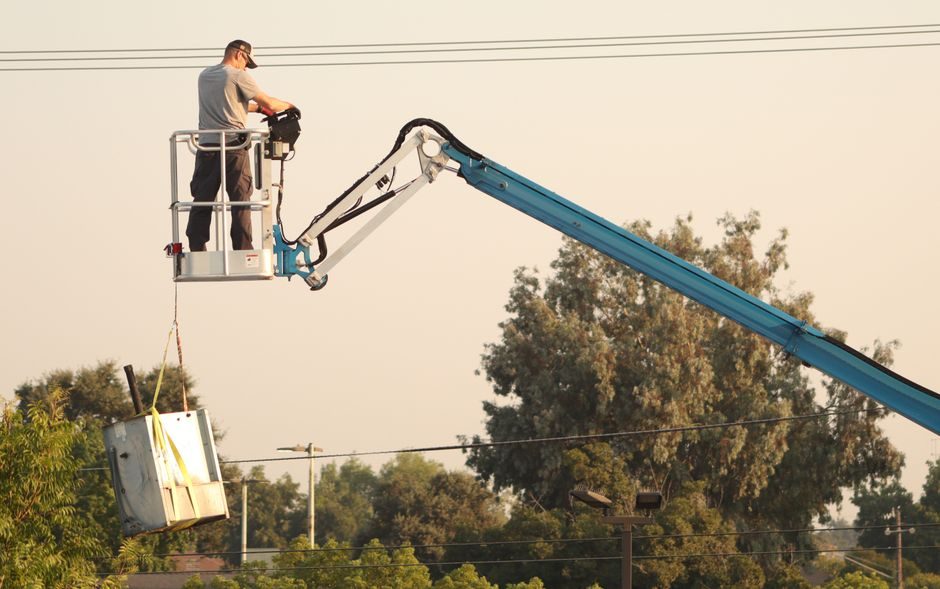
An order picker is a man-up low-level or high-level truck engineered for piece-pick and case-pick operations, lifting the operator and a load platform to the picking face so the operator can retrieve SKUs directly from the rack slot; lift envelopes commonly span 2,400 mm to 12,000 mm, with platform capacities ranging from 90 kg on light-duty low-level models up to roughly 1,500 kg on heavy-duty high-level units [S3].
This buying guide is built for warehouse specifiers, distribution-centre engineers and procurement leads who have to match a truck to a rack height, aisle width, throughput target and floor condition. For a deeper cross-reference on related lift-truck spec bands, see this reach-truck selection guide for chemical plants.
Order Picker Classes and Lift-Height Bands
Order pickers split into three functional classes, and the class drives almost every other spec on the data sheet: low-level (operator platform lifts to roughly 2,400–4,500 mm, used for first-level picking off the floor or pallet-position racks); medium-level (4,500–6,000 mm, typically for second-level picking); and high-level / man-aboard (6,000–12,000 mm, with a closed operator cab and usually rail or wire guidance in the aisle) [S3].
Low-level pickers are the most numerous fleet type in retail and 3PL fulfilment because the lift envelope covers the bulk of pick faces built on standard selective rack; medium-level covers pallet-flow and double-deep rack faces; high-level units move into narrow-aisle (VNA) territory and overlap architecturally with turret trucks. If a pick face sits above 6 m on a regular basis, a high-level picker is the right tool, not a reach truck with a cage — see also this rough-terrain forklift class breakdown for the contrasting outdoor drive-train spec bands.
Capacity, Platform Size and Load-Centre Rules
Platform capacity on a man-up order picker is governed by a load centre — typically 600 mm — and most OEM data sheets publish a derating curve as lift height increases. A 1,000 kg unit at 4,500 mm may drop to 700–800 kg at full lift, and high-level models commonly derate to 60–75 % of the nominal capacity at the top of the mast because the elevated load moment drives the chassis design [S3].
Platform dimensions matter as much as capacity: standard platforms run 600 mm × 1,000 mm to 1,200 mm × 1,200 mm, with wide-body or tandem-platform versions for two-pallet or multi-carton picks. Always cross-check the platform width against the smallest case footprint in the SKU mix, and against the rack-beam face that the operator must reach past; a 50 mm interference at the front rail forces operators to lean and breaks the 8-second per pick target most DCs run against.
Aisle Width, Aisle Type and Guidance Options

Aisle width is the single most expensive spec to get wrong, because VNA wire-guided aisles are typically 2,800–3,400 mm wide, and an extra 100 mm of aisle space across a 200 m aisle section adds roughly 20 m² of floor that has to be slabbed, racked, lit and conditioned. Wire guidance (inductive rail in the floor) is the most common high-level aisle control; rail-free guidance using magnetic tape, RFID markers or laser scanners is viable up to about 8 m of lift, but loses positional accuracy above that and is rarely used in 10–12 m aisles [S3].
For a comparison of how chassis, drive layout and chassis-derived aisle width decisions compare with other material-handling equipment, see this mining dump truck selection guide for the heavier end of the spec-class spectrum. Floor flatness and joint condition also matter: a 3 mm floor deviation across a 1 m run is the typical OEM tolerance; poor flatness causes mast sway at lift and can force a high-level aisle into a slower speed class, which neutralises the productivity case for going VNA in the first place.
Power Source: Lead-Acid, Lithium-Ion and Fuel Cells
Battery voltage on electric order pickers runs 24 V on low-level models, 48 V on most medium- and high-level units, and 80 V on the heaviest high-level VNA machines; battery capacity is sized in ampere-hours and sized against a single-shift (8 h) or two-shift (16 h with battery swap) duty cycle. Lithium-ion (LFP) has migrated into the order-picker segment and typically cuts opportunity-charge window from a 30–45 min lead-acid equalisation cycle to 10–15 min partial cycles; LFP battery cost premium is commonly recovered inside 24–36 months in two-shift operations. [S1]
Fuel-cell order pickers (PEM hydrogen) remain a niche but durable option for cold-store and high-utilisation sites where battery-swap space is constrained, and the same PEM stack that drives lift trucks is increasingly being specified alongside hybrid drive trains on the wider industrial truck fleet, similar to the robotics supply chain tier map.
Safety, Ergonomic and Compliance Specs
Operator-presence sensing, anti-roll-back on ramps, and platform interlocks are the three minimum safety items on a 2026-spec order picker, and most OEM platforms publish a stack of EN ISO 3691-1 (industrial truck safety) and EN 1175 (electrical requirements) compliance marks on the nameplate. Mast sway control, speed reduction at lift, and a category-3 PLd safety-rated control architecture are now standard on most high-level units, while low-level pickers commonly carry a category-2 / PLc architecture. [S2]
Ergonomic data should be a hard spec line, not a footnote: platform entry step height (typically 200–350 mm), pick-face reach envelope (operator hand reach without leaning, typically 600–800 mm from the platform edge), and vibration transmitted to the operator seat. A platform that forces the operator to lean more than 250 mm past the rail to reach a case on a 1,200 mm-deep beam is a musculoskeletal-injury flag and should be re-specified.
Spec Comparison: Low-Level vs Medium-Level vs High-Level
Across the three classes the decision criteria collapse to four numbers: lift height, platform capacity at full lift, minimum aisle width, and unit price band. A typical low-level order picker delivers 4,500 mm lift at roughly 1,000 kg full-lift capacity, in a 1,400–1,800 mm aisle, and lists in the USD 12,000–25,000 range; a medium-level unit pushes to 6,000 mm and roughly 800 kg at full lift in a 1,700–2,200 mm aisle at USD 25,000–45,000; a high-level VNA machine reaches 12,000 mm, 1,500 kg at full lift, in a 2,800–3,400 mm guided aisle, and lists in the USD 60,000–120,000+ band before wire-guidance, racking and infrastructure costs [S3].
The comparison shortens to one rule for procurement: if the pick face is consistently under 4,500 mm and pick density is below 60 picks per operator-hour, a low-level picker is the right tool; above 6,000 mm pick face, a high-level VNA unit has the throughput case; between those, total cost per pick over 7 years is the tie-breaker. Two cross-references worth keeping on file while you spec: this push-in fitting buying guide for the pneumatic logic lines that feed the mast lift cylinders, and this cable gland buying guide for the IP-rated cable entries on the chassis, both of which feed the bill of materials when you are sizing a fleet of ten or more units.
Use Cases, Limitations and Failure Modes

Order pickers are the wrong tool for pallet transport, full-pallet put-away, and outdoor yard work — those are reach truck, counterbalance forklift and rough-terrain forklift jobs respectively. Within a warehouse, the order picker's main failure modes are mast-induced sway at lift above 9 m on poor floors, premature mast-roller wear on VNA units that run 2,000+ hours per year, and regen-brake contactor wear on lead-acid units that are partial-cycled rather than fully equalised. Always check the OEM-published service-interval hours for the mast-rail rollers and the drive-axle bearings before signing the spec. [S3]
The complementary product tree to verify in parallel is the industrial valve spec for the mast hydraulic block, the flow meter on the battery thermal management loop, and the PLC platform for the truck controller — those three parts govern field-service cost over the 7-year fleet life.