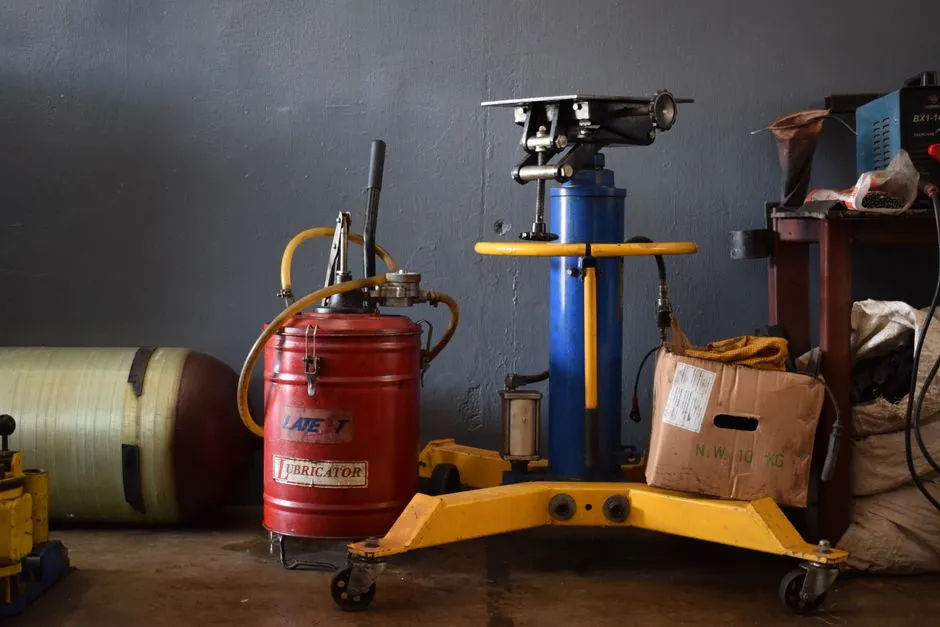
A 100 mm bore hydraulic cylinder at 200 bar develops roughly 157 kN of thrust, illustrating why hydraulic actuators dominate any application above ~50 kN linear or ~10,000 Nm rotary, where pneumatic packages become physically too large to be practical [S2][S4].
The class spans four output forms (linear cylinder, telescopic cylinder, limited-angle rotary actuator, continuous hydraulic motor) and three architectural families (conventional with external HPU, self-contained with internal reservoir and accumulator, and subsea-rated with umbilical supply), all of which must be decoded against ISO 5211/ISO 5210 mounting, ISO 6020/ISO 6022 cylinder geometry, and IEC 61508 / IEC 61511 functional-safety targets when specified for process isolation or ESD duty [S5].
Linear Cylinders: Single-Acting, Double-Acting, Telescopic
A double-acting hydraulic cylinder at 200 bar with 80 mm bore produces 100.5 kN on the bore side and a lower retract force because the rod subtracts from the piston area on the return stroke; that asymmetry is the single most common cause of undersized retract-side cylinder selection in mobile-equipment designs [S2].
Single-acting cylinders extend under hydraulic pressure and retract under gravity or a return spring, which keeps them cheap for jacks, log splitters, and dump-truck tipping bodies, but the spring return adds roughly 15–25% to the retracted length at any given stroke [S2]. Telescopic cylinders nest 2–5 stages to deliver strokes beyond 10 m from a compact retracted package, which is why they are the default on dump-truck hoists, crane booms, and refuse-collection packers [S2][S9]. HYDAC's conventional linear actuator family covers 10–250 kN at forces with the cylinder, drive, and control unit integrated, and a sealed oil reservoir with internal membrane to compensate pendulum volume changes [S3][S8].
Standard industrial bores run 40–200 mm at 160–350 bar with strokes of 50–3,000 mm; heavy mobile and press duties push bores to 150–500+ mm at 200–700 bar and strokes past 10 m, with force outputs at 200 bar ranging 4–39 kN (compact), 25–628 kN (standard), and 354–3,927 kN (heavy) [S2].
Rotary Actuators: Scotch-Yoke, Rack-and-Pinion, Vane, and Hydraulic Motors
Scotch-yoke hydraulic actuators convert linear piston motion into 90° (or up to ~100°) output rotation and are the workhorse for quarter-turn ball, butterfly, and plug valves on ESD and block-valve duty, with thrust capabilities up to 500 kN and hydraulic supply rated to 350 bar [S4].
The mechanical advantage of a scotch-yoke is not constant through the stroke: torque peaks near the mid-stroke position where the crank angle equals 90°, and falls off at the open and closed seats, which is the opposite of what most valve torque curves demand at the moment of unseating. Rack-and-pinion and helical-piston mechanisms give a flatter torque profile and are usually specified for modulating service on large ball or butterfly valves, while limited-angle vane rotary actuators deliver 90–360° rotation in a compact package for swing drives, index tables, and small valve duty [S2].
Continuous-rotation hydraulic motors (gear, vane, axial-piston) are the right answer when the load needs shaft rotation rather than partial travel, with typical applications in winches, conveyors, track and wheel drives on mobile machinery, and crane slew drives [S2]. For an overview of the electric counterpart on the same quarter-turn valve mounting footprint, see this electric actuator spec map, and for the pneumatic comparison baseline, the pneumatic valve actuator spec map is a useful cross-reference.
Self-Contained and Subsea-Rated Architectures

A self-contained hydraulic actuator integrates the oil reservoir, membrane compensator, accumulator, and control valves into a single head that bolts to the valve body, eliminating the external HPU and the leak-prone umbilical run, which is the preferred architecture for mobile work machines, remote sites, and skid-mounted packages [S3][S8].
The HYDAC conventional actuator family covers forces from 10 kN to 250 kN with the cylinder, drive, and control unit combined and an optional mounting position, while stand-alone variants add an internal accumulator for short-duration hold or fail-safe operation without external hydraulics [S3][S8]. Subsea-rated units extend the same logic to 3,000 m water depth with the control signal sent from surface via an umbilical, which is essential for subsea tree and manifold gate valves on deepwater oil and gas production systems [S4].
For ESD and safety-critical duty, a hydraulic spring-return actuator stores energy in a large compression spring that provides fail-safe closing on loss of supply, and the matched hydraulic accumulator holds enough pressurised fluid for 3–5 rapid close operations even after the HPU has lost power, which is the only viable architecture for subsea and remote pipeline ESD where loss of hydraulic supply is itself the initiating event [S4].
Selection Criteria: Force, Pressure, Stroke, and Standards
Selection is governed by four numbers (peak thrust or torque, available hydraulic supply pressure, required stroke or rotation, and the applicable mounting standard) and by two safety constraints (fail-safe action and fire-safe rating), which together narrow the architecture choice before any vendor selection begins [S4][S5].
Force is calculated as F = P × A: a 100 mm bore cylinder at 200 bar gives 157 kN (35,000 lbf); rotary torque is set by the same pressure applied through the mechanism's effective area and crank arm [S2]. The crossover to hydraulics is typically at ~50 kN linear or ~10,000 Nm rotary for scotch-yoke designs, and below those values pneumatic or electric actuators usually win on cost, footprint, and simplicity [S4].
For pipeline and process valves, the relevant standards are ISO 5211 (quarter-turn actuator top-mounting), ISO 5210 (multi-turn actuator mounting), API 6D (pipeline valves), API 6A (wellhead and christmas-tree equipment, where PSD/ESD valves are rated to ANSI 2000–20,000 WP), API 6DX and API 6FA (fire-safe type approval), and IEC 61508 / IEC 61511 for functional safety of the ESD loop [S4][S5]. Working fluids are typically mineral oil ISO VG 32–68, with biodegradable ester, water-glycol, and phosphate ester options for special environments; standard seals are rated −20°C to +80°C, extendable to +120°C with Viton, and servo systems demand 3–5 µm filtration while standard industrial circuits run 10–25 µm [S2].
Operating Limits, Failure Modes, and Common Specification Pitfalls
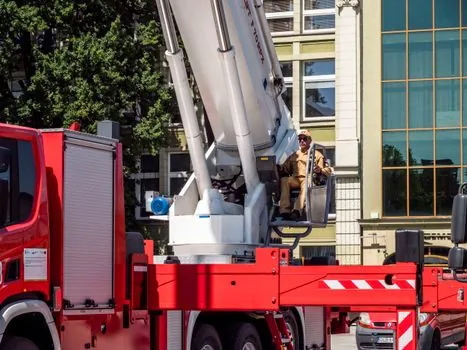
Hydraulic systems operate at extreme pressures (200+ bar / 3,000+ PSI typical), and a pinhole leak can inject fluid through the skin causing severe injury, so inspection must use cardboard or paper rather than bare hands, and any line disconnection requires full pressure relief first [S2].
The most common specification pitfall is matching actuator thrust to the valve's unseating torque rather than its running or seating torque, because the unseating torque on a ball or gate valve seated against differential pressure is often 1.5–2.5× the running torque, and a hydraulic actuator that can stroke the valve open against that initial surge may stall once the seats are clear [S4]. A second pitfall is the retract-side force deficit in double-acting cylinders, which is governed by the rod diameter and can drop retract output to 50–70% of the extend-side force on common rod/piston ratios [S2].
For higher-force, higher-power mobile platforms such as concrete pumps and quarry boom equipment, the same hydraulic logic is used in larger envelopes, as detailed in this quarry concrete pump selection guide.
Vendor and Product Landscape: Conventional, Self-Contained, Subsea
Three product families cover most industrial demand. HEINZMANN / REGULATEURS EUROPA supplies a proportional hydraulic governor-actuator family (RE 2221-1G, RE 2231-1GH, RE 2800-1G, DA 2800, RE 2222-3G/2223-3G/2232-3G/2233-1G) with output torques from 11 Nm to 54 Nm, designed for diesel engines, gensets, locomotives, ships, and steam turbines and controlled by VIKING35, DC 8, or XIOS digital controllers [S1].
Janatics positions its hydraulic actuator line for oil and gas, power, steel, and heavy process plants where pneumatic or electric solutions are insufficient, with high-torque, heavy-duty construction and fail-safe operation under extreme conditions [S7]. HYDAC's range splits into conventional (external hydraulics) and stand-alone (internal reservoir and accumulator) actuators, with autonomous variants for maximum-performance self-contained duty, all aimed at linear movement in industrial and mobile applications [S3][S8].
For a process valve actuator the typical package is scotch-yoke or linear ram, carbon steel or stainless body, double-acting or spring-return, with HPU, accumulators, and control systems as matched accessories, and lead times measured in same-day ex-stock for common sizes, 2–4 weeks for standard items, and 8–12 weeks for exotic alloys [S4].
Trackable signals to watch: revision cycles of ISO 5211 and ISO 6020/2 (the dimensional standards that lock cylinder and actuator interchangeability), updates to API 6DX and API 6FA fire-test protocols for pipeline ESD, and IEC 61508 / IEC 61511 SIL certification renewals on spring-return and accumulator-backed hydraulic actuator packages.
Component reference pages worth checking: hydraulic actuator, construction machinery and equipment, and lamps and light fittings.