Five published 2026 market reports place the hydraulic cylinder market at USD 16.18B to USD 21.11B in 2026, with CAGRs between 4.3% and 5.81% to 2031–2034 [S1][S2][S3][S5][S7]. The wide USD 5B spread across reports on the same product signals that supply chain planners should not anchor on a single forecast when sizing capacity or qualifying vendors.
Asia Pacific commanded 42.57% of 2025 hydraulic cylinder revenue, while the Middle East is the fastest growing geography at a 6.18% CAGR for 2026–2031 on Saudi and UAE infrastructure spend [S5]. Construction equipment alone took 27.63% of 2025 demand, and India's CE industry shipped 140,191 units in fiscal 2025, up from 107,624 in fiscal 2023, a 30% jump that is rippling back into the cylinder and honed-tube supply base [S5].
Market Size, CAGR, and the 5-Report Spread
Mordor Intelligence sizes the 2026 market at USD 17.21B and projects USD 22.83B by 2031 at a 5.81% CAGR [S5]. Research and Markets reports USD 21.11B in 2026 reaching USD 26.06B by 2030 at 5.4% CAGR [S2]. Grand View Research puts 2026 at USD 17.6B with USD 24.7B by 2033 at 5.0% CAGR [S3]. Polaris Market Research tracks USD 17.45B in 2025 and a 4.3% CAGR through 2034 [S7]. Fortune Business Insights reports USD 18.11B in 2026 to USD 27.19B by 2034 [S1].
The dispersion is not a modelling error so much as a definitional one: some reports count only the cylinder assembly, others roll in the hydraulic cylinder plus the honed tube, rod, seals, and gland service. A practical gate is to require vendors to publish whether pricing is FOB tube-included or kit-only, and to weight that into power supply and hydraulic power unit comparisons when integrating cylinders into a machine.
Product Mix: Welded vs Telescopic, Bore Sizes, and Where the Bottleneck Lives
Welded cylinders held 47.92% of 2025 revenue, with telescopic designs forecast at a 6.02% CAGR to 2031, faster than the welded segment [S5]. By bore, 50–150 mm units captured 44.73% of 2025 share, and cylinders above 150 mm are projected to grow at 5.91% CAGR [S5]. The above-150 mm segment is where forged end-caps, larger honed tubes, and chrome-plated rods concentrate, and it is also the segment most exposed to long-lead steel sourcing.
Double-acting cylinders led 2025 with 61.48% share, with single-acting units growing at 5.97% CAGR [S5]. End-use mix shows construction equipment at 27.63% of 2025 demand and industrial manufacturing as the fastest growing at 6.12% CAGR [S5]. For sourcing, the practical read is that telescopic and above-150 mm welded cylinders are the two pinch points where 26-week lead times have become routine, while standard 50–150 mm double-acting welded units remain the commodity baseline with 8–12 week availability from stock-holding distributors.
Steel, Honed Tube, and Seal Sourcing: The Real Bottlenecks
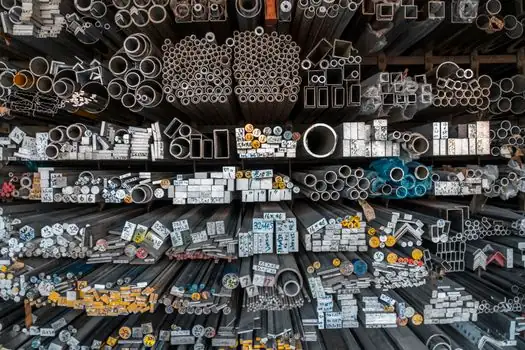
Hydraulic cylinder tube demand tracks construction equipment and material handling cycles, with 2026 projections pointing to continued growth on the back of mobile machinery and warehouse automation [S6]. The cylinder tube itself is the single highest-value raw input: cold-drawn seamless tube in C45E / SAE 1020 plus induction-hardened or chrome-plated rod bar account for roughly 35–50% of finished cylinder cost, depending on bore class.
Supply chain disruption in the American hydraulics industry has forced alternative solutions and adaptations to come to the forefront, including dual-sourcing of honed tube, qualification of Indian and Vietnamese Tier-2 fabricators, and inventory buffers of 4–6 months on chrome-plated rod [S4]. For procurement teams, the verification chain is straightforward: demand EN 10305-2 or DIN 2391-2 mill certificates for honed tube, ISO 4395 chrome thickness readings on rods, and FKM/NBR compound data on seal kits. These three documents, not price, are what separates a vendor who can deliver a 350 bar-rated cylinder from one who can only stamp one.
Regional Demand: Asia Pacific, Middle East Surge, and Warehouse Automation in North America
The Middle East at 6.18% CAGR is the fastest growing geography on multi-billion-dollar Saudi and UAE infrastructure programmes [S5].
North American demand is being reshaped by e-commerce warehouse automation, where compact high-duty-cycle cylinders are specified for conveyors, lifts, and shuttle systems; this driver carries a +1.0% CAGR impact in Mordor's framework with a short-term (≤ 2 year) timeline [S5]. For North American OEMs, the switching power supply and industrial UPS ecosystem that feeds modern electro-hydraulic actuators is also pulling demand for 24 VDC and 48 VDC logic power into the same machine builds, so sourcing teams increasingly run hydraulic and electrical purchasing in parallel.
Smart Cylinders, Sensor Integration, and the New Spec Sheet
OEMs are shifting toward electro-hydraulic "smart" cylinder designs that bundle sensors and firmware for condition-based maintenance, with this trend carrying a +0.9% CAGR impact in the medium term (2–4 years) and early adoption concentrated in Europe and North America [S5]. The practical change on the shop floor is that a "cylinder" RFQ now routinely includes an integrated LVDT or magnetostrictive position sensor, a pressure transducer port, and a CAN J1939 or IO-Link output.
This adds three new failure modes: sensor cable fatigue at the rod-end, signal interference from adjacent VFD-driven DC power supply lines, and firmware versioning across multi-vendor fleets. Buyers should write the sensor specification as a separate line item with its own MTTF target (commonly ≥ 50,000 hours for the position sensor) and require the vendor to disclose the protocol stack rather than a generic "4-20 mA output." Skipping this step is the most common reason a "smart cylinder" pilot fails to scale.
Wind, Aerospace, and Adjacent Demand Pulls
Hydraulic cylinders in wind-turbine pitch control carry a +0.6% CAGR impact on a long-term (≥ 4 year) horizon, with Europe offshore wind and North America leading adoption [S5]. Recovery of aerospace and defence production cycles adds +0.4% on a short-term (≤ 2 year) timeline, primarily in North America and Europe [S5]. These segments do not move the headline number, but they do move lead times on small-bore, high-cycle-duty welded cylinders because pitch and flight-control actuators share a honed-tube and seal-kit supply base with industrial cylinders.
The same logic applies to chain belt and linear-motion components when a forklift retrofit programme collides with an airport ground-support order at the same fabricator.
Buyer Workflow: 5 Verification Steps Before Placing a 2026 Order
Step 1: pin the scope. Confirm whether quoted pricing includes honed tube, rod, seals, and glands, or only the welded barrel-and-piston assembly; the 5-report USD 16.18B–USD 21.11B spread exists because of this exact line-item ambiguity [S1][S2][S3][S5][S7]. Step 2: require mill certs. EN 10305-2 or DIN 2391-2 for honed tube, ISO 4395 chrome thickness on rods, and FKM/NBR compound data sheets for seals.
Step 3: qualify a Tier-2 backup. American hydraulics buyers have moved to dual-sourcing honed tube and qualifying Indian and Vietnamese fabricators, with 4–6 month inventory buffers on chrome-plated rod now standard [S4]. Step 4: write smart-cylinder sensor specs as a separate line with MTTF ≥ 50,000 hours and a disclosed protocol. Step 5: track the supply chain news cycle for adjacent product categories such as gas analyzers and cold chain equipment, since the same steel and electronics pinch points hit multiple industrial verticals in 2026 and a vendor's financial health in one segment often predicts delivery performance in another.
The next trackable signals to watch are the Mordor Intelligence mid-year update of its 5.81% CAGR estimate, any new Indian CE shipment data from ICEMA for fiscal 2026, and the Q1 2027 release of honed-tube pricing from the major Chinese mills; each will move the lead-time conversation for above-150 mm welded cylinders by 4–8 weeks.