Made-in-China.com indexes 570 IGBT-related manufacturers and suppliers with 1,710 listed products as of the October 2025 catalogue snapshot, with the bulk of the listings concentrated in welding equipment, induction heating and continuous-casting machinery rather than bare semiconductor fabs [S1].
A separate made-in-China.com index page for IGBT TIG welders surfaces listed unit prices from roughly US$ 760–780 per piece at the entry level up to US$ 7,000–7,500 per set for higher-amperage inverter welders rated 200–250 A from suppliers in Shandong and other eastern provinces [S2]. Those numbers are useful as a sanity check on finished-equipment pricing, but they describe the downstream appliance, not the silicon inside it.
What an IGBT actually is, and why the supplier map is two-tier
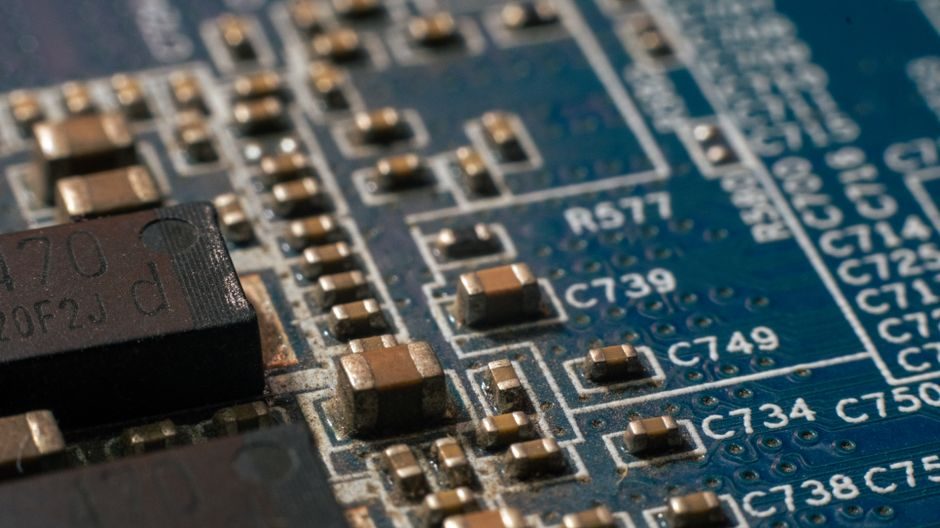
An IGBT (Insulated Gate Bipolar Transistor) is a compound fully-controlled, voltage-driven power semiconductor formed by combining a BJT (Bipolar Junction Transistor) and an insulated-gate MOSFET — the structure gives the high input impedance of a MOSFET and the low on-state voltage drop of a GTR, which is why it dominates DC-to-AC conversion and variable-frequency drive stages from 600 V upwards [S3].
That single fact explains the supplier geography: the 570-vendor Made-in-China.com list is mostly system integrators and welding-machine OEMs that buy IGBT modules or discrete co-packs and embed them in finished inverters, induction heaters and traction drives [S1]. The actual silicon wafer fabs and module packaging houses — Infineon, Mitsubishi Electric, Fuji Electric, Toshiba, ON Semiconductor, STMicroelectronics, Hitachi Power Semiconductor, ROHM — sit in a separate, much shorter tier that the catalogue does not directly index.
Selection criteria that decide which tier you actually need
If you are buying an IGBT welder or an induction furnace, the catalogue page is the right starting point: filter on rated current (200 A, 250 A, 315 A, 400 A), input voltage (110 V, 220 V, 380 V three-phase), duty cycle and cooling method, and verify the module brand on the BOM if lifetime matters [S2].
If you are buying bare IGBT modules for a VFD, solar inverter or UPS stage, the catalogue is a noise layer — the real supply chain is module-level IDMs plus authorised distributors. Match on VCE(sat), VCE rating (600 V, 1200 V, 1700 V, 3300 V, 6500 V), switching frequency and short-circuit withstand time (typically 10 µs), and on package family (TO-247, EconoDUAL, PrimePACK, IHM) — see the power semiconductor supply 2026 reference for the wafer-tier-to-distributor chain that governs allocation.
Who the catalogue is for, and who it is not for
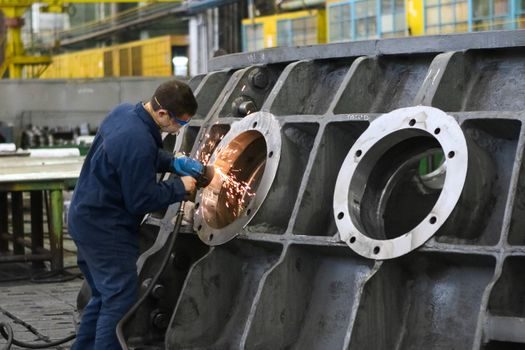
The Made-in-China.com listing is a workable sourcing channel for OEMs and end-users who need finished IGBT-based equipment — welders, induction heaters, rolling-mill drives, continuous casting controls, CNC machine spindle drives, switching-mode power supplies [S1]. For those buyers the relevant spec gates are output rating, weight, input voltage, certifications (CE, CCC, EAC) and warranty terms.
It is the wrong channel for buyers who need wafer-level traceability, lot-consistency data, AEC-Q101 or UL 1557 recognition, or who must sign an automotive PPAP. Those buyers should be talking directly to module IDMs, their authorised distributors, or a certified broker — the power semiconductor supply chain 2026 breakdown lays out where each gate sits in the chain.
Comparing the main IGBT-based equipment categories on the catalogue
Four product types dominate the 1,710-listing catalogue: IGBT inverter welders (MMA/MIG/TIG), IGBT induction heaters and melting furnaces, IGBT-based continuous-casting and rolling-mill drives, and IGBT-module switching-mode power supplies [S1]. On four decision criteria they line up as follows:
Cost: entry-level IGBT welders start at roughly US$ 760 per piece, mid-range 250 A units sit around US$ 7,000–7,500 per set, while industrial induction heaters and continuous-casting skids run into five-figure USD per line [S2][S1]. Switching frequency: welding inverters and induction heaters typically operate in the 10–50 kHz range; SMPS stages for industrial controls run 20–100 kHz, often sequenced by a PLC on the plant floor; high-speed motor drives push above 100 kHz and start to compete with SiC MOSFETs — see the 2026 SiC pricing reference for the crossover point. Cooling: welders and small induction heaters are forced-air; rolling-mill and casting drives are water-cooled; SMPS stages are typically conduction-cooled or forced-air. Lead time: catalogue-sourced finished equipment quotes in 15–30 days, while bare module allocation from IDMs runs 26–52 weeks for older 600 V/1200 V generations and longer for 1700 V and above.
Real use cases that pull demand into the catalogue

Workshop and field welding is the volume driver: portable 110 V/220 V IGBT MMA/MIG/TIG inverters in the 200–250 A class are heavily listed from Shandong and Guangdong suppliers and typically use a single half-bridge IGBT module from a recognised IDM [S2]. Industrial melting and forging — induction furnaces rated 50–500 kW at medium frequency with pressure sensor feedback on the water-cooling loop — are the second big pull, where IGBT has displaced older thyristor stacks in most new Chinese-built installations [S1].
Heavy-industry drives for rolling mills, continuous casting and CNC machine spindles are the third pillar and the segment where IGBT ratings push into 1700 V and 3300 V territory, and where module redundancy and paralleling — alongside the servo motor drive sitting next to it — become procurement decisions rather than component decisions [S1]. Across all three, a recurring buyer pain is verifying which IGBT die is actually inside the box, because finished-equipment vendors rarely publish the module part number on the catalogue listing.
Failure modes and limits you should plan for
IGBT modules fail most often from thermal cycling at the solder/DBC interface, from short-circuit events outside the 10 µs SCWT window, and from gate-oxide degradation when dv/dt exceeds the rated value. Welder and induction-heater OEMs absorb most of that risk in the warranty term, but plant engineers retrofitting IGBT modules into existing VFDs or solar inverters need to derate by case temperature, switching loss and altitude together — not by current alone [S3].
Sourcing and standards to anchor the supplier decision

For finished IGBT equipment on the catalogue, gate on CE (EU), CCC (China), EAC (EAEU) and UL/cUL listings where the destination market requires them, and on the vendor's audited-supplier status and trade-show presence [S1]. For bare modules, the binding standards are UL 1557 for solid-state component safety, IEC 60747-9 for IGBT device ratings, AEC-Q101 for automotive, and IEC 60068 environmental testing for industrial.
Trackable signals for the next quarter: (1) whether Chinese module-packaging houses start quoting 1200 V/1700 V automotive-grade IGBTs in volume to relieve IDM allocation; (2) whether the 570-vendor catalogue count grows further or consolidates around 20–30 audited welding-machine exporters; (3) whether SiC price erosion at the 1200 V level pulls more induction-heater designs off IGBT onto SiC. Each of these is a verifiable procurement signal, not a market forecast.