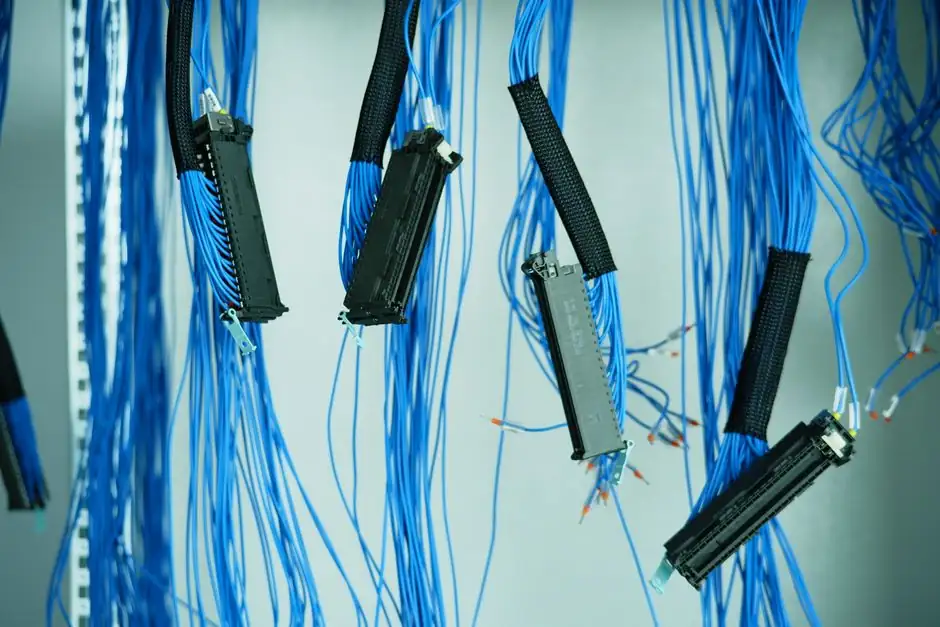
A programmable logic controller is selected by five quantitative gates: digital and analog I/O count with spare headroom, scan time against the fastest process cycle, program and data memory, IEC 61131-3 language fit, and the fieldbus or industrial Ethernet mix on the plant network [S1][S4].
Under-specifying any of these five gates is the most common reason a greenfield line trips at commissioning; over-specifying drives controller cost up by a factor of three to ten between nano and modular mid-range platforms [S2][S4].
What a PLC actually does, and the five hardware blocks
A PLC is a digitally operating electronic apparatus that uses a programmable memory to implement logic sequencing, timing, counting, and arithmetic, then drives machines or processes through digital or analog input/output modules [S4]. The architecture is fixed: CPU (typically RISC-based for real-time deterministic scan), memory, input circuits, output circuits, and a communications interface; relays, counters, timers, and data tables are simulated in software rather than wired as physical devices [S4].
Simulated counters and timers run at increments from 1 ms through 1 s, and come in on-delay, off-delay, retentive, and non-retentive variants; output relays are physical transistors or triacs that switch solenoids, contactors, and motors [S4]. For a buyer, the takeaway is that the cost of adding another timer or counter is zero, but adding another high-speed input or analog channel is hardware cost, not software cost.
Scan time as the real sizing constraint
Scan time, not I/O count, is the binding specification for high-speed packaging, motion, and batching lines: the controller must complete input read, program execution, and output write inside one process cycle, otherwise closed-loop PID and motion control go unstable [S1][S4].
A program length of 1,000 ladder instructions at a 0.5 ms per 1k instructions execution rate yields roughly 0.5 ms logic time, but most modular PLCs sit in the 1 to 10 ms total scan band once I/O update and communications are included [S4]. For process loops faster than about 50 ms, the PID controller block and analog input filtering have to live in a faster task class, not the main cyclic task [S1].
Class comparison: nano, modular mid-range, and rack PLCs
Three form factors dominate buying decisions. Nano or brick PLCs cover roughly 10 to 40 I/O, are fixed-configuration, and target standalone machines; the Keyence KV Nano series exemplifies this class with program-less EtherNet/IP communication to vendor sensors and remote I/O [S2]. Modular mid-range PLCs scale from about 100 to 1000+ I/O by stacking digital, analog, and specialty modules on a backplane, which is the workhorse for cell-level control in automotive, packaging, and water treatment [S1][S4]. Rack or hot-standby PLCs add redundant CPUs, often paired with a motion controller for synchronized servo axes, and target large process plants and high-availability lines [S4].
Decision rules: pick nano when the machine ships as a single SKU with under 40 field devices and no expansion; pick modular when I/O will grow or mix analog with high-speed counters; pick rack PLCs only when redundancy, SIL-rated safety, or deterministic motion across many axes is on the P&ID [S1][S4]. A small cell running temperature, level, and pressure loops through a PID controller typically uses a modular mid-range PLC plus a dedicated analog input module, not a brick.
Memory, programming language, and the IEC 61131-3 toolbox
Program memory is sized in KB or MB steps and tracks the choice of IEC 61131-3 language; Ladder (LD) and Function Block Diagram (FBD) compile to more bytes per logic function than Structured Text (ST), but ST is preferred for math-heavy routines such as batch recipes and reporting [S1]. The five common languages in industrial use are ST, FBD, LAD, STL, and SCL, with FBD flagged as the entry-level choice because of its drag-and-drop I/O mapping and LAD used where technicians need to read the logic on the HMI [S1].
Open-source and commercial toolchains now target this stack: an IEC 61131-3 compatible runtime on small PLCs runs on the Beremiz IDE, an ESP32 WROOM 32 can be flashed with MicroPython to act as a soft PLC, and Rust- and Python-based libraries expose Modbus TCP and EtherNet/IP for testing [S3]. A maintenance team that already runs Python or C++ can run a Modbus TCP tester, a CLI utility, or an emulator suite against the new controller before the panel is even powered up, which compresses commissioning by days [S3].
Communications, fieldbus, and the network layer
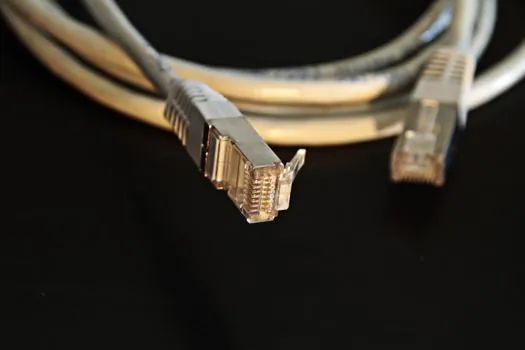
Fieldbus and industrial Ethernet choice is the second-biggest lock-in after the programming software, which is manufacturer-specific and sometimes model-specific [S1]. EtherNet/IP and PROFINET dominate greenfield discrete lines; Modbus TCP is the lingua franca for retrofit and OEM equipment; FOUNDATION Fieldbus and PROFIBUS PA survive in process plants, particularly where 4-20 mA HART devices are already installed [S1][S2].
When a linear guide axis or a crossed-roller guide stage is driven by a servo drive, the PLC talks to the drive over EtherCAT or PROFINET IRT, not the slower TCP/IP variants, because cycle times for synchronized motion are typically 1 to 4 ms [S1][S4]. Where a machine has to coexist with older devices, RS-232 and RS-485 serial ports are still common on nano and mid-range controllers, and a USB or Ethernet programming port is the modern default for code download [S1].
Power, environment, and semiconductor choices
Industrial PLC design is constrained by three environmental gates: 24 V DC or 100 to 240 V AC supply, an operating temperature of 0 to 55 degrees Celsius for the cabinet interior, and resistance to electrical noise from variable-frequency drives [S6]. Toshiba documents the typical sub-blocks as a power supply unit, input and output module units, and a control signal transmission unit, with low-power and miniaturization called out as two of the main design targets for 2026-class parts [S6].
Procurement should plan for semiconductor lifecycle alongside the PLC, since I/O modules and communication PHYs often go obsolete inside the controller lifecycle; a written alternate-source list and last-time-buy trigger are cheaper than a forced rip-and-replace on a running line, and a structured framework for that planning is described in Semiconductor procurement strategy: alternates, lifecycle, and risk-weighted costing.
Software execution models: cyclic, cyclic with interrupt, event-driven
Three software execution models divide the market, and picking the wrong one for the process is a common commissioning bug [S1]. Cycle-oriented PLCs read all inputs, run the user program once, then write all outputs, which fits slow sequential machines. Cyclic PLCs with interrupt add a fast task triggered by a sensor edge, so a high-speed counter or a registration mark on a label can fire in microseconds while the main scan keeps running at its slower rate. Event-controlled PLCs dispatch pre-programmed tasks on status change, which fits batch and recipe-driven cells where the work is defined by what just happened, not by a fixed scan [S1].
The interrupt class matters in safety-relevant selection: a hardwired E-stop that must drop contactors within 15 to 30 ms belongs in the interrupt or hardwired safety path, not the main scan, regardless of how fast the controller benchmark numbers look on a datasheet.
Selection checklist and a shortlist logic
A defensible spec sheet for a 2026 buy reads: (1) I/O count at 110 to 120 percent of the current P&ID, with explicit analog, high-speed counter, and motion channel counts; (2) scan time in ms per 1k instructions, with a budget for the worst-case program length plus communications; (3) program and data memory sized at 150 percent of the compiled code, with spare for recipe and historical data; (4) IEC 61131-3 languages matched to the team skill mix, and a maintenance contract that includes source code; (5) fieldbus and industrial Ethernet list pinned to the plant standard, with one legacy serial port if any third-party device on the line still uses RS-485; (6) environmental and certification list, including CE, UL, CSA, ATEX for hazardous areas, and SIL level if a safety function is in scope [S1][S2][S4][S6].
Skip the mainstream modular PLC only if the machine is a single-SKU appliance under 40 I/O with no expansion path, or if the application is a hard real-time motion platform better served by a dedicated motion controller plus a smaller PLC. In every other case, modular mid-range with documented IEC 61131-3 support and a strong third-party I/O catalog is the lowest-risk pick for 2026 deployments.