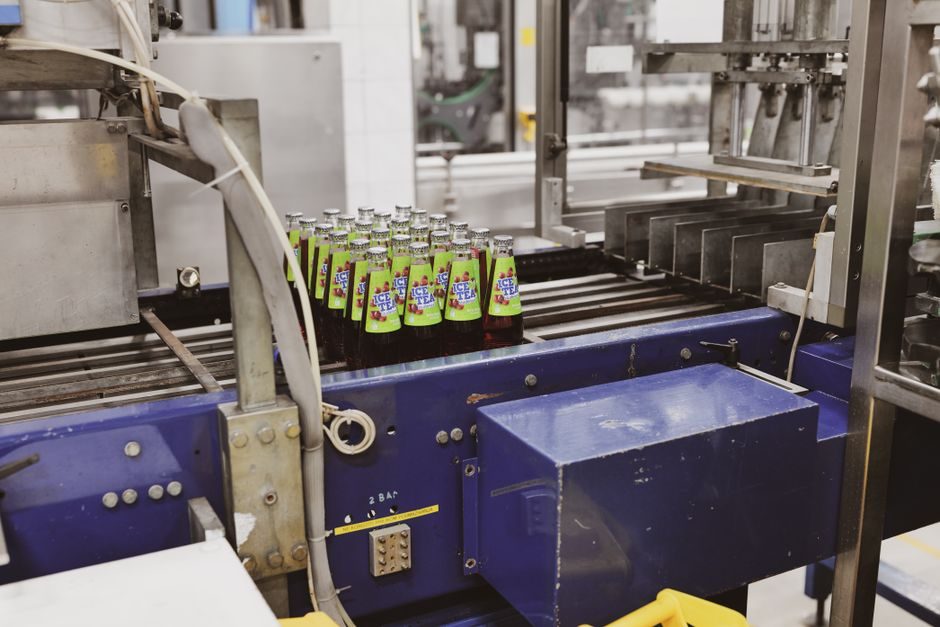
Hydraulic smart manufacturing in 2026 is anchored by electro-hydraulic pumping units (EHPUs) that integrate a variable-speed servo motor and an axial piston pump into a single controlled package, replacing fixed-displacement throttled loops and cutting idle-state energy waste in the 30-70% range typically reported for hydraulic machine tools [S4].
The build-out is driven by mid-volume machine shops, mobile-equipment OEMs, and die-casting lines that need closed-loop pressure and flow control without the cost of a full servo-hydraulic axis. Allied Automation's 2026 portfolio positions IIoT retrofit kits, motion controllers, and smart actuators as the entry path for plants moving from relay logic to networked hydraulics [S1]. On the production-equipment side, Chinese system houses such as WEBEN (Shanghai) now run dedicated hydraulic fixture divisions with more than 10 years of focused machining experience, supplying one-piece-flow clamps and quick-change workholding for CNC cells [S2].
Core architecture: electro-hydraulic pumping unit
The EHPU architecture validated in the 2022 IJAMT study uses an axial piston pump coupled directly to a permanent-magnet servo motor, with closed-loop control of swash-plate angle and motor speed to match instantaneous flow demand [S4]. Working-pressure bands of 21-35 MPa are typical for machine-tool hydraulics, while injection-mould clamps push to 16-25 MPa and die-casting intensification circuits reach 70+ MPa. Energy management is built around speed-on-demand: at zero stroke, the pump idles at near-zero displacement rather than circulating full flow through a relief valve.
For spec sheets, the decision axes are maximum continuous pressure (MPa or bar), peak flow at rated speed (L/min), displacement (cc/rev), filtration class (ISO 4406 18/16/13 or tighter for servo proportional valves), and feedback type (pressure transducer, flow meter, position sensor). Buyers should treat the pump-motor coupling, the inverter bus voltage (400 V / 480 V three-phase is the industrial default), and the controller protocol (EtherCAT, PROFINET, CANopen) as a matched set — mismatched cycle times are the most common field failure [S4].
Smart manifolds, sensors, and IIoT retrofit
Manifold-block builders are now standardising on cartridge-style logic elements with embedded pressure and temperature transducers, and on multi-pin connectors that carry both power and bus signalling. Kawartha Controls' 2026 manufacturing brief describes a transition toward robotised cell production and a Triple Bottom Line (social, environmental, financial) evaluation framework, with hydraulic manifold assembly cells delivering repeatable leakage performance to fit Industry 4.0 traceability requirements [S6]. Allied Automation's own 2026 offering bundles smart actuators, smart sensors, and motion controllers into a single procurement channel for plant retrofits, shortening the panel-build cycle for small-batch skid builders [S1].
For a credible IIoT retrofit, three sensor layers are non-negotiable: (1) pump inlet vacuum or pressure to flag suction-line air ingress — a long-standing installation rule that pump suction lines should sit as close to the tank as possible, with the reservoir above the pump where layout allows [S5]; (2) system pressure transducers at the load, not just at the pump outlet; (3) return-line temperature and filter differential-pressure switches. The data should be exposed via a deterministic protocol — EtherCAT or PROFINET for line-rate control, MQTT/OPC UA for cloud — not a proprietary serial link. See the related hydraulic actuator and hydraulic cylinder reference pages for the actuator-side interface that these manifolds have to drive.
Fixture design for hydraulic smart manufacturing
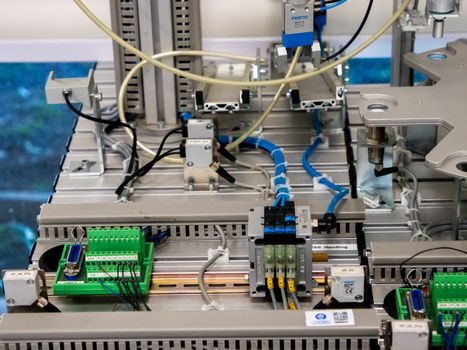
WEBEN's machining-fixture division publishes a 10-year focus on hydraulic clamping for the service-machining industry, with the engineering pitch centred on cutting-edge technology, rich professional design experience, and rigorous quality control across one-off and small-batch workholding [S2]. In practice this means fixture designers specify the clamping pressure (typically 6-10 MPa for hydraulic workholding), the number of clamping points, the actuation source (single-acting spring-return, double-acting), and the safety rating — fail-safe-spring or fail-safe-blocked depending on the workpiece hazard class.
For plants buying a hydraulic fixture in 2026, the spec gates are clamping force consistency (±5% across the cell), cycle time (clamp/unclamp under 2 s for high-volume cells), and integration with the machine tool's M-code or PROFINET signal. A smart fixture exposes clamp/unclamp confirmation, pressure, and proximity feedback, so a stuck clamp is a hard interlock — not an operator visual check. The wider digital-twin scope of smart manufacturing is also documented in the IWAMA 2019 Springer proceedings, which remains a reference for academic benchmarking of sensor density, OEE uplift, and digital-thread coverage in hydraulic cells [S3].
Selection criteria: who it is for, who it should avoid
It is also a fit for die-casting and injection-moulding cells where intensification and clamp tonnage have to be tuned per shot. Plants with open-loop proportional valves on long-stroke low-duty cycles (harvester booms, ship hydraulics) generally see payback in 3-5 years; low-duty agricultural valves rarely justify an EHPU rebuild. [S1]
It is NOT a fit for: (1) high-frequency servo-hydraulic axes that already run on a dedicated servo pump — adding an EHPU controller on top adds latency; (2) hazardous-area zones where the inverter's thermal load and certification envelope (ATEX/IECEx considerations for Group II) cannot be met without a flameproof enclosure; (3) sub-7 MPa low-pressure lubrication circuits, where a VFD on the gear pump is enough. The decision table below summarises the main architectural options against the criteria that matter at procurement.
Criteria comparison: EHPU vs fixed-displacement vs servo-hydraulic
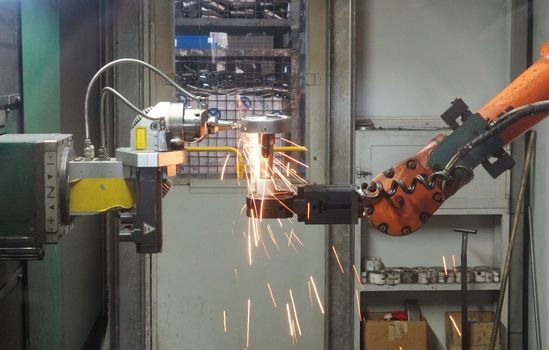
Comparing the three dominant hydraulic power architectures for a 2026 retrofit: an EHPU (variable-speed servo motor + axial piston pump) wins on energy and noise; a fixed-displacement throttled loop wins on lowest capex and is acceptable at low duty cycle; a dedicated servo-hydraulic axis (servo valve + constant-pressure pump) wins on dynamic response for high-bandwidth motion.
On commissioning complexity, fixed-displacement is the simplest (one relief-valve setting), EHPU is intermediate (motor tuning, bus configuration, twin pressure-loop tuning), and servo-hydraulic is the most demanding (valve linearisation, gain scheduling). On retrofit cost, fixed-displacement is the cheapest to leave in place, EHPU mid-range, servo-hydraulic the most expensive if the existing pump pack is being retained. Plants already running Industry 4.0 cells on smart valve positioner platforms can extend the same OPC UA tag structure to the EHPU controller, which is the cleanest path to a unified asset model. For an adjacent view of how China-based integrators are wiring IIoT into machine-tool cells, see the machine tool smart manufacturing 2026 casework.
Failure modes, installation rules, and the verified 2026 signal chain
The most common hydraulic failure is still contaminated fluid, so installation discipline matters more than the controller choice. A 2017 field-engineering reference from Changzhou Hydraulic still holds: pump and motor shaft ends generally do not tolerate radial force, so belt pulleys and gears must not be mounted directly on the shaft; the pump should sit as close to the tank as practical, with the reservoir above the pump where possible, and an in-line oil filter on the suction line to prevent cavitation-grade contamination reaching the pump [S5].
The 2026 retrofit is judged on three signals: a deterministic-bus handshake between PLC and inverter (PROFINET or EtherCAT, cycle time 1-4 ms), published OPC UA tags for pressure, flow, temperature, and energy, and an alarm model that flags filter Δp, return-line temperature, and tank level as first-class events. For the broader sourcing reality behind the sensors and inverter drives sitting on these manifolds, the bearing smart manufacturing 2026 spec breakdown is a useful adjacent read.
Track these over the next two quarters: (1) the 2026 release of integrated EHPU-inverter-controller modules from Chinese system houses such as WEBEN, which would compress the bill of materials for fixture-cell builders [S2]; (2) Allied Automation's continued bundling of smart actuators, sensors, and motion controllers into a single procurement channel for North-American plant retrofits [S1]; (3) the spread of robotised manifold assembly cells such as the Kawartha Controls model into European Tier-2 hydraulic builders under the Triple Bottom Line framework [S6].