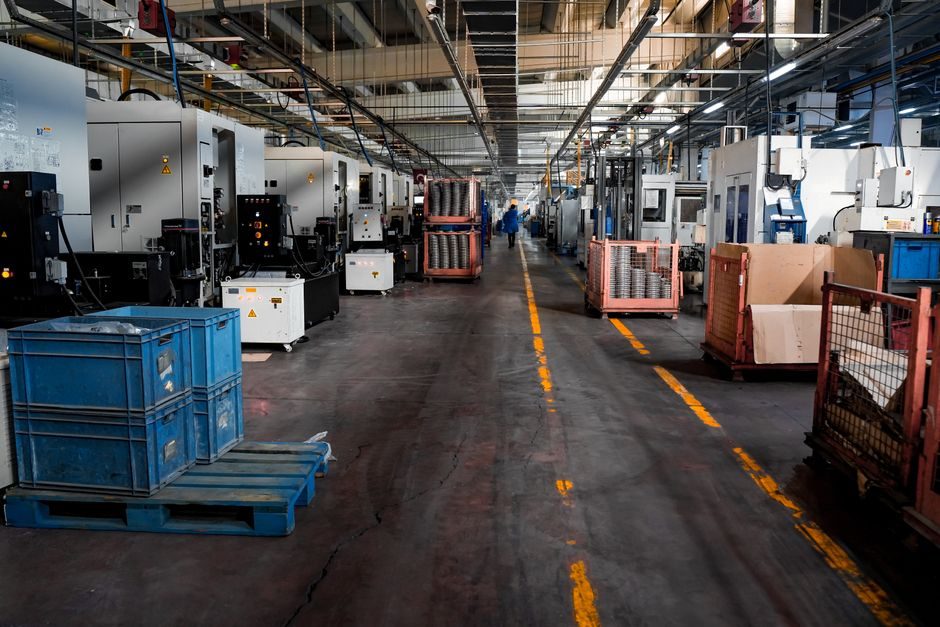
Process plants, EPCs and skid builders that buy into these upgraded lines are seeing traceable, faster-acceptance deliveries; specifiers who still demand paper-only MTRs are paying a premium for hand-stuffed binders [S2]. The shift is being driven by valve producers rebuilding around ISO 9001 + API 6D / API 600 quality systems, with control and smart-valve positioner calibration increasingly folded into the same MES layer that runs the CNC cells [S3][S4].
What "Smart" Looks Like on a 2026 Valve Shop Floor
A modern valve line pairs CNC turning/machining centres with on-machine probing so that every body and bonnet dimension is logged against the part drawing, not a clipboard [S4]. In assembly, torque tools are networked: each bolt-up event writes a torque-vs-angle curve to the valve's serial record, and the MES rejects a build that misses the spec window before the unit ever reaches the test bench [S2][S3].
Pressure-test cells are no longer standalone; the test rig's chart, the ambient-temperature reading, the test-medium certificate and the operator badge all bind to the same valve serial number, and a 2D code printed on the body is the only human-readable artefact that travels with the unit [S3]. Allied Automation-style systems integrators report that this kind of closed-loop build data is the single most common request from skid builders in 2026 [S2].
Valve-Type Selection Under a Smart-Manufacturing Spec
Specifying a valve is no longer just about body, class and end connection — it's about whether the OEM can deliver the digital artefacts your plant needs. A spec gate that works in 2026: (1) per-valve material traceability to EN 10204 3.1 / 3.2, (2) networkable positioner-ready mounting per IEC 61514 / NAMUR NE 145 for smart-valve positioner drop-in, (3) FAT data in CSV/PDF tied to serial, and (4) documented lead time on the body cast or forging [S3][S4].
Forged-body gate/globe units remain the default for high-pressure refinery service above ASME Class 600, while cast ball valves dominate chemical and water service to Class 600 [S3].
Smart Sensors, Positioners and the IIoT Layer on the Valve Itself
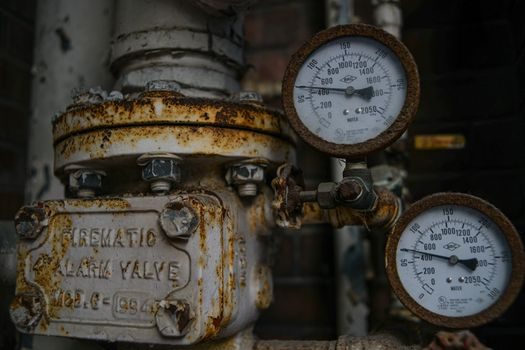
Once the valve is on the pipe, the smart layer is mostly about the positioner and a handful of on-body instruments. A modern digital smart-valve positioner provides HART 7 / IO-Link communication, auto-calibration, partial-stroke-test for ESD applications, and a signed diagnostic log that feeds plant historians [S3][S4].
For quarter-turn units, inductive position switches and 4–20 mA + HART position transmitters are now baseline; pneumatic I/P converters remain common, but electric actuators with PROFIBUS PA or FOUNDATION Fieldbus are gaining share in greenfield North Sea, Middle East and U.S. Gulf projects where the DCS already speaks those protocols [S4]. The practical spec-floor rule: confirm actuator torque output at the actual supply pressure (typically 4.0–6.0 bar / 60–90 psi instrument air), confirm the positioner protocol matches the DCS, and confirm the partial-stroke-test cadence is configurable, not locked.
CNC, Robotics and Where Lead Time Is Actually Being Cut
The cycle-time win on a 2026 valve line is concentrated in three cells: body machining on multi-axis turning-milling centres, bonnet-bolting with collaborative robots on a torque-and-angle station, and final test on a skid that handles hydrotest, seat-leak and signature-test in one fixture changeover [S2][S4].
The same playbook shows up in adjacent process-equipment shops — see how a pump manufacturing line and a pneumatic sub-assembly line get rebuilt around the same MES, robotic torque and networked-test logic, so the specifier can reasonably expect valve, pump and instrument-skid vendors to deliver data in the same shape. For low-volume / high-mix runs (under ~50 valves per drawing), robotic bolting is rarely economic; manual torque tools with logged curves are the smart-manufacturing baseline [S2].
Testing, Traceability and the Documents That Travel with the Valve

Quality systems on a 2026 valve line are anchored to API 6D (pipeline valves), API 600 (gate/globe/check, ASME B16.34), and ISO 5208 for seat-leak rates, with the test sequence and acceptance criteria written into the work-instruction rather than left to the operator [S3]. For sour service, NACE MR0175 / ISO 15156 material limits apply and are tied to the cast or forging certificate; for offshore and arctic, low-temperature impact testing to ASME B16.34 is the usual spec-floor call-out [S3].
Traceability looks like this in 2026: a body cast arrives with a 3.1 certificate and a heat code; the MES binds the heat to the body serial; every machining, assembly, test and paint step is logged against that serial; the as-shipped package is a PDF dossier plus a QR sticker on the body, readable by any phone or plant handheld, that resolves to the OEM's secure record [S3]. Compared with the paper dossier of 2015, this cuts the average document-handling time per shipment from hours to minutes and removes most transcription errors.
Who Smart Valve Manufacturing Is For — and Who Should Skip It
It is FOR: EPCs and skid builders buying 50+ valves per project who want to skip the incoming-inspection bottleneck; plant owners running DCS-integrated ESD or partial-stroke-test programmes; and OEM valve brands competing on delivery reliability rather than just unit price [S2][S3][S4].
It is NOT for: very small maintenance, repair and operations orders (under 5 valves) where the digital dossier costs more than the valve itself; or for service classes and materials so specialised (e.g. ASME Class 2500 and above, certain nuclear or hydrogen-service codes) that the production volume on a smart line is too low to recover the integration cost [S3]. For those cases, paper MTRs from a qualified smaller foundry remain the rational answer.
Failure Modes, Limits and What the Spec Cannot Fix

Smart manufacturing does not change metallurgy. A mis-specified body material in sour or chloride service will still fail; the digital record will simply be very detailed about the failure [S3]. Common limits to call out: (1) network coverage — IIoT positioner data is only as reliable as the plant's industrial wireless or wired backbone; (2) cybersecurity — networked torque tools and test rigs sit on the plant network and need segmentation; (3) sensor drift — pneumatic positioner diagnostics are sensitive to instrument-air quality (ISO 8573-1 dewpoint and particulate), and a dirty supply will produce false partial-stroke-test failures [S4].
Engineers should also remember the protocol boundary: HART 7 is FSK on a 4–20 mA loop, not a digital fieldbus; if the DCS card is FOUNDATION Fieldbus or PROFIBUS PA, a HART-only positioner needs an integrated or linking device, and the spec must say so explicitly [S4]. The 2026 industrial PC running the MES or local test cell has to be specified for the same harshness class as the plant — fanless, wide-temperature, IEC 60079-compliant if it sits in a classified area.
Standards and Spec References Buyers Cite in 2026
The standards that show up most often on a smart valve line's quality plan in 2026: ASME B16.34 (valve design and testing), API 6D (pipeline valves), API 600 (gate/globe/check), API 607 / API 6FA (fire-test), ISO 5208 (seat-leak rates), NACE MR0175 / ISO 15156 (sour service), ASME B31.3 (process piping) and EN 10204 3.1/3.2 (material certificates) [S3]. For actuation and control, IEC 61514-2 (positioners), NAMUR NE 043 / NE 107 (diagnostic signalling) and the IEC 60079 series for hazardous-area electrical content are the baseline calls [S3][S4].
Honeywell's industrial-fire and building-automation portfolio references the same IEC and EN families on detector, signalling and shutdown-device datasheets, which is the cleanest cross-check a process engineer can run when validating a vendor's CE / ATEX claim on a valve-mounted solenoid or positioner [S1]. A specifier who cites the standard, the acceptance class and the certificate level on the PO closes most of the room for ambiguity on a 2026 smart valve order [S3].
Trackable signals to watch through the second half of 2026: (1) wider roll-out of OPC UA over MQTT on valve-test cells as a replacement for vendor-proprietary historians, and (2) growing OEM support for AAS (Asset Administration Shell) submodels for the industrial valve, which would let EPCs drop the per-valve type datasheet into a digital twin without hand-translation. Engineers can validate these by asking two questions on the next RFQ — "what is your OPC UA server stack on the test cell?" and "do you publish an AAS submodel for this valve family?"
For component-level specifications, see additive manufacturing material.