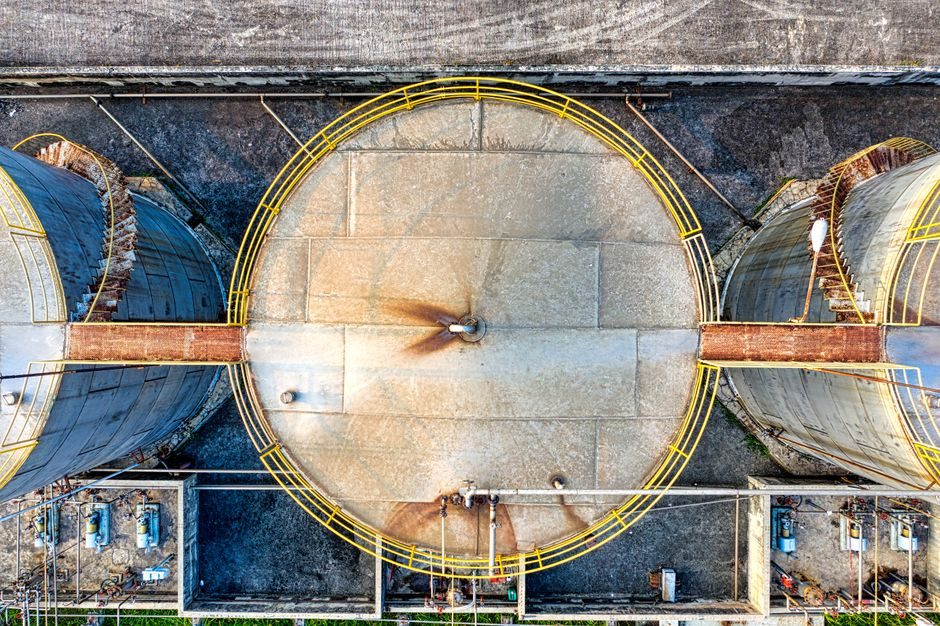
An ISO tank container is a stainless-steel pressure vessel held inside a standard ISO 1496-1 frame, most commonly 20ft long with a nominal 26,000 L payload, designed for intermodal transport of bulk liquids and (with the right code) liquefied gases [S3].
Buyers should treat it as a freight-and-cleaning decision, not a vessel purchase: the container itself is depreciable hardware, but the real cost drivers are one-way repositioning, cleaning-station access, and the product's compatibility with the tank's material of construction and approval code [S3]. For a deeper look at code families and typical pressure/ temperature envelopes, see Tank Container Types and Classifications: A Spec Engineer's Working Map.
Where the ISO Tank Container Wins on a Spec Sheet
Payload density is the headline number: a single 20ft ISO tank carries roughly 26,000 L, which compresses the unit into a single IMDG/ADR shipping entry and removes the per-drum handling cost of a flexibag (typically limited to ~24,000 L) or a pallet of 205 L drums [S3]. For shippers moving 500-5,000 t/month of a single grade, the per-tonne loading and discharge cost at a fixed rack or gantry is materially lower than drum de-palletising, and disposal/recovery of empties is eliminated because the same vessel returns on the next haul.
Modal flexibility is the second structural advantage: one container is legally road-, rail-, and sea-transportable under the UN/IMDG/ADR/RID framework, with US-DOT and AAR 600 covering North American road and rail respectively [S3]. Specialized variants push the envelope — 40ft cryogenic units move LNG/LIN/LAR at working pressures that fixed isoframes simply do not handle, while 20ft bitumen and asphalt units run heated coils to keep viscous product pumpable at ~150-200 °C.
Cleaning throughput is a hidden win. Because the tank is drained, sealed, and returned to a fixed CIP station, depots using rotary-jet heads typically complete a standard food-grade wash in 30-45 minutes for a 26 kL vessel — orders of magnitude faster than dismantling and steam-cleaning the same volume in drums.
Where the ISO Tank Container Loses or Disqualifies
One-way legs destroy the math. ISO tanks are returnable assets, so a true "A-to-B" lane with no backhaul is uneconomic beyond 4,000-6,000 km versus flexitank or IBC: the empty repositioning cost alone often exceeds USD 1,500 per box on transcontinental trades [S3]. Buyers who need true one-way economics should default to IBC tanks or flexitanks on standard 20ft dry containers, not ISO tanks.
Product compatibility is the second hard constraint. Stainless 304 covers most food and chemical duties, but chlorides, strong acids, and HF demand 316L, rubber-lined, or PTFE-lined shells, and those variants are scarce and command premium lease rates [S3]. Reefer/heated product lines need a fully integrated refrigeration/heating plant, dropping payload to ~21,000 L and lifting capex materially.
Cleaning infrastructure is the gating constraint in many regions. A depot with food-grade, chemical, and gas-trained bays is standard in northern Europe (UK, Benelux, Germany) but thin in Africa, Central Asia, and inland South America; if a CIP station is not within ~300 km of the discharge point, the round-trip cycle time breaks and the specifier is back to drums [S3].
Decision Matrix: ISO Tank vs Drum vs Flexitank vs Shore Tank
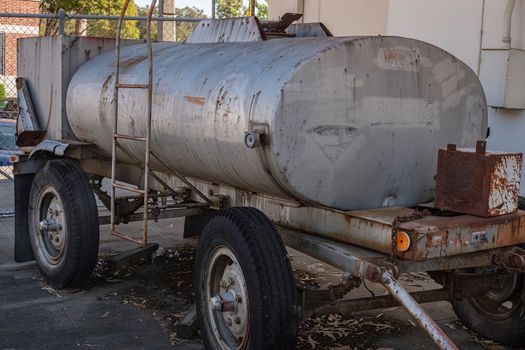
Specifying engineers should score each option against four decision criteria before locking the bill of lading type: payload per TEU, returnable-asset dependency, cleaning burden, and regulatory ceiling.
On payload-per-TEU the ranking is Shore Tank (∞ per dedicated vessel) > ISO Tank (~26 kL) > Flexitank (~24 kL) > Drum (~24 kL across 120 × 200 L drums in 20ft). On returnable-asset dependency, ISO tank is the most demanding (must return loaded or empty to a depot), drum is the most forgiving (one-trip, no return), and shore tank is irrelevant (fixed asset). On cleaning burden, drum is heaviest, flexitank is single-use, and ISO tank sits in the middle — heavy on first fill, near-zero on return legs. On regulatory ceiling, ISO tank covers IMO Class 3/8/9 plus gases under IMDG, drum hits UN packaging approvals at smaller volumes, flexitank is limited to non-hazardous food and non-regulated chemicals, and shore tank has no transport code at all [S3].
For specifiers choosing between similar 20ft frame formats, the linked reference on IBC tanks is the right comparator for 1,000 L intermediate bulk duties — ISO is the wrong size class for that duty.
Cleaning, Venting, and Instrument Integration
Loading and discharge use a top manway plus a bottom foot-valve with a 3-inch (DN80) or 2-inch (DN50) ANSI/MSS coupling, with the vent line sized to the pump's NPSH requirement during fill. For closed-loop nitrogen blanketing on oxidisable or moisture-sensitive cargo, the top dome accepts a pressure/vacuum relief valve typically set around +0.35 bar / -0.05 bar for non-dangerous liquids, and higher on pressure-vessel coded gas variants [S3].
Inventory measurement on a road-going ISO tank still leans heavily on external level probes rather than intrusive sensors, because the shell is the spec boundary, not the contents. A non-invasive magnetostrictive probe mounted in a side-mounted stilling well can hit ±1 mm resolution in a refined-product service without breaching the shell, which matters for custody transfer on a multi-stop run [S2]. For a fully welded, no-penetration option, ultrasonic clamp-on level is the workhorse, at the cost of some accuracy in foam or vapor-heavy service.
Flow metering on fill and discharge is dominated by Coriolis on hygienic/corrosive lines and by positive-displacement meters on bitumen and high-viscosity heated duty; a 4-20 mA + HART output feeds the depot's loading automation, with flow meter selection keyed to viscosity, not just line size. Tank-cleaning after the last load is the operational pivot: a tank-cleaning machine that has been validated for the next product's allergen, residue, and MRL limits is what determines whether a box turns around in 12 hours or parks for two days.
Who the ISO Tank Is For — and Who It Is Not For
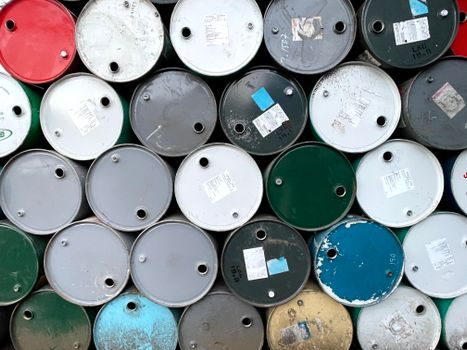
It is for: bulk-liquid shippers running closed-loop lanes (e.g. Rotterdam–Humber, Houston–Veracruz, Singapore–Klang) with product volumes of 1,000 t/month or more and a known backhaul; LNG/LPG/LIN distributors using cryogenic or gas-coded variants; food-grade edible-oil, juice concentrate, and alcohol operators with depot access in northern Europe or North America [S3].
It is not for: low-volume shippers (under ~200 t/month) where the lease and repositioning cost outweigh the loading saving; one-way export lanes with no return cargo; ultra-pure or pharma-grade products where shell cross-contamination risk is unacceptable and dedicated stainless equipment is mandatory; and any duty where the closest certified CIP station is more than a day of detour away.
Approvals, Standards, and Sourcing Reality
Approval stacking is the actual purchase specification: a typical 20ft chemical tank ships with UN Portable Tank (T-code per UN Model Regulations), CSC safety approval plate, IMDG compliance, ADR/RID for European road/rail, US-DOT 49 CFR §178.345 for US road, and AAR 600 for US rail — these are not optional line items and must appear on the data plate [S3].
On the supply side, China remains the dominant manufacturing base for new-build 20ft ISO tanks and frames, with multiple ASME U2/U3 stamp shops exporting direct; the Made-in-China supplier index for "Tank Container" lists several hundred active export vendors with CE/ISO9001 listings and capacities spanning 10ft, 20ft, 30ft, 40ft and 45ft frames [S1]. For food-grade and gas-coded units the specifier should still default to established lessors (Bertschi, Hoyer, VTG, Suttons) because the approvals and depot footprint matter more than the box's origin.
Trackable signals to watch over the next two quarters: IMO's ongoing review of CO2-emission factors per TEU-km for ISO tank vs dry-container-flexitank trades, and the European depot network's transition to water-recycled CIP systems, which is already shifting cleaning-station throughput economics in the Benelux cluster.