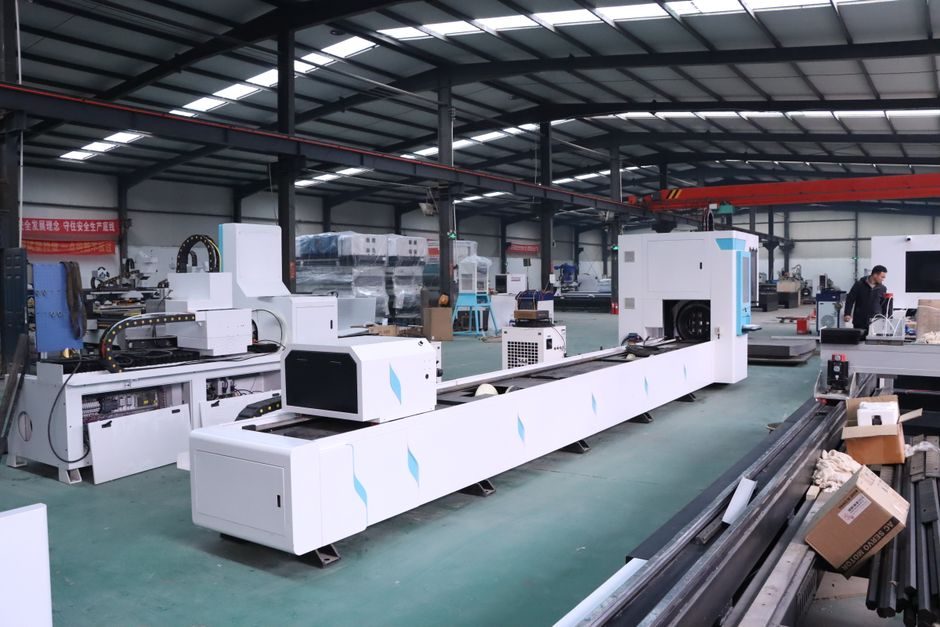
Industrial labeling machines cover a 1-piece to US$200,000 price band with 1-piece MOQ, and a properly commissioned automatic round-bottle labeler holds ±0.5 mm placement accuracy at 30-200 bottles per minute [S2].
Selection now splits across four functional families: manual weighing-labeling (15-60 kg range at 5-20 g resolution, e.g. ESPERA ES 2060 / ES 3015), OPP hot-melt wrap (US$120,000 laundry/liquid-detergent class), double-side adhesive labelers, and rotary sticker applicators [S1][S2].
Pre-install site survey: the four numbers that decide everything
A labeling machine's repeatability is dominated by upstream mechanical stability, so the site survey must capture four values before the crate is opened: floor flatness ≤3 mm over 2 m (concrete class C25/30 minimum, anchor pull-out ≥1.5 kN per M12 chemical anchor), compressed-air supply at 0.6-0.8 MPa with dew point ≤-20 °C, single-phase 220 VAC ±10% or three-phase 380 VAC ±10% at 50/60 Hz, and ambient temperature 5-40 °C with RH ≤85% non-condensing [S2][S5].
Skipping any of these four turns the acceptance test into rework: label skew, wrinkling, and encoder-miss counts all cascade from a flat-but-not-level frame, and a wet air line gums the print head within one shift on thermal-transfer OPP lines [S5].
Mechanical leveling and conveyor squareness
Acceptance criterion for the labeler frame is ≤0.05 mm/m lateral runout on the main conveyor, measured with a dial indicator across the 1.5-2 m bottle path, and a 90° ±0.1° squareness between the labeling head's peel-plate tangent and the conveyor centerline [S2].
Procedural sequence: set the four corner jackscrews to manufacturer datum, tighten anchor nuts to torque, then recheck level after 24 hours to capture concrete creep and shim compression, before any electrical energization [S2].
Label web tension, peel geometry, and wrap alignment

For adhesive sticker applicators the label web path requires 0.5-2.5 N closed-loop tension on the supply reel (set via dancer or load cell), a 30°-45° peel angle at the dispense tip, and a wrap-belt contact arc of 90°-180° for round bottles, holding registration ±0.5 mm against the bottle's reference fiducial [S2][S3].
The OPP hot-melt cut-and-stack path is mechanically stiffer but thermally sensitive: hot-melt glue tank sits at 130-160 °C with ±2 °C control, and the bottle's surface pre-heat station runs 50-70 °C to keep the OPP film from lifting on cold PET [S2].
Electrical, signal, and PLC integration
Power, control, and safety wiring follow three segregated routes: 24 VDC sensor bus, 220/380 VAC power (separate gland, shielded), and Ethernet/IP or PROFINET to the line PLC, with encoder feedback from the main conveyor at 1000-4096 PPR to lock label-dispense to bottle position [S5][S6].
Noise immunity comes from grounding the labeler's PE bus to the plant ring-ground at ≤4 Ω and routing HMI cables in a dedicated trunk ≥300 mm from any VFD power cable, since most misfires on OPP lines are VFD-induced common-mode noise on the encoder, not a defective applicator [S5].
Acceptance test: speed, accuracy, and reject rate
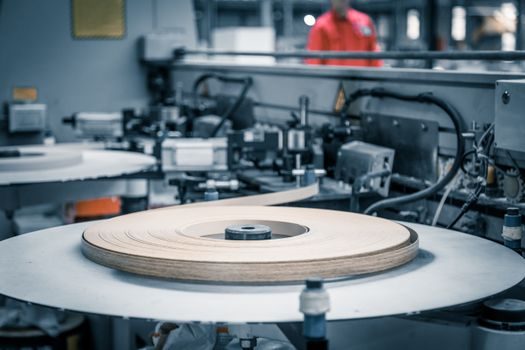
A standard 30-minute FAT runs at nameplate BPM with three product SKUs and records label-placement offset, vertical skew, and missing-label count; the pass threshold is ±0.5 mm offset, ≤0.3° skew, and ≤0.1% reject rate sustained over the full 30 minutes [S2][S5].
For manual weighing-labeling machines such as the ESPERA ES 2060 (15/30/60 kg range, 5/10/20 g increment) the acceptance shifts to scale linearity, OIML R76 Class III verification, and printer ribbon-tension calibration rather than BPM [S1].
Common failure modes and when to escalate
Symptom-to-cause map for the first 90 days: label skew on round bottles points to wrap-belt speed mismatch (re-tune 1:1 ratio with conveyor); wrinkling on OPP hot-melt films points to glue temperature out of 130-160 °C band; phantom misses at the optical sensor point to a dirty fiber-optic cable or a misaligned retroreflector; consistent double-feed points to a worn peel-plate edge that needs replacement, not adjustment [S2][S5].
Escalate to the OEM when the encoder loses counts under load, when the linear guide on the label-dispense carriage shows wear grooves >0.1 mm deep, or when the hot-melt tank's PID cannot hold ±2 °C, since these failures mark end-of-warranty exposure and a capping-sealing machine retrofit is usually cheaper than a field repair on a US$120,000-class line [S2].
Sourcing spec checklist before you sign the PO
Confirm the OEM publishes a valid CE declaration for the EU market, an FDA-grade contact-surface statement for food lines, and a 12-month warranty that names response time on site; for automatic labeling machine lines crossing into pharma, also request a GAMP 5 validation package and IQ/OQ templates [S2][S5].
Trackable signals for the next 90 days: a 2026 Q3 update from LTPM on servo-driven label heads that close the ±0.3° skew window, and a Guangzhou U-Packer FOB revision on the OPP hot-melt class currently anchored at US$120,000/piece [S2][S5].