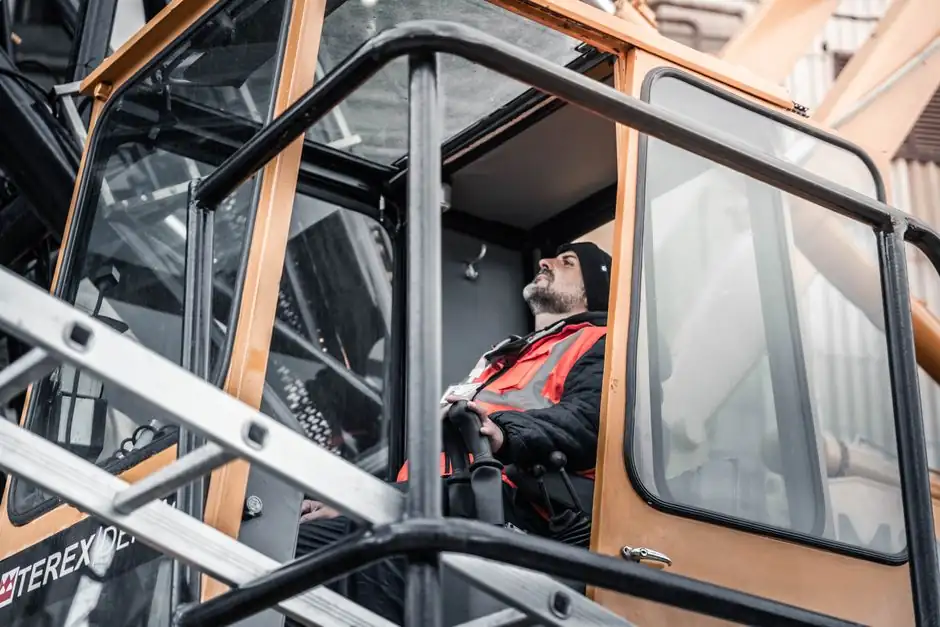
Landfill cells in 2026 push crawler crane selection toward 100-320 t machines with 64-86 m main booms, where used Sany SCC1000A-6 (100 t / 64 m / 396 t·m), SCC2000A-2 (200 t / 85 m / 1152 t·m) and SCC3200A-2 (320 t / 86 m / 1820 t·m) units now anchor the resale market [S1].
Operators moving geosynthetics, leachate pipes, and compactors onto a degrading subgrade need tracked lift platforms that outperform mobile crane outriggers on soft, methane-prone ground [S4].
Ground Pressure and Track Shoe Width
A standard crawler crane spreads load through track shoes at roughly 0.05-0.12 MPa, which is the same order as a standing adult on soft soil and the primary reason crawlers out-perform rubber-tired carriers on capped landfill cells [S4]. For daily-cell work over a 2-3 m-thick daily cover of silt and C&D debris, spec a machine with bolt-on 900-1200 mm wide track pads and an optional central jack-up pontoon set; this drops contact pressure further and protects the geomembrane from puncture during pick-and-carry moves.
Compare crawler behaviour against gantry crane alternatives: gantries need fixed rails on stable subgrade, so on a working face that shifts 5-10 m per day they are functionally immobile, whereas a 200 t class crawler can re-position under its own power without matting out the cell.
Engine Tier, Ventilation, and Methane Management
EU and US landfill tenders in 2026 require Tier 4 Final / Stage V diesel oxidation-catalyst plus diesel-particulate-filter packages, and most sites now mandate a methane (CH4) sensor interlock that trips the engine to idle if LEL exceeds 10% inside the cab plenum [S4]. Spec the engine bay with a spark-arresting exhaust routed upwind and a positive-pressure cab supplied by a fresh-air intake fitted with a 0.3 mg/m³ HEPA + activated-carbon stage, since landfill gas routinely carries 40-60% methane plus trace H2S above 5 ppm that fogs windshields and pits brass fittings.
Deferring the same duty to a tower crane is rarely viable: tower cranes demand a poured raft foundation and are uneconomic below 80 m radius on a moving face, while a telescopic boom on a crawler picks up the same 10-30 t geosynthetic rolls at 25-40 m radius in two minutes per cycle.
Boom Configuration and Lift-Plan Geometry
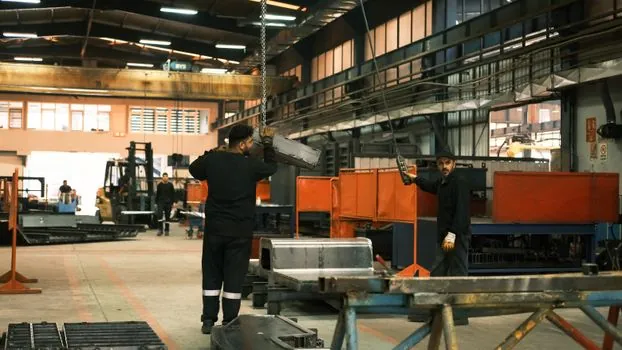
Landfill rigs typically lift leachate manholes, liner rolls, and 15-20 t well casings at radii between 14 m and 38 m, so a 64 m main boom with a 12-21 m fixed jib covers 90% of daily picks without re-rigging. The SCC2000A-2's 85 m main boom and 1152 t·m rated moment provide a 2× safety margin over typical 18 t liner-panel picks at 30 m radius when the cell slopes 1V:3H, a common final-cover grade in EU landfills [S1].
For repetitive stack-and-place cycles such as building a leachate chimney with 1.5 t precast rings, compare the stacker crane principle: stackers are rail-bound warehouse tools with 0.5-2 t capacity and 20-40 m/min vertical travel, none of which translates to a 25 m free-standing lift on deformable ground, so the crawler remains the only practical host.
Load Chart Discipline on Deforming Subgrade
Most used-crane resale listings still quote the OEM maximum moment (e.g. 1820 t·m for the SCC3200A-2) without a landfill-derate footnote, and operators who ignore that gap have overturned 200 t class machines on 8% cell grades. [S4]
Maintenance, Spare Parts, and Resale Footprint
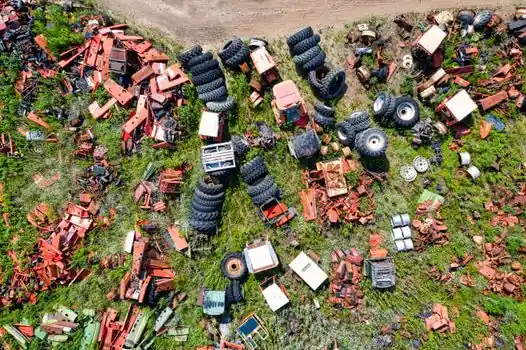
Shenzhen Juyi International Equipment Management reports a fleet of more than 300 crawler cranes and over 1000 cooperative-channel machines, exporting more than 100 second-hand units a year, which gives landfill operators access to OEM-pattern replacement track shoes, slewing bearings, and boom pins at 30-60% of new-OEM list [S1]. Henan-based OEM/ODM lines on Made-in-China.com list complementary truck-mounted, knuckleboom, and hydraulic telescopic boom cranes sharing common hydraulic valves, so a single spare-parts inventory can cover mixed fleets on multi-cell sites [S5].
EU buyers sourcing from UK hire specialists such as Delden Cranes get CPCS/A67-equivalent operator coverage, LOLER thorough-examination at 12-month intervals, and on-site service vehicles; pair that with a crawler crane already fitted with remote diagnostics so the engine DPF soot-load and hydraulic oil particulate counts stream to the contractor's maintenance dashboard.
Sourcing, Standards, and 2026 Tender Language
Landfill tenders in 2026 typically cite EN 13000 for crane safety, EN 16228 for foundation-pillar and anchor-pile drilling attachments, and ISO 14001 for site environmental management, while US federal Superfund sites layer in 29 CFR 1926.1400-1441 for power-line clearance and a 3 m stand-off rule for any haul truck positioning under the boom path. The Made-in-China.com factory directory shows Henan province holding the densest cluster of crawler-crane OEM/ODM lines, all of which can ship 100-320 t class machines with CE-marked load moment indicators and on-board anti-two-block [S5].
Buyers who already run port-logistics fleets can extend a 2026 AMR procurement pattern to crane telematics, since the AMR selection for port logistics 2026 spec gates piece covers the same CAN-bus J1939 data feed and remote-lockout discipline, and quarries with similar ground-bearing constraints have published a parallel set of gates in crawler crane selection for quarrying 2026 spec gates.
Track three signals over the next two quarters: methane-sensor interlock pricing falling below 2% of new-crane list, landfill-specific OEM derate charts replacing generic OEM charts, and rental houses offering 200 t class landfill-rated crawlers on short-term hire, since any two of those landing in Q4 2026 will reset the capex vs opex math for mid-size operators.