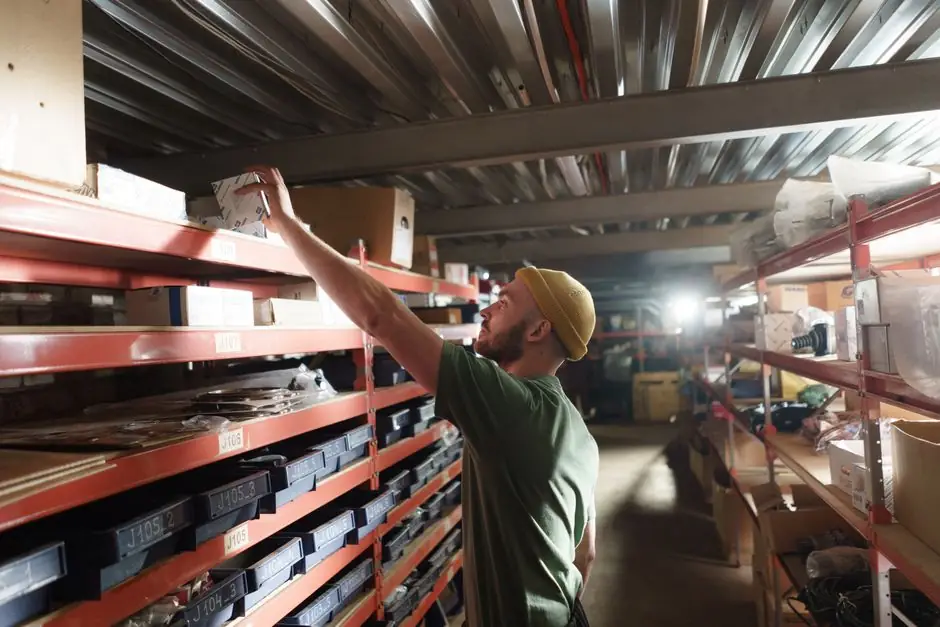
Landfill transfer stations and materials-recovery facilities require storage racks built to withstand corrosive leachate aerosols, UV exposure, and dynamic forklift loads, which is why ASTM A123 hot-dip galvanized structural steel selective and drive-in configurations dominate 2026 procurement specifications [S1][S3].
Unlike indoor distribution centers, landfill rack installations are typically anchored to a minimum 6-inch reinforced concrete slab with epoxy-anchored base plates, and frame capacities routinely span 20,000–40,000 lb per upright pair to accommodate dense loads of baled recyclables, used tires, and containerized hazardous waste [S1][S3].
Service Environment and Material Specification
Landfill service environments expose rack structures to hydrogen sulfide, ammonia, and chloride-rich leachate condensate at concentrations that degrade unprotected carbon steel within 18–36 months, which is why hot-dip galvanizing per ASTM A123 with a minimum 3.0 mil (75 µm) zinc coating is the default 2026 specification for outdoor and semi-enclosed rack installations [S1].
For racks located within enclosed transfer buildings where wash-down occurs, 304 stainless steel uprights and braces are increasingly specified as an alternative, with cross-aisle bracing of hot-rolled ASTM A36 steel remaining common due to cost and weldability [S3]. Cantilever configurations are preferred for storing long landfill components such as HDPE liner rolls, geocomposite panels, and perforated leachate pipe, with single-sided arms typically rated 1,500–5,000 lb and double-sided configurations rated to 10,000 lb per arm pair [S1].
Configuration Selection: Selective vs. Drive-In vs. Cantilever
Selective pallet rack is the baseline configuration for landfill transfer stations, because it preserves 100% SKU accessibility for inbound mixed recyclables, household hazardous waste, and e-scrap streams where rotation frequency is high and pallet identity must be tracked [S1][S3]. Drive-in and drive-through rack configurations, in contrast, are specified for high-density storage of homogeneous bales (OCC, PET, aluminum UBC) where first-in/last-out (FILO) rotation is operationally acceptable, with pallet shuttle deep-lane systems now displacing traditional drive-in at sites handling more than 500 pallets per SKU per month [S3][S4].
Selection pivots on four engineering criteria:
1. Throughput: Selective supports 25–40 pallet moves per shift per aisle; drive-in supports 80–120 but reduces selectivity to one SKU per lane [S1].<br>2. SKU count: Fewer than 50 active SKUs favors drive-in; more than 200 SKUs forces selective regardless of density goals [S2].<br>3. Landfill footprint: Drive-in cuts aisle count by 50–60% versus selective, reclaiming 1,800–2,400 sq ft per 100 pallet positions, which is significant on sites where permitted cap is fixed [S3].<br>4. Pallet type: Standard 40×48 GMA pallets dominate inbound; if 48×48 or 44×44 chemical-waste pallets appear, rack bay dimensions and load stops must be re-validated [S1][S2].
Load Capacity, Frame Geometry, and Seismic Anchoring
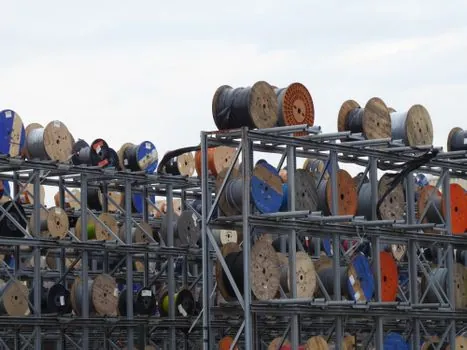
Standard landfill-grade selective rack frames are roll-formed or structural-channel teardrop uprights, with column capacities of 20,000–30,000 lb per pair at standard 144-inch heights, while heavy-duty structural-channel frames built from C3×4.1 or W6×15 hot-rolled sections routinely achieve 40,000–60,000 lb per pair to support baled tire or battery loads [S1][S3].
Seismic design factor depends on the project's mapped spectral acceleration, with the 2026 default for landfill racks in IBC Seismic Design Category C and D requiring a minimum R = 4.0 ductility factor, cross-aisle bracing of 2× L2×2×1/4 angles, and base-plate anchorage using 3/4-inch Hilti HIT-RE 500 V3 epoxy anchors at 8-inch minimum embedment into 4,000 psi concrete [S1]. Beam-to-column engagement via teardrop or boltless connections must be positively locked; the common failure mode at landfill sites remains disengaged beams from forklifts striking the load end, not column buckling, which is why end-of-aisle rack guards and column protectors rated for 10,000 lb impact at 5 mph are standard spec items [S1][S3].
Regulatory and Procurement Considerations
Landfill racking is not a regulated pressure-boundary item, but it is governed by the Rack Manufacturers Institute (RMI) ANSI MH16.1 specification for the design, testing, and utilization of industrial storage racks, which the 2024 revision codified as the single governing document under OSHA 29 CFR 1910.176 for materials handling in active waste facilities [S1][S3].
Procurement documents in 2026 typically require: (1) a stamped P.E. letter confirming ANSI MH16.1 conformance, (2) seismic calculations tied to the site-specific IBC category, (3) galvanizing certificates per ASTM A123, (4) signed floor-loading diagrams with allowable slab tolerances, and (5) a documented installation inspection per RMI Guidelines for Assessment of Damaged Pallet Racks [S1][S2]. Skipping any of these five items is the leading cause of denied insurance claims after a collapse event.
Common Failure Modes and What to Avoid

Three failure patterns recur at landfill installations: (1) floor-slab heave beneath base plates, mitigated by 6-inch minimum slab thickness and verification of 3,000 psi compressive strength before rack erection [S1]; (2) column-base corrosion from standing leachate, addressed by elevating base plates 1/4 inch above slab on shims and sealing the gap with polyurethane caulk [S3]; (3) overloaded beams from unintended stacking above the load-distribution plate, prevented by installing placard decals at every beam level with a legible 8,000 lb capacity figure [S1].
What to skip: light-duty welded-wire shelving rated under 1,000 lb per shelf, and any rack supplied without a legible load placard, both of which appear in surplus stock at auction but fail within 12 months under landfill duty cycles. Specifiers evaluating large fleets of pallet rack for the first time should also compare storage cage options for loose bulk items like fluorescent tubes and lithium batteries, which need contained secondary storage rather than open pallet positions.
Spec Map Summary: 2026 Landfill Rack Default
For most 2026 landfill and transfer-station bids, the default rack specification is: ASTM A123 galvanized teardrop selective rack, 144-inch frame height, 42-inch column spacing on 96-inch beams, 20,000 lb frame capacity, 8,000 lb beam pair, ASTM A36 base plates with Hilti epoxy anchors, ANSI MH16.1 conformance letter, and a RMI-anchored installation inspection [S1][S3]. Cantilever variants are added for liner and pipe storage, and pallet-shuttle deep-lane units are evaluated for baled-commodity zones where SKU count is below 50.
Trackable signals for the next procurement cycle: monitor whether RMI incorporates the 2024 ANSI MH16.1 seismic-anchorage table updates into state-level landfill construction permits, and whether ASTM A123 batch certificates become a submittal requirement under EPA 40 CFR 258 closure-post-closure care rules. Sites already running storage handling fleets can use a forklift selection for road construction spec map as a cross-reference for the lift-truck end of the rack-forklift interface, and operators comparing pallet rack layouts against cold milling machine picks for landfill cell prep will find the same concrete-tolerance and slab-loading logic applies across both equipment classes.