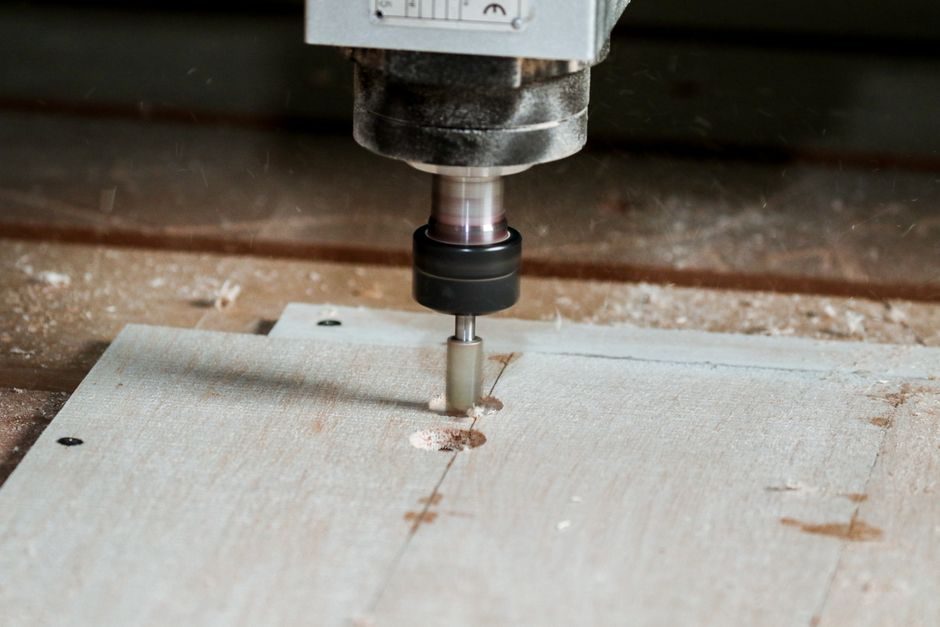
The CNC controller segment is structured as a three-tier market in 2026: Japan- and Germany-headquartered incumbents still own the high-axis / high-precision tier, while a China-based PC-based and standalone-controller cluster has grown into a third supply tier focused on woodworking, advertising, light aluminum machining, and entry-level metal cutting [S7].
According to market research, the CNC controller market is projected to reach USD 3.4 billion by 2026, with segmentation by axis type (2-Axis, 3-Axis, 4-Axis, 5-Axis), machine type, and offering (hardware and software & services) [S7]. APAC accounts for about 42% of that spend, which is why Chinese suppliers have moved from OEM/ODM to branded competition in woodworking and light metalworking [S7].
Selection criteria that actually drive CNC controller sourcing
The technical selection criteria for a CNC controller in 2026 are: axis count (2/3/4/5), feedback type (open-loop stepper vs. closed-loop servo with absolute encoders), interpolation behaviour (linear / circular / helical / spline / RTCP for 5-axis), supported G-code dialect (Fanuc-compatible vs. Siemens SINUMERIK vs. Heidenhain Klartext vs. LinuxCNC/Mach3), and fieldbus support — typically EtherCAT for European motion platforms and MECHATROLINK or proprietary links on Japanese platforms [S6][S7]. For process engineers evaluating a motion controller layer, the controller is the deterministic layer that closes the current and position loops; for a retrofitter, the same device is the bridge that has to talk the plant's existing fieldbus.
Beyond motion, the practical procurement criteria are: number of I/O and M-code functions, supported spindle interfaces (0-10 V analog, ±10 V analog, Modbus RTU/TCP, or digital SERCOS), HMI resolution and screen size, post-processor compatibility with the shop's CAM package (Mastercam, Fusion 360, UG/NX, hyperMILL), and the controller's tolerance to contaminated mains and ambient temperatures — typically 0-45 °C operating for industrial panels, derated for cabinet mounting [S5][S6]. Lead-time and certification (CE for Europe, UL for North America, GB for China domestic) are the procurement-side filters that usually eliminate vendors before any motion benchmark runs.
Who the major Japan and Germany vendors are FOR — and who they are not for
Fanuc, Mitsubishi Electric, and Yaskawa dominate the high-end Japanese tier; Siemens SINUMERIK, Bosch Rexroth MTX, Beckhoff TwinCAT, and Heidenhain TNC occupy the German motion-control tier. These are the right pick for 5-axis simultaneous aerospace work, high-rpm spindles (above 20,000 rpm), plants that require 24/7 unattended lights-out runs, and shops that need full digital twin integration with CAM packages — a process discipline that also shows up in EV process control lines, where the same controller platforms are reused on battery tray machining [S7].
They are the wrong pick for a sign shop, a small woodworking job shop, or an entry-level engraving cell: the per-axis licence model, the closed post-processor ecosystem, and the service-parts pricing push total cost of ownership well beyond what a 3-axis router needs. For those cells, a PC-based controller (Mach3, Mach4, LinuxCNC) with a motion card, or a Chinese standalone DSP / ARM controller, is the practical answer — the same trade-off the CNC controller market 2026 baseline notes when it segments price points below USD 1,500 per axis [S5][S6][S7].
China-based PC and standalone controller cluster: Shenzhen and Shandong
The Chinese cluster breaks into two sub-tiers. The PC-based tier is dominated by Shenzhen suppliers offering PCI/PCIe motion cards, Ethernet-serial MPG handwheels, and Mach3/Mach4 plug-in ecosystems, with typical package prices in the USD 200-1,200 range for a 3-axis card plus pendant and a free MPG wheel, as listed on Alibaba supplier pages [S6]. The standalone tier is the DSP/ARM-based industrial controller typically packaged in a separate operator panel with integrated keypad and LCD, priced at roughly USD 340-1,165 per set on Made-in-China wholesale listings from Shenzhen Guanhong Automation, Shenzhen Shenyan CNC, and Shandong-based trading companies [S5].
LEAD CNC, founded in 2007 in Shandong, sits adjacent to this controller market as a CNC machine integrator rather than a controller OEM: it ships its own CNC aluminum-profile processing lines with a tolerance band down to 0.1 mm, more than 200 national patents, and a 24,919 m² factory floor, exporting to over 70 countries — which is why the company is one of the data points for "Chinese CNC machine-builder density" in the 2026 vendor map [S2]. iGolden CNC, another Shenzhen/Shandong-area machine builder, packages its CNC wood carving and milling machines with a 3-axis-plus-spindle controller that follows the standard machine frame / controller / spindle / driver architecture typical of this segment [S3].
Side-by-side comparison: Japan incumbent vs. German motion platform vs. China PC-based
Across the four decision criteria that matter most to a process engineer, the three vendor tiers line up as follows. On axis and feedback, Japanese platforms offer up to 32 axes with high-resolution serial encoders; German platforms offer essentially unlimited axes via EtherCAT and support full digital servo drives; Chinese PC-based platforms are typically 3-6 axes with stepper or AC servo, and the feedback loop is software-driven with cycle times of 1-2 ms vs. 250 µs on a closed industrial platform [S6][S7].
On post-processor / CAM compatibility, the Japanese vendors lock to Fanuc-style G-code and proprietary conversational screens, German platforms expose SINUMERIK / Heidenhain dialects and full 5-axis RTCP, and Chinese PC-based platforms accept standard G-code plus Mach3/Mach4 post-processors — meaning a shop's existing CAM seat can drive any of the three, but only the German tier and LinuxCNC are smooth for 5-axis RTCP without heavy post work [S5][S6][S7]. On TCO over 5 years, the Japan/Germany tier is roughly 4-8x the upfront axis cost of the Chinese tier once service contracts, training, and licence fees are added, but delivers 99.5%+ uptime figures; the China tier is 1.0-1.5x baseline cost with documented warranty gaps in field-replaceable parts. On certification, Japan/Germany ships CE, UL, and KC marks as standard; the China PC-based cluster ships CE on most models but UL is inconsistent and is the main blocker for North-American OEM integration [S5][S6].
Real use cases mapped to vendor tier
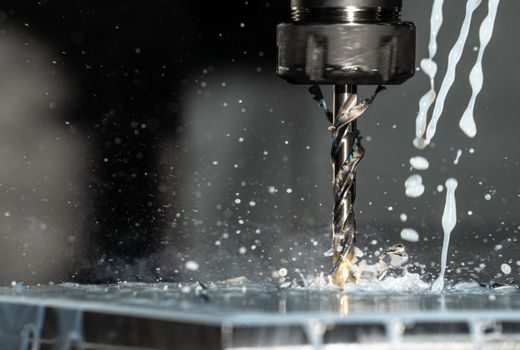
For aerospace structural parts in 5-axis titanium and Inconel, the German motion-control platforms (Siemens SINUMERIK 840D sl, Heidenhain TNC 640) are the standard answer; the same is true for high-end medical implants and mould-and-die work where surface finish and thermal stability of the controller are non-negotiable [S7]. For automotive powertrain lines, EV battery-tray machining, and large-format gantry milling, Fanuc and Mitsubishi controllers dominate — a trend that is documented in EV manufacturing quality coverage where digital-twin and process-gate architectures are layered on top of these controllers.
For sign-making, advertising-engraving, PCB drilling, foam cutting, and small woodworking routers, the China PC-based Mach3/Mach4 stack and standalone DSP controllers handle the bulk of installs [S5][S6]. For aluminum window and door profile processing, the integrated Chinese machine builder plays — LEAD CNC, for example, machines profiles to ±0.1 mm and shipped its first ERP-integrated CNC line in 2016, then released its first multi-machine CNC production line in 2020, with the "no. 1 sales turnover among Chinese manufacturers" claim holding for the four years through 2024 [S2]. For the broader ball-screw-and-controller supply chain that underpins all of these machines, the ball screw market 2026 map is a useful cross-reference on component-side pricing trends.
Limitations, failure modes, and sourcing constraints
The dominant failure modes on the China PC-based tier are EMC-related: USB motion cards that drop enumeration on a VFD-spike event, MPG handwheels that lose calibration after firmware updates, and fieldbus converters that do not survive a 24 V cross-wire on the I/O block — these are the documented reasons shops pay the German-tier premium for a closed industrial motion stack [S6]. On the Japan/Germany tier, the failure modes are different and rarer: encoder battery failures on absolute encoders (Fanuc α series), backplane capacitor aging on SINUMERIK 840D power-line modules, and CNC display CCFL backlight failure after 8-12 years in service. A PID controller tuning miss on the spindle speed loop is the most common process-quality failure that shows up as surface finish waviness regardless of controller tier.
Sourcing constraints in 2026 are: lead-times of 12-26 weeks on Japanese servo motors and amplifiers, export-licence review on certain high-precision encoders shipped to listed entities, and a tightening of CE/UL compliance audits on Chinese PC-based controllers entering EU OEM lines. For plants that cannot tolerate the lead-time risk on Japan- or Germany-built motion platforms, the practical hedge is to standardise on a China-built controller for non-critical cells while reserving the Japan/Germany tier for the spindle, the 5-axis trunnion, and any closed-loop thermal compensation that the temperature controller loop depends on.
Standards, sourcing signals, and the next trackable node
The standards stack that governs CNC controller sourcing in 2026 is: IEC 61131-3 for PLC programming languages, ISO 6983 / DIN 66025 for G-code and M-code, IEC 61784 for fieldbus profiles (including EtherCAT, PROFINET, and MECHATROLINK), ISO 23218 for STEP-NC data model, and the regional safety standards IEC 60204-1 / NFPA 79 / GB 5226.1 — these govern the controller and the integrated machine, not the spindle motor. For buyers, the verifiable next signals to watch are: CE-RED and EMC Directive 2014/30/EU compliance statements on Chinese PC-based controller data sheets, ISO 23218 STEP-NC adoption in aerospace-tier CAM packages, and whether Fanuc and Siemens release new AI-assisted chatter-detection or tool-wear estimator options on their HMI in the second half of 2026 [S5][S6][S7].
Track the next two data points to update this map: the 2026 mid-year list of UL-listed Chinese PC-based controllers, and the post-2026 CAPA (China Association of Precision Machine) audit results on the 0.1 mm tolerance claim used by Chinese aluminum-profile machine builders — both directly feed the go/no-go decision for shops standardising on the China tier [S2][S5].