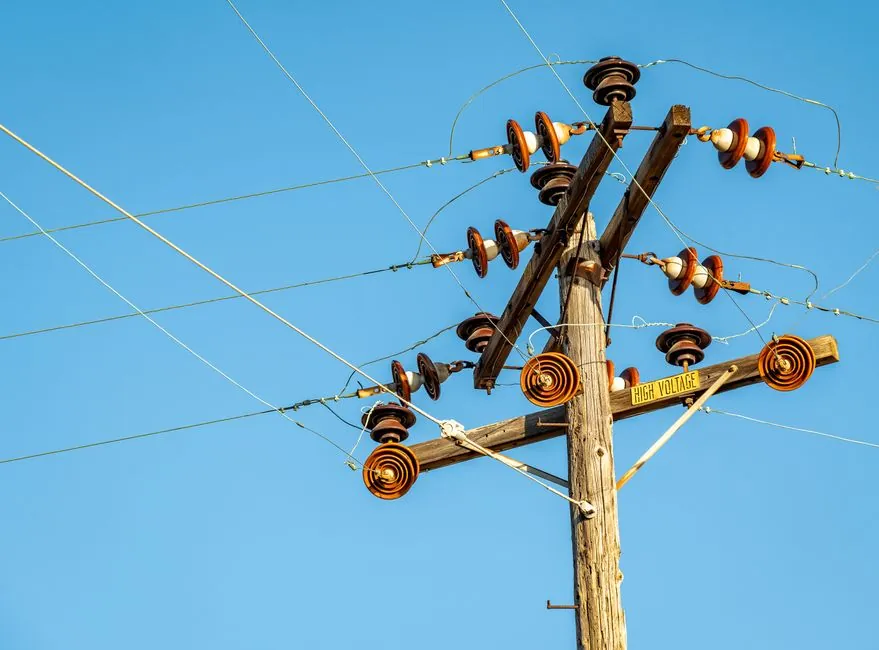
A well-engineered lost foam casting line cuts machining time by 40-60% and reduces per-ton labor by roughly 2-3 operators per shift versus green sand at equivalent tonnage, with defect rates of 2-4% measured on gray iron and ductile iron components in the 5-200 kg window [S3][S5].
For foundries making energy hardware such as pump housings, valve bodies, wind-turbine hubs, and stator press rings, the line must deliver consistent EPS pattern density, refractory coating control, unbonded-sand compaction under vacuum, and a PLC-logged pour cycle; modular systems are sold in 50-5000 t/yr capacities and ship in standard containers with on-site connection in 4-6 weeks [S5].
Defect-Rate Economics and Why the Equipment Chain Matters
Scrap rate drives foundry margin more than any other KPI: a 5,000 t/yr line at 10% scrap and a $1,200/ton cost base writes off $600,000 annually, versus under $180,000 at 3% scrap, a swing of $420,000/yr from one percentage point of yield [S3]. Green sand systems hit 8-15% defect rates because moisture swings above 3.5% cause gas porosity, sub-2.5% moisture causes sand erosion inclusions, and dimensional scatter routinely exceeds ISO 8062 CT10-CT12 on thin-wall sections [S3]. Lost foam casting eliminates the mold-sand interface, removes parting-line flash, and drops core-registration errors to near zero, with measured defect windows of 2-4% on ductile and gray iron castings when the equipment chain is properly integrated [S3]. For a deeper comparison against conventional green-sand and shell-molding lines, see the Lost Foam Casting Line Spec for Automotive Iron and Aluminum Parts spec map.
Line Architecture: Five Stages, Five Equipment Decisions
A complete lost foam line is a sequence of matched stations, and mismatched stages propagate defects: foam density drift causes pattern dimensional scatter, pattern scatter causes coating thickness variation, and coating variation drives gas porosity in the finished casting [S1][S2]. The five stations are: (1) EPS pre-expander for bead density control, (2) EPS molding machine for pattern shape and dimensional accuracy, (3) EPS block molding machine for large pattern bodies, (4) air-source heat-pump drying unit, and (5) a central vacuum system tied to the molding flask [S1]. Process flow then runs pattern coating, sand burial, vacuum-assisted pouring, and shakeout; molten metal vaporizes the polystyrene pattern on contact and fills the cavity in a single pour with no cores required [S2]. Buyers evaluating a turnkey lost foam casting line should treat the EPS pre-expander and the vacuum system as the two highest-leverage stations, because bead-density consistency and flask vacuum level determine casting density more than any other variable.
Selection Criteria for Energy-Equipment Castings

Energy castings impose specific loads: pump housings see cyclic pressure and require leak-tight cast iron; valve bodies demand controlled metallurgy for corrosion resistance; wind-turbine hubs and stator press rings need tight concentricity on large patterns; railway and power-transmission brackets need fatigue-grade ductile iron [S4]. Define the casting weight envelope first; a 5-200 kg working window is the proven range where lost foam defect rates stay at 2-4%, while larger castings require higher-capacity flask and vacuum systems [S3]. Next, set the annual tonnage band; modular systems from 50-5000 t/yr let mid-size foundries scale without a full green-sand replacement [S5]. Finally, lock in tolerance targets: ±0.5-1.0 mm is achievable on most features, which removes 2-4 mm of CNC stock versus 5-10 mm on conventional sand castings, a 40-60% reduction in cycle time on a typical 20-surface manifold [S4][S5].
Process Comparison: Lost Foam vs Sand vs Shell vs Lost Wax
Across four production scenarios, the comparison is sharp. (a) Defect rate: lost foam 2-4%, green sand 8-15%, shell molding lower but offset by shell-breakage and binder gas defects, lost wax competitive but tooling cost-prohibitive above 50 kg [S2][S3]. (b) Tolerance: lost foam ±0.5-1.0 mm, green sand typically CT10-CT12 (looser), shell molding CT7-CT9, lost wax CT5-CT7 [S3][S4]. (c) Machining stock: lost foam 2-4 mm removal, sand 5-10 mm, saving $25-40 per casting at $80-120/hr machine rates on a 20-feature aluminum manifold [S5]. (d) Labor per shift at 100 t/month: lost foam 2-3 operators, green sand 5-7 operators, a $60,000-100,000/yr labor delta on a two-shift schedule at $15-20/hr fully loaded [S5]. For energy castings in the 5-200 kg range, lost foam is the only method that simultaneously hits low defect rates, tight tolerance, and low labor count.
Real Use Cases in Energy Hardware
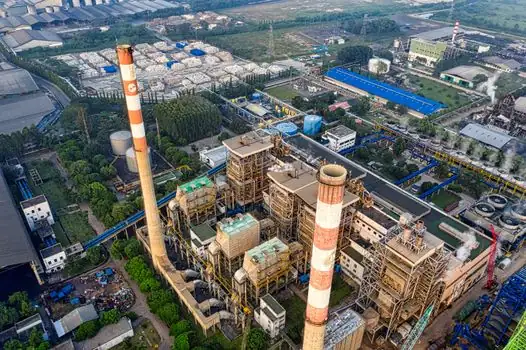
Documented energy-sector applications include industrial valve housings in ductile iron tested for mechanical strength and durability, wind-turbine hubs and pump housings, and stator press rings where lost foam already supplies partial production with precise dimensions and improved machining efficiency [S4]. Railway bogie brackets, gearbox housings in steel and ductile iron, and electrical stator press rings round out the energy-adjacent portfolio, with automotive gearbox housings showing post-machining reductions of up to 30% [S4]. For foundries weighing whether lost foam fits an agricultural or heavy-machinery product mix rather than energy, the Lost Foam Casting Line Selection for Agricultural Machinery: A Spec Map covers pattern-size and throughput trade-offs that differ from energy castings.
Material, Energy, and Operating-Cost Boundaries
Material savings of 15-25% versus traditional sand casting translate to 150-250 kg of metal saved per ton of finished castings, worth $300-500/ton at current aluminum prices [S5]. EPS pattern tooling costs $2,000-3,000 for a 10 kg aluminum pump housing and amortizes over 1,000+ castings, versus $800-1,200 wooden patterns that need replacement every 200-300 castings, a $4,000-6,000 saving on a 5,000-unit run [S5]. Melting energy drops 10-15% because lower scrap rates mean less remelt, but coating drying and vacuum pumps add parasitic load that partially offsets the gain [S5]. Pattern storage and humidity control become operational constraints: EPS patterns absorb moisture, so a controlled drying stage (air-source heat pump, 40-60°C range) and inventory rotation are mandatory for foundries running more than a few pattern SKUs [S1][S5].
Failure Modes and Constraints to Engineer Around
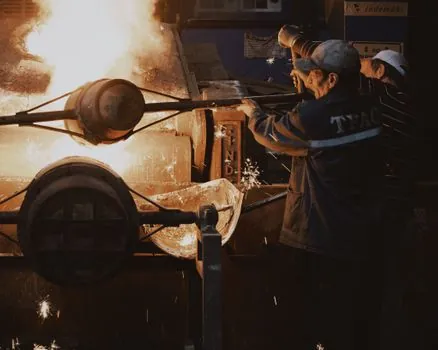
The most common lost-foam defects are not casting-design defects but equipment-integration defects. Inconsistent foam bead density from a poorly tuned pre-expander drives pattern shrinkage and coating cracks. Inadequate vacuum on the flask lets unbonded sand collapse during pour, creating sand inclusions. Refractory coating applied too thick traps gas and produces subsurface porosity; applied too thin lets sand burn-in. Sand moisture above 0.3% in the molding flask causes steam explosions during pour. Buyers should require PLC logging of pre-expander steam pressure, molding cycle time, vacuum level (typically -0.04 to -0.06 MPa working range for iron), coating viscosity, and pour temperature as a contract deliverable [S1][S5]. ISO 9001:2015 quality system certification, CE marking, and SGS inspection reports are the baseline vendor credentials documented on current modular line offerings [S5].
Who Should and Should Not Specify Lost Foam for Energy Castings
Foundries running primarily heavy steel castings above 500 kg, very short batch runs below 200 units per pattern, or simple geometry that green sand already produces at acceptable yield should stay on conventional methods, because the EPS tooling amortization and vacuum system overhead only pay off at sustained volume [S5]. Jobbing shops running 40-50 different part numbers a month also face higher pattern-inventory and changeover costs that erode the labor advantage [S3].
Sourcing and Standards Checklist
Specify the line to ISO 8062 casting tolerance grades (target CT7-CT9 for energy castings) and require the supplier to document vacuum-system sizing, refractory coating formulation support, and PLC integration scope as part of the EPC package rather than as aftermarket add-ons [S1][S3][S5]. Insist on a reference list of at least three installed lines at comparable tonnage in your alloy mix, plus documented defect-rate data from those lines, before signing [S1][S5]. For buyers also evaluating lighting, lighting equipment and electric lamps for the foundry floor or energy management systems to monitor the new line, those decisions should run in parallel because the lost foam line's vacuum and coating-drying loads will change the plant energy baseline by 5-10% [S5]. The next trackable signal to watch is vendor disclosure of pattern-changeover time targets below 15 minutes and documented 2% defect rates on 100+ t/month production campaigns; suppliers quoting both without third-party audit data should be downgraded in the evaluation.