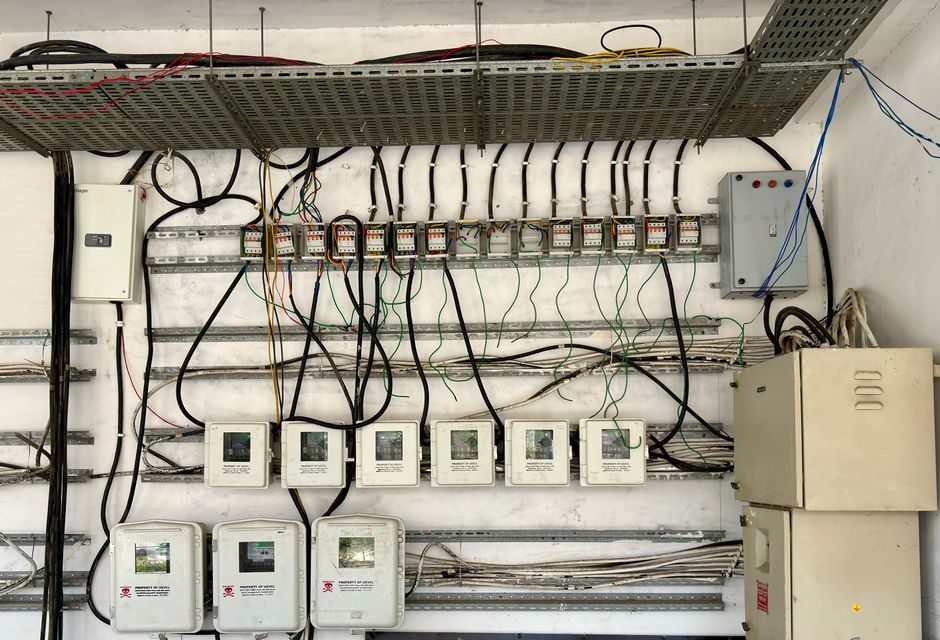
Cost engineers should anchor a 2026 budget on four variables — voltage class, enclosure NEMA/IEC rating, arc-flash containment, and bus ampacity — before negotiating with OEMs.
Globally, conventional MCCs still held the higher installed share as of the 2019 baseline study, but intelligent units with embedded metering are now the dominant specification on new LV builds in oil & gas, metals & mining, and chemical end-user segments [S1]. A typical LV section (one vertical column, 600V, 100kA short-circuit withstand, NEMA 12 enclosure) lands in the USD 25,000–60,000 range, with arc-resistant NEMA 1A/2 per IEEE C37.20.7 pushing the upper bound.
Cost drivers: enclosure, standard, voltage, and intelligence
NEMA 12 vs NEMA 4X alone moves section price 8–15% on equivalent bus ratings, because of gasket density, gland-plate spec, and 304/316L stainless fabrication [S4].
Voltage class is the largest single multiplier. A 480V LV section typically uses 65kA or 100kA short-circuit bracing and 600–1200A vertical bus; an MV section rated 5–15 kV requires vacuum contactors, increased clearances, and partial-discharge-tested insulation, which together drive per-section cost 2–3× higher than an equivalent LV column [S1]. The mining retrofit example from a global nickel-copper processor, where 50+ MCCs were replaced in a single site, illustrates why MV gear must be factored as a separate cost line and not blended with LV average prices [S3].
Intelligent vs conventional: where the premium actually goes
The price premium is recovered in predictive-maintenance labour: 20% of manufacturers run smart manufacturing at scale, while over 55% pilot, so the per-bucket network/IO cost is increasingly absorbed rather than negotiated out [S3].
Conventional MCCs remain the cost-favoured choice for non-critical pumping, HVAC, and conveyor service where the only data needed is running/faulted status. For those duty profiles, a fixed-mounted or plug-in conventional bucket with motor circuit protector, contactor, and overload lands roughly USD 1,200–3,000 per starter cell, versus USD 2,500–6,000 for an equivalent intelligent unit with metering relay and network drop [S1]. The delta closes fastest on high-motor-count cells where the I/O and commissioning savings multiply.
Who an MCC is for (and where it loses)
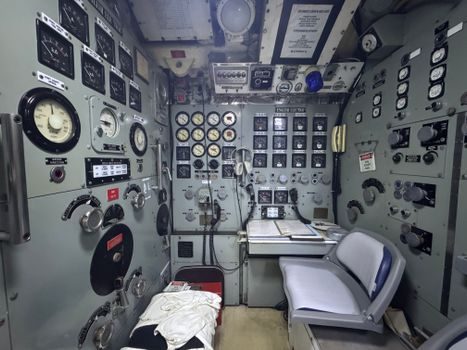
Centralised motor control is the right answer for plants with more than 15–20 LV motors in a contiguous area, where running individual disconnect switches to each motor would inflate copper and labour cost beyond the MCC line item. For small skid packages, a combination motor starter or distributed I/O with local disconnect is typically cheaper than a full section. Standalone standalone outdoor pumps under 50 hp rarely justify the section price versus a UL 489 motor-rated disconnect and a standalone VFD pad. [S1]
Specifying a UL 845 / IEC 61439-2 compliant MCC is over-spec for: (1) sub-5 hp single-motor loads; (2) packaged equipment with an OEM-supplied, already-listed starter; (3) hazardous areas where a control cable run to a remote control valve is governed by IEC 60079-14 segregation rules that an MCC would still need to honour. In those cases, the right reference is a direct-on-line starter or a soft-starter bucket, not a full section.
Cost-driver matrix: option by criterion
Conventional LV vs Intelligent LV vs Arc-Resistant LV vs MV (5–15 kV) compares on four procurement dimensions. On commissioning labour, intelligent units cut 20–30% of loop-check hours because of network-based verification, while MV gear adds 40–60% of on-site test time for relay and partial-discharge commissioning [S3].
On safety and regulatory fit, only arc-resistant LV and MV gear meet IEEE C37.20.7 Type 2B accessibility for high incident-energy rooms; conventional and intelligent non-arc MCCs require remote racking and PPE. On total installed cost over 20 years, intelligent units lead because of energy data, reduced nuisance trips, and predictive maintenance — though the payback hinges on 5+ years of operation and a plant with reliability KPIs already in place [S1].
Total cost of ownership: beyond the purchase order

Capital cost is the line item buyers negotiate; lifecycle cost is the one that bankrupts the maintenance budget. Spare parts for proprietary relay platforms can run 3–5× the price of equivalent open-standard protection relays, so the OEM lock-in should be priced separately.
Energy monitoring on intelligent buckets typically returns 2–5% reduction in motor kWh for plants with significant idling load, because operators can see the waste in real time and apply load-shedding [S3]. On a 500-motor site, that savings pays back the MCC premium in 3–5 years without other intervention — a useful check number for MCC selection criteria in 2026 and for cross-referencing against brownfield PLC upgrade decisions where the MCC is the next asset class to modernise.
Standards, certifications, and failure modes to plan against
UL 845 and IEC 61439-1/-2 govern the assembly-level safety case, while NEMA ICS 18 and IEC 60068 cover seismic and environmental testing. Arc-resistant gear is additionally tested to IEEE C37.20.7, with Type 2B being the practical floor for personnel protection [S4]. Hazardous-area plant sections need the relevant IEC 60079-1/-7/-11 component certification on the starter compartment; this is where low-cost assembled-in-Asia sections frequently fail documentation, even when the metalwork looks right [S1].
The most common failure mode is not the bus bar; it is the bolted bus joint re-torqued incorrectly after a maintenance intervention, which is why thermographic surveys and a torque-marking discipline are line items — not options. The second is condensation in NEMA 3R outdoor sections where space heaters were left off the BOM; the third is arc-flash incident on insertion of a plug-in bucket without the interlock confirmed, which is why remote racking is now standard on new builds.
Trackable signals to watch over the next procurement cycle

Three numbers are worth tracking: (1) the copper-content escalator in the bus price, which moves the section baseline every quarter; (2) lead time on intelligent relays, where the cycle has tightened but is still 12–20 weeks for some lines; (3) IEEE C37.20.7 arc-test certificate validity dates on the OEM's published ratings, since a lapse will force a re-spec on safety grounds. If the budget is being prepared for 2026 capex release, lock pricing in two stages — section price now, intelligent starter adders at hand-off — and require the OEM to confirm the bus ampacity and short-circuit withstand in writing before PO. [S1]