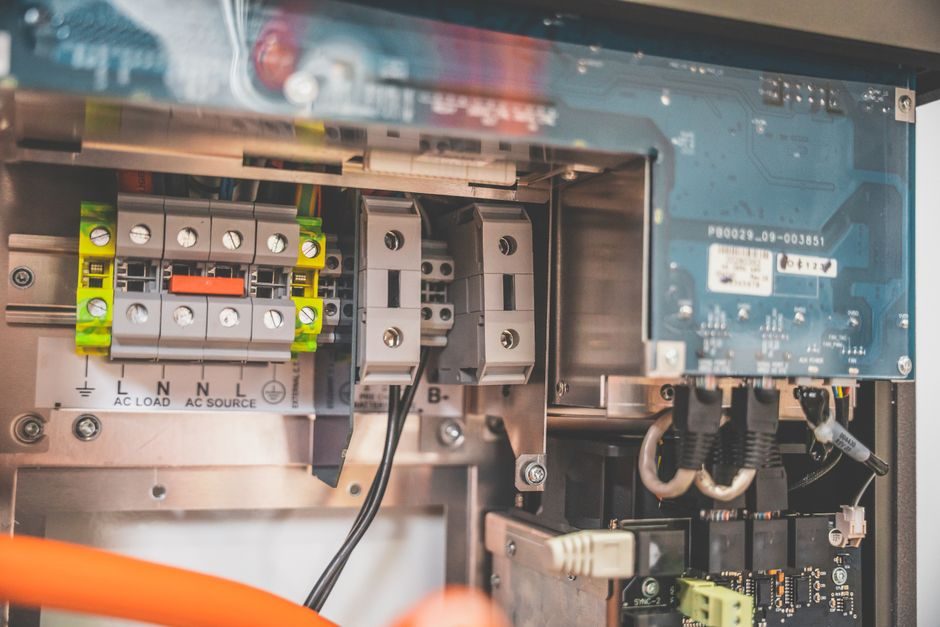
Distribution cabinet list prices in 2026 cluster in three bands: US$1.40–US$33 per piece for SMC FTTH cross-connect cabinets, US$20–US$100 for low-voltage metal power distribution enclosures, and US$19–US$20 for 144/288/576-core fiber optic distribution frames, all MOQ = 1 piece on the China-EXW listings sampled 2026-07 [S2][S3][S5][S6].
Those EXW numbers exclude inland freight, CE/UL witnessing, copper busbar content, and MCCB/ACB internals — the four cost drivers that most often push a "cabinet" line item past US$5,000 on a real bill of materials. Procurement teams should treat the table as the bare-enclosure floor, not the landed MCC distribution cabinet price.
What the 2026 EXW price bands actually cover
The US$1.40–US$33 band on Made-in-China covers SMC (sheet molding compound) FTTH cross-connect cabinets with STB modules and 20-pair subscriber connectors, listed by Ningbo-based trading factories with 1-piece MOQ [S2]. At the US$19–US$20 tier sits a 144/288/576-core fiber optic distribution frame, the size that typically feeds a 6–10 floor commercial MDU [S5][S6]. These are passive enclosures — no breakers, no busbars, no power distribution power distribution box internals.
Metal low-voltage distribution cabinets cluster at US$20–US$100, with the median around US$50 for a CCC-approved sheet-steel enclosure from Nancome-class Chinese OEMs [S3]. The price reflects cold-rolled steel thickness of 1.0–1.5 mm, epoxy-polyester powder coat, and a hinged door with quarter-turn lock. It does not include the DIN rail, terminal blocks, or molded-case circuit breakers that turn an empty box into a working MCC cabinet assembly.
Five cost drivers that move the line item
Material: SMC versus cold-rolled steel versus 304/316 stainless is the single largest swing. Stainless 316L enclosures for washdown or coastal sites typically price 3–5× the equivalent sheet-steel box; the SMC fiber cabinets sit at the bottom of the stack because the molding process absorbs labor that would otherwise be welding [S2][S3].
IP and impact rating: an IP54 indoor cabinet is the baseline; IP65 outdoor adds gasket groove machining, captive hinged latches, and a cable gland plate — typically a 30–60% adder over the IP54 version. IK10 impact rating (10 joule) on the door panel further pushes the gauge up to 2.0 mm steel [S2][S3].
Certification tier: CCC only is the Chinese-domestic baseline; CE under the EN 62208 empty-enclosure standard or UL 50/NEMA 4 adds third-party witnessing and unique component costs. ATEX/IECEx explosion-proof distribution cabinets (Zone 1/2) carry the largest premium of all, and that premium is not just on the box — it flows through every internal component, since the enclosure alone without certified internals fails the audit.
Volume tier: every Chinese OEM sampled quotes 1-piece MOQ at the highest unit price; 50–100 pieces commonly drops 15–25%, and 500+ pieces another 10–15% [S2][S3]. Freight mode (LCL vs FCL) and Incoterm (EXW vs FOB vs CIF) move the landed figure by 8–20% on cabinets because of dimensional weight.
Lead time: 7–15 days for the SMC FTTH stock items, 20–35 days for standard metal enclosures, and 45–75 days for ATEX/IECEx-engineered units. Rush fabrication (≤10 days) on metalwork typically costs a 20–30% expedite premium [S3].
Options compared on the four selection criteria
For a spec engineer choosing between the three families, the comparison below lines them up against the criteria that actually drive a 2026 buy:
SMC FTTH cross-connect (US$1.40–US$33): strong on cost and corrosion resistance, weak on IP rating ceiling (typically IP54) and mechanical impact. Best for indoor MDU telecom rooms, wall-mounted FTTH feeder runs, and balcony-side pole mounts. Not suitable for industrial floors with forklift traffic [S2].
Sheet-steel LV metal distribution (US$20–US$100): strong on configurability and DIN-rail ecosystem, neutral on cost, weak on corrosion (requires powder coat, not bare). Best for indoor plant rooms, MCC lineups, lighting and small-motor distribution. Not suitable for outdoor unprotected or chemical atmospheres without upgrading to 316L [S3].
Fiber optic distribution frame 144/288/576-core (US$19–US$20 per piece for the enclosure alone): strong on port density per rack unit and standardized 19-inch mounting, weak on pre-terminated cost (the real installed cost is the pigtail labor). Best for data-center meet-me rooms and carrier POPs. Pair spec work with a linear guide review only when the cabinet is sliding into a battery rack — otherwise unconnected [S5][S6].
Total cost of ownership, not just the box
Purchase price on a distribution cabinet line item typically represents 40–65% of the 5-year installed cost.
The error most often seen on a 2026 estimate is to under-budget the internals. A US$50 empty steel enclosure fitted with a 250 A main MCCB, a 12-way distribution board, surge protection, and a digital meter will land at US$1,200–US$2,000 fully populated — a 24–40× multiplier on the bare-box price [S3]. Buyers who anchor their RFQ on the EXW enclosure price will fail their own cost gate at the FAT.
Failure modes and spec traps to flag before signing the PO
Spec trap 1: ordering an indoor IP54 cabinet for a plant room with a hose-down wash zone. IP65 should be the floor for any food, beverage, or pharmaceutical area. Spec trap 2: specifying stainless 304 where 316L is required for chloride exposure; 304 will pit in months. Spec trap 3: CCC-only marking on a cabinet destined for export to the EU — customs will hold it, and the rework cycle costs more than the original CE-certified unit [S2][S3].
Spec trap 4: mixing empty-enclosure standard EN 62208 with installed-assembly standard IEC 61439. The two have different test regimes, and a CE mark on the box does not extend to the assembled lineup. The PLC price and cost guide covers the controller-side analog of this same confusion. Spec trap 5: ignoring ambient derating. A cabinet rated 40 °C drops roughly 10% of its current capacity at 50 °C ambient — common in boiler rooms and unventilated switchgear rooms in tropical installations.
Who a 2026 distribution cabinet buy is for — and who it is not
Buy the SMC FTTH band (US$1.40–US$33) if you are terminating 6–144 fiber pairs in a commercial or multi-dwelling build and the cabinet is mounted indoors or on a sheltered exterior wall. Do not buy this band for any 230/400 V power application — the plastic compound is not rated as a power-enclosure dielectric in most jurisdictions [S2].
Buy the metal LV band (US$20–US$100 empty) if you are building a 100–630 A indoor distribution lineup, an MCC section, or a lighting/socket sub-board. Do not buy it without also budgeting the internal components, and do not place it outdoors without an IP65 + UV-stable powder coat option confirmed on the datasheet [S3].
Buy the 144/288/576-core fiber frame (US$19–US$20 per piece enclosure) if you are terminating carrier or data-center backbone cabling at a meet-me room. For finer selection logic on the cabinet family itself, the Distribution Cabinet Selection spec map and the crossed-roller guide (for sliding-frame mechanical integration) round out the decision tree [S5][S6].
Trackable signals for the next sourcing cycle: monitor the US$20 floor on metal enclosures — if it breaks below US$15 across three consecutive quarterly samples, the market has shifted to oversupply and 2027 budgets can be tightened. Monitor CCC versus CE marking ratios on Chinese OEM listings; a swing toward CE is a leading indicator that the OEM is preparing for export and may carry a small-spec premium worth absorbing. A remote I/O module cross-reference is the natural next step once the cabinet lineup is locked.