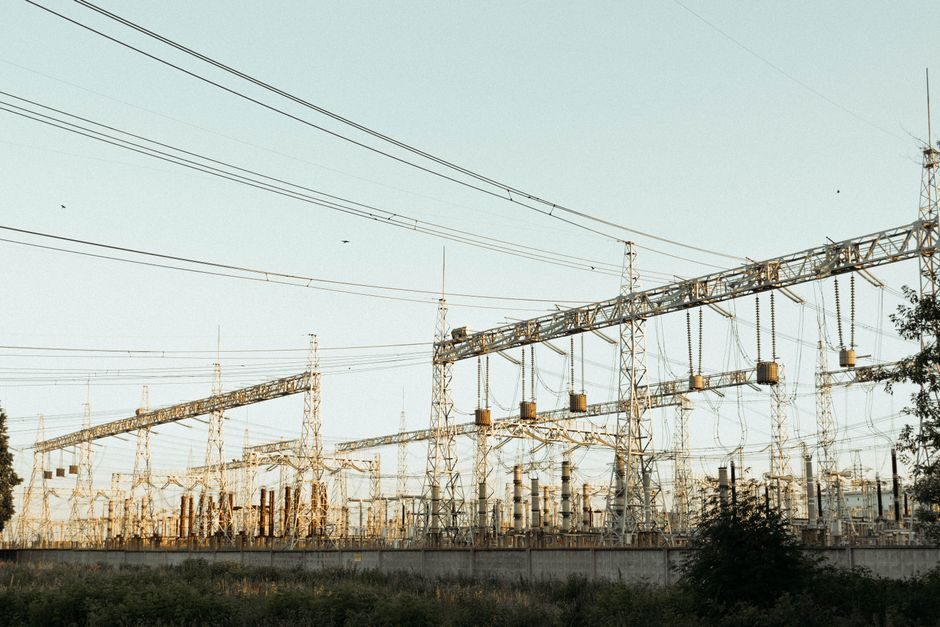
A dry-type transformer is a voltage-conversion device using cast-resin or VPI solid insulation instead of oil, offered by manufacturers such as TMC, Jiangsu Tianhua, Yawei, and Hengda in ratings spanning medium- and low-voltage classes [S1][S2][S3][S5].
A distribution cabinet is the downstream enclosure that receives transformed power and houses breakers, busbars, and protective devices, exemplified by XL-21 type LV cabinets in current Made-in-China listings [S8]. The two are not substitutes; they sit in series on the same power path, so a "comparison" is really a sizing and integration exercise.
Defining the Two Devices and Their Boundary
A dry-type transformer changes voltage between two or three windings using Class F or Class H solid insulation; TMC's process portfolio explicitly covers both cast-resin and vacuum-pressure-impregnated (VPI) windings, with the former giving higher fire resistance and the latter favouring mechanical strength and lower partial discharge [S1]. Typical build follows IEC 60076-11 for dry-type power transformers, with the Tianhua product line extending from distribution-class dry units up to 220 kV oil-immersed EHV units at 31.5–360 MVA — though the 220 kV class is oil-immersed, not dry [S2].
A distribution cabinet is the LV switchgear assembly on the secondary side that splits, meters, and protects feeders. Chinese-market XL-21 cabinets are a common low-voltage AC power distribution format, built to GB 7251.1 / IEC 61439-1 indoor enclosure practice and widely listed on B2B portals [S8]. The MCC cabinet family sits next to it for motor control, while an explosion-proof distribution box substitutes for the standard cabinet in hazardous areas. The cabinet sees only the voltage the transformer delivers, so its rated current and short-circuit withstand (Icw) are dictated upstream.
Decision Criteria: What Drives the Choice Between Them
Four criteria separate the two in any spec meeting: function, voltage class, environment, and short-circuit behaviour. Functionally, the dry-type transformer is a magnetic energy-conversion device with kVA/MVA and impedance-voltage (% Uk) as the headline specs, while the cabinet is an electromechanical assembly with rated current (In), busbar rating, and Icw (kA/1s) as the headline specs [S1][S8].
Voltage class partitions the choice: dry-type units dominate LV and MV (typically up to 36 kV / 40.5 kV on the primary), with manufacturers like Yawei and Hengda listing dry-type transformers alongside 10–35 kV oil-immersed distribution products [S3][S5]. Above ~40.5 kV, oil-immersed construction becomes the norm because resin penetration and clearance economics work against dry-type at higher BIL [S2]. For the cabinet side, the dominant classes are LV (≤ 690 V, e.g. XL-21) and MV switchgear (12–24 kV), with power distribution box enclosures used for smaller sub-feeders [S8].
Environment shapes the resin choice inside a dry-type transformer: cast-resin suits humid, polluted, or fire-risk indoor sites (data centres, hospitals, basements), whereas VPI is the lighter, more breathable option for clean industrial plants [S1]. Cabinets inherit the same ambient class but additionally must satisfy IP rating (IP54 for dusty plants, IP65 for wash-down) and, in hazardous zones, Ex d or Ex e certification per IEC 60079 series — a route covered in the explosion-proof distribution reference design.
Options Comparison: Cast-Resin vs VPI, and XL-21 vs MCC vs Distribution Box
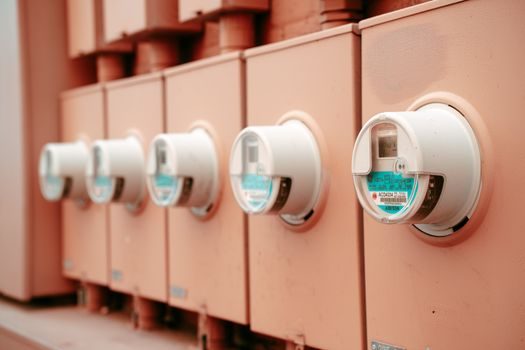
On the transformer side, the cast-resin vs VPI choice is a trade-off. Cast-resin (typically epoxy-encapsulated windings) offers higher short-circuit withstand, lower flammability, and better moisture resistance, at the cost of heavier coils and longer cure cycles. VPI units use polyester or epoxy varnish impregnated under vacuum and pressure, giving a lighter, more compact, easier-to-repair unit that is, however, more sensitive to contamination and overloading. TMC markets both as complementary processes and not interchangeable defaults [S1].
On the cabinet side, the three common formats in Chinese and export specs are XL-21 (low-voltage power distribution, indoor, fixed-mounted), MCC cabinet (motor control centre, withdrawable or fixed, with starter compartments), and small power distribution box units (sub-feeders, lighting, ≤250 A). XL-21 lists on B2B marketplaces with ratings sized for the typical 400–630 A LV busbar class; MCC cabinets add functional compartments per IEC 61439-2; distribution boxes trade breaking capacity for compact footprint [S8]. A criteria matrix below lines them up.
Selection matrix — options vs decision criteria (research-grounded):
• Cast-resin dry transformer: best for fire-risk / humid sites; short-circuit strength high; weight penalty 20–30% vs VPI; repair limited to surface [S1].
• VPI dry transformer: best for clean industrial duty; lower weight; better partial-discharge behaviour at low load; more sensitive to overload and contamination [S1].
• XL-21 LV cabinet: general-purpose power distribution 400–630 A; fixed mounting; cost-effective; Icw typically 25–35 kA/1s for the format family [S8].
• MCC cabinet: motor-rich plants; compartmentalised starters; higher Icw; higher cost per outgoing way [S8].
• Power distribution box: sub-feeder / lighting; compact; lowest Icw; not a main distribution device [S8].
Integration: How the Two Devices Are Sized Together
The dry-type transformer's secondary voltage and rated current set the cabinet's main busbar. A 1000 kVA cast-resin transformer at 10/0.4 kV delivers roughly 1443 A on the LV side (1000 kVA / (√3 × 0.4 kV) = 1443 A), so the cabinet main breaker must be ≥1600 A frame with Icw ≥ the transformer let-through, typically 25 kA minimum for distribution-class dry units [S1][S8]. The transformer's % impedance (commonly 4% or 6% for LV/MV dry-type) drives short-circuit current at the cabinet busbar: at 6% Uk and 1443 A, I sc ≈ 1443 / 0.06 ≈ 24 kA, which then dictates Icw selection.
Vendor datasheets confirm the sizing logic. Tianhua's transformer range runs 31.5 MVA–360 MVA at 220 kV for EHV duty with OLTC tap ranges of ±8×1.25% or ±10×1.25% on the HV winding, and supports both 50 Hz and 60 Hz to match regional grids [S2]. Yawei's distribution-side offering includes pad-mounted, pole-mounted, and oil-immersed distribution transformers down to LV dry-type — a 10 kV–765 kV stated portfolio span on the homepage [S3]. Hengda's Made-in-China listing similarly bundles distribution and dry-type under one factory address in Pizhou, Jiangsu [S5].
For related plant-network spec work, see HMI Touch Panel vs SCADA Software: Protocol Compatibility Decision Map for the downstream monitoring tier once the cabinet is energised, and Industrial Ethernet Switch vs Fieldbus Gateway: Spec-Driven Selection Map for the communication layer that ties transformer and cabinet IEDs back to SCADA.
Use Cases: When Each Combination Applies

Indoor commercial buildings and hospitals typically pair a 1000–2500 kVA cast-resin dry-type transformer with an XL-21 main distribution cabinet feeding sub-floor distribution boards. The dry-type sits in a dedicated transformer room or basement with fire-rated separation; the cabinet sits in an electrical riser on each floor zone. This combination is also the default for European data-centre builds where oil-filled transformers are excluded by insurer or fire code, and where cast-resin's self-extinguishing behaviour removes the need for oil bunding [S1][S2].
Industrial plants with motor-heavy loads (HVAC, pumps, conveyors) more often pair a VPI dry-type transformer with an MCC cabinet rather than a plain distribution cabinet, because the compartmentalised starter bays handle direct-on-line, star-delta, or soft-starter motor starters more economically than a general-purpose XL-21 [S8]. In mining or tunnel projects, where the ambient may be wet and space tight, manufacturers like Jiangsu Tianhua offer mine-specific transformer variants; the matching cabinet upgrades to IP54 or IP65 and may need an explosion-proof distribution form if methane or dust hazards are present [S2].
For smaller sub-feeder scope — lighting panels, small commercial sub-boards, or a single feeder extension in a retrofit — the power distribution box replaces the full distribution cabinet, and a small dry-type transformer (≤100 kVA) is often packaged as a compact indoor unit. This is the configuration seen in French and Malaysian RFQs on B2B portals, where buyers order 500-piece batches of LWSMC-500400200 cabinets for export projects [S9].
Limitations, Failure Modes, and Sourcing Standards
Dry-type transformers have three hard limits. First, voltage ceiling: resin penetration and clearance economics make dry-type uneconomical above ~36–40.5 kV; for 66 kV and up, oil-immersed or gas-insulated designs dominate. Second, overload tolerance: cast-resin windings derate faster than oil-immersed in sustained overload, with typical continuous overload capability around 110–120% of nameplate versus 120–130% for oil-immersed in the same kVA class — values consistent with IEC 60076-12 loading guides. Third, repairability: a cast-resin coil failure usually means replacement, not repair, while a VPI coil can sometimes be re-impregnated [S1].
Distribution cabinets' main constraints are short-circuit withstand and heat rise. Undersized Icw leads to busbar deformation and breaker welding during a downstream fault; undersized enclosure ventilation drives breaker tripping on nuisance heat. XL-21 family cabinets are typically rated to 35 °C average ambient with a derating curve above that, and Icw in the 25–50 kA/1s range depending on busbar cross-section [S8]. For the broader tier of related articles, see Fieldbus Gateway vs Remote I/O Module: Protocol-Bridge or I/O-Density Decision on the instrumentation side of the same cabinet.
Standards to anchor in any spec: IEC 60076-11 for dry-type power transformers, IEC 60076-12 for loading guides, IEC 61439-1/-2 for LV switchgear / MCC assemblies, GB 7251 (Chinese equivalent) for XL-21 type cabinets, and the IEC 60079 series for hazardous-area enclosures. TTU (distribution Transformer supervisory Terminal Unit) per DL/T 721 in China adds the monitoring tier above the transformer [S6]. Always confirm the exact revision on the vendor datasheet at quotation stage.
Trackable next signals: (1) new 40.5 kV-class dry-type product launches from at least one of Yawei, Tianhua, or Hengda in the next supplier-catalogue update window, signalling movement on the resin/BIL frontier; (2) revision of IEC 61439-2 clauses around Icw testing for ≤630 A cabinets, which would re-rank the XL-21 vs MCC choice for small commercial builds. Verify both against the issuing body's publication register before any re-spec.